




Elon Musk Biography and Business Journey
The Elon Musk biography and business journey is one of the most remarkable stories in the history of modern business. He was not born into Silicon Valley. He did not have powerful connections or a wealthy family backing him up.
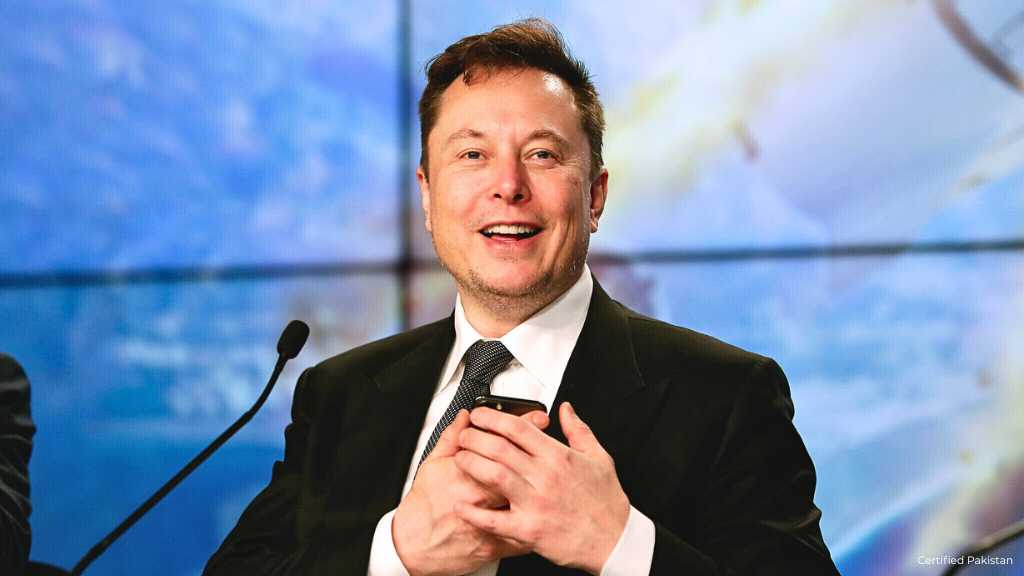
The Elon Musk biography and business journey is one of the most remarkable stories in the history of modern business.
He was not born into Silicon Valley. He did not have powerful connections or a wealthy family backing him up.
He was a quiet kid from South Africa who got bullied badly enough to end up in hospital and found his escape in books and computers.
And then he went out and built some of the most important companies on earth.
This is that story, told from the beginning.
Early Life and Childhood
Elon Musk came into this world on June 28, 1971 in Pretoria, South Africa. His father Errol Musk worked as an engineer and his mother Maye Musk was a model who also worked in nutrition.
From the outside the family looked perfectly fine. But what went on inside that house and inside those school walls was a completely different story.
His parents marriage fell apart when Elon was nine years old. That kind of thing leaves a mark on any kid.
But school was where things got really ugly. Elon was not the sporty popular type. He was the kid sitting in the corner reading thick books while everyone else was outside playing.
That made him an easy target. The bullying was not just harmless teasing either. There was one incident where a group of boys attacked him so badly that he ended up in hospital.
What kept him going through all of it was his obsession with reading and computers.
He went through entire encyclopedias as a child just because he wanted to know things. Science fiction novels, physics books, anything he could get his hands on.
By the time he was ten he had taught himself how to code. At twelve he wrote a video game called Blastar and sold it to a tech magazine for 500 dollars.
A twelve year old kid building and selling his own software in the early 1980s. That was not something you saw every day.
Leaving South Africa
The early chapters of the Elon Musk biography and business journey show a young man who always knew he was meant for somewhere bigger.
At seventeen he packed up and moved to Canada, where he could claim citizenship through his mother.
He enrolled at Queen’s University in Ontario and later moved to the United States to study at the University of Pennsylvania.
He graduated with two degrees, one in economics from the Wharton School and one in physics.
After Penn he was accepted into a PhD program in energy physics at Stanford University. He got there, settled in, and left two days later.
It was 1995 and the internet was starting to catch fire. Sitting through lectures felt completely wrong when something that big was happening right outside.
He trusted what his gut was telling him and walked away from one of the most prestigious academic programs in the world to go build something.
That decision changed everything.
Zip2 and PayPal: The Beginning of the Business Journey
The first real chapter of the Elon Musk biography and business journey starts with a company called Zip2.
He built it with his brother Kimbal. The idea was an online business directory for newspapers at a time when most local businesses had never even thought about having a website.
The early days were genuinely rough. The two brothers could not afford to rent a proper place to live so they just slept at the office. They shared a single computer and worked through the night to get the product built.
That sacrifice eventually paid off. Compaq bought Zip2 in 1999 for around 307 million dollars and Elon walked away with about 22 million dollars at twenty seven years old.
He put 10 million of that straight into his next company, an online payments business called X.com, which later became PayPal.
When eBay acquired PayPal in 2002 for 1.5 billion dollars, Elon’s share came out to around 180 million dollars.
Most people in that position would have taken a long break and spent a few years just enjoying life.
Elon started making plans that had the people around him genuinely scratching their heads.
SpaceX: The Bet Nobody Thought Would Work
The SpaceX chapter of the Elon Musk biography and business journey is the one that most people thought would end in disaster.
He moved to Los Angeles and started telling people he wanted to build rockets and eventually send humans to Mars.
The reaction from the aerospace world was not exactly warm. The idea that someone from the internet world was going to walk in and do it better and cheaper did not sit well with a lot of people.
The first three Falcon 1 rockets SpaceX launched all failed. Three in a row.
By 2008 Elon had spent almost everything he had on SpaceX and Tesla at the same time and both were dangerously close to shutting down. He was borrowing money from friends just to get by.
He has talked in interviews about having panic attacks during that stretch and feeling like the floor was falling out from under him.
He put together just enough for one final launch attempt.
The fourth Falcon 1 lifted off in September 2008 and reached orbit, becoming the first privately built liquid fuelled rocket in history to do so.
NASA came in shortly after with a 1.6 billion dollar contract.
SpaceX went on to send the first private astronauts to the International Space Station and is currently testing Starship, the largest rocket ever built, with a real Mars mission as the end goal.
Tesla: Changing the Car Industry Forever
Tesla was not actually founded by Elon. Two engineers named Martin Eberhard and Marc Tarpenning started it in 2003.
Elon came in as the lead investor in 2004 and took over as CEO in 2008.
His belief was straightforward. Electric cars had been around for years but every single one of them was slow, had a range problem and looked like something you would only drive if you absolutely had to.
He wanted to build one that people actually felt good about owning.
2008 came close to finishing Tesla off entirely. The financial crisis hit right when the company needed new investment most badly.
Elon put in the last of his personal money to keep it from going under.
The Model S arrived in 2012 and received the highest score Consumer Reports had ever given any car.
The Model 3 went on to become one of the best selling cars in the world.
What Tesla did to the car industry is a central part of the Elon Musk biography and business journey. Ford, Volkswagen, Toyota, General Motors, every single major manufacturer had to rebuild their long term plans around electric vehicles because Tesla proved people would buy them if someone actually made a good one.
Neuralink, The Boring Company and Twitter
The later chapters of the Elon Musk biography and business journey show a man who never stopped looking for the next big problem to solve.
Elon started Neuralink in 2016, a company building tiny chips designed to be implanted in the human brain and allow it to communicate directly with computers.
The near term goal is medical, helping people with conditions like ALS or spinal cord injuries regain some ability to communicate or move.
In January 2024 the first human patient received a Neuralink implant and early results have been positive.
Also in 2016 he started The Boring Company after one particularly bad afternoon stuck in Los Angeles traffic.
His thinking was that cities were never going to solve congestion by adding more lanes. The only real fix was to go underground.
The company has already completed tunnel projects in Las Vegas and has more work lined up.
In 2022 he bought Twitter for 44 billion dollars, renamed it X, reduced the workforce significantly and changed how the platform operates.
People have very strong opinions about whether that was a smart move or a costly mistake. Honestly, it is probably a bit of both.
How Elon Musk Actually Thinks
People who have worked closely with Elon tend to describe one thing about him consistently.
He does not look at how something is currently being done and then try to improve it by ten or twenty percent.
He throws the whole existing approach out and starts from the ground up.
When SpaceX was working out rocket costs, instead of trying to negotiate better prices on existing components, Elon asked what the raw materials actually cost to source.
The answer was roughly two percent of what finished rockets were selling for.
That gap told him the entire industry had been built in the most wasteful way imaginable and that rebuilding it from scratch at a fraction of the cost was completely possible.
His attitude toward failure is also different from most people.
Three rockets blowing up one after another would have finished off most founders. For Elon each failed launch was just information. What broke, why it broke, how to fix it. Then try again.
This mindset is what separates the Elon Musk biography and business journey from almost every other business story you will read.
What the Elon Musk Biography and Business Journey Comes Down To
Elon Musk grew up as a quiet kid in South Africa who got beaten badly enough to need hospital treatment and found his way through books and a secondhand computer.
He left his home country as a teenager with nothing but big ideas.
He built two companies from nothing and sold them both. Then he took all of that money and put it into rockets and electric cars at a time when most people watching thought he had completely lost the plot.
He nearly went broke in 2008 running two failing companies at the same time.
He came out the other side with two of the most significant companies built in the last twenty years.
The real lesson from the Elon Musk biography and business journey has nothing to do with being some kind of genius or getting lucky with timing.
Plenty of smart people had the same opportunities in 1995 and did nothing with them.
What made Elon different was that he picked things he actually believed in and then refused to let go even when everything around him was falling apart.
Losing money, looking foolish in public, having people in the industry laugh at him, none of that was enough to make him stop.
Most people quit the moment it stops being fun. He kept going when it stopped making sense to almost everyone watching.
That gap between those two things is basically the entire Elon Musk biography and business journey in one sentence.
Elon Musk’s journey from a small apartment to global dominance is rare but not unique. Read the Jack Ma life story and success to see how another visionary built an empire from absolute zero.
For the latest mission updates and satellite launch schedules, you can visit the Official SpaceX Website.


Comments