




How to Start Investing in Cryptocurrency: The Complete Beginner’s Guide for 2026
How to start investing in cryptocurrency is one of the most searched financial questions in the world right now, and the timing makes sense. The total crypto market capitalization as of late April 2026 sits around $2.55 to $2.63 trillion according to CoinMarketCap and CoinGecko. Bitcoin alone accounts for roughly $1.33 to $1.
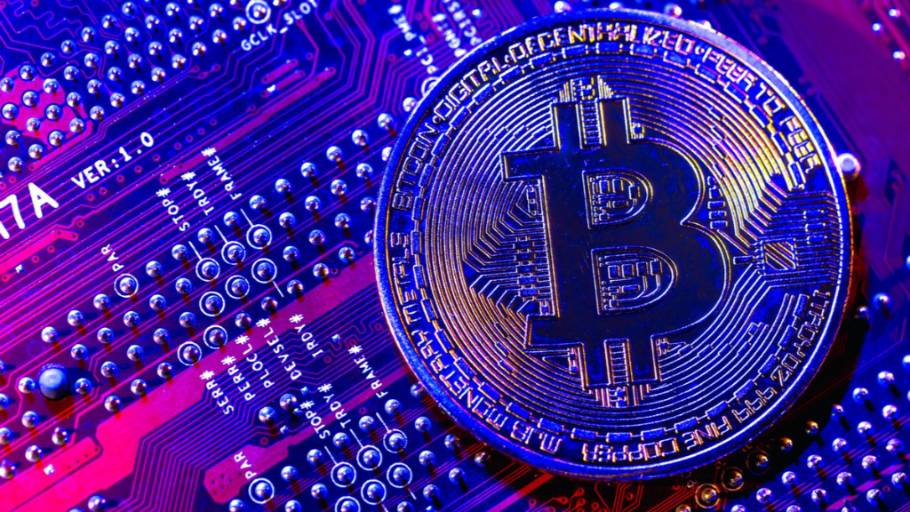
How to start investing in cryptocurrency is one of the most searched financial questions in the world right now, and the timing makes sense. The total crypto market capitalization as of late April 2026 sits around $2.55 to $2.63 trillion according to CoinMarketCap and CoinGecko.
Bitcoin alone accounts for roughly $1.33 to $1.52 trillion of that, representing about 58 to 60 percent dominance over the entire market. Over 30 percent of American adults, more than 70 million people, now own some form of digital asset.
Bitcoin has gone from a niche internet experiment to a recognized asset class held by pension funds, corporations, and governments. If you have been watching from the sidelines and wondering whether it is too late or too complicated to get in, this guide covers everything you need to know about how to start investing in cryptocurrency in a way that is practical, honest, and grounded in what is actually happening in the market right now.
What Cryptocurrency Actually Is
Before getting into how to start investing in cryptocurrency, it helps to be clear on what you are actually buying.
Cryptocurrency is a digital asset secured by cryptography and built on blockchain technology, which is essentially a decentralized ledger that records transactions across thousands of computers simultaneously. No single bank, government, or company controls it.
Bitcoin was the first and remains the largest, currently accounting for around 58 to 60 percent of the entire crypto market by value. Ethereum is second, currently priced around $2,277 as of April 28, 2026, and powers most of the decentralized applications, smart contracts, and financial services built on blockchain technology.
Beyond those two, there are thousands of other cryptocurrencies, known as altcoins, ranging from genuinely innovative projects to outright scams. Understanding this distinction matters before you put any money in.
Step 1: Understand the Risk First
Anyone teaching you how to start investing in cryptocurrency without starting here is doing you a disservice. Crypto is one of the most volatile asset classes in the world.
The total crypto market fell 20.4 percent in Q1 2026 alone, dropping to around $2.4 trillion according to CoinGecko, before partially recovering. Bitcoin declined 22 percent in that same quarter, slightly worse than the NASDAQ’s 18.7 percent drop over the same period.
The rule that every serious investor repeats is simple: never invest money you cannot afford to lose entirely. This is not a legal disclaimer. It is practical advice that the market has enforced brutally on people who ignored it. Start with an amount that would not change your life if it went to zero, because with individual cryptocurrencies, that outcome is genuinely possible.
Step 2: Choose the Right Exchange
Once you understand the risk, the next step in how to start investing in cryptocurrency is picking where to buy. A crypto exchange is the platform where you create an account, deposit money, and purchase digital assets. In 2026, the major regulated exchanges serving most markets include:
| Exchange | Best For | Coins Available | Key Feature |
|---|---|---|---|
| Coinbase | Beginners in the US | 200+ | Most regulated, simple interface |
| Kraken | Security-focused investors | 200+ | Strong track record, long-standing |
| Binance | Active traders globally | 350+ | Low fees, high liquidity |
| Gemini | US investors wanting compliance | 100+ | Strong regulatory standing |
What to look for when choosing an exchange: Security including two-factor authentication, cold storage for most assets, and a proven track record against hacks.
Regulatory compliance meaning the exchange should be registered with relevant financial authorities and follow Know Your Customer and Anti-Money Laundering rules. Fees since trading fees, withdrawal fees, and deposit fees all vary and even small differences add up over time. Supported assets to make sure the exchange lists the cryptocurrencies you want to buy.
Step 3: Set Up and Verify Your Account
Signing up for a regulated crypto exchange in 2026 is straightforward but takes a day or two due to identity verification requirements. You will need to provide a government-issued ID and in most cases complete a facial scan for Level 2 verification. This process, known as KYC, is legally required on all regulated exchanges and is there to protect both you and the integrity of the market.
Once verified, you can deposit funds via bank transfer, debit card, or instant payment systems like FedNow and Instant ACH which now allow funds to move from your bank to your crypto account within seconds.
Step 4: Decide What to Buy
This is where most beginners learning how to start investing in cryptocurrency spend the most time and make the most mistakes. The honest starting point for almost everyone is the same two assets.
Bitcoin (BTC) is the most established cryptocurrency with the longest track record, the most liquidity, and the broadest institutional adoption.
Bitcoin is now included in regulated spot ETFs managed by BlackRock, Fidelity, and as of April 2026, Morgan Stanley, with spot BTC ETFs now managing over $150 billion in assets combined. Bitcoin’s current trading range in late April 2026 is approximately $68,000 to $75,000, though this changes daily given the market’s volatility.
Bitcoin is the closest thing crypto has to a blue-chip asset, though that does not mean it cannot fall sharply.
Ethereum (ETH) is the backbone of decentralized finance, smart contracts, and the broader Web3 ecosystem. As of April 28, 2026, Ethereum trades at around $2,277.
The Glamsterdam upgrade deployed in early 2026 has introduced Smart Accounts as a native feature, making crypto wallets considerably easier to use. Major financial institutions including BlackRock and JP Morgan are now using Ethereum-based networks to settle secondary market trades.
A common allocation for conservative beginners is around 50 to 70 percent Bitcoin, 20 to 30 percent Ethereum, and the remainder in other assets if desired. Most experienced investors suggest that beginners should not go beyond Bitcoin and Ethereum until they genuinely understand what they are buying and why.
Real-time Tracker:Current market dominance aur prices check karne ke liye CoinMarketCap visit karein.
Step 5: Use Dollar Cost Averaging
One of the most important concepts in how to start investing in cryptocurrency is dollar cost averaging, which means investing a fixed amount at regular intervals regardless of what the price is doing. Instead of trying to time the market and buy at the perfect moment, you invest $50 or $100 every week or every month on a set schedule.
This approach does two things. It removes the psychological pressure of trying to pick the right entry point, which is something even professional traders consistently fail at in crypto markets.
And it means you automatically buy more when prices are low and less when prices are high, which tends to produce better average purchase prices over time than lump sum investing in a volatile market.
Smart Wealth Tip: Crypto investing is only one part of the puzzle. To truly maximize your income in the digital age, explore our guide on the best skills to learn to make money in 2026.
Step 6: Secure Your Investment
Security is one of the most important and most overlooked parts of how to start investing in cryptocurrency. There is a saying in the crypto world that captures the core issue: not your keys, not your coins.
When your cryptocurrency sits on an exchange, you do not technically own the private keys that control those assets. The exchange does. If the exchange is hacked, goes bankrupt, or freezes withdrawals, your assets could be at risk.
For beginners with small amounts, keeping funds on a reputable regulated exchange is generally acceptable. As your investment grows, moving assets to a hardware wallet, which is a physical device that stores your private keys completely offline, significantly reduces the risk. Popular hardware wallets include Ledger and Trezor, both of which are widely trusted in 2026.
Always enable two-factor authentication on any exchange account and never share your private keys or seed phrases with anyone under any circumstances.
Step 7: Understand the Tax Situation
How to start investing in cryptocurrency without understanding taxes is an incomplete education, and in 2026 the tax situation has become considerably more serious than it used to be.
In the United States, the IRS treats cryptocurrency as property. Every time you sell, trade, or use crypto to buy something, it is a taxable event. If you held the asset for less than a year, gains are taxed as ordinary income. If you held for more than a year, lower long-term capital gains rates apply.
The critical 2026 update that every crypto investor needs to know: the IRS has introduced a new Form 1099-DA this year. Exchanges like Coinbase and Kraken are now legally required to report your gross proceeds directly to the IRS every year.
This means hiding crypto income from tax authorities is no longer a realistic option. Keep detailed records of every transaction including the date of purchase, amount paid, and date and price of any sale. Most major exchanges provide downloadable transaction histories and integrate with tax software to make this manageable.
Types of Cryptocurrency to Know
| Type | Examples | What It Is |
|---|---|---|
| Store of Value | Bitcoin (BTC) | Digital gold, long-term hold |
| Smart Contract Platform | Ethereum (ETH), Solana (SOL) | Powers apps and DeFi |
| Stablecoins | USDT, USDC | Pegged to US dollar, no volatility |
| DeFi Tokens | Aave, Uniswap | Decentralized finance protocols |
| Altcoins | Thousands of others | Varies widely, higher risk |
Common Mistakes Beginners Make
People learning how to start investing in cryptocurrency tend to make the same mistakes repeatedly. Investing more than they can afford to lose is the most damaging one. Chasing coins that have already gone up dramatically, hoping to catch the same wave, almost always ends badly.
Ignoring security and leaving large amounts on exchanges without hardware wallet backup creates unnecessary risk. Panic selling when prices drop sharply locks in losses that the market might have eventually recovered. Buying coins based on social media hype rather than any understanding of what the project actually does is how most people lose money in altcoins.
What the Market Looks Like in April 2026
The crypto landscape in 2026 is genuinely different from what it was five years ago. In March 2026, a landmark joint ruling by the SEC and CFTC classified 16 major digital assets including Bitcoin, Ethereum, and XRP as Digital Commodities, providing long-awaited regulatory clarity.
The GENIUS Act has provided a legal framework for banks to issue their own USD-backed stablecoins. The EU’s MiCA framework is now fully enforceable, having pushed unregulated exchanges out of the European market.
Bitcoin dominance sits at around 58 to 60 percent as of late April 2026, meaning Bitcoin continues to attract the majority of capital flowing into the market. Stablecoin transaction volume has exceeded $5 trillion annually, rivaling traditional payment processors.
None of this means crypto is safe or guaranteed to go up. The Q1 2026 decline of over 20 percent is a reminder that the market remains volatile. But the regulatory and institutional infrastructure surrounding it is more developed and more trustworthy than at any previous point.
The Bottom Line
How to start investing in cryptocurrency in 2026 comes down to a straightforward set of decisions made in the right order. Understand the risk honestly. Choose a regulated exchange. Verify your account. Start with Bitcoin and Ethereum. Use dollar cost averaging rather than trying to time the market.
Secure your assets properly. Keep records for taxes, especially now that the IRS receives your transaction data directly from exchanges via Form 1099-DA. And never put in more than you can genuinely afford to lose.
The people who have built wealth through cryptocurrency are mostly not the ones who found the perfect altcoin at the perfect moment. They are the ones who started with the most established assets, invested consistently over time, and did not panic when the market dropped.
That approach is available to anyone willing to take it seriously, and it starts with the same first step: getting in and learning as you go.



Comments