
How to Use Binance in Pakistan: 2026 Complete Guide After the Crypto Regulation
Five years ago, asking how to use Binance in Pakistan usually got you a cautious WhatsApp voice note from someone who would whisper through the whole thing like he was sharing a smuggling tip. The platform worked, P2P trades happened daily, nobody wanted to put their name on it openly. Banks froze accounts.
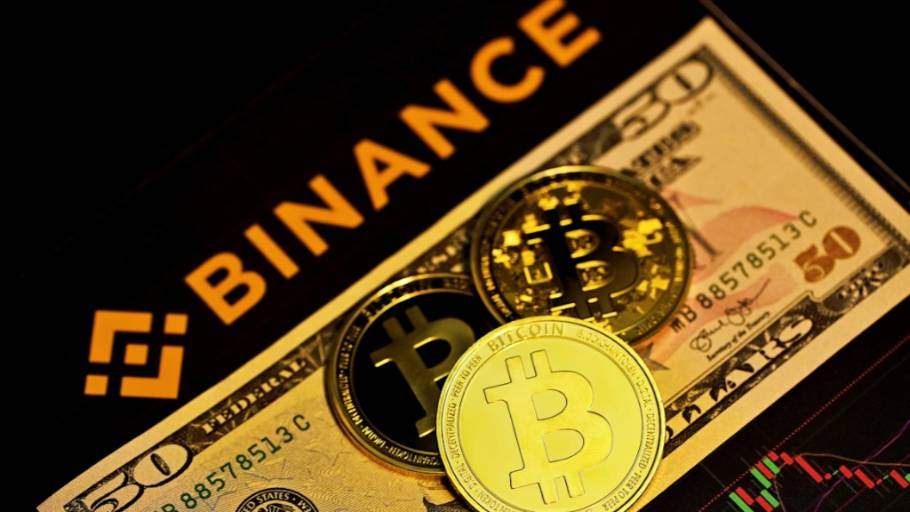
Five years ago, asking how to use Binance in Pakistan usually got you a cautious WhatsApp voice note from someone who would whisper through the whole thing like he was sharing a smuggling tip. The platform worked, P2P trades happened daily, nobody wanted to put their name on it openly. Banks froze accounts. FIA officers showed up in news cycles. The whole thing felt slightly illegal even when nobody could explain exactly why.
Then 2026 happened.
Parliament passed the Virtual Assets Act. PVARA came into existence as the country’s first proper crypto regulator. SBP, after eight years of treating crypto like contraband, lifted its banking ban. Binance got its NOC and the platform millions of Pakistanis had been using all along became officially recognized. The whisper turned into a normal conversation.
This guide on how to use Binance in Pakistan fits the new reality. Account setup, KYC, the P2P trades that still run the whole show, withdrawing money to your bank, and the parts where things can quietly go wrong. Whether you’re starting from zero or have been trading for years, most of what matters is in here.
The Backstory Most People Skip
Before you start clicking around the Binance app, it helps to know what actually changed and why, because the rules of the game are different now and a lot of YouTube tutorials still teach the old version.
The short version. Pakistan had an awkward relationship with crypto for years. Trading was never explicitly illegal but SBP banned banks from touching it back in 2018, which left users stuck in a workaround economy. P2P trades through Binance became the main way Pakistanis bought and sold crypto. Adoption grew anyway. By 2025, Pakistan was the third-largest crypto market in the world, behind only India and the US, which is wild considering the official position was “we don’t really allow this.”
The government finally accepted reality. Virtual Assets Act 2026 set up an actual regulatory framework. PVARA started licensing exchanges. Binance got its No Objection Certificate after passing AML and KYC compliance reviews. Then in April, SBP rescinded the eight-year banking ban entirely. Banks can now legally service licensed crypto companies. Crypto-related transfers stopped being automatic red flags.
For everyday users, this means the legal cloud has mostly cleared. You’re still expected to follow the rules, file your taxes, and handle KYC properly, but you’re not operating in a grey zone anymore. The whole experience of using Binance in Pakistan in 2026 is materially different from what it was even eighteen months ago.
Step One: Setting Up Your Binance Account
This part is genuinely easy. Honestly the easiest part of the whole process.
Go to binance.com or grab the app. Sign up with your email or phone number. Pick a strong password, something you’ve never used anywhere else. Then before you do literally anything else, set up two-factor authentication.
Use Google Authenticator. Not SMS. I know SMS feels easier, but SIM-swap attacks happen in Pakistan more than people realize, especially once your number gets linked to crypto activity. Authenticator apps are not optional in 2026. Skip them and you’re rolling dice with your money.
Most people set up the account, skip 2FA, plan to do it later, and then forget. The account becomes a target the moment you start trading anything. Get the security stuff out of the way in the first five minutes.
Also turn on email confirmations for withdrawals and login alerts for new devices. Few extra clicks, much harder for someone to drain your account if they ever get past your password.
Step Two: Completing KYC Verification
KYC stands for Know Your Customer, which is the boring industry term for “prove who you actually are.” Binance won’t let you do anything serious until you finish this. No P2P, no real trading volume, no withdrawals beyond tiny limits. If you want to actually use Binance in Pakistan for anything meaningful, KYC is the gate.
For Pakistanis, the process goes like this.
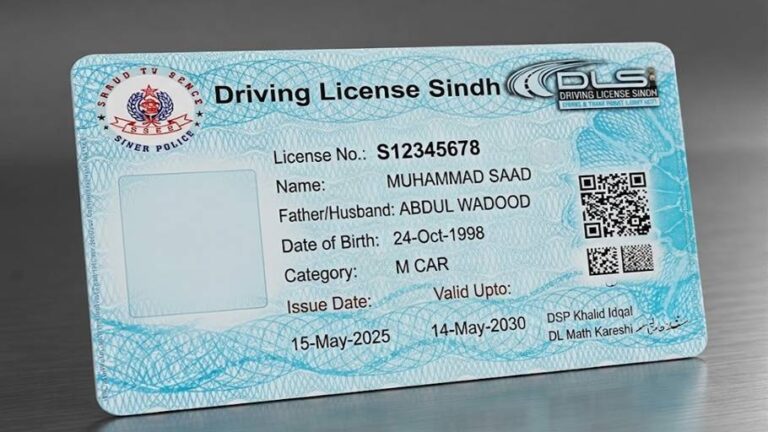
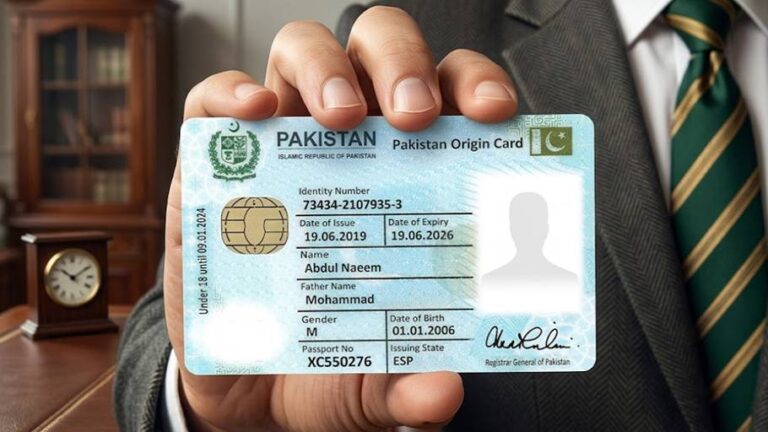
You pick Pakistan as your country. Enter your full legal name exactly as it appears on your CNIC. Not Awais if your CNIC says Muhammad Awais. Not your nickname. The system will reject you and lock the field if you mess this up too many times.
Upload front and back of your CNIC. Good lighting, no shadows, all four corners visible. The number one reason people get rejected is bad photos. The card is bent at an angle, glare on the lamination, half the text is cut off. Just put it flat on a table, decent light, phone directly above it. Done.
Then the face check. Binance asks you to turn your head, blink, follow some simple movements on screen. Camera lens should be clean. Lighting should be coming from in front of you, not behind. If your face is too dark or too washed out, redo it.
If everything’s clean, verification often comes through in a few hours. Sometimes it takes a day or two when they’re busy. If you get rejected, read the actual reason they give before retrying. Resubmitting the same bad photo five times in a row doesn’t help anyone.
Once approved, your account opens up properly. Now you can actually use it.
How to Fund Your Binance Account in Pakistan
Here’s the thing nobody tells you upfront. There’s no “deposit PKR directly into your Binance account” button for Pakistani users. Doesn’t exist. The way money gets in is through P2P, which means buying crypto from another individual using local payment methods, with Binance acting as escrow in the middle.
It sounds complicated. It really isn’t. This is the part of how to use Binance in Pakistan that confuses new users most, but you’ll get it after one or two trades.
You go to the P2P section. Pick “Buy.” Choose USDT (Tether) as your starting cryptocurrency because it’s a stablecoin pegged to the dollar and it’s the easiest one to use as a base for everything else. Filter for PKR. Pick a payment method you actually have. JazzCash, EasyPaisa, SadaPay, NayaPay, or regular bank transfer all work.
Then you scroll through sellers. This is where most beginners mess up. They look at the price and pick the cheapest. Wrong move. Look at the seller’s stats first.
What I actually look at when picking a P2P seller:
- Completion rate of 95 percent or higher. The best ones sit at 98 to 100 percent.
- Number of completed orders. A merchant with 8,000 completed orders has a reputation worth protecting and isn’t going to scam you over a single trade. A new account with 30 orders is a bigger gamble.
- Response time. Active sellers respond within minutes. If someone takes an hour to respond after you click their offer, just cancel and pick someone else.
- Their terms section. Some have specific instructions about payment notes or additional ID. Read it. Follow it exactly. Disputes usually come from people ignoring these.
Once you pick a seller and start the trade, Binance holds their crypto in escrow. Your job is to send the PKR through your chosen payment method, mark the payment as sent in the app, and wait for the seller to confirm and release the crypto to your wallet.
Average transaction time once you know what you’re doing is around 5 to 15 minutes. First time will probably take longer because you’re learning the interface. Don’t rush it.
One important rule. Communicate through Binance’s in-app chat only. Not WhatsApp. Not anywhere else. If something goes wrong and Binance has to mediate, only what happened inside their system counts.
What You Can Actually Do With Crypto on Binance
So now you have some USDT in your wallet. What next? Depends entirely on why you’re here.
If you just want to hold. Park it in USDT for stability against the rupee, or convert some to Bitcoin or Ethereum if you believe long-term in those. Hold and check back later. Boring but historically the strategy that works for most people who aren’t full-time traders.
If you want to trade. Use the Convert feature first. It’s the simplest interface. You pick what you have, what you want, and Binance shows you the price. No order book complexity. Once you’re comfortable, move to Spot trading for better prices on larger amounts. Avoid Futures and Margin trading entirely until you genuinely understand them. The vast majority of Pakistanis I’ve seen lose money on Binance lose it to leveraged trading they thought they understood.
If you want yield. Binance Earn offers savings options, staking, and various yield products. Returns vary. Generally the higher the advertised return, the higher the risk. Stick to flexible savings on USDT until you understand what you’re actually doing.
The honest recommendation for anyone learning how to use Binance in Pakistan is to start very small. Buy fifty dollars worth of crypto. Do a couple of small trades. Withdraw a small amount back to PKR. Get the full cycle done with money you can afford to lose entirely. Once you understand all the steps and all the fees, scale up.
How to Withdraw Money From Binance in Pakistan
This is the part everyone wants to know about. How do you actually turn your Binance balance back into rupees in your bank account?
Same way you bought in. Through P2P, but in reverse.
You go to P2P, click Sell, pick your crypto (usually whatever stablecoin you’ve been holding), filter by PKR, and look at buyers. Same logic as before. Reputation, completion rate, response time. Pick a solid one.
Enter the amount you want to sell. Add your bank account details, JazzCash number, or whatever payment method you’re receiving on. Buyer sends you the PKR. You wait for it to actually arrive in your account. And only after you’ve confirmed the money is in your account do you release the crypto to them.
That order matters. Releasing crypto before confirming payment is how people get scammed. Buyers sometimes claim they sent the money when they didn’t. Stick to the rule: money first, release second.
Speed-wise, JazzCash and EasyPaisa are usually fastest. Cash in your wallet within minutes. SadaPay and NayaPay are quick too. Bank transfers can be slower especially during weekends or after 5 PM when interbank settlements slow down.
After 2026, this whole process has gotten less stressful because banks aren’t reflexively suspicious of crypto-related transfers anymore. Five years ago, three PKR transfers from random JazzCash numbers in a week could get your bank account frozen for review. Now it’s just normal traffic, as long as you’re not doing volumes that look unusual for your account profile.
What the SBP Change Actually Means
Some people think the SBP lifting the crypto ban means crypto is now fully integrated into Pakistani banking. That’s not exactly what happened.
What the change actually does is allow banks to provide services to licensed crypto companies. The VASPs (Virtual Asset Service Providers) that complete PVARA registration can now hold corporate accounts at Pakistani banks legally. Their funds are kept separate from regular client funds. This is the wholesale change. It’s huge for the industry but indirect for individual users.
For users like you and me, the practical effect is that receiving PKR from a P2P transaction is now treated as a normal incoming transfer rather than something suspicious. Banks aren’t supposed to freeze your account just because the PKR came from a crypto-adjacent source.
That said, some banks are still figuring out how to operate in the new environment. A few are openly building crypto-friendly products. Others are still cautious. If you’re doing significant volume, it helps to keep documentation clean, separate your crypto-related banking from your salary and household banking, and not raise red flags through unusual patterns.
When mentioning the new regulatory body, link to the official Pakistan Virtual Assets Regulatory Authority to back up the legal claims
Tax. The Boring Part That Matters.
Look. Nobody wants to read a tax section. But the FBR is increasingly serious about crypto, and the days of treating crypto profits as invisible income are ending.
Here’s the current situation. The Virtual Assets Act 2026 acknowledges crypto as a regulated asset class. That implies tax treatment, even if the specific implementing rules are still being clarified through FBR notifications. The general expectation is that profits from crypto trading are taxable income, just like profits from any other asset class.
What you should be doing if you’re serious about how to use Binance in Pakistan beyond casual trades:
Keep records of every trade. Date, asset, amount, price in PKR at the time of the transaction, fees paid, and final outcome. Binance lets you export your trade history as a CSV file. Download it every few months and save it somewhere. This becomes essential if FBR ever asks.
Get yourself on the Active Taxpayer List. Register for an NTN through FBR’s Iris portal if you don’t have one. Filer status gives you significant advantages on banking, vehicles, and property dealings, and it positions you correctly if FBR ever starts auditing crypto income more aggressively.
Talk to a tax consultant once your trading volume is meaningful. PKR 10,000 to 30,000 a year for a decent consultant is small compared to the headache of FBR notices on undeclared crypto income. The pricier consultants who actually understand crypto are worth the extra cost.
The era of crypto being invisible income is closing in Pakistan, same as it has in most countries. Better to set up your filing properly now than to scramble in two years when the rules tighten.
Mistakes I See Pakistanis Make Constantly
Let me just list these because honestly the same mistakes show up over and over.
Skipping 2FA. Using SMS 2FA. Sharing screenshots of their Binance dashboard on Instagram. Picking P2P sellers based on the cheapest price. Releasing crypto before confirming the PKR has actually arrived in their account. Going straight to Futures trading with no spot experience. Investing money they actually need for rent or bills. Trusting WhatsApp groups that promise insider tips. Falling for “Binance support” messages from fake accounts. Buying random altcoins because some YouTuber said it’s going to do a 100x. Storing significant amounts on the exchange for years instead of moving to a personal wallet for safety. Using the same password for Binance and three other websites.
Each one of these has cost real Pakistanis real money this year. Avoiding even half of them puts you ahead of most users.
Security Habits Worth Building
Binance accounts get targeted. The bigger the account, the bigger the target. Security isn’t paranoia, it’s basic hygiene for anyone serious about using Binance in Pakistan over the long term.
Enable everything Binance offers. 2FA through Google Authenticator. Anti-phishing code in your settings so you can verify real Binance emails. Withdrawal address whitelist if you regularly send to the same wallets. Device management to revoke old logins.
Never share your password, 2FA codes, or recovery phrases with anyone. Real Binance support doesn’t ask for these. Anyone asking is a scammer, full stop.
Be skeptical of every “investment opportunity” that lands in your DMs. WhatsApp groups promising 10 percent monthly returns are scams. Telegram channels with insider altcoin tips are pump-and-dump operations designed to extract money from beginners. The crypto industry has more scams than legitimate opportunities, and Pakistanis are heavily targeted because the local audience is large and new.
For larger holdings, get a hardware wallet. Ledger or Trezor, both available through international shipping. Cost is around $80 to $150. Worth it for anyone holding more than a few thousand dollars in crypto.
The Risks That Still Exist
Even with the regulatory cleanup, this isn’t a safe-by-default activity. Some risks just don’t go away.
Crypto is volatile. A position can drop 30 to 40 percent in a few weeks during downturns, with no warning, no recourse. If you can’t emotionally handle watching your money lose half its value before recovering, this isn’t a good fit for your psychology.
Scams happen and the money doesn’t come back. Unlike bank transactions, crypto transactions can’t be reversed. If you send to the wrong wallet, fall for a phishing site, or trust the wrong P2P counterparty outside the escrow, the funds are usually gone permanently.
Regulations are still settling. The 2026 framework is more favorable than what existed before, but future amendments could change specific requirements. Stay informed through PVARA announcements rather than YouTube speculation.
Account access can be lost. People forget passwords, lose their 2FA device, change phone numbers, and end up locked out of significant balances. Keep your recovery codes somewhere safe but accessible. A piece of paper in a locked drawer is fine. Photographing your seed phrase and storing it in WhatsApp is not.
Final Thoughts
Honestly, how to use Binance in Pakistan in 2026 is far less complicated than what you’ve probably read on older blogs and YouTube videos. The regulatory clouds have mostly cleared. The banks are gradually opening up. The platform itself works the same way it does anywhere else in the world. P2P remains the workhorse for funding and cashing out, which means most of your operational risk is in picking the right counterparties and following the basic safety steps.
Start small. Get comfortable with the interface using money you can afford to lose. Build proper security habits before you start trading larger amounts. Keep your records clean for taxes. Don’t trust anyone promising guaranteed returns. Stay patient enough to actually learn what you’re doing instead of jumping straight into leveraged trading like every YouTube ad pushes you to.
Pakistan has finally caught up to where its users have been for years. The infrastructure is improving. The legal cover is real. The platform works. The rest is up to you.
Best Banks for Freelancers in Pakistan: 2026 Guide for Smart Money Management

Comments