



Saudi Arabia Economy and Vision 2030
For most of the twentieth century, Saudi Arabia’s economic story was simple. Oil came out of the ground, money flowed in, and the country built itself around that single resource. The kingdom held the world’s second-largest proven oil reserves and had little reason to think beyond them. The system worked for decades.
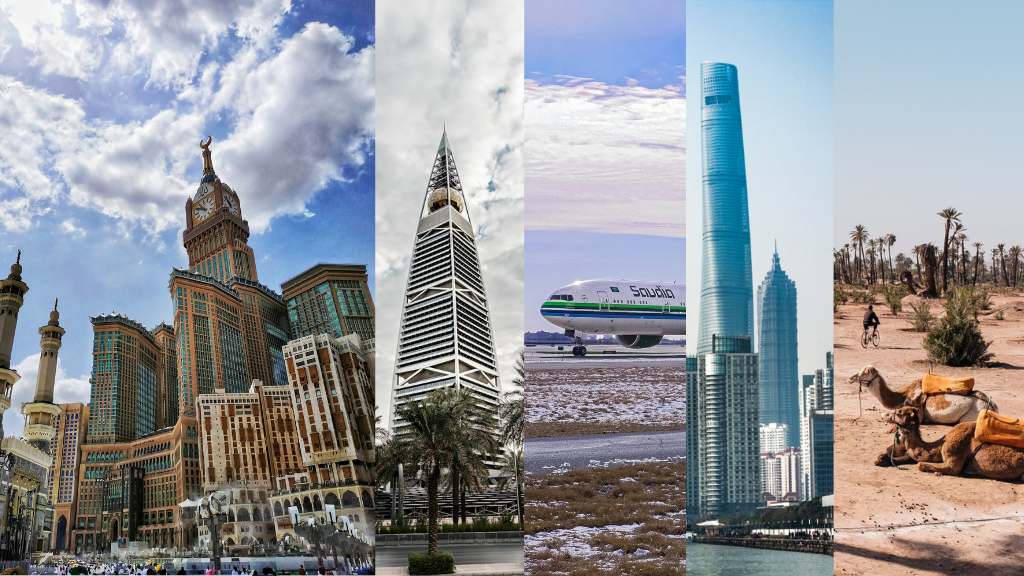
For most of the twentieth century, Saudi Arabia’s economic story was simple. Oil came out of the ground, money flowed in, and the country built itself around that single resource. The kingdom held the world’s second-largest proven oil reserves and had little reason to think beyond them. The system worked for decades.
Then in 2016, Crown Prince Mohammed bin Salman announced Vision 2030, a comprehensive plan to fundamentally transform what Saudi Arabia is and how it earns its wealth. The Saudi Arabia economy and Vision 2030 plan asks one core question: what happens when oil demand declines and the world’s largest reserves become less valuable than they were?
This guide covers what the Saudi Arabia economy and Vision 2030 actually involves, what’s been achieved so far, what remains uncertain, and why the outcome matters far beyond Saudi borders for any resource-dependent economy trying to figure out its own future.
What the Numbers Show
The Saudi Arabia economy and Vision 2030 results show up in measurable data. Saudi Arabia’s economy expanded 4.5 percent in 2025, with the fourth quarter coming in at 5 percent growth. The World Bank ranks Saudi Arabia as the world’s 19th largest economy with nominal GDP around $1.3 trillion.
More significant than total growth is where it came from. Non-oil sectors grew 4.9 percent in 2025 and now account for more than half the economy for the first time in Saudi history. Non-oil exports reached a record $25.9 billion in the final quarter of 2025, more than double what they were when the country began tracking the metric in 2017.
Foreign direct investment reached $6.64 billion in Q3 2025 alone, up 34.5 percent year on year. Saudi national unemployment dropped to 7 percent in 2024, hitting the original Vision 2030 target six years ahead of schedule. Female unemployment was cut in half in four years, reflecting both economic and social transformation.
The relationship between oil prices and overall economic health still exists, but it’s weaker than it was. A bad year for oil used to mean a bad year for everything in Saudi Arabia. That’s gradually becoming less true.
What Vision 2030 Actually Is
The Saudi Arabia economy and Vision 2030 plan covers multiple ambitious targets across economic, social, and governance dimensions.
Economic diversification goals include increasing non-oil revenue from $43 billion in 2015 to $267 billion by 2030, boosting private sector contribution to GDP from 40 to 65 percent, raising foreign direct investment from 3.8 percent to 5.7 percent of GDP, and growing SME contribution from 20 to 35 percent of GDP.
Sectoral development priorities include tourism and entertainment, financial services, technology and digital economy, renewable energy, manufacturing including defense industries, logistics and transportation, mining and metals, healthcare and pharmaceuticals, and religious tourism infrastructure.
Social changes that have already occurred include allowing women to drive (2018), opening cinemas after 35-year ban, allowing concerts and entertainment events, easier business licensing, women working in many previously closed industries, and significant reduction in social restrictions affecting daily life.
Governance reforms include consolidating economic decision-making, reducing bureaucratic friction for business, strengthening anti-corruption measures, and modernizing government services through digitization.
The Public Investment Fund: The Engine
Understanding the Saudi Arabia economy and Vision 2030 requires understanding the Public Investment Fund (PIF), the sovereign wealth vehicle that finances most major transformation projects.
PIF holds over $900 billion in assets and is targeting $2 trillion by 2030. The fund directly owns or has major stakes in dozens of new and existing Saudi companies including NEOM, Saudi Arabian Mining Company, Lucid Motors, Saudi Aramco shares, and various tourism and entertainment ventures.
Internationally, PIF has invested in companies including Tesla, Uber, Lucid, Newcastle United football club, LIV Golf, Activision Blizzard, electronic arts, and various technology companies. These investments aren’t just financial returns but strategic moves to acquire expertise, build international relationships, and position Saudi Arabia in industries Vision 2030 prioritizes.
The fund essentially serves as the financial machinery through which the Saudi Arabia economy and Vision 2030 strategy gets implemented at scale.
The Oil Question Hasn’t Disappeared
Oil isn’t going anywhere from the Saudi economy. It grew 5.7 percent in 2025 and crude petroleum remains the single biggest sector. Saudi Arabia pumps around 9 million barrels per day and remains one of the most consequential players in global energy markets.
When OPEC+ production cuts started unwinding in May 2025, Saudi output rose almost immediately. The country retains significant leverage over global oil prices through its spare production capacity.
Saudi Aramco, the state-owned oil giant, remains the world’s most valuable energy company. Its 2019 partial IPO raised $25.6 billion and created additional capital flows for Vision 2030 investments. Aramco continues generating massive cash flows that fund Saudi Arabia’s transformation.
The Saudi Arabia economy and Vision 2030 strategy isn’t about replacing oil. It’s about not being completely dependent on it. The oil revenue funds the diversification, while the diversification reduces vulnerability to oil price volatility.
NEOM and Megaproject Reality
The Saudi Arabia economy and Vision 2030 includes multiple massive infrastructure projects that have attracted global attention and skepticism.
NEOM is the flagship megaproject, a $500+ billion development in northwest Saudi Arabia covering 26,500 square kilometers. NEOM includes several sub-projects:
The Line, originally announced as a 170-kilometer linear city housing 9 million people, has been scaled back significantly. Reports in early 2024 indicated that initial construction targets reduced to just 2.4 kilometers by 2030 housing about 300,000 people, far below original ambitions.
Trojena is a mountain resort featuring artificial lakes and skiing, planned to host 2029 Asian Winter Games.
Oxagon is an industrial city focused on advanced manufacturing and logistics.
Sindalah is a luxury island resort that opened in 2024 as the first NEOM destination to receive visitors.
The NEOM project illustrates both the ambition and challenges of Vision 2030. The scale is unprecedented, but cost overruns and timeline slippages are real. Independent analysts question whether the original visions can be fully realized.
Other major projects include Diriyah Gate ($63 billion historical and cultural district), Red Sea Project (luxury tourism destination), Qiddiya (entertainment city near Riyadh), Roshn (massive residential developments), and Riyadh expansion projects.
Tourism and Entertainment Transformation
The Saudi Arabia economy and Vision 2030 has produced visible changes in tourism and entertainment that affect both domestic life and international perception.
Entertainment and hospitality grew 6.2 percent in 2025, the strongest non-oil sector growth. This reflects how dramatically daily life has changed in Saudi Arabia.
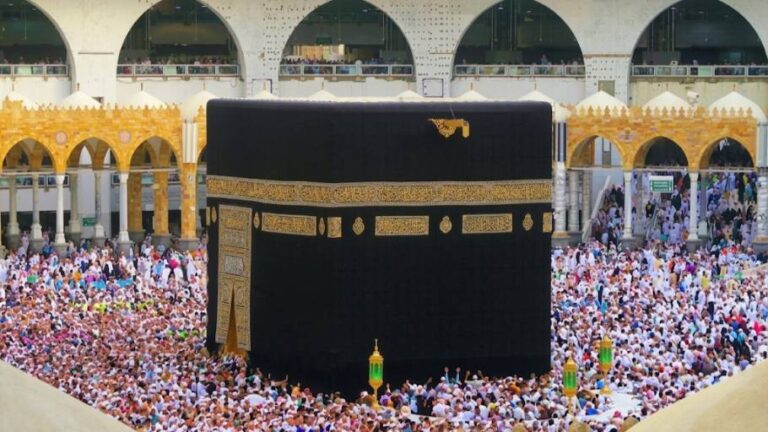
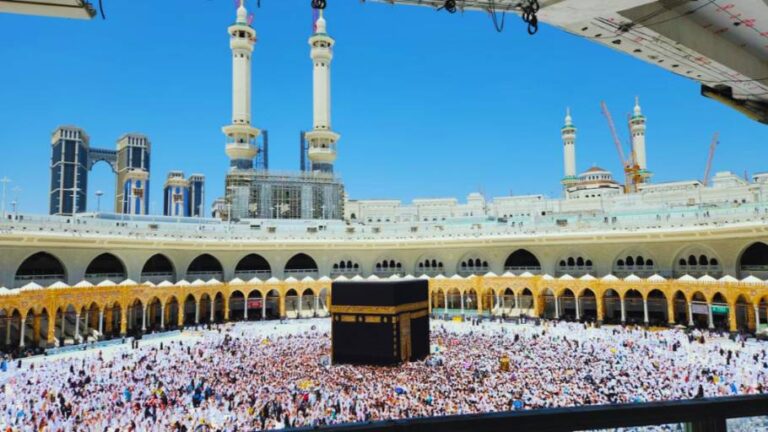
Religious tourism remains foundational. Over 1.67 million pilgrims performed Hajj in 2025. The government targets 30 million religious visitors annually by 2030, requiring massive expansion of airports, hotels, transportation, and digital services.
Riyadh Season has become a major annual entertainment festival featuring international musicians, sports events, and attractions that draw millions of visitors.
Sports investments include hosting Formula 1 Saudi Arabian Grand Prix, LIV Golf tour, Cristiano Ronaldo and other major football players joining Saudi Pro League clubs, Newcastle United football club acquisition through PIF, and the 2034 FIFA World Cup hosting rights.
Cultural opening includes cinemas reopening, music concerts allowed, mixed-gender entertainment events, and significantly reduced enforcement of religious dress codes.
These changes aren’t just economic. They represent fundamental shifts in Saudi society that would have been unimaginable a decade ago.
How Far Has Saudi Arabia Actually Come
The Saudi Arabia economy and Vision 2030 transformation is genuine but uneven. Some targets have been met or exceeded. Others have been quietly adjusted. Some remain aspirational.
What’s demonstrably worked:
Non-oil sector now exceeds 50 percent of economy. Foreign investment at record levels. Tourism and entertainment industries built where almost none existed. Women’s workforce participation more than doubled. Saudi unemployment significantly reduced. Religious tourism infrastructure substantially expanded. Cultural and social changes implemented. Major sports events hosted successfully.
What’s been scaled back or delayed:
The Line megaproject ambitions significantly reduced. Multiple NEOM completion timelines extended. Some foreign investment targets not yet met. Private sector independence from government still developing. Saudization quotas creating some unintended labor market effects.
Ongoing uncertainty:
Whether NEOM can deliver anything resembling its original vision. Whether tourism targets are achievable given infrastructure timelines. Whether private sector can sustain growth without continued government push. Long-term sustainability of investment levels. How geopolitical tensions affect economic plans.
The Challenges That Remain
The Saudi Arabia economy and Vision 2030 faces real obstacles that should be acknowledged honestly.
Project execution challenges: Megaprojects across history regularly miss timelines and costs. Saudi projects are no exception. NEOM specifically has faced multiple reported scale-backs as initial visions met practical engineering and economic realities.
Building genuine private sector: Countries that depended on state-driven economies for decades struggle to develop authentic private sectors that operate independently. Saudi Arabia is no different. Much current “private sector” growth still depends heavily on government contracts and PIF backing.
Foreign investment attraction: While increasing, foreign direct investment remains below targets. Concerns about human rights, regional stability, and project transparency affect international investor confidence.
Human capital development: Vision 2030 requires skills the Saudi workforce is still developing. Education reforms are underway but producing globally competitive professionals takes time.
Regional security: Saudi Arabia exists in a complicated neighborhood. The 2026 Iran conflict that affected Qatar also raised concerns about Saudi infrastructure vulnerability. Regional instability complicates everything.
Human rights concerns: International criticism of Saudi human rights practices, including the Khashoggi case impact, affects some international relationships and complicates certain investments.
Climate transition uncertainty: The pace of global oil demand decline determines how much time Saudi Arabia has to complete its transition. Faster transition means more pressure. Slower transition gives more time but reduces urgency.
Why It Matters Beyond Saudi Borders
The Saudi Arabia economy and Vision 2030 transformation has implications well beyond the kingdom itself.
Other oil-dependent economies watch closely. Norway diversified through its sovereign wealth fund decades ago. UAE has been diversifying for years. But Saudi Arabia represents the largest oil-dependent economy attempting transformation, and its results will inform thinking in Russia, Nigeria, Venezuela, and other resource-dependent nations.
Global energy markets are affected by Saudi production decisions, which continue mattering enormously even as the country diversifies. The relationship between Saudi domestic transformation and oil policy decisions shapes prices that affect every country.
Middle East geopolitics are shaped by economic relationships. Saudi Arabia’s diversification creates new economic relationships with non-Western powers including China, India, and Russia, alongside traditional Western relationships.
Climate transition outcomes depend partly on how major oil producers adapt. Saudi Arabia explicitly investing in renewable energy alongside oil reflects the complicated reality of energy transition.
What Comes Next
The Saudi Arabia economy and Vision 2030 still has five years to its 2030 target dates. The remaining timeline involves completing infrastructure projects already in progress, expanding sectors showing early success, addressing the gaps where targets remain unmet, and managing the transition while maintaining oil revenue that funds everything else.
Some projects will succeed beyond expectations. Some will disappoint. The overall direction is clear and unlikely to reverse regardless of specific project outcomes. The kingdom has invested too much political capital and financial resources to abandon the transformation course.
What’s genuinely uncertain is whether the transformation can be sustained beyond Mohammed bin Salman’s active leadership, whether private sector growth can become self-sustaining rather than government-dependent, whether megaprojects deliver economic returns matching their costs, and how external factors including oil prices, regional stability, and climate policies affect the overall trajectory.
Final Thoughts
The Saudi Arabia economy and Vision 2030 represents one of the most consequential economic transformations being attempted anywhere in the world. A country built entirely around one resource is deliberately constructing an economy that can function without that resource being central.
The early results are genuinely impressive. Non-oil sectors now exceed half the economy. Women’s workforce participation has doubled. Tourism and entertainment industries exist where they didn’t a decade ago. Foreign investment continues growing. Major projects, despite some scale-backs, are producing visible results.
The remaining challenges are significant. NEOM’s ultimate scope remains uncertain. Some Vision 2030 targets will likely be missed. Private sector independence requires more time than original timelines assumed.
For anyone trying to understand where the global economy is heading, the Saudi Arabia economy and Vision 2030 transformation is one of the most important live experiments to follow. The results over the next five years will shape thinking about resource-dependent economies, energy transition, and what’s possible when a country commits major resources to fundamental change.
It’s not finished. The honest assessment isn’t whether Vision 2030 will succeed completely (it won’t) or fail completely (it isn’t), but rather what mix of successes and adjusted ambitions emerges by 2030, and whether the foundation built supports continued evolution beyond that date.
Saudi Arabia is following a path of rapid transformation, much like its neighbor. Read our UAE tourism growth and travel guide to see how the Gulf region is redefining global travel.
For official quarterly reports and project updates, you can visit the Official Saudi Vision 2030 Portal.
Comments