




Read More: While Singapore is a leader in human capital, other nations focus on social safety nets to drive progress. Explore our analysis of the Norway welfare system to see a different model of success.
Singapore
why the Singapore education system is successful
People ask why the Singapore education system is successful more than they ask about almost any other country’s schools, and the answer shows up most clearly in one set of numbers. In the 2022 PISA assessment, the OECD’s global test of 15-year-olds conducted across 81 countries, Singapore came first in every single category.
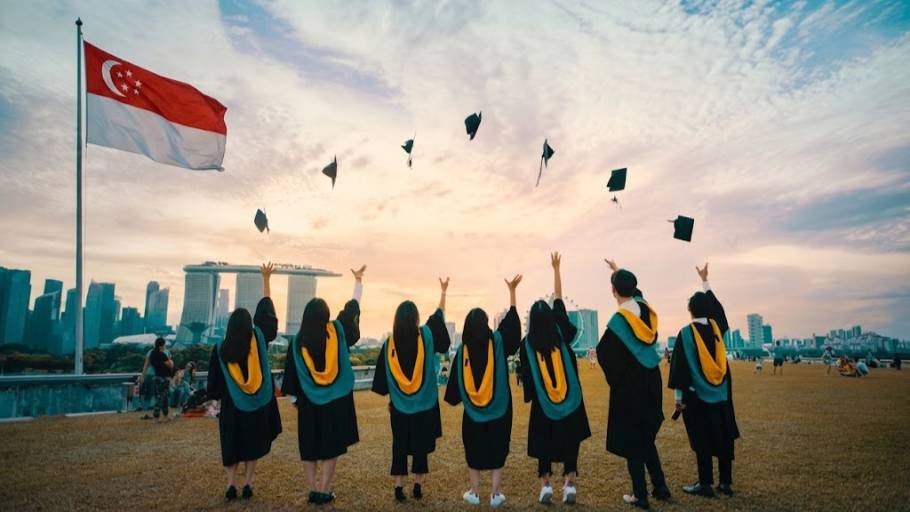
People ask why the Singapore education system is successful more than they ask about almost any other country’s schools, and the answer shows up most clearly in one set of numbers.
In the 2022 PISA assessment, the OECD’s global test of 15-year-olds conducted across 81 countries, Singapore came first in every single category. Mathematics score of 575, the highest any country has ever recorded in any PISA domain. Science score of 561. Reading score of 543. All ranked number one in the world.
The OECD average across those three subjects sits around 476 to 485. Singapore is not slightly above average. It’s in a different tier altogether, equivalent to roughly three to five years of additional schooling ahead of its global peers according to OECD’s own analysis.
Understanding why the Singapore education system is successful means looking beyond rankings to how the system was actually built, what it prioritizes, and what it costs the children, families, and teachers inside it.
A System Built From Scratch With One Clear Goal
When Singapore became independent in 1965, it had almost nothing. No natural resources, no agricultural hinterland, no obvious economic advantage. Lee Kuan Yew and the founding government decided early that the people were the country’s only real resource, which meant the education system had to be exceptional.
The story of why the Singapore education system is successful begins here. It was designed from day one as a national survival strategy, not just a social service.
Every decision about curriculum, teacher training, school structure, and assessment was made by asking what kind of workforce and what kind of citizens Singapore needed to compete globally. That clarity of purpose, maintained consistently across decades and across governments, is one of the things that makes Singapore’s approach difficult for other countries to replicate. Most education systems drift over time as priorities change with each new education minister. Singapore’s system stayed remarkably focused.
Teacher Quality: The Core of the System
One of the most important reasons why the Singapore education system is successful is what happens before a teacher ever sets foot in a classroom.
All teachers in Singapore are trained at the National Institute of Education (NIE), the single institution responsible for teacher preparation in the country. The government covers full tuition fees in exchange for a teaching bond commitment after graduation (typically three years for diploma routes, longer for degree programs). Entry to NIE is competitive, with the Ministry of Education historically selecting candidates from the top third of graduating classes, often with explicit recruitment of high-achievers into the profession.
Once in the profession, teachers in Singapore receive continuous professional development, structured mentoring, and genuine career progression through three distinct tracks: teaching, leadership, and specialist tracks. Teaching is treated as a high-status profession with competitive compensation, not a fallback career option for graduates who couldn’t find work elsewhere.
This matters enormously. Education research consistently shows teacher quality is the single most important in-school factor in student outcomes. Singapore built its system around that finding decades ago and has maintained that investment ever since.
The Singapore Math Approach
Ask any education researcher about why the Singapore education system is successful and the Singapore Math curriculum will come up within the first few minutes of conversation.
This approach, developed in the 1980s and refined continuously since, teaches mathematics through a mastery-based method rather than rote memorization. Students work with concrete objects first (physical manipulation of blocks, beads, counters), then pictorial representations (drawings, bar models), then abstract concepts (numbers and symbols). The framework is called “CPA”: Concrete, Pictorial, Abstract.
Every student must demonstrate understanding of one concept before the class moves on. The curriculum uses a spiral structure, returning to core mathematical ideas at increasing depth across school years rather than covering them once and moving on permanently.
The emphasis throughout is on problem-solving in real contexts rather than drilling isolated formulas. Bar modeling, a visual representation technique unique to Singapore Math, helps students translate word problems into solvable mathematical relationships.
The PISA 2022 results showed how effective this approach has been. Around 41 percent of Singaporean students performed at top levels in mathematics, compared to around 9 percent across OECD countries on average. Even more striking, only about 8 percent of Singaporean students fell below basic proficiency, compared to 31 percent across OECD.
The system isn’t just producing high scorers at the top. It’s pulling performance up across the entire distribution.
Official Source: For a deep dive into the 2022 PISA results and country-specific data, visit the official OECD PISA 2022 Database or explore the latest curriculum reforms on the Singapore Ministry of Education (MOE) website.
English-First Bilingual Education
A foundational element often overlooked in discussions of why the Singapore education system is successful is the country’s bilingual education policy.
English is the medium of instruction across all subjects from primary school onward. This decision in the 1960s was strategically critical: it gave Singapore’s small population direct access to global business, technology, science, and international institutions in a way that monolingual education systems couldn’t match.
At the same time, every student studies their mother tongue (Mandarin Chinese, Malay, or Tamil) as a second language requirement throughout primary and secondary school. This dual-language fluency creates students who can engage with both global English-language knowledge and their cultural heritage.
For Singapore, English fluency isn’t a foreign language skill. It’s the working language of education, business, government, and most public life. This produces graduates equipped to compete in international markets with no language barrier, which has been central to Singapore’s economic success and continues to anchor the education system.
Equity Across Income Levels
One of the most remarkable findings about why the Singapore education system is successful is what it achieves for students from disadvantaged backgrounds.
In the 2022 PISA results, students from Singapore’s lowest socioeconomic quartile scored higher in mathematics than the overall OECD average, which includes students from all income levels worldwide. No other country in the assessment could make that claim.
This outcome isn’t accidental. Singapore has invested heavily in:
- Additional resources for schools serving lower-income communities
- The Edusave scheme providing government funds to every Singaporean student
- MOE Financial Assistance Schemes covering tuition, examination fees, textbooks, and uniforms for families below specific income thresholds
- After-school programs and learning support for students who need it
- Free meals for students from low-income families
Whether the system fully delivers on equity promise is debated, particularly given the private tutoring industry’s growth. But the data suggests Singapore comes closer to equalizing educational opportunity across income levels than almost any other developed nation.
The PSLE and Streaming System
Understanding why the Singapore education system is successful also requires understanding its most controversial feature.
At the end of primary school, around age 12, students sit the Primary School Leaving Examination (PSLE). Results determine which secondary school they attend. Singapore’s secondary schools are selective, and the most prestigious schools take the highest scorers.
Historically, students were further streamed in secondary school into Express, Normal Academic, or Normal Technical tracks based on PSLE performance. Express stream students typically took O-Levels and proceeded to junior college or polytechnic. Normal streams had different pathways.
The intensity of this system produces the outcomes visible in PISA rankings. It also produces enormous pressure on 11 and 12 year olds that many parents, teachers, and researchers find troubling.
Singaporeans have a word for the anxiety this creates: kiasu, meaning the fear of falling behind or losing out. The private tutoring industry has grown into a multi-billion dollar sector, with parents paying significant fees for after-school coaching to give their children an edge in the PSLE.
Surveys suggest the higher the family income, the more likely a child receives private tutoring. This raises genuine questions about whether the system is as purely meritocratic as it presents itself, since families with resources can buy preparation advantages that lower-income families cannot match.
Recent Reforms to Reduce Pressure
The Singapore Ministry of Education has spent the past decade trying to reduce the intensity of pressure the system creates while preserving its academic strengths.
PSLE Scoring Reform (2021): The old T-score system, which produced very fine-grained rankings down to individual points, was replaced with an Achievement Level (AL) system. Students now receive band-based scores (AL1 to AL8), reducing the pressure of fighting for marginal score differences.
Streaming Reform (Full Subject-Based Banding): Beginning in 2024, the rigid Express, Normal Academic, and Normal Technical streams have been replaced with subject-based banding. Students take each subject at the level appropriate for their ability rather than being locked into one stream across all subjects.
Reduced Mid-Year Exams: Mid-year exams in primary school have been eliminated for several grade levels to reduce assessment pressure.
SkillsFuture for Adults: Beyond formal schooling, Singapore has invested heavily in adult learning through SkillsFuture credits, recognizing that lifelong learning matters more than ever.
Greater Emphasis on Non-Academic Skills: Curriculum changes have introduced more emphasis on character education, social-emotional learning, and applied learning programs.
Whether these reforms meaningfully shift the culture of kiasu is an open question. The structural features of the system, selective schools, high-stakes assessment, tight links between qualifications and life outcomes in a small city-state, create incentives that official messaging alone cannot override.
Cultural Attitudes and Parental Investment
Any honest answer to why the Singapore education system is successful has to include culture.
Education in Singapore carries a weight it does not carry in most Western countries. For a population that experienced poverty within living memory and understood that certificates and qualifications were a way out, academic achievement became deeply embedded as a cultural value across generations.
Parents invest time and money in children’s education at rates high even by Asian standards. Conversation around dinner tables often includes academic performance. Birthday gifts often include educational tools. Weekends often include tutoring sessions.
This cultural commitment amplifies everything else the system does. A well-designed curriculum works better when students take it seriously. High-quality teachers have more impact when students come prepared to learn. Government policies work better when families align with their goals.
This is not something a government can engineer directly. Singapore’s specific historical circumstances created it. The education system has been built to channel that cultural energy effectively. Whether the energy itself is healthy or sustainable for children is a separate question many Singaporean parents themselves wrestle with.
Why the Rest of the World Cannot Simply Copy It
Delegations from education ministries around the world visit Singapore regularly to study why the Singapore education system is successful and what elements can be borrowed.
What they tend to find is that the pieces of the system are interconnected in ways that make selective borrowing difficult.
Teacher quality depends on the status of teaching. The status of teaching depends on competitive selection. Selection depends on competitive compensation and prestige. Compensation depends on political commitment. Political commitment depends on national consensus about education’s importance. That consensus goes back to founding decisions made sixty years ago in a specific historical context.
The cultural dimension is also not directly transferable. A system that leverages deep parental investment and a population-wide belief in the connection between education and opportunity cannot simply be installed in societies where those conditions don’t exist.
The scale also matters. Singapore is a city-state of about 5.9 million people with relatively uniform infrastructure, transportation, and administrative reach. Implementing nationally consistent education in countries with hundreds of millions of people, multiple states or provinces, varied infrastructure, and decentralized governance is structurally different in ways that can’t be ignored.
Lessons for Pakistan and Similar Countries
For Pakistani readers thinking about what Singapore’s success means for Pakistan, several patterns matter more than others.
Teacher quality is the single highest-leverage investment. Pakistani education debates often focus on infrastructure, curriculum, and exam reform. Singapore’s experience suggests that teacher selection, training, status, and compensation matter more than any of these. A genuinely high-quality teaching profession would change Pakistani education more than any other single intervention.
Consistency matters more than perfection. Singapore’s policies haven’t been perfect. What’s been exceptional is sustained focus across decades without major reversals every time governments change. Pakistani education has suffered from constant policy changes, curriculum revisions, and administrative disruption. Long-term consistent execution of reasonable policies would outperform constant searching for the perfect approach.
Equity policies actually work when funded properly. Singapore’s outcomes for low-income students didn’t happen by accident. They required sustained financial investment in support programs. Pakistani education would benefit more from sustained equity investment than from one-off programs that come and go.
English-first instruction is genuinely strategic. Pakistan has debated the role of English in education for decades. Singapore’s experience suggests that English fluency from primary school onward, while maintaining mother tongue education, opens economic opportunities that purely local-language education cannot match.
Private tutoring isn’t necessarily the solution. Pakistan’s private tutoring industry has grown significantly. Singapore’s tutoring industry growth has created equity concerns that the government is now trying to address. Pakistani families should think carefully about whether private tutoring is solving educational gaps or creating new ones.
The Honest Verdict
Why the Singapore education system is successful comes down to a combination of factors that rarely appear together in the same country at the same time:
- Consistent long-term political investment in education as a national priority
- Genuinely high teacher quality maintained through serious selection and compensation
- A rigorous, well-designed curriculum that balances rigor with progressive pedagogy
- Meaningful equity policies that actually pull up low-income student performance
- A cultural environment that takes education seriously across generations
- A small geographic and administrative scale that allows consistent national implementation
- English-medium instruction that provides direct access to global economic opportunities
The system has real costs. The pressure it places on children and families is genuine and well-documented. Singaporean children report higher academic anxiety than peers in most developed countries. The private tutoring economy raises real questions about whether family income is buying advantage in a system that officially runs on merit.
These are not small concerns and Singapore itself is wrestling with them through ongoing reforms.
But the academic outcomes are real. Singaporean students from poor families outperform average students in most wealthy countries. The country’s education system, whatever its flaws, is producing results most of the world is genuinely trying to understand.
The question of why the Singapore education system is successful matters not because Singapore’s exact approach can be copied elsewhere, but because it shows what’s possible when a country treats education as a genuine national priority sustained across decades. That alone makes the question worth taking seriously, in Pakistan and everywhere else.
Comments