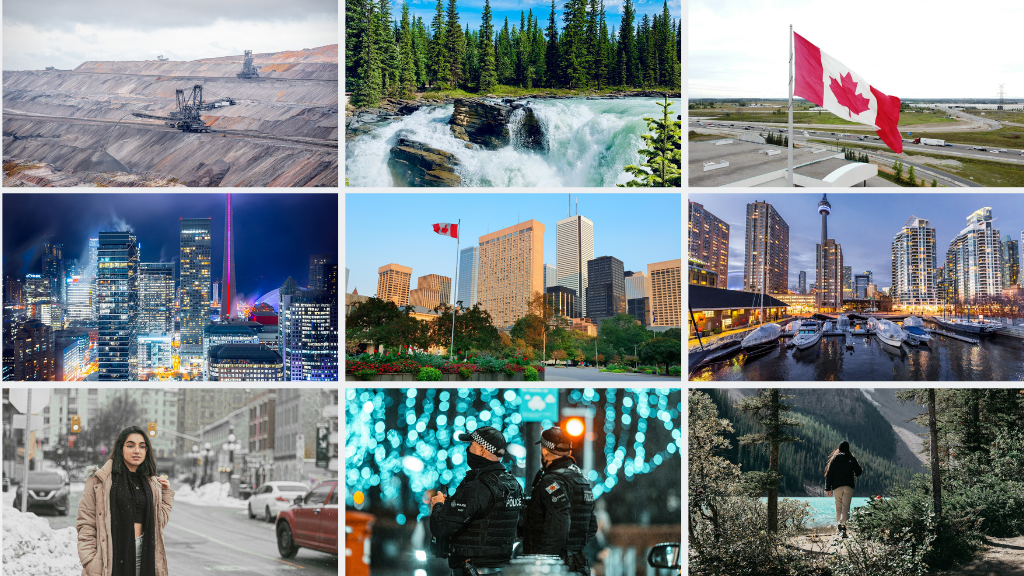
Most people think of Canada and picture snow, hockey, and polite people. What they do not always picture is one of the most resource-rich countries on the planet. The second largest country in the world by land area, and almost all of that land is sitting on something valuable. Oil, gas, timber, fresh water, gold, copper, potash, uranium. The list goes on. If you went through the world’s most important natural resources one by one and checked who had them, Canada would show up on almost every single one.
Living on top of that much wealth sounds straightforward. It is not, and Canada has been figuring that out for a long time.
Canada’s Natural Resources Industry: How Big Is It Really
The natural resources sector contributes 16 percent of Canada’s entire economy, around $459 billion in 2024, and keeps 1.8 million people employed across energy, mining, and forestry. For a country with a large financial sector, a growing tech industry, and one of the most educated workforces in the world, that is still a remarkable share coming from the ground.
Energy drives most of it. Alberta’s oil sands hold one of the largest proven oil reserves anywhere on earth, and the energy sector makes up more than half of all natural resource GDP in Canada. The country is consistently among the top oil and gas producers globally. Most of what gets produced goes straight to the United States, which buys around 78 percent of Canadian natural resource exports. That single-customer arrangement worked comfortably for decades. Then American tariffs arrived and suddenly Canada started wondering why it had not built more pipelines east and west a long time ago.
Minerals and metals round out the picture. Canada is one of the world’s biggest producers of potash, the key ingredient in fertilizer that a significant portion of the global food supply depends on. It also produces serious quantities of gold, nickel, copper, and uranium. There are currently 504 major resource projects either under construction or in planning, representing $632 billion in potential investment over the next decade. That is not a sector winding down. That is a sector with a very long runway still ahead of it.
Canada’s Forests: A Resource Under Pressure
Canada has a lot of trees. More than 347 million hectares worth, which works out to about 9 percent of all the forests left on earth. Entire towns in British Columbia, Quebec, and Ontario exist because of those trees. The lumber mills, the paper plants, the logging roads cutting through the mountains. Generations of families built their lives around this industry and in many places still do. On top of that, those forests are holding an enormous amount of carbon that would otherwise be sitting in the atmosphere, which is a fact that keeps becoming more relevant every year.
But the fires have changed things. Wildfire seasons have been getting worse year after year, and the 2023 season was the worst on record. The timber that burns cannot be harvested, and the communities that depend on forestry feel it directly. Forestry exports dropped 15.5 percent in the second quarter of 2025, hit from multiple directions at once: fires, American tariffs on Canadian lumber, and a housing slowdown in the US that cut into demand. The industry is not finished, but it is carrying more weight than it used to.
Fresh Water: Canada’s Most Overlooked Natural Resource
Canada holds around 20 percent of the world’s surface fresh water. That number does not get the attention it deserves, probably because water has never had the obvious market value of oil or gold. But as climate change tightens water supply across large parts of the world, that calculation is shifting. Agricultural regions in Asia, the Middle East, and parts of the United States are already under serious water stress. Canada is sitting on reserves that are going to look increasingly valuable as the decades pass. There is no major export framework for it yet and Canada has been cautious about creating one, but this resource will be part of the conversation in a much bigger way before long.
Canada Natural Resources and the United States: A Complicated Relationship
Canada and the US have been doing this dance for decades and it always worked out. Resources go south, money comes north, everyone is more or less happy. Then 2025 happened. Tariffs on steel, aluminum, and lumber landed without much warning, and the energy sector started getting nervous about whether they were next. In Alberta especially, where the whole provincial economy runs on what comes out of the ground, people were watching Washington very carefully and not particularly liking what they saw.
Canada’s response has been to start building relationships it probably should have built earlier. Talks with European buyers, conversations about LNG terminals on the west coast to reach Asian markets, and a harder look at east-west pipeline capacity within the country itself. Whether those alternatives develop fast enough to meaningfully reduce dependence on the US market is one of the bigger economic questions Canada is sitting with right now.
Critical Minerals: Canada’s Next Big Resource Opportunity
The world is moving away from oil and toward batteries and clean energy, and that shift is creating a whole new kind of demand for what is in the ground. Lithium, cobalt, nickel, the stuff that goes into electric vehicles and renewable energy systems. Canada has all of it in serious quantities. There are 138 minerals and metals projects either underway or planned, worth around $17 billion, and Ottawa has been pushing hard to get investment locked in before other countries get there first. It is a race and Canada knows it.
Clean technology is already a $73 billion part of the Canadian economy and keeps over 300,000 people employed. A few years ago those numbers were much smaller. The fact that they have been growing every year without much fanfare says something about where Canada is quietly putting its energy, no pun intended. The country has clearly decided this is the direction and is trying to get ahead of it rather than catch up later.
The Bottom Line
Canada’s natural resources built this country. The mining towns, the lumber mills, the pipelines cutting across the prairies, all of it came from the same basic fact that the land here holds things people elsewhere need. That has not changed. What has changed is the pressure coming from multiple directions at once: a trading partner that is less predictable than it used to be, a climate that is making the forests harder to manage, and a global economy that is starting to want different things from the ground than it wanted before.
Canada has the resources to navigate all of that. Whether it makes the right calls on how to use them is the question worth watching.