




Jack Ma Life Story and Success
The Jack Ma life story and success is one of the most inspiring journeys in the history of business. He was not born rich. He had no connections. He had no technical skills. He failed more times than most people can count. And yet he built one of the biggest companies in the world.
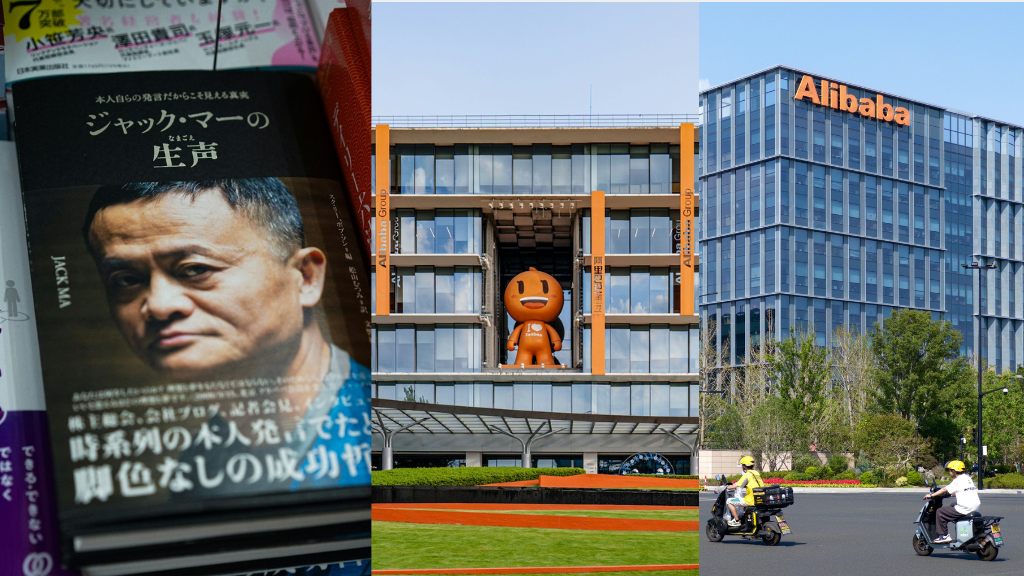
The Jack Ma life story and success is one of the most inspiring journeys in the history of business.
He was not born rich. He had no connections. He had no technical skills. He failed more times than most people can count.
And yet he built one of the biggest companies in the world.
This is that story, told from the beginning.
Early Life and Childhood
Jack Ma was born on September 10, 1964 in Hangzhou, China. His real name is Ma Yun. Jack is just the English name he picked up as a teenager because foreigners kept struggling with his actual name.
His family was not well off at all. His parents were traditional musicians and storytellers and money was always tight growing up.
But the most interesting part of the Jack Ma life story and success does not start with poverty. It starts with curiosity.
When he was around twelve years old, China started letting foreign tourists in for the first time. Hangzhou had a beautiful lake that tourists loved visiting and Jack spotted something in that.
Every morning before school he would hop on his bicycle and ride to where the tourists were. He offered to take them around for free. Not for money. Just to practice his English.
He did this every single day for nine years. One of those tourists gave him the nickname Jack and they stayed in touch through letters for years after.
For a kid in 1970s China that small connection to the outside world meant everything.
The Years of Failure Nobody Talks About
The most important part of the Jack Ma life story and success is the part that gets glossed over in most articles. The years of failure.
He failed his primary school exams twice. Then failed his middle school exams three times.
When it came to the big national university entrance exam he sat it twice, failed both times, and barely scraped through on his third attempt.
He ended up at a college that most students only considered as an absolute last option.
He applied to Harvard ten times. Ten times. Got rejected every single time.
After graduating he sent out applications for thirty different jobs and heard nothing back from any of them.
He tried to become a police officer and was told he was not good enough.
When KFC opened in China for the first time he was one of twenty-four people who applied. Twenty-three got hired. He was the one who did not.
When he tells these stories in interviews there is no bitterness in him. No anger. He actually laughs about some of it.
That attitude is a big part of what makes the Jack Ma life story and success so different from most business stories you will read.
The Day the Internet Changed Everything
In 1995 Jack went to the United States for the first time as part of a work assignment. A friend there introduced him to the internet.
Jack sat down at a computer and typed the word beer into a search engine. Dozens of results came back from all over the world.
Then he typed China. Nothing. A completely blank screen. Not one single Chinese website existed anywhere on the internet at that point.
Most people sitting in that room that day saw nothing remarkable about that.
Jack sat there and felt something click in his head. A country of a billion people and not one of them existed online yet.
He flew back home and could not stop thinking about it.
He pulled together a few friends and started a basic online directory for Chinese businesses called China Pages. It was one of the first internet companies ever launched in China.
It did not work out in the end but it showed him enough to know he was looking in the right direction.
How Alibaba Actually Started
In 1999 Jack gathered seventeen people in his apartment in Hangzhou. Friends, former colleagues, people who believed in him.
He stood in the middle of his living room and talked for two hours about what he wanted to build.
An online marketplace that would connect Chinese businesses and manufacturers with buyers anywhere in the world.
He called it Alibaba because it was a name people from almost any country already recognized. It felt open and universal rather than specifically Chinese.
Those early months were hard in a very real way. Everyone was working out of his apartment. There were long stretches with no salary at all.
Jack has always been completely open about the fact that he has no technical background and genuinely does not understand how computers work even today.
What he had was the ability to stand in a room and make people believe so completely in something that did not exist yet that they were willing to sacrifice a normal income to help him build it.
That is actually a rarer skill than knowing how to write code. And it is a central part of the Jack Ma life story and success.
Surviving the Dotcom Crash
When the dotcom crash hit in 2000 it wiped out internet companies around the world almost overnight.
Alibaba was running dangerously low on money. Jack flew to America to try to raise emergency funding and got turned down in meeting after meeting.
He came back to China with empty hands, sat his team down, told them exactly where things stood, and they all decided together to keep going.
That moment says a lot about the kind of trust he had built with those people.
The real game changer came in 2004 when Alibaba launched Alipay.
It was a payment system designed specifically for people without credit cards or bank accounts, which in China at that time was most of the population.
Suddenly hundreds of millions of ordinary people could buy and sell online for the first time in their lives.
That one decision changed everything about where the company was heading.
The Biggest IPO in History
Alibaba went public in New York in September 2014 and raised 25 billion dollars. It was the biggest IPO in history at that point.
The same person who could not get a job at KFC was now the richest man in China.
This moment alone makes the Jack Ma life story and success one of the greatest comebacks ever recorded in the business world.
Stepping Away From Alibaba
Jack stepped down as chairman of Alibaba in 2019 at fifty-five years old.
He said he wanted to focus on education and giving back. That felt genuine coming from someone who had spent years as a school teacher before any of this happened.
Things got complicated after that though.
In late 2020 he gave a public speech criticizing China’s state owned banks and regulators.
Shortly after that the massive planned public listing of Ant Group, Alibaba’s financial arm, got blocked by Chinese authorities.
Jack went quiet for a long time after that.
It was a reminder that in China the relationship between private wealth and political power is never simple, no matter how successful you become.
What Actually Made Him Different
Jack Ma is not a tech guy. Never was.
He was an English teacher who stumbled across the internet at thirty one years old and had the imagination to see what it meant for a billion people who were invisible on it.
What he actually had was something harder to define.
He could walk into a room of skeptical people with no money, no product and no track record and leave with them ready to work for him for free because they believed in where he said they were going.
That quality kept his team together through years of uncertainty when any sensible person would have looked for a safer option elsewhere.
The Jack Ma life story and success teaches one lesson above everything else. Rejection is not the end. It is just the beginning of the next attempt.
What His Story Comes Down To
If you told someone the Jack Ma life story and success without mentioning his name, most people would say that guy never had a chance.
Failed exams repeatedly. Rejected from every single job he applied for. Turned down by Harvard ten times. His first internet company went nowhere.
On paper this person should have given up a long time ago.
But that is exactly what makes his story worth talking about.
Jack did not come from money. He had no connections, no technical skills, no investor backing him from the start.
What he had was a stubbornness that most people would have been embarrassed by. He kept showing up even when every door was closing in his face.
He once said in an interview that he is not even sure why he kept going. He just could not picture himself stopping.
That one quality, that refusal to treat rejection as a final answer, is what separates the Jack Ma life story and success from the millions of people who had similar ideas and walked away when things got hard.
The man who could not get hired at KFC ended up building a company worth hundreds of billions of dollars.
Sometimes the story really is that simple.
Jack Ma’s resilience is a reminder that starting from nothing is possible. To see how another global giant transformed, read our UAE tourism growth and travel guide story



Comments