




History of the Holocaust Explained
Six million Jewish people were murdered. Two-thirds of every Jewish person living in Europe at the time. More than 1.5 million of them children, killed because they were born to the wrong parents in the wrong country at the wrong moment in human history. This is the central fact of the twentieth century.
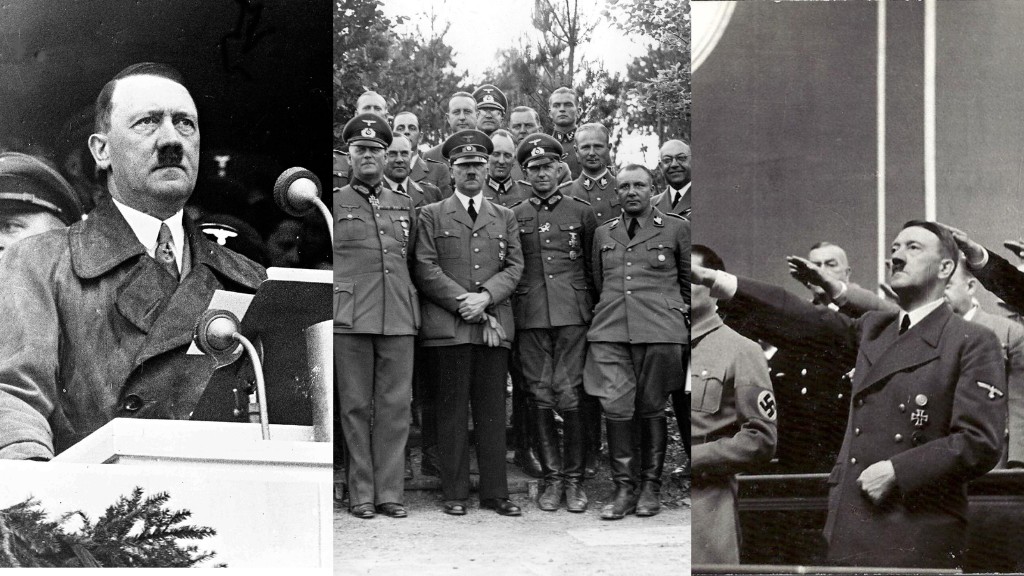
Six million Jewish people were murdered. Two-thirds of every Jewish person living in Europe at the time. More than 1.5 million of them children, killed because they were born to the wrong parents in the wrong country at the wrong moment in human history.
This is the central fact of the twentieth century. It did not happen in distant centuries or in some primitive corner of the world. It happened in the middle of the twentieth century, in Germany and across occupied Europe, in a country with great universities, world-class philosophers, concert halls, and modern infrastructure. It was carried out by people who went home at the end of the day and had dinner with their families.
Understanding the history of the Holocaust requires sitting with that gap between civilization and atrocity. This guide walks through how it happened, who was responsible, who was killed, what Germany has done about it since, and why understanding this history matters more in 2026 than it did even a decade ago.
Germany After the First World War
To understand how the Holocaust happened, you have to understand Germany in the 1920s and early 1930s.
The First World War ended in November 1918 with Germany’s defeat. The Kaiser fled. The Treaty of Versailles, signed in 1919, imposed harsh reparations, stripped Germany of significant territory, and assigned full war guilt to Germany. Millions of Germans saw the treaty as a national humiliation.
The Weimar Republic that replaced the monarchy struggled from its founding. Economic catastrophe hit twice. Hyperinflation in 1923 reached a point where workers were paid daily and rushed to spend money before it lost half its value by afternoon. Families who had saved carefully their entire lives woke up to find their savings worth nothing.
Then the Great Depression hit in 1929. German unemployment rose to approximately 30 percent by 1932. Six million Germans were without work. The political center collapsed as voters turned to extremists on both left and right.
This is the environment in which Adolf Hitler and the Nazi Party rose. He offered humiliated, impoverished, angry people something powerful: an explanation for their suffering that wasn’t their fault, a sense of national pride, and an enemy to blame.
He was wrong about almost everything. But the anger he was speaking to was real, and he understood how to channel it.
The Holocaust
How Hitler Came to Power
In the July 1932 elections, the Nazi Party became the largest party in the Reichstag with 37 percent of the vote. They didn’t win a majority, but they had become the dominant political force.
On January 30, 1933, German President Paul von Hindenburg appointed Hitler as Chancellor. The conservative politicians and businessmen who helped engineer this appointment believed they could control Hitler. They were catastrophically wrong.
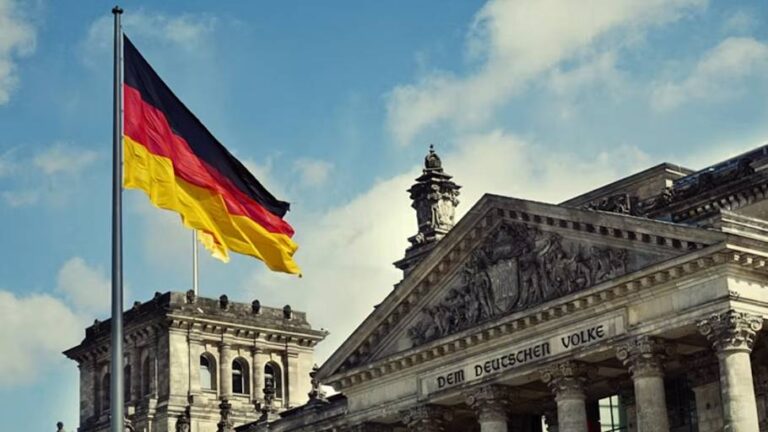
Within weeks of taking office, Hitler used the Reichstag Fire (February 27, 1933) as a pretext to suspend civil liberties. The Enabling Act of March 23, 1933 gave him dictatorial powers to pass laws without parliamentary approval. The first concentration camp, Dachau, opened on March 22, 1933, initially holding political prisoners.
By summer 1933, all other political parties had been banned. Trade unions were dissolved. The Nazi state was consolidating power at extraordinary speed.
What followed over the next twelve years is one of the most studied periods in modern history, and the history of the Holocaust as it actually unfolded is more gradual, more bureaucratic, and more visible to ordinary Germans than people often imagine.
The Gradual Escalation: 1933 to 1939
The Holocaust didn’t begin with gas chambers. It began with laws, paperwork, and small humiliations that escalated year by year.
1933: Boycotts of Jewish businesses began within weeks of Nazi power. Jewish civil servants were dismissed. Jewish lawyers, doctors, and academics faced systematic professional persecution.
1935: The Nuremberg Laws stripped German Jews of citizenship, banned marriage between Jews and non-Jews, and defined Jewishness through Nazi racial categories. Jews who had been German citizens for generations became legal outsiders.
1938: Jewish businesses were forcibly transferred to non-Jewish owners through “Aryanization.” Jewish children were expelled from German schools. Passports for Jews were marked with a “J.”
November 9-10, 1938: Kristallnacht (the Night of Broken Glass). Coordinated attacks across Germany, Austria, and the Sudetenland destroyed approximately 7,500 Jewish businesses, burned over 1,400 synagogues, killed at least 91 Jews, and resulted in the arrest of approximately 30,000 Jewish men sent to concentration camps.
Kristallnacht was not hidden. It happened in plain sight across hundreds of German cities. International newspapers covered it extensively. The world saw what was happening and largely chose to look away.
Jewish emigration accelerated as escape routes remained open, but the world’s response to Jewish refugees was largely closure rather than welcome. The 1938 Évian Conference convened by 32 countries to discuss the refugee crisis ended with no country willing to accept significant Jewish immigration. The MS St. Louis, carrying 937 Jewish refugees, was turned away by Cuba, the United States, and Canada in 1939, forcing passengers to return to Europe where many were later murdered.
War and the Path to Mass Murder
Germany invaded Poland on September 1, 1939. The Second World War had begun.
As German forces conquered Poland, the Netherlands, Belgium, France, Yugoslavia, Greece, and eventually large parts of the Soviet Union over the following two years, each conquest brought millions more Jews under Nazi control.
In Poland, Jews were initially confined to ghettos. The Warsaw Ghetto held approximately 400,000 people in conditions of extreme overcrowding, starvation, and disease. Tens of thousands died from starvation and disease before deportations to death camps even began.
After the German invasion of the Soviet Union in June 1941, the killing escalated dramatically. Einsatzgruppen (mobile killing units) followed the German army into Soviet territory, shooting Jewish communities wherever they were found.
At Babi Yar, a ravine on the edge of Kyiv, approximately 33,771 Jews were shot over two days, September 29 to 30, 1941. Two days. By war’s end, the Einsatzgruppen had murdered approximately 1.5 million people, mostly Jews, mostly by shooting.
The Wannsee Conference and the Final Solution
On January 20, 1942, fifteen senior Nazi officials and SS officers met at a villa outside Berlin on Lake Wannsee. The meeting, chaired by SS-Obergruppenführer Reinhard Heydrich, lasted approximately 90 minutes.
The purpose was to coordinate the bureaucracy required for what Nazi leaders called the “Final Solution to the Jewish Question.” The complete extermination of every Jewish person in Europe, estimated at 11 million people including Jews in countries not yet under German control.
The minutes from the Wannsee Conference survived the war. What strikes readers most isn’t the horror of the subject matter. It’s the ordinary bureaucratic language. Budget concerns. Logistical coordination. Categorization criteria. Population estimates.
That gap between the words on the page and what they were planning is one of the most disturbing aspects of the entire history of the Holocaust as documented by historians today. It demonstrates how genocide can be administered like any other government program by people who have psychologically distanced themselves from what they’re actually doing.
The Death Camps
Six major killing centers were constructed in occupied Poland: Auschwitz-Birkenau, Treblinka, Sobibór, Bełżec, Chełmno, and Majdanek. These weren’t traditional concentration camps. They were industrial murder facilities designed for one purpose.
Auschwitz-Birkenau became the largest, where approximately 1.1 million people were murdered, including approximately 960,000 Jews, 74,000 Polish prisoners, 21,000 Roma, 15,000 Soviet POWs, and others.
Trains arrived from across occupied Europe. People were sorted on the platform within hours of arrival. Those judged unable to work, the elderly, mothers with young children, anyone who looked too weak, were walked to gas chambers usually within hours of disembarking. Those selected for forced labor were worked until they had nothing left and then killed.
Treblinka murdered approximately 925,000 people in just under 16 months of operation.
Bełżec murdered approximately 500,000 people.
Sobibór murdered approximately 250,000 people before a prisoner uprising in October 1943 forced the camp’s closure.
The killing was industrialized. Deutsche Reichsbahn (the German railway company) coordinated the transport of millions of victims to death camps as a paid commercial service. Other corporations supplied gas, ovens, and infrastructure.
Beyond the Jewish Victims
The Nazis targeted multiple groups for persecution and murder. The Holocaust’s Jewish death toll of approximately 6 million represents the central catastrophe, but the broader Nazi murder campaign killed millions more.
Roma and Sinti (Romani people): Approximately 250,000 to 500,000 killed in what Romani communities call the Porajmos.
People with disabilities: The T4 program murdered approximately 70,000 to 200,000 disabled Germans, including children, through systematic euthanasia beginning before the war. Families received letters explaining their relatives had died from ordinary illnesses.
Polish civilians: Approximately 1.8 million non-Jewish Polish civilians killed under Nazi occupation.
Soviet prisoners of war: Approximately 3.3 million Soviet POWs died in Nazi captivity, mostly through deliberate starvation and exposure.
Gay men: Approximately 5,000 to 15,000 sent to concentration camps under Paragraph 175, with high mortality rates.
Jehovah’s Witnesses: Approximately 1,200 to 1,500 killed for refusing to serve in the military or pledge loyalty to Hitler.
Political opponents: Communists, socialists, trade unionists, and other political prisoners, in numbers difficult to fully document.
When discussions of the history of the Holocaust focus only on Jewish victims, they leave out groups whose suffering was also central to Nazi ideology and policy.
Resistance and the Stories That Matter
Resistance to the Nazis took many forms, often heroic and almost always futile against the overwhelming machinery of state violence.
The Warsaw Ghetto Uprising in April-May 1943 saw approximately 750 Jewish fighters with limited weapons resist 2,000 well-equipped German soldiers for nearly four weeks. Over 13,000 Jews died in the uprising. The remaining ghetto residents were deported to Treblinka and murdered.
Sobibór’s prisoner uprising in October 1943 led to the escape of approximately 300 prisoners, though most were eventually recaptured or killed.
Anne Frank, whose diary became the most widely-read first-person account of the Holocaust, was 13 when her family went into hiding in Amsterdam. She was 15 when she died at Bergen-Belsen in February 1945, just weeks before liberation.
Janusz Korczak, the renowned Polish-Jewish pediatrician and educator, refused multiple offers of escape and went to the gas chambers at Treblinka with the 200 children from his orphanage in August 1942.
Hannah Szenes, a Hungarian-Jewish poet, parachuted into Yugoslavia in 1944 to help rescue Hungarian Jews. She was captured, tortured, and executed at age 23.
Elie Wiesel, who survived Auschwitz as a teenager, spent the rest of his life ensuring the world would not forget. His book “Night” remains essential reading.
These individual stories matter because the scale of six million can become abstract. The Holocaust happened to specific people with names, families, hopes, and futures that were taken.
Liberation and the End of the War
Soviet forces reached Auschwitz-Birkenau on January 27, 1945, finding approximately 7,000 surviving prisoners too weak to have been forced on death marches. International Holocaust Remembrance Day is now observed on January 27 in honor of this liberation.
American forces liberating camps in Germany and Austria that spring saw scenes they spent the rest of their lives struggling to describe. General Dwight Eisenhower, after touring the Ohrdruf camp on April 12, 1945, ordered American troops not directly involved in combat to visit the camps personally, saying he wanted future generations to know what had happened. He ordered photographers to document everything in case anyone ever tried to deny it.
Germany surrendered on May 8, 1945. The war in Europe was over. The full scale of what the Nazis had done was beginning to emerge.
The Nuremberg Trials and Historical Reckoning
The Nuremberg Trials (November 1945 to October 1946) tried 22 senior Nazi officials for crimes against humanity, war crimes, and crimes against peace. Twelve were sentenced to death by hanging. Seven received prison sentences. Three were acquitted.
The trials established principles that have shaped international law since:
- Individuals can be held personally responsible for war crimes and crimes against humanity
- “Following orders” is not a defense for committing atrocities
- Heads of state are not immune from prosecution for these crimes
The Universal Declaration of Human Rights, adopted by the United Nations on December 10, 1948, emerged directly from the world’s need to articulate basic human rights protections that the Nazis had so thoroughly violated.
The Genocide Convention, also adopted in 1948, made genocide a crime under international law. Subsequent international tribunals for Rwanda, the former Yugoslavia, and the International Criminal Court trace their authority to principles established at Nuremberg.
Germany’s Reckoning
Germany after the war did something that countries with dark histories often refuse to do: it looked at what happened and chose not to look away.
Holocaust denial is illegal in Germany, punishable by imprisonment. Public symbols of Nazism (swastikas, SS insignia) are banned. Schools teach the Holocaust as core curriculum across multiple grade levels.
The Memorial to the Murdered Jews of Europe in central Berlin, designed by architect Peter Eisenman and completed in 2005, covers 19,000 square meters with 2,711 concrete slabs of varying heights. It sits steps from the Brandenburg Gate, unavoidable to anyone visiting Berlin.
Stolpersteine (stumbling stones), small brass plaques set into pavement outside homes where Jewish residents lived before deportation, have spread to over 1,000 cities across Europe. There are over 100,000 Stolpersteine in place now. You can walk down an ordinary German street and find one at your feet, with the name of a person who lived in that building before being murdered.
Germany has paid more than $90 billion in reparations to Holocaust survivors and their families since the 1950s. The payments continue. Survivors have correctly said no amount is enough for what was taken from their families. But as historical reckonings go, Germany’s response has been more honest than what most countries with violent histories have managed.
What the World Did and Didn’t Do
The history of the Holocaust includes uncomfortable truths about other countries that have received less attention than they deserve.
The United States restricted Jewish immigration during the 1930s and 1940s through quota systems that prevented potentially hundreds of thousands of Jews from finding refuge. The St. Louis incident in 1939 is one of many examples.
The United Kingdom restricted Jewish immigration to British Mandate Palestine during the same period, even as the Holocaust was happening.
Switzerland turned back thousands of Jewish refugees at its borders. Swiss banks held assets of murdered Jewish families for decades after the war before settlements forced disclosure.
The Vatican has been criticized for inadequate response, though individual Catholic clergy and lay people throughout occupied Europe saved Jewish lives at great personal risk.
Allied governments received intelligence about the death camps from late 1942 onward but did not bomb the rail lines leading to Auschwitz or take other military action specifically aimed at disrupting the killing.
These failures don’t equate to perpetrating the Holocaust. They do form part of why six million died rather than a smaller number.
Why This History Still Matters in 2026
Antisemitism did not end with the war. It exists in every country today, including Germany, the United States, and across the Muslim world including in Pakistan where conspiracy theories about Jewish people circulate widely. Holocaust denial has spread, sometimes in places that should know better, sometimes promoted by political figures who calculate that the denial will benefit them politically.
The last Holocaust survivors are old now. The youngest survivors of Auschwitz, who were small children when liberated in 1945, are in their 80s in 2026. When they’re gone, the living memory of what it was actually like goes with them. Within ten to fifteen years, the Holocaust will pass entirely from living testimony into recorded history.
This is why the history of the Holocaust matters more now than at any point since the war ended. The witnesses are leaving. The political environment in many countries is becoming more hostile to the memory they spent decades preserving. The lessons of how a modern, educated society descended into genocide are needed in 2026 specifically because the conditions that produced that descent are not entirely absent from current politics.
The warning the Holocaust represents doesn’t have an expiry date because the human capacity for the behaviors that produced it never had a start date either. The lesson isn’t that German people were uniquely capable of these atrocities. The lesson is that any society can descend if it allows hatred to become policy, if it strips groups of legal protections, if ordinary people choose not to see what is happening in front of them.
That lesson is permanent because the warning is permanent. The history of the Holocaust deserves to be taught and remembered not as ancient horror but as living warning about what humans remain capable of when systems of protection fail.
What We Carry Forward
The names matter. Researchers have spent decades recovering individual identities of the murdered, working through fragmentary records, family memories, and physical evidence to assign names to numbers. Yad Vashem in Jerusalem has documented over 4.8 million names of Jewish Holocaust victims. The work continues.
The witnesses matter. The testimony recorded by survivors during the decades after the war forms one of the most extensive personal documentation projects in human history. The USC Shoah Foundation alone holds over 55,000 video testimonies. These will outlast the people who gave them.
The documents matter. Nazi bureaucratic records, photographs, films, and recovered evidence ensure that denial faces overwhelming factual refutation. The history of the Holocaust is one of the most thoroughly documented atrocities in human history specifically because the perpetrators kept meticulous records.
The memorials matter. From Auschwitz preserved as a museum to Stolpersteine scattered across European streets to the Holocaust Memorial in Washington DC, physical sites of memory ensure the history remains tangible rather than purely abstract.
The obligation matters. To look at this history clearly, not water it down or dress it up. To recognize the patterns when they reappear. To not look away when groups in our own societies are being dehumanized today. To remember not as historical exercise but as moral practice that shapes who we choose to be.
The history of the Holocaust is not just a lesson from the past. It is a warning about what humans remain capable of when hatred becomes policy, when laws strip groups of their humanity, and when ordinary people choose silence in the face of injustice.
That warning belongs to everyone. The responsibility to remember belongs to everyone too.
The lessons of this dark era led to global changes. Read about how the Rise and Fall of the British Empire and the Magna Carta eventually influenced the Universal Declaration of Human Rights.

Comments