




The Greatest of All Time: The Incredible Life and Legacy of Muhammad Ali
Muhammad Ali was not just a boxer. He was the most famous athlete on earth during a stretch of the 20th century when being the most famous athlete meant being one of the most recognized humans alive. He won the heavyweight championship three separate times in three different decades.
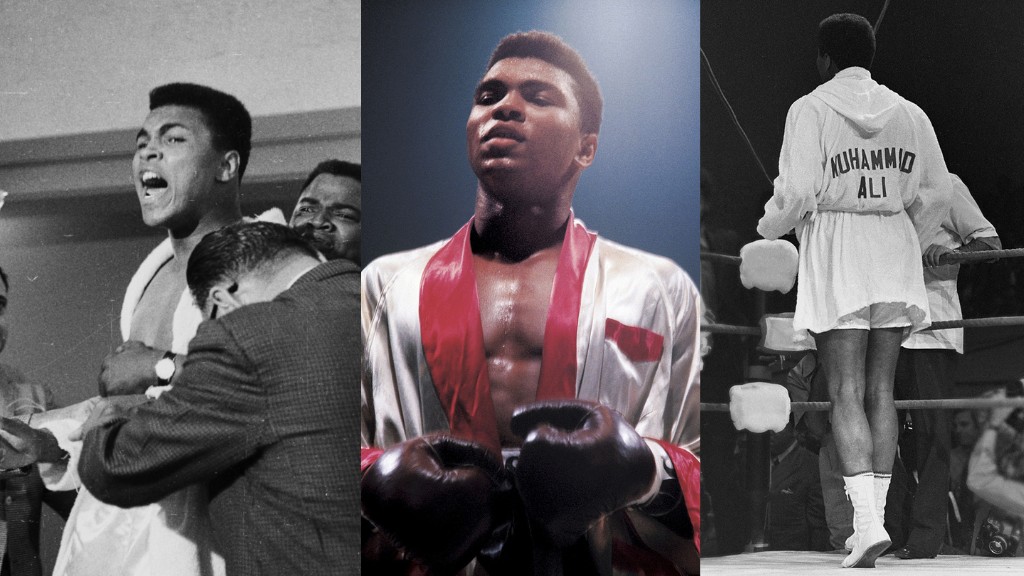
Muhammad Ali was not just a boxer. He was the most famous athlete on earth during a stretch of the 20th century when being the most famous athlete meant being one of the most recognized humans alive. He won the heavyweight championship three separate times in three different decades. He gave up the peak years of his career rather than fight in a war he opposed. He changed his name in public, changed his religion in public, and refused to apologize for any of it.
The incredible life and legacy of Muhammad Ali isn’t just a boxing story. It’s the story of a poor Black kid from segregated Kentucky who built a global identity entirely on his own terms in an era when almost nobody got to do that, especially not Black men in America.
This is that story.
Cassius Clay’s Louisville Beginning
Cassius Marcellus Clay Junior was born on January 17, 1942 in Louisville, Kentucky. The name Muhammad Ali came twenty-two years later.
His father painted signs and billboards. His mother cleaned houses for white families. The family lived on Grand Avenue in the West End of Louisville, in a country where Kentucky’s segregation laws meant separate schools, separate restaurants, separate water fountains, and separate everything else for Black Americans. Young Cassius grew up inside this system in a way that shaped him long before boxing entered the picture.
What people noticed about him from the start wasn’t anything obviously athletic. It was the energy. He talked constantly, played jokes constantly, filled rooms with a kind of personality that adults found either charming or exhausting depending on their mood. His mother Odessa later said her son was already performing for audiences before he could read.
How Boxing Found Him
The story of how Cassius Clay found boxing has been told so many times it sounds half-mythological, but the basic version is real.
At twelve years old, he and a friend rode their bikes to the Louisville Home Show. When they came back out, his bike was gone. Furious, Cassius went looking for a police officer to report the theft. The officer he found, a man named Joe Martin, ran a boxing gym in the basement of the Columbia Auditorium on the side. When Cassius told Martin he was going to beat up whoever stole his bike, Martin told the kid he’d better learn how to fight first.
That gym became Cassius Clay’s second home for the next six years.
What people noticed about him in the gym was the speed. Not just hand speed but everything. His feet never stopped moving. His head moved in ways that confused sparring partners much older and bigger than him. He had reflexes that made standard boxing wisdom look slow.
He combined that natural ability with a work ethic that nobody his age matched. He ran every morning before school. He stayed in the gym after other kids went home for dinner. By the time he was sixteen he was already beating grown men in amateur tournaments.
The Rome Olympics and What Came After
In 1960, at eighteen years old, Cassius Clay won the light heavyweight gold medal at the Rome Olympics. He came home a national hero, talked about on radio and television, photographed for newspapers across the country.
A few days after he got home to Louisville, he tried to eat at a downtown restaurant and was refused service because he was Black. An Olympic gold medal hanging around his neck and it meant nothing at the lunch counter.
Whether the story of him throwing his gold medal into the Ohio River is literally true (Ali sometimes said yes, his brother sometimes said no, biographers have argued about it for decades) is almost beside the point. The emotional truth of the story is what mattered to Ali. A country had cheered him at the Olympics and then made it clear it still considered him a second-class citizen the moment he came home.
That tension defined the rest of his life.
Becoming Heavyweight Champion
Cassius Clay turned professional immediately after Rome and won his first nineteen fights, most by knockout. He wrote poems before each fight predicting which round he would win. He called himself the Greatest before anyone else was using that word for him. He was loud, brash, and completely unapologetic.
In February 1964, at twenty-two years old, he got his shot at Sonny Liston for the heavyweight championship of the world.
Liston was the kind of fighter most boxers were afraid of before the bell even rang. Physically terrifying, with a glare that broke people. He had destroyed Floyd Patterson twice to take the title. The boxing press almost universally picked him to demolish young Clay. Forty-three of forty-six sportswriters at ringside predicted a Liston win.
Clay danced for six rounds, hitting Liston with combinations Liston couldn’t get to in time. By the seventh round Liston was sitting on his stool with a hurt shoulder, and he didn’t come out. Cassius Clay was the new heavyweight champion of the world.
In the ring after the fight, Clay screamed at the press row. “I shook up the world! I shook up the world! I’m the greatest!” He was right about all three.
The Name Change That Shocked America
The day after winning the title, Clay announced he had joined the Nation of Islam. A few weeks later, he announced his new name: Muhammad Ali.
In 1964 America, this hit like an earthquake. A Black heavyweight champion of the world publicly rejecting his “slave name” and aligning with a movement that mainstream white America considered radical was almost unprecedented in sports. Boxing’s old guard kept calling him Cassius Clay for years afterward as a deliberate insult.
His mentor and friend at the time was Malcolm X, who had been the public face of the Nation of Islam before his split with Elijah Muhammad. When Malcolm broke from the Nation in 1964, Ali sided with Elijah Muhammad and effectively cut Malcolm X off. He later said this was one of the biggest regrets of his life. Malcolm X was assassinated in February 1965, before they could reconcile.
This complicated chapter is sometimes scrubbed from sanitized versions of the incredible life and legacy of Muhammad Ali, but it was central to who he became.
The Liston Rematch
The Sonny Liston rematch happened in May 1965 in a small arena in Lewiston, Maine. The fight is famous because of what’s known as the “phantom punch.”
In the first round, Ali threw a short right hand and Liston went down. The crowd erupted because most people didn’t see the punch clearly. Liston stayed down. Conspiracy theories about whether Liston took a dive have persisted for sixty years. The film evidence suggests it was a real punch, perfectly timed, that landed exactly where it needed to.
Either way, Ali defended his title in the first round and his place at the top of the heavyweight division was undisputed.
The Years They Took From Him
In April 1967, Muhammad Ali was called for induction into the United States military to serve in the Vietnam War. He refused.
His stated reasons were straightforward. As a Muslim, his faith forbade fighting in a war he hadn’t been called to as religious obligation. He had no quarrel with the Vietnamese people. He famously said, “Why should they ask me to put on a uniform and go ten thousand miles from home and drop bombs and bullets on brown people in Vietnam while so-called Negro people in Louisville are treated like dogs and denied simple human rights?”
The consequences came fast. The New York State Athletic Commission stripped him of his title within hours. Other state boxing commissions followed. He was indicted for draft evasion, convicted, sentenced to five years in prison and a $10,000 fine. His passport was confiscated.
He stayed out on appeal but couldn’t fight. For three and a half years, from age 25 to 28, the prime years of any boxer’s career, Muhammad Ali was prevented from doing what he was clearly the best in the world at doing.
He didn’t go quiet during those years. He spoke at colleges and universities across the country, often for free, sometimes for small fees that kept him financially afloat. He talked about race, the war, his faith, his country. As public opinion on Vietnam slowly turned against the war, more people started listening to what Ali had been saying since 1967.
In June 1971, the Supreme Court unanimously overturned his conviction in Clay v. United States. Justice Thurgood Marshall had recused himself, so the vote was 8-0. Ali was free to fight again.
The Fight of the Century
By the time Ali got back in the ring, the heavyweight division had a new champion: Joe Frazier. Frazier was a relentless, short, heavily muscled fighter who threw the most feared left hook in boxing.
The two of them met for the first time in March 1971 at Madison Square Garden in a fight billed as the Fight of the Century. Both were undefeated. Both were claimed by their supporters as the true champion. The world stopped to watch.
Frazier won by unanimous decision after fifteen of the most brutal rounds in heavyweight history. Ali went down hard in the fifteenth from a left hook. He got up, but he had lost.
It was the first loss of his professional career.
The Rumble in the Jungle
After the Frazier loss, Ali was no longer the same fighter. The three and a half years away had taken something from his legs that his training couldn’t quite restore. He couldn’t dance the way he used to. So he had to invent a different way to win.
He worked his way back through the heavyweight division, getting his jaw broken by Ken Norton in 1973 (and beating Norton in the rematch), beating Frazier in their second fight in 1974, until he got another title shot. The champion now was George Foreman, who had destroyed Frazier two years earlier in two rounds.
In October 1974, Ali and Foreman met in Kinshasa, Zaire, in a fight promoter Don King called the Rumble in the Jungle. Foreman was considered by many at the time to be the most physically devastating heavyweight who had ever lived. Almost no one gave Ali a real chance.
Ali introduced something he later called the rope-a-dope. He spent rounds leaning back on the ropes, covering up, absorbing punishment that would have stopped most fighters. Foreman threw everything he had. Round after round, Ali took it, occasionally counter-punching to keep Foreman engaged but mostly just letting Foreman empty his tank.
By the eighth round Foreman’s arms were dead. Ali came off the ropes and finished him with a flurry that ended with Foreman face-down on the canvas. At thirty-two years old, after three and a half years out of boxing entirely, Muhammad Ali was heavyweight champion of the world again.
The fight is still considered one of the greatest moments in sports history.
Thrilla in Manila
In October 1975, Ali fought Joe Frazier for the third and final time, in Manila, the Philippines.
Both men were past their prime. Both had been damaged by the first two fights. The heat in the arena reached 110 degrees by the middle rounds. Frazier’s face was so swollen by round 14 that he could barely see out of either eye. Ali later said it was the closest thing to death he had ever experienced.
Frazier’s trainer Eddie Futch stopped the fight before round 15 to save his fighter from permanent damage. Ali sat on his stool, completely spent, having won the third fight in their trilogy.
The Frazier-Ali rivalry was personal in ways that made it heavier than most sports rivalries. Ali had insulted Frazier viciously in the lead-up to fights, called him an “Uncle Tom,” called him ugly, called him a gorilla. Frazier never fully forgave him. The two men reconciled partially before Frazier’s death in 2011, but the wounds from those years stayed real for both of them.
The Late Career Decline
Ali fought too long. Nearly every great fighter does.
He lost the title to Leon Spinks in February 1978, won it back from Spinks seven months later (becoming the first heavyweight champion to win the title three times), and then should have retired. He didn’t.
In October 1980, he came back to fight Larry Holmes, who had been his sparring partner years earlier. Holmes won the fight in ten rounds. He didn’t want to hurt Ali but he had no choice. Ali looked like a different fighter that night, slow and unable to defend himself the way he used to.
In December 1981, Ali fought Trevor Berbick in the Bahamas and lost a ten-round decision. It was his last professional fight. His final record was 56 wins (37 by knockout) and 5 losses.
His conversion from the Nation of Islam to Sunni Islam in 1975 had moved him toward a more universalist version of his faith that would shape his later years.
Life After Boxing
Ali was diagnosed with Parkinson’s syndrome in 1984. Doctors disagreed for years about whether his condition was Parkinson’s disease specifically or pugilistic Parkinson’s caused by accumulated head trauma from boxing. Either way, the condition progressed over the next three decades, slowly taking his speech, his movement, and eventually most of his physical functions.
He never publicly complained.
In 1990, he traveled to Iraq during the lead-up to the Gulf War and helped negotiate the release of fifteen American hostages held by Saddam Hussein. American politicians criticized the trip at the time. The hostages came home safely.
In 1996, he lit the Olympic flame at the Atlanta Games. His hand visibly shook from Parkinson’s. Television cameras lingered on his face. People watching around the world cried. It remains one of the most powerful single moments in modern Olympic history.
He worked as a United Nations Messenger of Peace. He visited refugee camps. He met with leaders, athletes, and ordinary people in dozens of countries. He used his name and his presence for causes he believed in right up until his physical condition made public appearances nearly impossible.
He died on June 3, 2016, at age 74, from septic shock related to complications from Parkinson’s.
His funeral in Louisville drew mourners from around the world. Streets were lined with tens of thousands of people. The service included tributes from Bill Clinton, Billy Crystal, and a wide range of Muslim, Christian, and Jewish religious leaders speaking together in a way that honored what Ali had come to represent in his final decades.
What the Incredible Life and Legacy of Muhammad Ali Comes Down To
The incredible life and legacy of Muhammad Ali isn’t just about the boxing, though the boxing was extraordinary. Three heavyweight championships, the Rumble in the Jungle, the Thrilla in Manila, the rope-a-dope, the first round destruction of Sonny Liston, the comeback after three and a half lost years.
It’s about what he did with the platform that boxing gave him. He took a stand against the Vietnam War when standing cost him his title, his prime, and very nearly his freedom. He changed his religion and his name in public at a time when both moves cost him in tangible ways. He talked about race in America when most Black athletes were advised to stay quiet. He won people over decade by decade as the country slowly caught up to what he had been saying all along.
The incredible life and legacy of Muhammad Ali also includes the contradictions. The cruelty he sometimes directed at Frazier and other opponents. The complicated relationship with Malcolm X. The marriages that didn’t work. The fights he should have walked away from but didn’t. He wasn’t a saint. He was a man, with all the complexity that involves.
What separated him from almost everyone else in 20th century sports was the willingness to be exactly who he was in public, at the cost of money and freedom and championships, in an era when public Black self-determination was rare and dangerous.
He called himself the Greatest from the very beginning, before anyone agreed with him. By the end, even the people who had once hated him for it had mostly come around. The incredible life and legacy of Muhammad Ali made the title impossible to argue with.
Muhammad Ali’s journey of overcoming racial barriers is a testament to the power of the human spirit. For another inspiring look at a legend who turned rejection into unparalleled greatness, check out Michael Jordan the Official Story of Failure and Success.
To explore more about the humanitarian work and the museum dedicated to the incredible life and legacy of Muhammad Ali, visit the Official Muhammad Ali Center.

Comments