
Why Did the Ottoman Empire Fall: The Real Story Behind a 600-Year Collapse
Why did the Ottoman Empire fall is one of those historical questions every Muslim especially thinks about at some point. This wasn’t just any empire. This was the Muslim superpower that ruled from 1299 to 1922. Over 600 years of continuous existence.
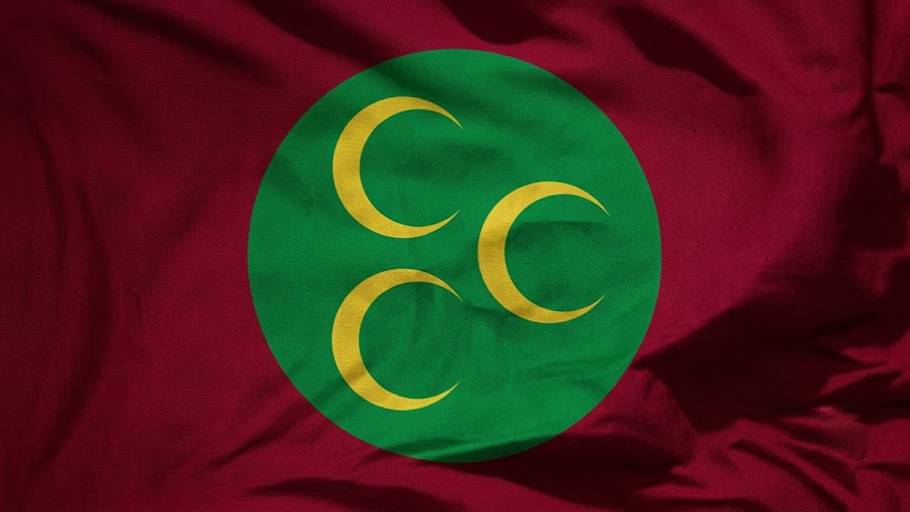
Why did the Ottoman Empire fall is one of those historical questions every Muslim especially thinks about at some point. This wasn’t just any empire. This was the Muslim superpower that ruled from 1299 to 1922. Over 600 years of continuous existence. At its peak, it controlled Southeast Europe, Western Asia, North Africa, and the Middle East. Then it just collapsed and disappeared. How does that happen?
Let me be honest with you. The standard explanations most Pakistanis learn are incomplete at best and wrong at worst. “It fell because the British and French destroyed it” is oversimplified. “It fell because Muslims stopped being religious” is nonsense. “It fell because of Ataturk” gets timeline backwards. The actual story is way more complicated and honestly more instructive.
The Ottoman Empire didn’t fall for one reason. It fell through a slow decay lasting over 200 years combined with dramatic events during World War I. Understanding this properly matters because the same patterns that destroyed the Ottomans continue affecting Muslim countries today. This is real history with real lessons, not just old stories from textbooks.
When the Decline Actually Started
Before understanding why did the Ottoman Empire fall, you need to know when it started declining. This wasn’t sudden collapse in 1922. This was slow multi-century decay.
The empire reached its peak under Suleiman the Magnificent (1520-1566). This was the golden age. Ottoman armies threatened Vienna. Ottoman fleets dominated the Mediterranean. Ottoman administration was more efficient than European kingdoms. Ottoman legal system, architecture, and culture were genuinely impressive.
Then things started slowly going wrong from about 1600 onward. The empire kept existing for another 300+ years but was gradually losing ground in ways contemporaries didn’t fully recognize.
The 1683 failed siege of Vienna was symbolic turning point. Ottoman armies had reached Vienna twice, in 1529 and again in 1683. Both times they failed to take the city. After 1683, Ottoman military expansion in Europe essentially stopped. From this point, the empire was mostly on defensive rather than offensive.
The Treaty of Karlowitz in 1699 formalized this shift. For the first time, Ottomans lost significant European territory to the Habsburg Empire. Hungary was gone. This was psychological shock as much as territorial loss. The invincible Ottoman military machine could clearly be beaten.
Understanding the Ottoman Empire history properly means recognising that the decline started when the empire was still enormously powerful. External observers in 1700 wouldn’t have predicted collapse. The empire was still one of the world’s great powers. But the structural problems that would eventually destroy it were already developing.
The Military Problems
One major reason for the collapse of the Ottoman Empire was gradual military decline compared to European rivals.
The Janissary corps had been elite Ottoman infantry. Recruited through devshirme system taking Christian boys from Balkans and training them as Muslim soldiers, they were disciplined professional force superior to most European armies for centuries.
By 1600s, this system started degrading. Janissaries began marrying and having families. They started demanding hereditary privileges. Their status became birthright rather than earned position. Elite fighting force gradually became privileged class more interested in political power than military effectiveness.
Meanwhile, European armies were transforming. Military revolution based on gunpowder weapons, disciplined line infantry, professional officer corps, and standardized training created armies that could defeat Ottoman forces in field battles.
Ottoman military reform attempts kept failing due to internal resistance. The Janissaries resisted any changes threatening their privileges. Multiple sultans who tried military reform faced Janissary rebellions. Some were killed. This resistance to change while opponents were rapidly improving created growing military gap.
By 1700s, Ottomans were consistently losing wars against Russia, Austria, and other European powers. Each war meant territorial losses and payment of indemnities.
Sultan Selim III attempted major military reform in 1790s creating new modern army. Janissaries revolted and killed him in 1808. Sultan Mahmud II finally succeeded in 1826 by literally destroying the Janissary corps in the “Auspicious Incident.” He surrounded their barracks and killed thousands of them. Only through this brutal action could Ottoman military finally modernize. But by then, Ottomans were centuries behind European military development.
The Economic Collapse
Economic problems were fundamental to the fall of the Ottoman Empire and get less attention than military issues but were equally important.
Ottoman economy was based on land taxes, trade taxes, and control over key commercial routes. Multiple problems attacked all these income sources over centuries.
The discovery of new sea routes to Asia devastated Ottoman trade income. When Portuguese found route to India around Africa, and Spanish reached the Americas, trade started bypassing Ottoman-controlled routes. The spice trade that had made Ottoman merchants wealthy shifted to European ships going around Africa.
American silver flooding into Europe caused massive inflation across Mediterranean world. Ottoman currency lost value. Fixed government salaries became worthless. Tax collection based on old rates couldn’t fund rising costs.
Capitulations to European powers were originally trade privileges granted from position of Ottoman strength. Over centuries, they became exploitative arrangements. European merchants paid minimal taxes while getting protected status. European powers eventually used these agreements to extract concessions and interfere in Ottoman internal affairs.
The empire never developed industrial economy. When Europe underwent Industrial Revolution in 1700s-1800s, Ottomans remained agricultural economy. This meant productivity gap kept growing. European countries became dramatically wealthier while Ottoman economy stagnated.
Attempts at economic modernization came too late and often failed. Efforts to build railways, telegraph, banking, and modern industry happened but required foreign capital that came with strings attached. European loans eventually forced Ottoman government into humiliating financial receivership under the Ottoman Public Debt Administration in 1881. Foreign bondholders directly collected certain Ottoman tax revenues to pay European creditors.
The Nationalism Problem
Rising nationalism among subject peoples was perhaps the deepest reason for the collapse of the Ottoman Empire.
Ottoman Empire was multi-ethnic and multi-religious. It ruled over Turks, Arabs, Kurds, Armenians, Greeks, Serbs, Bulgarians, Albanians, and dozens of other groups. It contained Sunni Muslims, Shia Muslims, Orthodox Christians, Catholic Christians, various Protestant groups, Jews, and other religious communities.
For centuries, the millet system managed this diversity. Each religious community had autonomy over its own affairs. Christians lived under Christian law within their communities. Jews under Jewish law. Muslims under Islamic law. Central government took taxes and provided security but didn’t try to homogenize the population.
This worked until European nationalism spread to Ottoman subjects. Starting in late 1700s, various groups began developing national identities and desires for independent states rather than continued Ottoman rule.
Greek War of Independence (1821-1832) created first successful nationalist breakaway. Serbia and Romania gained autonomy through 1800s. Bulgaria became independent state in 1878. Each loss reduced empire’s territory, population, and revenue.
By 1900s, nationalism was spreading among Muslim populations too. Arabs began developing Arab nationalism separate from Ottoman identity. This shocked Turkish leadership who assumed Islamic solidarity would prevent Arab separatism.
Armenian nationalism became particularly tragic issue. Armenian Christians in eastern Anatolia developed nationalist aspirations. Ottoman response became increasingly violent, culminating in genocide during World War I where approximately 1-1.5 million Armenians were killed through massacres, forced marches, and deliberate starvation.
European Interference
Understanding why did the Ottoman Empire fall requires acknowledging role of European great powers in accelerating the decline.
By 1800s, Britain, France, Russia, and Austria-Hungary saw the Ottoman Empire as “sick man of Europe” whose eventual death would create major territorial questions. Each power positioned itself for eventual carve-up of Ottoman territories.
Russia particularly pushed against Ottoman territory throughout 1800s. Multiple Russo-Turkish wars each ended with Ottoman defeats and territorial losses in Balkans and Caucasus. Russia sought warm-water ports and access to Mediterranean that would come from further Ottoman collapse.
Britain played complex game. Sometimes supporting Ottomans against Russia (Crimean War 1854-1856). Sometimes undermining Ottoman position (backing various nationalist movements). Overall goal was preventing any single power from gaining too much Ottoman territory while maintaining Ottoman weakness that served British interests.
France focused on protecting Christian populations in Ottoman territories, particularly Lebanon and Syria. This “protection” became mechanism for extending French influence throughout Ottoman-controlled Middle East.
The Congress of Berlin in 1878 formalized the pattern. European powers meeting in Berlin decided the fate of Ottoman territories with only symbolic Ottoman participation. Bulgaria became independent. Cyprus went to Britain. Bosnia went to Austria-Hungary. Various other adjustments happened. The empire had become object of European decisions rather than participant in international politics.
Each intervention accelerated Ottoman decline. Each territorial loss reduced tax base while European powers extracted increasing concessions from remaining territories.
The Modernization Struggle
Ottoman leadership recognized problems and attempted modernization throughout 1800s. Understanding the Ottoman Empire collapse requires assessing why these reforms failed to save the empire.
The Tanzimat reforms (1839-1876) tried to modernize administration, legal system, military, and society. New codes of law were introduced. Educational reforms happened. Religious equality was formally declared. Various infrastructure projects developed.
These reforms had genuine success in some areas but faced multiple problems. Traditional religious authorities resisted secularizing legal changes. Conservative Muslims worried about erosion of Islamic character. Non-Muslim populations demanded even more concessions. European powers pushed for reforms that served their interests.
The 1876 constitution and parliament represented dramatic reform. Ottoman Empire became constitutional monarchy with elected parliament. This was progressive by contemporary standards.
Sultan Abdul Hamid II suspended parliament and constitution in 1878. His autocratic reign (1876-1909) reversed many reforms while attempting different modernization approach through infrastructure development and religious pan-Islamism.
The Young Turk Revolution of 1908 restored constitutional government. Young Turks were nationalist reformers who believed Turkish national identity should replace Ottoman multi-ethnic identity. Their reforms accelerated Arab nationalism in reaction. Their approach also created new problems while trying to solve old ones.
By early 1900s, empire had experienced over century of reform attempts. Some succeeded partially. Many failed. Overall, reforms weren’t fast enough to save the empire from accumulated problems.
World War I: The Final Blow
The immediate reason for the collapse of the Ottoman Empire was disastrous participation in World War I.
Ottoman leadership under the Young Turk triumvirate (Enver, Talat, Cemal) chose to enter war on side of Germany and Austria-Hungary against Britain, France, and Russia. This decision was catastrophic mistake.
Ottoman military had some successes. Gallipoli campaign (1915-1916) defeated Allied attempt to knock Ottomans out of war. Mesopotamian campaign initially went well before eventual British victory. Palestine and Sinai fronts fluctuated.
But overall war was disaster. Ottoman armies suffered massive casualties. Economic mobilization destroyed already fragile economy. Arab Revolt (1916-1918) supported by British significantly damaged Ottoman position in Middle East. Armenian genocide happened as government response to feared Armenian collaboration with Russia.
By 1918, empire was collapsing. Bulgaria surrendered. Ottoman forces were being pushed back everywhere. Armistice of Mudros (October 30, 1918) ended Ottoman participation in war.
The peace settlement was designed to destroy the empire. Treaty of Sèvres (1920) would have reduced Ottoman territory to small piece of central Anatolia while giving territory to Greeks, Armenians, Italians, French, and British. Constantinople itself would have been placed under international control.
The Turkish War of Independence
The final chapter of Ottoman Empire history involves emergence of modern Turkey.
Mustafa Kemal Ataturk led Turkish nationalist resistance against both Ottoman government (which had accepted humiliating Treaty of Sèvres) and Greek invasion of Anatolia.
The Turkish War of Independence (1919-1923) was successful. Kemal’s forces defeated Greek army, negotiated better terms with European powers, and established new Turkish state.
The last Ottoman sultan, Mehmed VI, was formally deposed on November 1, 1922. He escaped to Malta aboard a British warship. Ottoman dynasty that had ruled for 623 years was formally ended.
The Republic of Turkey was proclaimed on October 29, 1923. Ataturk became first president. The Caliphate itself, which had been theoretical spiritual leadership of global Sunni Muslims, was abolished on March 3, 1924.
For Muslim world globally, abolition of Caliphate was profound event. For centuries, the Ottoman sultan had claimed status as Caliph, symbolic leader of Muslim community. Its formal end represented loss of institutional Muslim political unity that continues affecting Muslim political thought today.
The Real Lessons
Understanding why did the Ottoman Empire fall provides genuine lessons that apply beyond just historical curiosity.
Empires that don’t adapt to changing technologies and organizations decline. Ottomans stayed with traditional military and economic systems while Europeans transformed. This gap became fatal over time.
Institutional resistance to reform is dangerous. Janissaries preventing military modernization until they were massacred. Religious authorities resisting legal reform. Various interests protecting their positions at cost of overall system viability. Reform requires overcoming institutional resistance.
Managing multi-ethnic populations becomes harder when nationalism spreads. The millet system worked for centuries but couldn’t handle nationalist demands. Multi-ethnic empires globally struggled with same issue in 1800s-1900s.
Foreign debt creates political vulnerability. Ottoman Public Debt Administration was national humiliation. Modern countries facing IMF conditions face similar dynamics though less severe.
Late reforms often fail. Ottomans recognized problems and attempted modernization but changes came too late to prevent collapse. Better to reform early than to face crisis reform under pressure.
Economic development is national security. Empires with stagnant economies eventually can’t afford militaries needed to defend themselves. Ottomans lost economically before losing militarily.
What This Means for Muslim World Today
For Pakistanis and Muslims globally, Ottoman Empire history remains relevant.
The fall represented end of major independent Muslim political power that had existed for centuries. Its collapse created power vacuum in Middle East that European powers filled through mandates and eventually Israel’s establishment.
Modern Middle Eastern conflicts trace back to Ottoman collapse. Iraq, Syria, Lebanon, Jordan, Palestine, and various other countries were carved out of Ottoman territories with borders drawn by European powers pursuing their own interests. Many current conflicts have roots in these arbitrary boundaries.
The abolition of Caliphate created institutional vacuum in Muslim political thought that still affects debates today. Various movements throughout 20th century tried to reconstitute some form of Muslim political unity. None succeeded.
Pakistan itself emerged partially from this vacuum. Muslim nationalism that produced Pakistan was partly response to loss of Muslim political power symbolized by Ottoman collapse.
Understanding this history properly helps Pakistanis think more clearly about current Muslim political challenges rather than just repeating simplified narratives.
Final Thoughts
Why did the Ottoman Empire fall isn’t a simple question with simple answer. It fell through combination of military decline, economic problems, nationalism among subject peoples, European interference, failed modernization attempts, catastrophic World War I decisions, and finally Turkish nationalist revolution.
The Ottoman Empire collapse took over 200 years of gradual decline followed by dramatic final decade. No single cause explains everything. Multiple factors compounded over generations until empire couldn’t survive the shocks of early 1900s.
Understanding the fall of the Ottoman Empire matters beyond historical interest. Same patterns of institutional resistance to reform, economic stagnation, and political mismanagement continue affecting Muslim world today. Learning from Ottoman experience means recognizing these patterns before they produce similar consequences.
For anyone interested in Ottoman Empire history, the story is genuinely fascinating and instructive. Rise from small Anatolian principality to world empire. Golden age of Suleiman. Long slow decline while empire remained impressive on surface. Failed reforms. Catastrophic modernization struggles. Dramatic World War I collapse. Emergence of modern Turkey from Ottoman ruins.
The reasons for the collapse of the Ottoman Empire remind us that even the mightiest empires can fall through combination of internal problems and external pressures. Ottomans ruled for 623 years and seemed permanent to their contemporaries. Their fall shows that no political system is truly permanent regardless of how well-established it appears.
For Muslim world specifically, understanding this history properly is important for thinking about future. The vacuum left by Ottoman collapse hasn’t been filled. The lessons about reform, adaptation, and modernization remain relevant. History doesn’t repeat exactly but similar patterns produce similar results if we don’t learn from past.
That’s the honest picture of why the Ottoman Empire fell. Complicated history with real causes and real consequences that continue shaping our world today. Understanding it properly matters for both historical accuracy and practical lessons about what makes political systems succeed or fail over time.
Thomas Edison Biography: The Man Who Actually Built the Modern World



Comments