
Thomas Edison Biography: The Man Who Actually Built the Modern World
Thomas Edison biography is one of those topics everyone thinks they know but few actually understand properly. We hear he invented the light bulb. We know he had thousands of patents. We remember something about him being a self-made genius who worked incredibly hard.
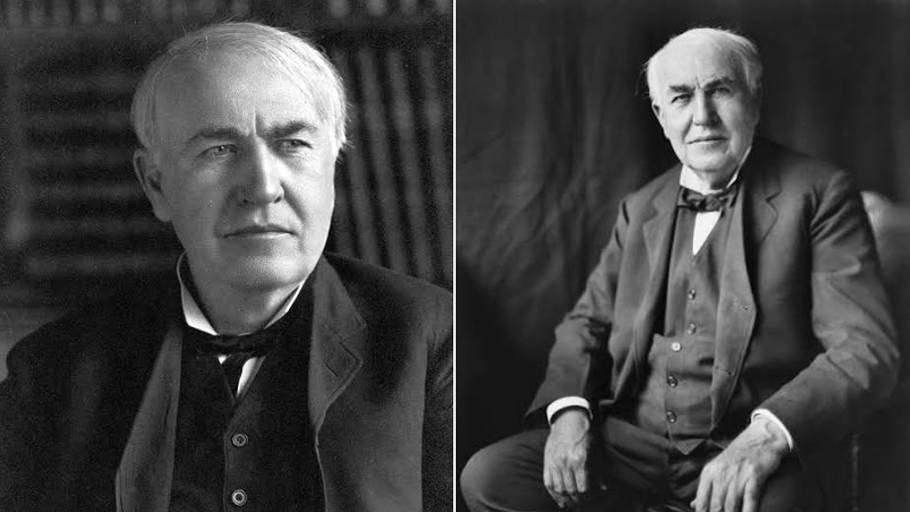
Thomas Edison biography is one of those topics everyone thinks they know but few actually understand properly. We hear he invented the light bulb. We know he had thousands of patents. We remember something about him being a self-made genius who worked incredibly hard. But the real story of Thomas Edison is way more complicated, more controversial, and honestly more interesting than the sanitized version we get in school textbooks.
Let me be honest with you. Edison wasn’t purely the noble inventor working alone in his lab. He was also a shrewd businessman who took credit for work done by his employees. He engaged in vicious commercial battles that shaped how electricity works today. He electrocuted animals to discredit competitors. And yet, despite all this complexity, he genuinely was one of the most productive inventors in human history whose work fundamentally reshaped modern life.
This is the full Thomas Edison biography with the actual truth. His difficult early life. His breakthrough inventions. The business empire he built. His controversial competitive tactics. His personal life and family. His mistakes and failures. And his real legacy that continues shaping how we live today.
The Early Years That Shaped Him
Thomas Alva Edison was born on February 11, 1847, in Milan, Ohio, USA. His family had modest means. His father Samuel Edison ran various businesses with mixed success. His mother Nancy Edison had been a school teacher before marriage.
Young Edison had a difficult start that shaped his entire personality. He was partially deaf from childhood, likely from a case of scarlet fever combined with untreated ear infections. This hearing loss became increasingly severe throughout his life, eventually leaving him almost completely deaf in one ear and significantly impaired in the other.
His formal education was disastrous. Teachers described him as “difficult” and “addled.” He attended school for only about three months total in his life. His mother pulled him out and homeschooled him herself, which turned out to be crucial for his development.
Understanding this part of who was Thomas Edison matters enormously. The genius we later see wasn’t produced by elite schooling or wealthy background. It came from a partially deaf boy whose mother believed in him when teachers didn’t, who spent his childhood reading voraciously across every subject that interested him.
He started working incredibly young. By age 12, he was selling newspapers and candy on trains between Port Huron and Detroit. He set up a small chemistry lab in the baggage car (which he eventually got kicked off after starting a fire). He even published his own small newspaper called “The Grand Trunk Herald” while working the trains.
His break into telegraphy came from a heroic act. In 1862, at age 15, he saved a three-year-old boy from being hit by a runaway train. The boy’s father was a station agent who taught Edison telegraphy as reward. This skill launched his professional life.
Becoming a Telegraph Operator
For the next several years, young Edison worked as an itinerant telegraph operator. He moved between cities across the American Midwest and eventually to the East Coast. He was known for being technically brilliant but also for making trouble.
He was fired from various positions for playing pranks, conducting experiments during work hours, and generally being disruptive. But his technical ability was undeniable. He could take and send messages faster than most operators. He constantly tinkered with the equipment trying to improve it.
His early Thomas Edison inventions and achievements came from this telegraph background. He developed improvements to telegraph technology, including a system for automatic transmission and improvements in how messages could be recorded.
In 1868, at age 21, he moved to Boston working for Western Union. Here he applied for his first patent for an electrographic vote recorder. It was a genuine improvement over existing systems, but politicians didn’t actually want faster voting because it eliminated their ability to filibuster and negotiate. The invention was a commercial failure that taught him crucial lesson: solve problems people actually want solved, not just problems that seem technically interesting.
This lesson shaped his entire career approach afterward. He became relentlessly focused on commercial applications rather than pure scientific research.
The Menlo Park Era
The most important part of Thomas Edison biography is the period from 1876-1886 at his famous Menlo Park laboratory in New Jersey. He built this as the world’s first industrial research facility. This was genuinely revolutionary approach to invention.
Before Edison, most inventions came from individual inventors working alone or from academic scientific research. Edison created something different: a systematic invention factory where teams of engineers, chemists, machinists, and scientists worked together on multiple projects simultaneously.
He famously said the facility would produce “a minor invention every ten days and a big thing every six months or so.” He wasn’t wrong.
The phonograph came out of Menlo Park in 1877. This device could record and play back sound, which had been considered impossible. When Edison first successfully recorded and played back “Mary Had a Little Lamb,” his own team was stunned. Nothing like it had existed before.
The phonograph made Edison internationally famous almost overnight. Newspapers around the world covered the invention. He became known as “The Wizard of Menlo Park.” He was 30 years old.
But the phonograph was just the beginning of the most productive decade in inventive history.
The Light Bulb Reality
Let’s discuss the invention Edison is most famous for because the reality is more nuanced than school textbooks suggest.
Thomas Edison did not invent the electric light bulb. Multiple inventors had created working electric lights before him. Humphry Davy demonstrated arc lighting in 1802. Warren de la Rue created an early bulb in 1840. Joseph Swan in England was working on incandescent bulbs alongside Edison. Various other inventors had made progress.
What Edison did was solve the practical problems that made electric lighting commercially viable. His 1879 successful bulb using carbonized bamboo filament could burn for 1,200+ hours. This was breakthrough. Previous bulbs burned out too quickly to be practical.
But Edison’s real genius wasn’t just the bulb itself. It was building the entire electrical system needed to make it useful. Generators. Wiring systems. Meters. Fuse boxes. Every component of what became the modern electrical grid was developed by Edison’s team.
He opened the world’s first commercial power station in 1882 in New York City. The Pearl Street Station served 82 initial customers with direct current electricity. This launched the electrical industry.
Understanding this correctly matters for accurate Thomas Edison facts. He wasn’t purely the inventor of the light bulb. He was the person who made electric lighting practical, commercial, and part of everyday life. That’s actually more impressive than just inventing one device.
The War of the Currents
The most controversial part of Thomas Edison life story involves his commercial battle with George Westinghouse over which type of electricity would power America.
Edison committed to direct current (DC) electricity. His entire business empire was built around DC systems. But DC has significant limitations. It can’t easily be transmitted over long distances. It needs generating stations every mile or so.
Nikola Tesla developed alternating current (AC) which could be transmitted long distances efficiently. Westinghouse acquired Tesla’s AC patents and started building competing electrical systems.
Edison should have adapted to AC when it became clear it was superior for large-scale electricity distribution. Instead, he waged one of the most vicious commercial battles in industrial history.
The “War of Currents” got ugly. Edison publicly electrocuted animals to demonstrate AC’s supposed dangers. He electrocuted a circus elephant named Topsy in 1903 (though Edison himself may not have been personally present). He lobbied to have the first electric chair use AC current, hoping to associate it with death in public mind.
None of this stopped AC. Westinghouse won the war for large-scale electricity distribution. Edison’s own company eventually had to switch to AC. This entire episode reveals Edison’s character. Brilliant inventor but also ruthless businessman willing to use questionable tactics to protect his commercial interests.
The Patents and Inventions
The list of Thomas Edison inventions and achievements is genuinely staggering. He held 1,093 patents in the United States alone. Additional patents in other countries pushed his total above 2,300.
Some of his major inventions:
Phonograph (1877): First device to record and play back sound. Revolutionary technology that created the entire music recording industry.
Practical incandescent light bulb (1879): Long-lasting bulb that made electric lighting commercially viable.
Electric power distribution system (1880s): Complete infrastructure for delivering electricity to homes and businesses.
Motion picture camera and viewer (1891-1892): The kinetograph and kinetoscope launched the film industry.
Alkaline storage battery (1901): More reliable batteries used in vehicles and various applications.
Improved telegraph systems: Multiple improvements including the quadruplex telegraph that could send four messages simultaneously.
Carbon microphone (1877): Made telephones actually practical by significantly improving voice transmission quality.
Electric pen (1875): Early duplication device, precursor to mimeograph machines.
Vote recorder (1868): His first patent, commercial failure but technical achievement.
Beyond his own patents, he founded or shaped companies that became foundational to modern industry. General Electric (still one of the largest companies in the world) grew from his Edison General Electric Company. His motion picture work laid foundations for Hollywood.
How He Actually Worked
Understanding who was Thomas Edison requires knowing how he actually operated. This differs from popular romantic images of lone inventor.
Edison ran his labs like factories. He employed teams of scientists, engineers, and technicians. He directed research priorities but individual inventions often came from his employees who received little credit or compensation.
His most famous quote captures his approach: “Genius is one percent inspiration and ninety-nine percent perspiration.” He believed in systematic trial and error rather than pure theoretical work. For the light bulb, his team tested over 6,000 different materials before finding suitable filament.
His work habits were legendary. He often worked 18-20 hour days. He’d catch quick naps at his desk or on couches. He expected similar dedication from his employees, which many resented.
He had complicated relationship with formal science. He respected practical results but was skeptical of theoretical physics. Sometimes this served him well. Sometimes it led him astray, as when he insisted DC electricity was superior when the physics clearly favored AC for long-distance transmission.
He was famously stubborn about his opinions even when evidence contradicted them. This trait produced brilliant persistence on some problems and disastrous business decisions on others.
Personal Life and Family
The personal Thomas Edison life story is often skipped in biographies focused on inventions. But his private life reveals much about the man.
His first marriage was to Mary Stilwell in 1871, when he was 24 and she was 16. They had three children: Marion (nicknamed “Dot” after Morse code), Thomas Jr. (nicknamed “Dash”), and William. The marriage was reportedly not happy. Mary suffered from various health problems throughout the marriage and died in 1884 at age 29, likely from a brain tumor.
Edison remarried in 1886 to Mina Miller, daughter of wealthy Ohio inventor. They had three children together: Madeleine, Charles, and Theodore. This marriage was more stable and lasted until Edison’s death.
His children had mixed relationships with their famous father. Thomas Jr. struggled with alcohol and various failed business ventures. Charles Edison eventually became Governor of New Jersey. Theodore became MIT-educated engineer who worked with his father.
Edison was demanding father who expected his children to match his work ethic. Most struggled under this pressure. His fame overshadowed their own lives in ways that damaged them.
His health deteriorated in later years. Diabetes, hearing loss becoming near-total deafness, various complications from decades of overwork. He died on October 18, 1931, at age 84, at his home in West Orange, New Jersey.
The Uncomfortable Truths
Being honest about Thomas Edison facts means acknowledging things that don’t fit the noble inventor narrative.
He took credit for inventions his employees developed. The “Edison” name went on patents that came primarily from team members’ work. This was standard business practice for the era but still worth acknowledging.
His treatment of Nikola Tesla was ruthless. Tesla worked briefly for Edison and was reportedly promised significant money for improving Edison’s DC generators. When Tesla succeeded, Edison refused to pay claiming the offer was a joke. Tesla quit and became Edison’s biggest competitor.
The electrocution campaigns during War of Currents were genuinely awful. Publicly killing animals for commercial propaganda would be considered horrific today. It reveals character willing to use extreme tactics for business advantage.
He fought vigorously against workers’ rights and labor unions in his companies. His employees worked long hours in demanding conditions for modest pay while he became enormously wealthy.
He held prejudices typical of his era including views on race that were problematic. Not uniquely bad for his time but not enlightened either.
His business practices were often predatory. He used patents aggressively to eliminate competitors. He acquired other companies partly to shut down their innovations that competed with his own.
These aren’t reasons to discount his achievements but they’re necessary for accurate picture of the person he actually was.
His Impact on the Modern World
Beyond specific inventions, Edison shaped modern world in fundamental ways.
He created the modern research and development lab. Every major company’s R&D operation today follows the model he established at Menlo Park. Systematic team-based innovation replaced individual inventor approach.
He built the electrical industry that powers modern civilization. Every home with electric lights, every appliance, every computer, every industrial system connects back to infrastructure Edison’s team developed.
He created the recording industry through phonograph invention. Every music recording, every audiobook, every radio broadcast traces back to that 1877 breakthrough.
He launched the film industry that became Hollywood. Every movie, every TV show, every video content connects back to his motion picture cameras.
He shaped how companies protect intellectual property through aggressive patent strategy. Modern corporate IP practices largely follow patterns he established.
His approach to invention (systematic trial and error focused on commercial applications) still dominates how most technology gets developed today.
Why This Matters Today
Understanding Thomas Edison biography properly matters for people trying to build things today.
His example shows that persistent effort combined with team collaboration produces more than individual genius alone. Modern innovation still works this way despite Silicon Valley mythology about individual founders.
His story shows that commercial success requires solving problems people actually want solved. Technical brilliance without commercial application produces limited impact.
His controversies show that even genuine achievements come with complicated ethics. Being productive doesn’t require being nice. Being nice doesn’t guarantee productivity. Real historical figures were complicated humans, not saints or villains.
His work ethic remains relevant even in an era of work-life balance discussions. Edison genuinely worked 18-20 hour days for decades and produced accordingly. This isn’t sustainable or healthy but it’s honest reality of what extreme productivity requires.
His failures also matter. Vote recorder, iron ore mining venture, various failed inventions all show that even history’s most productive inventor had many misses among his hits. Failure is part of innovation process.
Final Thoughts
Thomas Edison biography reveals a genuinely complicated figure whose achievements and character deserve honest assessment. He was neither pure genius nor pure villain. He was extraordinarily productive inventor and businessman whose work fundamentally reshaped modern life. He was also willing to use questionable tactics against competitors and took credit for work his employees did.
Understanding who was Thomas Edison properly requires accepting these contradictions rather than choosing between hero worship and cynical dismissal. He built systems and technologies that we still depend on daily. He also acted in ways we wouldn’t accept from modern figures.
His approach to innovation through systematic team-based research and development shaped how technology gets created still today. His electrical infrastructure powers modern civilization. His entertainment technologies created industries employing millions globally.
For anyone building things today, Thomas Edison inventions and achievements offer practical lessons. Focus on solving real problems. Build systematic processes rather than relying on inspiration alone. Combine technical work with business strategy. Persist through repeated failures. Build teams that can accomplish more than individuals.
For anyone studying history, the Thomas Edison life story shows how modern industry actually developed. Not through pure scientific research alone. Not through romantic individual genius. Through practical inventors working on commercial applications with teams of collaborators over decades.
That’s the honest picture of Thomas Edison from birth in 1847 through death in 1931. A partially deaf boy from modest background who through relentless work built empire that shaped the modern world. Complicated ethics. Genuine achievements. Real controversies. Lasting impact still visible in electricity flowing through walls, music playing through speakers, movies displayed on screens, and countless other technologies that trace back to his work.
Understanding him honestly matters because we still live in the world his team built. Ignoring his flaws whitewashes history. Focusing only on his flaws misses his genuine contributions. Both matter for accurate appreciation of one of history’s most productive humans.
Jobs for Fresh Graduates: Where to Actually Start Your Career in Pakistan




Comments