
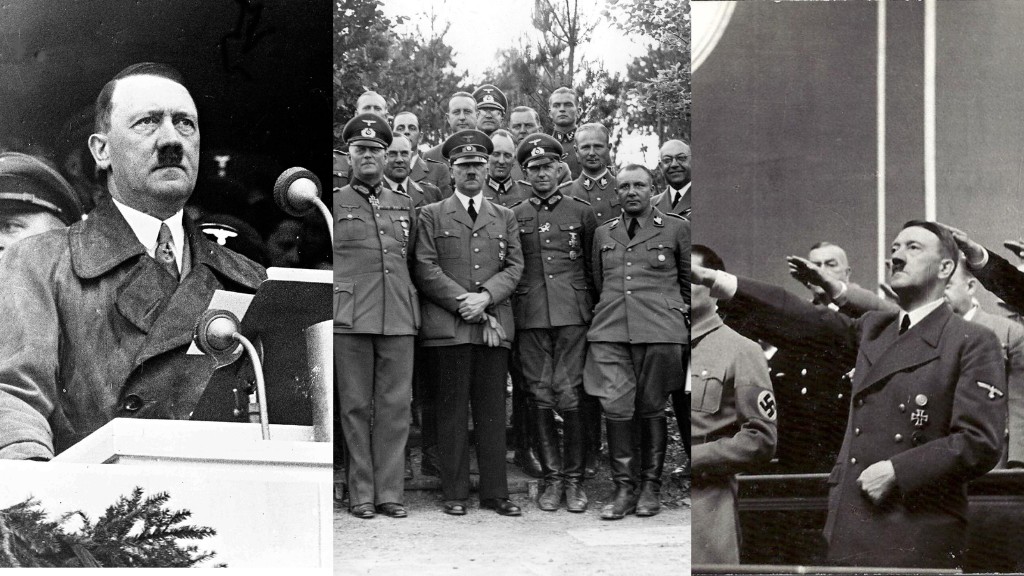
There are things in history that no amount of context makes easier to absorb. The Holocaust is one of them. Six million Jewish people dead. Two thirds of every Jewish person living in Europe at the time. More than a million of them children. It did not happen in the dark ages. It did not happen in some distant, primitive corner of the world. It happened in the middle of the twentieth century, in a country with universities and philosophers and concert halls, carried out by people who went home at the end of the day and had dinner with their families. That is the thing about it that never gets easier to sit with.
How Hitler Got There
Germany after the First World War was a mess and everyone living through it felt it personally. The war had been lost. The Kaiser had fled. The Treaty of Versailles came in and twisted the knife, demanding reparations that would take generations to pay off and stripping away territory that Germans had considered their own. Then the economy went. Inflation reached a point where people were getting paid in the morning and rushing to spend the money before it lost half its value by afternoon. Families who had done everything right, saved carefully, planned ahead, woke up one day to find their savings were worth nothing. That kind of thing does not just hurt people financially. It humiliates them. And humiliated people with nothing left to lose are not difficult to radicalize.
Hitler had an answer for all of it. He told people their suffering was not bad luck or the result of decisions made by their own leaders. It had a cause. It had a face. He was wrong about almost everything but the anger he was speaking to was real and he knew exactly how to use it. The politicians and businessmen who helped put him in power in January 1933 thought they were getting someone they could control and point in useful directions. Within weeks they understood they had made the kind of mistake you do not get to take back.
It Started With Laws
People sometimes imagine the Holocaust as something that arrived suddenly. It did not. It crept in through laws and paperwork and small humiliations that kept getting worse year by year.
Within weeks of the Nazis taking power, Jewish businesses were being boycotted. Within months, Jews were being pushed out of government work. By 1935 the Nuremberg Laws had stripped Jewish people of German citizenship, banned them from marrying non-Jews, and made them legal outsiders in a country where many of their families had lived for generations. Each year something new was taken away. Each year the space available to Jewish people in Germany got a little smaller.
Then in November 1938 came the night that made clear how far things had already gone. Synagogues burned across Germany and Austria. Jewish businesses were smashed up and down the streets. Around 30,000 Jewish men were arrested and taken to camps. The first concentration camp, Dachau, had actually been open since March 1933, just weeks after Hitler came to power. None of what was coming was hidden. It was just that not enough people chose to see it.
The Decision
Germany invaded Poland in September 1939 and the war was on. As German forces swept across Europe in the months and years that followed, each new country they took brought more Jewish people under Nazi control. France. The Netherlands. Greece. Hungary. Everywhere the army went, the question followed. What happens to the Jews here. The answer had been taking shape inside the Nazi leadership for years. Wannsee was just the meeting where they finally wrote it down.
In January 1942, senior Nazi officials met at a villa outside Berlin called Wannsee. Over the course of one afternoon they discussed the complete extermination of every Jewish person in Europe. They called it the Final Solution to the Jewish Question. The minutes from that meeting survived the war. The thing that gets people when they read them is not the horror of the subject. It is how ordinary the language is. Budget meeting language. Scheduling language. That gap between the words on the page and what they were actually planning is one of the most disturbing things in the entire historical record.
The Camps
What followed Wannsee was murder at a scale and efficiency the world had never seen. Jews from across occupied Europe were loaded into cattle cars and sent by rail to killing centers in occupied Poland. Auschwitz-Birkenau was the largest. Treblinka, Sobibor, Belzec, Chelmno and Majdanek were the others. At Auschwitz alone, around 1.1 million people were killed.
Trains arrived and people were sorted on the platform. Those judged unable to work were walked to the gas chambers, usually within a few hours of getting off the train. Old people. Mothers with young children. Anyone who looked too weak. The ones selected for labor were worked until they had nothing left and then killed. The crematoria ran through the night.
In Ukraine and the Soviet Union, mobile killing units followed the German army and shot Jewish communities wherever they found them. At Babi Yar, a ravine on the edge of Kyiv, more than 33,000 people were shot over two days in September 1941. Two days.
Everyone Else
Jewish people were the main target but the Nazis cast a wide net. Roma and Sinti families were pulled from their homes and killed. People with disabilities were dying in German hospitals before the war even started, their families receiving letters explaining they had passed away from some ordinary illness. Gay men were arrested. Jehovah’s Witnesses who would not bend were locked up. Soviet prisoners of war were herded into camps and left to die of starvation and disease, millions of them. Polish civilians were not collateral damage, they were on the list deliberately. Six million is the number most people carry in their heads, and that number refers to Jewish victims alone. The full count of everyone the Nazis killed is something else entirely.
The End
Soviet soldiers reached Auschwitz in January 1945 and found around 7,000 survivors too weak to have been marched away. American troops liberating camps in Germany and Austria that spring saw things they spent the rest of their lives struggling to put into words. The photographs went everywhere and for anyone willing to look, there was nothing left to deny.
Germany surrendered on May 8 1945. The Nuremberg Trials created something new, the idea that individuals could be held personally responsible for crimes against humanity, that following orders was not a defence. The Universal Declaration of Human Rights in 1948 came out of the world asking itself what rules needed to exist so that nothing like this could be allowed to happen again.
What Germany Did With It
Germany after the war did something that countries with dark histories do not always do. It looked at what happened and did not look away.
Holocaust denial is illegal there. The Memorial to the Murdered Jews of Europe sits in the center of Berlin, right next to the Brandenburg Gate, unavoidable. Schools teach this history properly. The stumbling stones, small brass plaques set into the pavement outside homes where Jewish residents once lived before being taken, are spread across German cities in their hundreds of thousands. You can be walking down an ordinary street and look down and find one at your feet.
Germany has paid more than $80 billion in reparations to survivors and their families since the 1950s and the payments have not stopped. Survivors have said it is not enough, and they are not wrong. But as reckonings go, it is more honest than most countries have managed.
Why It Still Matters
Antisemitism did not disappear when the war ended. It is in every country today, including Germany. Holocaust denial has spread in places that should know better. The last survivors are old now and when they go, the living memory of what it was actually like goes with them.
What remains is the record. Documents, photographs, testimony, the names of six million people that researchers have spent decades trying to recover one by one. The obligation to look at it clearly and not dress it up or water it down is one of the few things people across politics still broadly agree on.
Whether the world learned what it needed to learn from all of this is a harder question. Looking at how the decades since 1945 have actually gone, the honest answer is probably not enough.