




Why Switzerland Has the Best Healthcare and Education System
Why Switzerland has the best healthcare and education system isn’t a simple story. The country doesn’t have oil. It doesn’t have a massive population. It doesn’t have a colonial history that built up wealth over centuries. It’s a small landlocked country of 8.
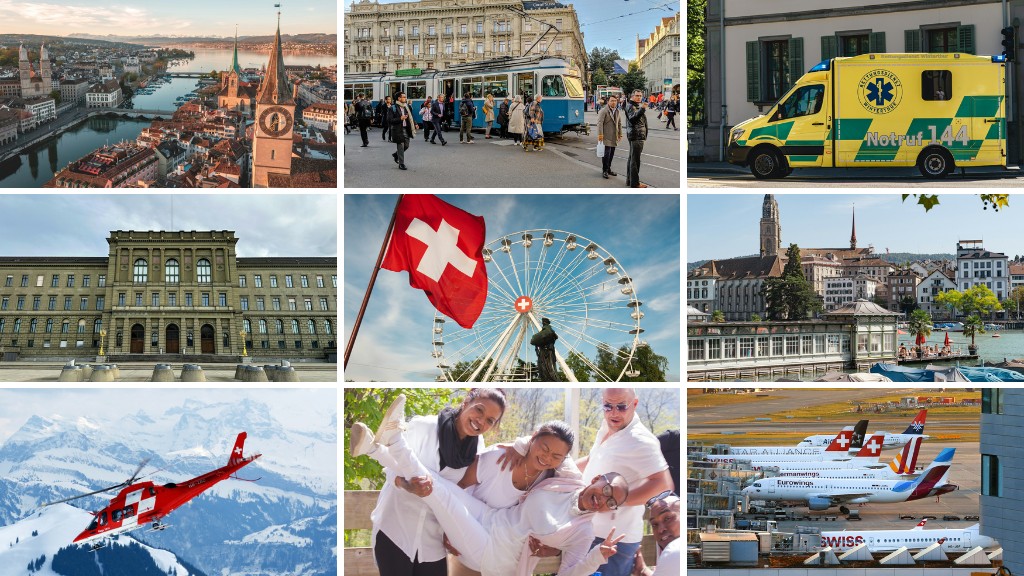
Why Switzerland has the best healthcare and education system isn’t a simple story. The country doesn’t have oil. It doesn’t have a massive population. It doesn’t have a colonial history that built up wealth over centuries. It’s a small landlocked country of 8.8 million people in central Europe, bordered by France, Germany, Italy, Austria, and Liechtenstein. There’s nothing obvious in the basics that explains why Switzerland consistently ranks at or near the top of global rankings for both healthcare quality and education outcomes.
Yet the rankings keep coming back the same way. Swiss healthcare delivers some of the best outcomes in the world. Swiss education produces a workforce that combines academic depth with practical skills few countries match. Understanding why Switzerland has the best healthcare and education system means looking at the specific design choices, the long-term thinking, and the cultural priorities that produced both systems over decades.
This guide covers what actually makes both Swiss systems work, what they cost, what they get right, what challenges remain, and what other countries can realistically learn from the Swiss approach.
Swiss Healthcare: Expensive, Complicated, and Effective
Swiss healthcare isn’t cheap. Anyone who’s lived there or examined it closely confirms this immediately. Switzerland spends approximately $9,963 per person on healthcare annually, well above the OECD average of $5,967. Total Swiss healthcare spending was approaching CHF 103 billion in 2025, around 12 percent of the entire economy.
For a country of 8.8 million people, that represents enormous resources directed at one sector. The relevant question is what people actually receive for that spending.
The outcomes are part of why Switzerland has the best healthcare and education system reputation:
Life expectancy: 84.3 years, more than three years above the OECD average
Doctors per capita: 4.5 per 1,000 residents versus OECD average of 3.9
Nurses per capita: 18.8 per 1,000, more than double the OECD average of 9.2
Quality access surveys: 89% of Swiss residents report having quality healthcare available when needed, compared to OECD average of 64%
Unmet medical need: Among the lowest in the OECD
Cancer survival rates: Among the best in Europe
Infant mortality: Below 4 per 1,000 live births
The system delivers measurable results. Patients get treated. Outcomes are strong. Wait times for non-emergency procedures are generally low compared to NHS-style systems in the UK.
How the Swiss Healthcare System Actually Works
How Switzerland delivers these results is unusual compared to most other developed countries. There’s no government-run healthcare service. Instead, every Swiss resident is legally required to purchase private health insurance through one of approximately 50 approved insurance providers.
The mandatory insurance system has been in place since 1996 under the KVG (Krankenversicherungsgesetz) federal law. This is central to why Switzerland has the best healthcare and education system from a structural perspective.
Key features of Swiss healthcare structure:
Mandatory insurance: Every resident must purchase basic health insurance within 3 months of arriving in Switzerland
Insurer competition: Multiple private insurers compete on price and supplementary coverage
No risk selection: Insurance companies cannot refuse anyone for basic coverage, regardless of age or pre-existing conditions
Government subsidies: Low-income residents receive premium subsidies (around 25% of population)
Federal basic package: All insurers must cover the same basic package set by federal law
Annual deductibles: Patients choose deductibles between CHF 300 and CHF 2,500, with lower premiums for higher deductibles
10% co-payment: Patients pay 10% of costs above the deductible up to an annual maximum (CHF 700 for adults)
Free choice of doctor: Patients generally choose their own doctors and specialists
The basic insurance covers all medically necessary care including general practice visits, specialist consultations, hospital treatment, prescribed medications, mental health care, maternity care, and emergency services. Supplementary insurance adds private hospital rooms, alternative medicine, dental coverage, and other optional services.
This hybrid model produces a specific outcome. Everyone is covered. Nobody gets turned away from care. Insurance company competition creates some pressure to keep costs reasonable. Government intervention prevents the worst features of pure market healthcare systems.
The 2025 premium increase of approximately 6% has become a significant political issue. Households paying CHF 400-600 per month per adult in basic premiums feel the pressure, especially when wage growth doesn’t match premium increases.
Swiss Mental Health Coverage
Switzerland has more psychiatrists per capita than any other OECD country. Mental health receives serious attention in the Swiss system in ways many countries are still catching up to. Coverage is universal under basic insurance.
The nuance worth acknowledging: Switzerland also has comparatively high rates of involuntary psychiatric hospitalization compared to its European neighbors. This reflects both the system’s willingness to use formal interventions and ongoing debates about appropriate use of involuntary commitment. The system isn’t perfect even in areas where Switzerland leads internationally.
Swiss Education: Practical, Flexible, and Decentralized
Why Switzerland has the best healthcare and education system extends from healthcare into education through a fundamentally different approach to schooling than most countries take.
Most people assume Switzerland has one national education system. It doesn’t. Switzerland is divided into 26 cantons (states), and each canton operates its own education system with substantial independence. The language situation alone shows the diversity. German, French, Italian, and Romansh are all official languages, with each linguistic region having different educational traditions.
A school in Geneva (French-speaking) operates differently from one in Zurich (German-speaking) or Lugano (Italian-speaking). The instruction language is different. The cultural orientation is different. Some details of curriculum are different. Despite this decentralization, the system produces consistent outcomes across cantons.
This decentralized success is part of why Switzerland has the best healthcare and education system reputation. The country has found ways to maintain quality and consistency without centralizing decision-making.
The Vocational Training Model
What truly distinguishes Swiss education is the dual vocational training system (Berufsbildung in German, Formation Professionnelle in French). This system represents the biggest single answer to why Switzerland has the best healthcare and education system.
Approximately 60-70% of Swiss students after compulsory school (around age 15-16) enter apprenticeship programs rather than university-track education. They work 3-4 days per week at companies in their chosen profession while attending vocational school 1-2 days per week. Programs typically last 3-4 years.
What makes Swiss apprenticeships different:
Genuine respect: Vocational education isn’t considered second-best. It’s a respected path that produces successful careers across many industries
Real company training: Major companies including Migros, Coop, UBS, Credit Suisse, Novartis, and SBB (Swiss Federal Railways) actively train apprentices
Wide range of professions: Over 230 different apprenticeship programs exist, from traditional trades to banking, IT, healthcare, and pharmaceutical sectors
Standardized qualifications: Federal vocational education certificates (EFZ) are recognized nationwide
Continued education paths: Apprentices can later pursue Federal Diplomas of Higher Education or university degrees through the Berufsmaturität (vocational baccalaureate)
Strong industry engagement: Companies invest substantial resources in training because the system delivers qualified employees who already understand the work
This model produces several Swiss advantages. Youth unemployment remains among the lowest in Europe (around 2-4% versus 15-20% in some EU countries). Companies get workers who learned actual work processes rather than purely theoretical knowledge. Workers begin earning real wages and developing careers at younger ages without crushing student debt.
The vocational system also creates the steady pipeline of skilled workers Switzerland needs across sectors. Healthcare workers, technicians, financial services professionals, and skilled tradespeople all come substantially through vocational pathways.
Swiss Universities and Research
For students choosing academic tracks, Swiss universities offer some of the world’s best higher education. The Swiss university system is heavily research-focused and internationally connected.
ETH Zurich (Swiss Federal Institute of Technology) consistently ranks among the world’s top 10-20 universities globally. ETH has produced 22+ Nobel Prize winners across physics, chemistry, and medicine, including Albert Einstein who graduated in 1900. ETH excels particularly in engineering, computer science, mathematics, and natural sciences.
EPFL (École Polytechnique Fédérale de Lausanne) is ETH’s French-speaking counterpart, also ranked among Europe’s top engineering schools.
University of Zurich is Switzerland’s largest university with strong programs across medicine, law, and humanities.
University of Basel is Switzerland’s oldest university (founded 1460) with particular strengths in medicine and pharmaceutical sciences.
University of Geneva, University of Bern, University of Lausanne, and others round out the major research universities.
Approximately 58% of doctoral students at Swiss universities are international, one of the highest proportions in the OECD. This international character feeds back into research quality and connects Swiss universities to global academic networks.
Medical Education and Training
Medical education in Switzerland connects directly to why Switzerland has the best healthcare and education system through rigorous training standards.
Medical degree: 6 years at university
Specialty training: 5-6 additional years for most specialties
Federal medical examination: Standardized national exam at completion
Mandatory continuing education: Compulsory throughout career, not optional
Federal standards: Medical practice standards set federally, enforced consistently across cantons
Doctors who want to work independently must complete specialty qualifications. The continuing education requirements ensure ongoing competency throughout careers rather than competency only at qualification.
This rigorous training contributes directly to healthcare quality. Patients see doctors who have completed extensive education and continue ongoing training throughout their practice years.
The Connection Between Healthcare and Education
What ties Swiss healthcare and education together extends beyond statistics into systemic interconnection. Why Switzerland has the best healthcare and education system reputation depends partly on how these systems reinforce each other.
The vocational education system produces a steady stream of qualified nurses, healthcare assistants, medical technicians, and other healthcare workers. The Swiss healthcare system needs these workers continuously and the education system provides them at scale.
The Swiss medical universities feed research into pharmaceutical companies including Novartis (based in Basel) and Roche (also Basel). Both companies are among the world’s largest pharmaceutical companies. Both generate substantial revenues that flow back into Swiss research institutions, university funding, and tax revenues that support both healthcare and education systems.
The cycle works in both directions. Universities produce researchers and skilled workers. Companies fund research and provide career destinations. The tax revenue from both supports the systems that produced them. This integrated structure is one reason why Switzerland has the best healthcare and education system performance has been sustainable over decades.
The Cultural Foundations
Beyond structural design, why Switzerland has the best healthcare and education system depends on cultural factors that are harder to replicate elsewhere.
Long-term thinking: Swiss political and social culture emphasizes long-term outcomes rather than short-term wins
Quality consciousness: Cultural emphasis on doing things properly rather than quickly
Practical orientation: Education and training focused on what actually works rather than theoretical ideals
Consensus politics: Direct democracy and consensus-building approach creates buy-in for systemic changes
Federalist design: Decentralization allows experimentation and prevents single-point failures
Tax compliance: High social trust translates to high tax compliance, which funds the systems
Civic participation: Citizens actively engaged in democratic processes including referendums on healthcare and education
These cultural factors take generations to develop and cannot simply be implemented through policy changes.
The Problems Switzerland Still Faces
The honest assessment of why Switzerland has the best healthcare and education system also requires acknowledging the genuine challenges that remain.
Healthcare premium growth: Insurance premiums keep rising faster than wages, creating real political pressure. The 2025 increase of 6% follows years of increases. Reform debates continue without clear consensus.
Regional healthcare disparities: Rural cantons have less specialist access than Zurich, Basel, or Geneva. Mountain communities especially face longer travel times for specialized care.
Education inequalities between cantons: PISA scores and university entry rates vary across cantons. The German-speaking regions sometimes outperform French-speaking regions academically, creating ongoing policy discussions.
Foreign healthcare worker dependency: Switzerland relies heavily on foreign-trained doctors and nurses (especially from Germany, France, and Italy). This creates long-term workforce sustainability questions if neighboring countries improve their own systems.
Aging population pressure: Swiss demographics are aging like other developed countries. The combination of more elderly patients with the same healthcare structure creates rising costs.
University capacity constraints: Some Swiss programs (especially medicine) have entrance restrictions creating tensions between demand and available training slots.
Apprenticeship participation by gender: Some traditional apprenticeships remain heavily gender-segregated, with policy work ongoing to address this.
These problems exist alongside Switzerland’s strengths and don’t invalidate the system’s achievements. They represent ongoing challenges that the Swiss are working through with the same methodical approach that built the systems originally.
What Other Countries Can Actually Learn
Understanding why Switzerland has the best healthcare and education system reputation can help inform other countries’ policy thinking, but with important caveats about what’s actually transferable.
Transferable concepts:
Vocational education respect and serious investment
Mandatory health insurance with insurer competition under regulation
Federal standards with regional implementation flexibility
Long-term policy thinking rather than electoral cycle focus
Quality emphasis throughout education and healthcare
Not easily transferable:
Swiss wealth that funds both systems substantially
Direct democracy political culture
Cantonal federalism developed over centuries
Cultural emphasis on practical outcomes over credentialism
The wealth question matters significantly. Switzerland spends substantially on both healthcare and education because the country can afford to. Per capita GDP exceeds $85,000. The tax base supports the spending. Countries with lower GDP per capita can adopt structural lessons but cannot match Swiss spending levels.
Switzerland in 2026 Context
The 2026 Swiss situation includes several relevant developments. Healthcare premium debates continue with no clear resolution. Education adapts to AI and technology changes more cautiously than some countries. The vocational system maintains popularity even as some industries change rapidly. Foreign worker integration discussions continue across both sectors.
Why Switzerland has the best healthcare and education system in 2026 looks similar to 2020 in fundamentals but with rising cost pressures and demographic transitions creating ongoing reform discussions. The basic structure remains sound. The challenges are about adapting that structure to changing conditions.
Final Thoughts
Why Switzerland has the best healthcare and education system comes down to a specific combination of factors that took decades to develop. Long-term thinking that resisted shortcuts. Substantial investment that wasn’t subject to budget cuts during economic downturns. Practical orientation that focused on what actually produces good outcomes rather than what looks impressive politically. Decentralized implementation that allowed adaptation to local needs. Cultural foundations that supported the systems through citizen participation and tax compliance.
The system isn’t perfect. Insurance premiums frustrate Swiss households. Regional inequalities persist. Aging demographics create cost pressures. But the overall outcomes consistently rank among the world’s best because the foundational design choices were sound and the long-term commitment was sustained across multiple generations.
For other countries studying the Swiss model, the lesson isn’t that Switzerland has some magic formula. The lesson is that good systems require long-term commitment, substantial investment, design choices that prioritize outcomes over ideology, and cultural foundations that support continued improvement. Those elements take time to build and political consistency to maintain. Switzerland has had both for the period that produced today’s results. Whether other countries can replicate those conditions varies significantly by their own circumstances.
What Switzerland demonstrates is that healthcare and education can simultaneously be high-quality, universal, and economically sustainable when designed with care and supported with sustained commitment. That’s the most important answer to why Switzerland has the best healthcare and education system question, and the one most worth learning from for anyone working on improving similar systems elsewhere.
While Switzerland focuses on systems, other legends focus on performance. Read about the Life and Career of Charlie Chaplin, who eventually found his home in the Swiss mountains

Comments