




How Mike Tyson Conquered the World
How Mike Tyson conquered the world is one of those stories that sounds too dramatic to be real. A kid from Brownsville, Brooklyn with 38 arrests by age 13. No father in his life. Mother dead by the time he was 16. Stuck in juvenile detention.
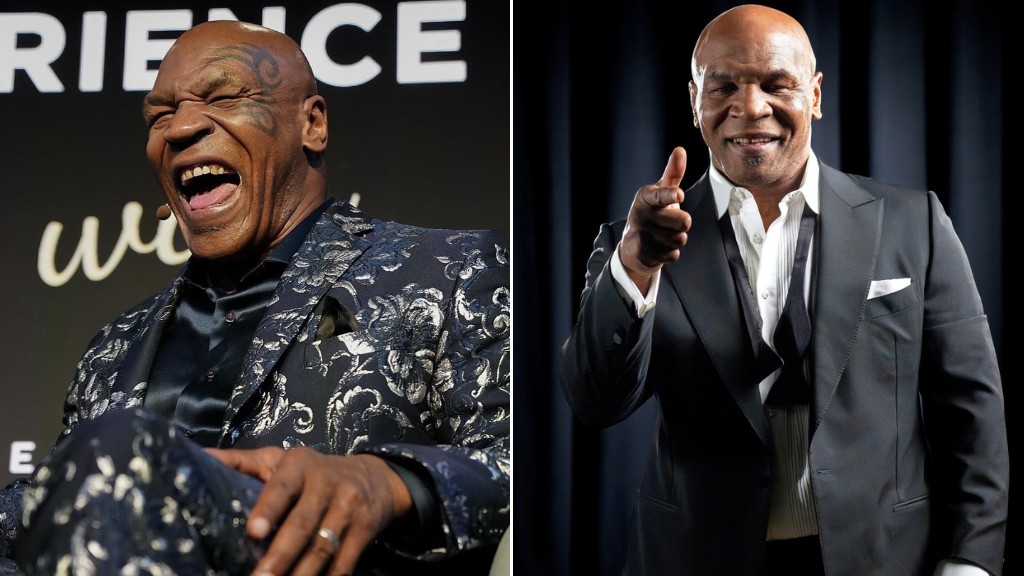
How Mike Tyson conquered the world is one of those stories that sounds too dramatic to be real. A kid from Brownsville, Brooklyn with 38 arrests by age 13. No father in his life. Mother dead by the time he was 16. Stuck in juvenile detention. By all reasonable expectations, he should have ended up in prison or dead. Instead he became heavyweight champion of the world at 20, the youngest ever, and held that record for the next four decades.
This is how Mike Tyson conquered the world. Not the polished version. The actual story including the one old man who changed everything, the boxing peak that nobody had ever seen before, and what fell apart when the people who built him were gone.
Brooklyn and Brownsville
Michael Gerard Tyson was born on June 30, 1966 in Brooklyn, New York. His father Jimmy Kirkpatrick left when Mike was about two years old and barely existed in his life after that. His mother Lorna was left raising three kids alone in some of the worst conditions New York City had at that time.
When Mike was ten the family moved to Brownsville. If you don’t know what Brownsville meant in the 1970s, the short version is: it was one of the most violent neighborhoods in America. Crime wasn’t an occasional thing. It was the everyday environment.
Mike was small as a child with a high-pitched voice and a lisp. In Brownsville that made him a target. Older boys robbed him regularly. Then one day a kid named Gary Flowers killed one of Mike’s pet pigeons in front of him. Mike attacked him without thinking. He won that fight. Something changed in him that day that never fully changed back. Looking at how Mike Tyson conquered the world later, that pigeon fight in Brooklyn was the actual beginning.
By eleven he was running with the Jolly Stompers gang. By thirteen he had been arrested 38 times. Most people who knew him then wouldn’t have bet anything on his future surviving the next few years.
Cus D’Amato
Understanding how Mike Tyson conquered the world means understanding Cus D’Amato. There’s no version of the story without him.
In 1980 a counselor at Tryon School for Boys, a juvenile detention facility, named Bobby Stewart noticed something in the 13-year-old version of Tyson nobody else had bothered to look for. Stewart was a former amateur boxer himself. He started training Mike. A few months later he brought Tyson to meet Cus D’Amato in Catskill, New York. D’Amato was 72 at the time and one of the most respected boxing trainers alive. He had trained Floyd Patterson to the heavyweight title and Jose Torres to the light heavyweight championship.
D’Amato watched Tyson hit the bag for a few minutes and told people around him this kid was going to be heavyweight champion of the world. Not might be. Was. He saw something specific in the combination of speed, power, and natural aggression nobody had taught him.
Tyson moved into D’Amato’s home in Catskill. That house, where Cus lived with his partner Camille Ewald, became the first stable environment Mike had ever known. D’Amato was old enough to be his grandfather and became close to that role. He gave Mike structure he had never experienced. He told him the truth even when it was hard. He believed in him without asking for anything back.
When Mike was 16 his mother died of cancer. He had nobody left from his original family. D’Amato became his legal guardian. The gym in Catskill and the old man who ran it were everything Mike had.
The Rise
Cus D’Amato died on November 4, 1985 at age 77, before Tyson turned professional. Mike was 19. The man who had pulled him out of Brownsville, given him a home, and told him he would be champion was suddenly not there. Trainer Kevin Rooney, who D’Amato had personally trained for this purpose, continued working with Mike. Camille Ewald stayed close to him. But the person who had been the architect of everything was gone.
Tyson turned pro on March 6, 1985, eight months before D’Amato died. What followed was the period that shows how Mike Tyson conquered the world in boxing terms. He won his first 19 fights by knockout. 12 of those knockouts came in the first round. He wasn’t just beating opponents. He was destroying them before they could process what was happening.
On November 22, 1986, Tyson fought Trevor Berbick for the WBC heavyweight championship. He won by knockout in the second round. At 20 years, 4 months, and 22 days old, Mike Tyson became the youngest heavyweight champion in boxing history. That record still stands today nearly forty years later.
In 1987 he added the other major belts. He took the WBA title from James Smith. He took the IBF title from Tony Tucker. By August 1987 he held all three major heavyweight championships simultaneously, the first heavyweight in history to do so. The peak of how Mike Tyson conquered the world was happening in real time.
Then in 1988 came the Michael Spinks fight on June 27. Spinks had never been knocked out. He was undefeated. The fight lasted 91 seconds. Spinks was on the canvas before the arena had finished filling up.
What Made Him Different
When people analyze how Mike Tyson conquered the world technically, several things stood out about prime Tyson.
His hand speed was unusual for a heavyweight, closer to lightweight quickness. His head movement, taught by D’Amato using the peek-a-boo style, made him nearly impossible to hit clean. His combination of explosive power with that speed created punches opponents couldn’t see coming. His mental approach, also taught by D’Amato, was about establishing dominance before the bell. By the time fights started, opponents were often already broken psychologically.
The peek-a-boo style D’Amato developed wasn’t just defense. It set up Tyson’s signature punches by drawing opponents into committed shots that left them exposed for counterattacks. Watch any prime Tyson fight from 1986-1988 and the pattern is consistent. Opponents would try to engage. Tyson would slip the shots. Two or three punches later the fight would be effectively over.
This is the technical answer to how Mike Tyson conquered the world. Speed, power, defensive movement, mental dominance, and a style designed to end fights as fast as possible.
The Collapse Begins
Marriage to Robin Givens in 1988 brought chaos into Tyson’s personal life that hadn’t existed before. Don King became increasingly central to his business affairs, eventually taking control of decisions that D’Amato would have handled. Kevin Rooney was fired in 1988. The structure that had built Tyson started coming apart piece by piece.
By 1990 the team around Tyson wasn’t doing the work D’Amato’s team had done. Training camps were sloppy. Discipline was gone. The fight against James “Buster” Douglas in Tokyo on February 11, 1990 was supposed to be an easy defense.
Douglas knocked Tyson out in the 10th round. The arena went silent. Boxing’s seemingly unbeatable champion was on the canvas, getting counted out by referee Octavio Meyran. The fight remains one of the biggest upsets in sports history. Looking back, the warning signs had been there for over a year. Without D’Amato and Rooney, Tyson wasn’t the same fighter.
How Mike Tyson conquered the world in the late 1980s was directly connected to how he lost it in 1990. The system that built him had been dismantled. What happened next was even worse.
Prison and What It Took
In 1992 Tyson was convicted of raping Desiree Washington and sentenced to six years in Indiana State Prison. He served three years before being released in March 1995. He has consistently maintained his innocence over the decades since. Whatever the truth of what happened, those three years in prison took something from him that never fully came back.
The 1990 loss was about preparation and a coaching transition. Prison was something different. The fighter who emerged in 1995 looked similar to the prime version on the surface but wasn’t the same person inside.
The Comeback That Wasn’t
After prison, Tyson returned to boxing in 1995 with significant fanfare. He won back two heavyweight titles in 1996, defeating Frank Bruno for the WBC and Bruce Seldon for the WBA. The crowds came back. The pay-per-view numbers were enormous. But the boxing was different.
The Evander Holyfield fights changed how people would remember Tyson’s second career. In their first fight on November 9, 1996, Holyfield won by TKO in the 11th round. In the rematch on June 28, 1997, Tyson bit a chunk out of Holyfield’s right ear in the third round and was disqualified. The bite became one of the most replayed moments in sports history and followed Tyson everywhere for years after.
In 2002 Lennox Lewis knocked Tyson out in the 8th round of their long-awaited fight. The Lewis loss essentially confirmed what people had been seeing. The Tyson of the late 1980s was gone and wasn’t coming back.
The Money
By the mid-2000s Tyson was broke despite earning approximately $300 million during his career. He filed for bankruptcy in 2003 with debts of around $23 million. Most of his earnings had been taken by Don King, lost to mismanagement, or spent on lifestyle expenses that ate through massive amounts of money very quickly. Lawsuits, divorces, and tax debts consumed what remained.
The financial collapse is part of how Mike Tyson conquered the world story because it shows how completely the supports that should have protected him after D’Amato had failed him instead. The systems that wealthy athletes need around them were missing or actively exploitative.
The Numbers
How Mike Tyson conquered the world is supported by statistics that remain remarkable decades later:
- 50 wins, 6 losses, 2 no contests in his professional career
- 44 wins by knockout (88% knockout rate)
- Youngest heavyweight champion in history at 20 years old (record still stands)
- First heavyweight to unify WBC, WBA, and IBF titles simultaneously
- 19 first-round knockouts in his career
- Peak years 1986-1988 produced perhaps the most dominant heavyweight stretch ever recorded
Post-Boxing Chapters
Tyson’s life after his boxing career officially ended in 2005 has included multiple chapters that show some reinvention. He developed Mike Tyson Mysteries as an animated TV show that ran from 2014-2020. He wrote bestselling memoirs. He developed a successful one-man stage show called “Mike Tyson: Undisputed Truth.” His cannabis business venture Tyson 2.0 became one of the more successful celebrity cannabis brands.
In November 2024 Tyson returned to the ring at age 58 to fight Jake Paul in a heavily promoted exhibition. He lost the eight-round fight by unanimous decision but the spectacle drew massive Netflix viewership. The fight itself wasn’t competitive in boxing terms but represented Tyson’s continued cultural relevance four decades after his peak.
Why The Story Still Matters
How Mike Tyson conquered the world is a story people still tell decades later because it isn’t really about boxing. It’s about what becomes possible when someone everyone has written off finds the right mentor at the right moment.
Cus D’Amato looked at a 13-year-old with 38 arrests and saw a heavyweight champion. That single decision changed everything. Without D’Amato, there’s no Tyson dynasty in boxing, no records, no story to tell. One person’s belief in another genuinely altered the entire trajectory of multiple lives.
People watch old Tyson fights today not just because he was exciting, though he was the most exciting heavyweight ever to live. They watch because how Mike Tyson conquered the world represents something specific about human potential and what’s possible when someone gets the chance they need.
The Hard Truth
The complete story of how Mike Tyson conquered the world also includes what happened after the people who built him were gone. D’Amato died too early. The people who replaced him weren’t built for the same role. The systems Mike needed didn’t exist outside of Catskill.
At his peak, no human being on earth was more dangerous inside a boxing ring than Mike Tyson. Outside the ring, he remained in many ways the same kid from Brownsville who had never been taught how to exist in a world that wasn’t actively hostile. The boxing he understood instinctively. Everything else was always harder.
How Mike Tyson conquered the world is a story about what one person’s belief in another can accomplish. It’s also a story about what happens when that belief disappears too soon. Both parts matter equally. The peak from 1985-1988 is what people remember. The decades since are what they should also study, because both halves of the story exist for the same underlying reasons.
The 13-year-old kid from Brownsville who Cus D’Amato saw potential in did something nobody had ever done before in heavyweight boxing. The same person without D’Amato struggled for decades to navigate a world he had never been prepared for. Both Tyson stories are true. Both came from the same place.
While Mike Tyson was the most feared, find out how another legend changed the world in The Incredible Life and Legacy of Muhammad Ali.
| Personal Stats | |
|---|---|
| Born | June 30, 1966 (age 59 years), Fort Greene, New York, United States |
| Division | Heavyweight |
| Height | 1.78 m |
| Spouse | Lakiha Spicer (m. 2009), Monica Turner (m. 1997–2003), Robin Givens (m. 1988–1989) |
| Children | Exodus Tyson, Miguel Leon Tyson, Milan Tyson, Mikey Lorna Tyson, Ramsey Tyson, Amir Tyson |
| Martial art | Boxing |
| Coach | Kevin Rooney (1985–1988), Freddie Roach (2003–2004) |



Comments