


Qatar Natural Gas Empire: How a Small Desert Nation Controls the World’s Energy Supply
Qatar is smaller than Connecticut. Its citizen population is around 300,000, with total residents reaching about 3 million including expatriate workers. By most metrics, it should be a footnote on the world map.
Qatar is smaller than Connecticut. Its citizen population is around 300,000, with total residents reaching about 3 million including expatriate workers. By most metrics, it should be a footnote on the world map. Yet the Qatar natural gas empire has made this small Gulf state one of the most influential energy players on earth, controlling roughly 20 percent of global seaborne LNG supply and holding leverage over the energy budgets of countries on every continent.
The story behind the Qatar natural gas empire is not about luck. It’s about a country that found massive natural gas reserves in the 1970s and made deliberate decisions over five decades that most resource-rich nations never make. While other oil and gas producers spent their windfalls, Qatar invested in infrastructure, signed long-term contracts, built one of the world’s largest LNG shipping fleets, and methodically constructed an export operation that now serves Asia, Europe, and growing markets globally.
The Foundation: North Field
Everything in the Qatar natural gas empire begins with the North Field. This offshore reservoir in the Persian Gulf is the largest single natural gas deposit in the world, and it connects underground to Iran’s South Pars field, making the combined structure the biggest known gas reserve on earth.
Qatar holds the third-largest proven natural gas reserves globally, behind only Russia and Iran. Hydrocarbon revenues account for around 60 percent of the country’s GDP and roughly 83 percent of total government revenues. Everything visible about modern Qatar (the gleaming Doha skyline, world-class infrastructure, the sovereign wealth fund buying stakes in global companies, the 2022 World Cup spending) traces back to what lies beneath North Field waters.
The Qatar natural gas empire exists because of this single geological accident. Without North Field, Qatar would be a sleepy fishing economy. With it, the country has become a major global power that punches dramatically above its physical size.
How the Qatar Natural Gas Empire Was Built
Qatar shipped its first LNG cargo in 1997 to Spain, entering the global market as a minor player. By 2006, it had surpassed Indonesia to become the world’s largest LNG exporter, a position it held for years until US shale gas production growth pushed America into the lead position around 2023.
The strategy that built the Qatar natural gas empire had three main components: aggressive investment in liquefaction infrastructure, long-term supply contracts with buyers in Asia and Europe, and building Nakilat, the shipping arm that operates one of the world’s largest LNG tanker fleets.
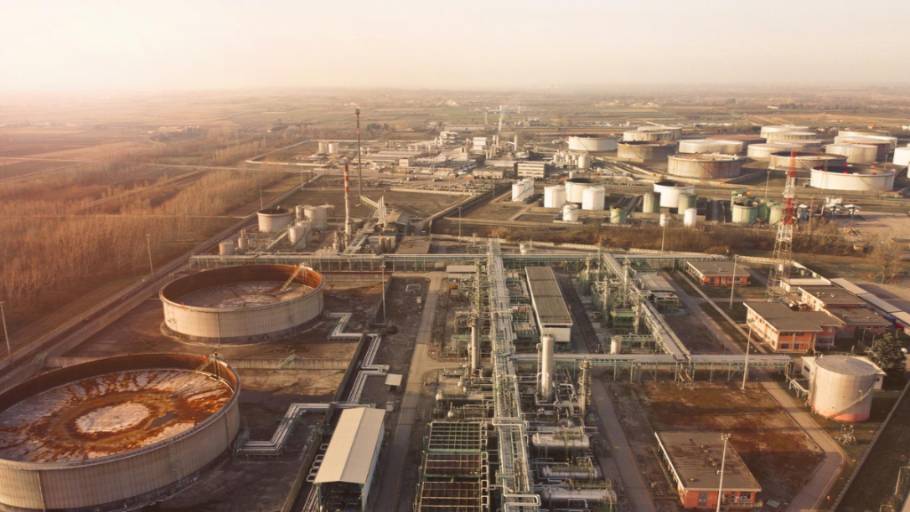
The industrial heart of the operation is Ras Laffan Industrial City, a purpose-built complex on Qatar’s northeastern coast. It houses the LNG trains, petrochemical plants, and supporting infrastructure that turn North Field gas into export revenue. Ras Laffan is often called the LNG capital of the world for good reason. The facility exists essentially to do one thing at enormous scale.
In recent years, Qatar exported approximately 77-84 million tons of LNG annually, running production at or above design capacity. Qatar accounts for nearly 20 percent of global LNG trade and around 20 percent of all LNG transiting the Strait of Hormuz.
Official Source: For live LNG cargo tracking and quarterly production reports, visit the official QatarEnergy LNG Portal or check the latest energy security analysis from the International Energy Agency (IEA).
The 2026 Iran Conflict and Its Impact
The Qatar natural gas empire faced an unprecedented disruption in early 2026. On March 2, Iranian drone and missile strikes hit Ras Laffan Industrial City and Mesaieed Industrial City as part of the broader US-Israeli-Iran conflict that escalated through that period.
QatarEnergy halted LNG production entirely. The company subsequently declared force majeure on long-term supply contracts including buyers in Italy, Belgium, South Korea, and China. Shell, the world’s largest LNG trader, similarly declared force majeure on its Qatari LNG contracts.
QatarEnergy CEO Saad al-Kaabi confirmed that two of Qatar’s 14 LNG trains and one of two gas-to-liquids facilities sustained damage. The affected capacity represents approximately 17 percent of Qatar’s total LNG export capacity. Repairs to the damaged units could take three to five years according to al-Kaabi’s statements. Estimated annual revenue loss reaches $20 billion.
By April 2026, following a US-Iran ceasefire tied to reopening the Strait of Hormuz, Qatar began mobilizing engineers and workers to restart production at the undamaged units. Initial restart efforts are underway though full recovery depends on continued security in the region and safe passage for LNG tankers through Hormuz.
This event exposed the geographic vulnerability that has always been part of the Qatar natural gas empire. The infrastructure can’t relocate. The region generates instability. The reliability that made Qatar a preferred supplier suddenly has visible limits.
The Expansion That Was Reshaping Global Energy
Before the 2026 conflict, the Qatar natural gas empire was in the middle of its most ambitious expansion ever. Plans called for raising LNG production capacity from current levels to 126 million tons per year by 2027, with further expansion targeting 142 million tons by 2030. That would have represented nearly doubling Qatar’s output.
The North Field East and North Field South expansion projects were the engine of this growth. Major international oil companies including ExxonMobil, Shell, TotalEnergies, ConocoPhillips, and Eni signed on as partners, reflecting the global energy industry’s confidence in Qatar’s long-term position.
The 2026 disruption has delayed these projects. Japanese contractor Chiyoda Corporation, working on North Field East, paused activities during the conflict. With the ceasefire holding, contractors are evaluating restart timelines. Analysts at Wood Mackenzie estimate the disruption could tighten global LNG supply, raise prices, and delay capacity growth through 2028.
Whether Qatar can recover the full expansion timeline and ultimately reach the 142 million ton target by 2030 depends on regional stability that no one can predict with confidence.
Who Buys Qatar’s Gas
The Qatar natural gas empire sells globally. For decades, Asia dominated the customer base. Japan, South Korea, India, and China have been major long-term buyers, attracted by reliable supply and competitive pricing through extended contracts.
Europe became significantly more important after Russia’s 2022 invasion of Ukraine forced European countries to find alternatives to Russian pipeline gas. The EU is now the largest single importer of seaborne LNG globally. Qatar has been a key supplier filling the Russian gas gap.
The relationship with Europe has been complicated. In late 2024, the European Commission announced a tax on LNG imports from Qatar over compliance issues. Qatar’s energy minister explicitly threatened to halt EU supplies if the fine was pursued. The standoff illustrated the power dynamic at the heart of the Qatar natural gas empire: Europe needs the gas, but Qatar has enough buyers elsewhere to make walking away a credible threat.
The 2026 conflict added a new dimension. Force majeure declarations affected European buyers including Italy and Belgium directly. The dependence Europe had built on Qatari gas suddenly produced acute supply concerns when production halted.
QatarEnergy: The Operational Center
The Qatar natural gas empire runs through one state-owned company. QatarEnergy controls all aspects of gas production, LNG exports, shipping, and downstream activities. It is one of the most powerful energy companies in the world.
CEO Saad al-Kaabi is among the most influential figures in global energy markets. Statements from him regularly move gas prices and reshape supply expectations. During the 2026 conflict, his updates about production capacity damage directly affected European and Asian gas markets.
QatarEnergy has been expanding vertically, not just selling raw LNG but acquiring upstream assets in countries from Namibia to the United States, and pushing into downstream markets in northwest Europe where it wants direct access to wholesale buyers rather than working through intermediaries.
The ambition extends beyond current operations. Qatar wants to control more of the supply chain from wellhead to end consumer, capturing margin currently going to middlemen and trading houses.
The Risks and Complications
The Qatar natural gas empire faces real long-term challenges that the 2026 conflict highlighted but didn’t create.
Geopolitical risk is baked into the geography. The infrastructure sits in a region prone to instability and now has demonstrated vulnerability to direct attack. Insurance costs for facilities and tankers will rise. Buyers may seek diversification specifically to reduce Qatar dependence.
Energy transition concerns affect long-term demand. Qatar is betting that natural gas remains a key transition fuel for decades, bridging coal and renewables. That bet may prove correct, but the timeline is uncertain. Aggressive climate policies in major markets could reduce gas demand faster than Qatar’s planned production growth.
Competition is intensifying from US LNG exports, Australian production, and emerging suppliers including Mozambique. Qatar’s pricing power decreases as alternative supplies grow.
Infrastructure damage repair from 2026 will sideline 12.8 million tons of annual LNG production for 3-5 years. The competitive position deteriorates during this period as competitors maintain or expand capacity.
The country’s National Vision 2030 explicitly aims to diversify away from hydrocarbons, investing in education, technology, sports infrastructure, and other sectors to reduce dependence on gas as the sole driver of national wealth. The 2026 disruption likely accelerates this diversification urgency.
Why the Qatar Natural Gas Empire Matters Globally
When gas prices spike in Europe during cold winters or supply disruptions, Qatar is part of the global conversation about where replacement gas comes from. When Japan signs long-term energy security deals, Qatar is on the list. When developing economies in Asia build new power infrastructure, Qatari LNG is often the chosen fuel.
The 2026 conflict made the global dependence even more visible. European gas futures surged dramatically on news of the Ras Laffan halt. Asian buyers scrambled for alternative supplies. The 17 percent capacity loss from one country affected energy markets across multiple continents.
The Qatar natural gas empire matters because energy security matters, and Qatar sits at the intersection of supply and demand in ways that give this small desert nation an outsized voice in global affairs. Whether that position can be sustained through repair of damaged facilities, the energy transition, ongoing Middle East instability, and competition from American and Australian LNG remains the defining question for the next decade.
The foundation of North Field reserves remains. The infrastructure can be rebuilt. The customer relationships endure. But the assumption of reliability that made Qatar a preferred supplier has been shaken in ways that will affect industry decisions for years.
Final Thoughts
The Qatar natural gas empire represents one of the most remarkable resource-based economic transformations of modern times. A small desert state with a tiny population built itself into a global energy power through deliberate strategy and decades of consistent investment.
The 2026 conflict has tested this empire in ways nothing previously had. The recovery timeline will determine whether Qatar maintains its position or cedes ground to competitors. The expansion plans that were going to nearly double output by 2030 now face uncertain timelines.
What’s clear is that the gas itself remains. North Field hasn’t moved. The infrastructure that survived continues operating once Strait of Hormuz passage is reliable. The customer demand persists. The question is whether the Qatar natural gas empire can rebuild trust in its reliability while completing repairs and expansion in a region where another conflict could erase progress overnight. The answer will shape global energy markets through 2030 and beyond.
Read More: The security of Gulf energy hubs is deeply tied to regional peace. To understand the broader diplomatic efforts, read our report on will Trump visit Pakistan for Iran peace deal.
Comments