
How Does Plastic Pollution Affect Oceans: The Real Environmental Crisis Explained
How does plastic pollution affect oceans is one of those questions that people ask casually but the actual answer is genuinely disturbing. We see viral images of turtles with plastic straws stuck in their noses. We see beach clean-up posts on Instagram. We hear about the Great Pacific Garbage Patch.
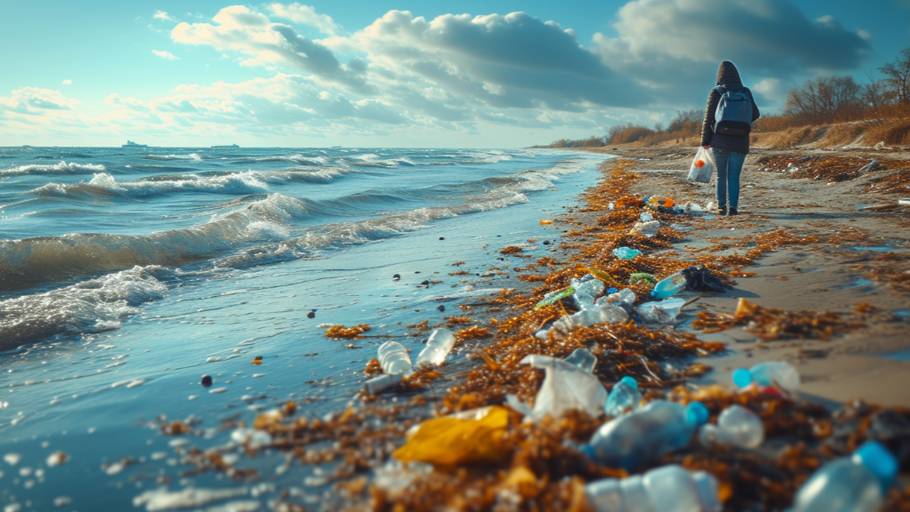
How does plastic pollution affect oceans is one of those questions that people ask casually but the actual answer is genuinely disturbing. We see viral images of turtles with plastic straws stuck in their noses. We see beach clean-up posts on Instagram. We hear about the Great Pacific Garbage Patch. But putting all this together into an actual understanding of what plastic is doing to our oceans requires looking at hard science rather than just emotional imagery.
Look, I’ll be direct with you. The situation is much worse than most people realize. Roughly 8-11 million metric tons of plastic enter the oceans every single year. That’s the equivalent of dumping a garbage truck full of plastic into the sea every minute. Scientists predict that by 2050, oceans could contain more plastic than fish by weight. This isn’t environmental fearmongering. This is peer-reviewed research from institutions like the World Economic Forum and Ellen MacArthur Foundation.
This guide covers how does plastic pollution affect oceans with the actual scientific picture for 2026. What plastic is actually doing to marine ecosystems. How microplastics are now appearing in human blood and lungs. Why this affects Pakistanis specifically. And what needs to happen to address a crisis that most governments are still ignoring.
The Scale of the Problem
Before understanding how does plastic pollution affect oceans in detail, understand the actual scale.
Every year, humans produce over 400 million metric tons of plastic globally. Roughly 8-11 million metric tons of this ends up in oceans annually. That’s from rivers carrying plastic waste, coastal dumping, fishing industry losses, and various sources. Most of this plastic doesn’t just disappear. It stays in ocean environments for hundreds to thousands of years.
The Great Pacific Garbage Patch is the most famous example. Located between Hawaii and California, this floating collection of debris covers an area roughly three times the size of France. It contains an estimated 1.8 trillion pieces of plastic weighing about 80,000 metric tons. And this is just one of five major garbage patches in the world’s oceans.
Similar patches exist in the North Atlantic, South Atlantic, Indian Ocean, and South Pacific. All formed by ocean currents concentrating floating plastic in specific circulation zones.
Plastic pollution isn’t limited to visible garbage patches. It’s distributed throughout the oceans. From coastal areas to deep-sea trenches. From Arctic ice to Antarctic waters. From surface waters to sediments 11 kilometers deep in the Mariana Trench. Nowhere in the ocean is unaffected.
What Actually Happens to Plastic in Oceans
Understanding how does plastic pollution affect oceans requires knowing what happens to plastic once it enters marine environments.
Plastic doesn’t biodegrade in oceans the way organic material does. Instead, it goes through a process called photodegradation where sunlight and physical forces break it into smaller pieces. This creates a hierarchy of plastic pollution:
Macroplastics are large visible pieces like bottles, bags, fishing nets, and containers. These are what we typically see and photograph. They cause immediate harm through entanglement and ingestion by marine animals.
Microplastics are fragments smaller than 5 millimeters. Created when larger plastics break down. Also directly produced as microbeads in cosmetics, synthetic fibers from clothing, and tire wear particles. Now present throughout ocean environments in staggering quantities.
Nanoplastics are particles smaller than 100 nanometers. These are so small they can penetrate cell membranes. Their effects on marine life and human health are just beginning to be understood, and the initial research is alarming.
The breakdown process takes different amounts of time for different plastics. A plastic bottle takes approximately 450 years to fully degrade. A plastic fishing line takes 600 years. Plastic bags take 20-1000 years depending on conditions. Cigarette filters (which contain plastic) take 10 years. During all this time, they’re releasing chemicals into the water and being consumed by marine life.
Direct Impact on Marine Animals
The impact of plastic waste on marine life is genuinely horrifying when you look at specific cases and statistics.
Sea turtles ingest plastic bags mistaking them for jellyfish. Studies show over 50% of sea turtles globally have ingested plastic. This blocks digestive systems, creates false feelings of fullness that lead to starvation, and often results in death. Six out of seven sea turtle species are now threatened or endangered.
Marine mammals including whales, dolphins, and seals face similar problems. Plastic debris found in stomachs of dead whales sometimes weighs 40+ kilograms. A whale that washed ashore in Philippines had 40 kilograms of plastic bags in its stomach. Another in Scotland had over 100 kilograms. These aren’t isolated incidents anymore.
Seabirds are catastrophically affected. Research shows over 90% of seabirds have plastic in their stomachs. By 2050, scientists predict virtually every seabird species will have consumed plastic. Albatrosses feeding their chicks pieces of plastic they mistake for food is documented across their populations. Chicks die from starvation despite full stomachs.
Fish consume microplastics constantly. This affects their reproduction, growth, and behavior. Studies show fish that consume microplastics have altered feeding patterns and reduced ability to escape predators.
Coral reefs are damaged by both physical plastic contact and chemical leaching. Plastic in contact with coral increases disease rates from 4% to 89% according to major research. Reefs are dying globally partly due to plastic pollution combined with warming waters.
Filter feeders like whales, manta rays, and whale sharks consume massive amounts of microplastic-contaminated water. Some species now filter tons of contaminated water annually. The long-term reproductive and health effects are still being studied but preliminary research is concerning.
The Microplastic Contamination Reality
The effects of plastic pollution on oceans have moved beyond just visible waste. Microplastic contamination has become universal.
Microplastics are found in every part of the ocean tested. Arctic sea ice contains microplastics. Deep-sea sediments contain microplastics. Table salt harvested from oceans contains microplastics. Seafood consumed globally contains microplastics.
Sources of ocean microplastics include:
Synthetic clothing: Every wash of synthetic clothing releases thousands of microfibers into water systems that eventually reach oceans. A single load of polyester clothing can release 700,000+ microfibers.
Tire wear: Vehicle tires release microplastic particles that wash into water systems. This is one of the largest sources of ocean microplastics globally.
Personal care products: Microbeads in exfoliants, toothpaste, and cosmetics. Banned in many countries now but still widely used globally.
Broken down larger plastics: Every plastic bottle, bag, and container that enters oceans eventually breaks into microplastics through UV exposure and physical forces.
Fishing gear: Lost fishing nets, lines, and equipment continuously release microplastics as they degrade.
The scale is staggering. Recent research estimates 51 trillion microplastic particles float in ocean surface waters alone. That’s not counting particles in deeper waters, sediments, or ice.
How This Affects Human Health
The impact of plastic waste on marine life eventually returns to affect humans. This isn’t distant environmental concern anymore. It’s affecting our bodies directly.
Microplastics are now found in human blood. Research published in 2022 detected plastic particles in blood samples from 77% of tested individuals. This means plastic is circulating throughout our bodies, potentially depositing in organs.
Microplastics have been found in human lungs. Particles from ocean pollution eventually enter the atmosphere and get inhaled. Studies detect plastic fibers in lung tissue of nearly all tested subjects.
Microplastics appear in placentas. Research found microplastic particles in placenta tissue, meaning fetuses may be exposed to plastic pollution before birth. Long-term developmental impacts are unknown but concerning.
Microplastics contaminate our food. Seafood is obvious source but plastics also enter food chains through soil (from agricultural plastic use), through processed foods (from plastic packaging), and through water systems.
Chemical exposure adds another layer. Plastics contain endocrine-disrupting chemicals like BPA and phthalates. These affect hormonal systems, potentially contributing to fertility problems, developmental issues, and various diseases.
The full health implications are still being researched. Scientific consensus is that human exposure to plastic pollution is now universal and long-term health effects are likely serious.
Ocean Plastic Pollution Impact on Pakistan Specifically
Ocean plastic pollution affects Pakistan directly given our coastline and marine economy.
Karachi coastline receives massive amounts of plastic pollution. Some from Pakistan’s own waste management failures. Some from regional and global ocean currents. Beaches near Karachi are visibly affected, particularly during monsoon seasons when runoff carries land-based waste to sea.
Pakistani fishing industry is affected in multiple ways. Fish stocks declining partly due to marine ecosystem damage. Fishing gear frequently damaged by plastic debris. Fish caught increasingly contain microplastic contamination, affecting quality and safety.
Karachi’s water supply concerns. As microplastics contaminate marine environments, they enter water treatment systems. Testing of Pakistani drinking water has found microplastic contamination, though at varying levels.
Coastal tourism affected. Beaches strewn with plastic don’t attract tourists. Pakistan’s potential coastal tourism suffers from visible pollution.
Sindh’s coastal ecosystems damaged. Mangrove forests along Sindh coast are affected by plastic accumulation. These ecosystems provide critical protection against storms and support marine biodiversity that Pakistani fisheries depend on.
Indus Delta pollution. The Indus River carries significant plastic waste from Pakistan’s inland cities to the sea. Reducing this requires addressing waste management throughout the country, not just at coast.
Pakistani seafood exports face increasing scrutiny. International markets demand documentation of plastic contamination levels. Pakistani seafood industry needs to address this to maintain export access.
Why Recycling Alone Won’t Solve This
Common response to ocean plastic pollution is “we need to recycle more.” Reality is more complicated.
Only about 9% of all plastic ever produced has actually been recycled. The recycling infrastructure globally is fundamentally inadequate compared to plastic production volumes. Most plastic marketed as “recyclable” isn’t actually recycled due to contamination, complexity, and economic factors.
Recycling of most plastics is downcycling. Each recycling cycle produces lower-quality material. Eventually the material becomes unusable and enters waste stream.
Recycling doesn’t address the source problem. As long as we keep producing hundreds of millions of tons of plastic annually, the amount entering oceans will remain massive even with better recycling.
The plastic industry has knowingly promoted recycling as solution while knowing it wouldn’t work at scale. Internal industry documents from decades ago show companies understood recycling wasn’t going to solve the problem but promoted it anyway to justify continued production.
Real solutions require reducing plastic production, not just managing waste better after production. This is inconvenient truth for industries built on plastic.
What Actually Needs to Happen
Being honest about how does plastic pollution affect oceans requires understanding what solutions could actually work.
Reducing plastic production: The most important action. Every year of continued massive plastic production adds decades of ocean pollution. Governments need to regulate production levels, not just downstream waste management.
Single-use plastic bans: Multiple countries have banned single-use plastic bags, straws, cutlery, and packaging. These reduce plastic entering waste streams. Pakistan has attempted plastic bag bans with mixed results due to weak enforcement.
Extended producer responsibility: Making companies responsible for lifecycle of their plastic products. This shifts economics away from disposable plastic and toward reusable systems.
Better waste management infrastructure: Developing countries including Pakistan need substantial investment in waste collection and processing. Without this infrastructure, plastic ends up in oceans regardless of individual behavior.
Ocean cleanup efforts: Projects like Ocean Cleanup are attempting to remove plastic from garbage patches. Useful but limited given scale. Can only address surface pollution, not microplastics or seafloor contamination.
Corporate accountability: Major plastic producers (fossil fuel companies producing plastic feedstock, consumer goods companies packaging in plastic) need to face real consequences for pollution their business models create.
International treaties: Various UN negotiations for global plastic treaty are ongoing. Real binding commitments needed rather than voluntary aspirations.
Alternative materials: Genuine investment in biodegradable alternatives, though these have their own complications and shouldn’t be treated as complete solution.
Consumer behavior: Individual actions matter but can’t solve systemic problem. Reducing personal plastic consumption helps but requires policy changes to have major impact.
What Individuals Can Actually Do
For Pakistanis wanting to help address ocean plastic pollution, some genuine actions matter more than others.
Reduce plastic bag use: Reusable cloth bags for shopping. Small change but multiplied across households makes difference.
Avoid single-use plastic bottles: Reusable water bottles. Refilling from filtered water at home. Reducing bottled water consumption meaningfully reduces plastic waste.
Refuse plastic straws and cutlery: Small items that accumulate massively across society. Refusing when ordering food helps.
Support businesses reducing plastic: Restaurants and shops taking plastic reduction seriously deserve customer loyalty.
Participate in beach cleanups: Karachi has various organizations organizing coastal cleanups. Physical participation raises awareness beyond just individual impact.
Reduce synthetic clothing washing: Or use bags that catch microfibers during washing. This reduces microplastic release into water systems.
Political engagement: Vote for candidates serious about environmental regulation. Support policy changes. Individual actions have limited impact without systemic change.
Educate others: Sharing accurate information about ocean plastic crisis. Most Pakistanis don’t understand the scale of the problem.
The Uncomfortable Truth
Being honest about how does plastic pollution affect oceans requires acknowledging uncomfortable realities.
Current trajectories show plastic pollution getting worse, not better. Despite growing awareness, plastic production continues increasing. New plastic factories are being built. Consumption keeps rising in developing economies including Pakistan.
By 2050, if current trends continue, ocean plastic could exceed fish biomass. Marine ecosystems that took millions of years to evolve could be fundamentally damaged within a few decades.
Wealthy countries export plastic waste to poorer countries including Pakistan. This shifts pollution rather than solving it. Real solutions require rich countries to stop producing so much plastic in first place.
Individual consumer actions are important but wildly insufficient. Real solutions require industrial and governmental changes that most political systems have failed to deliver.
Time is genuinely running out. Damage to ocean ecosystems is accelerating. Some damage may become irreversible. The window for effective action is closing.
For Pakistanis particularly, the crisis affects national interests including food security (fisheries), economic potential (coastal tourism), and public health (drinking water contamination). This isn’t distant environmental issue. It’s directly affecting Pakistani lives now.
Final Thoughts
How does plastic pollution affect oceans in 2026 is a genuinely serious crisis affecting every ocean ecosystem on Earth. The scale is massive. The impact is documented. The trajectory is concerning. And the solutions require action at levels that haven’t materialized despite decades of warnings.
For Pakistanis reading this, the effects of plastic pollution on oceans directly affect our country. Our beaches, our fisheries, our coastal ecosystems, our seafood safety. All of these are being damaged by ocean plastic pollution that includes our own waste plus regional and global contamination.
Understanding the impact of plastic waste on marine life helps us see this isn’t abstract environmental concern. It’s genuine ecological catastrophe unfolding in real time. Marine species are dying. Ecosystems are being permanently damaged. Food chains are being contaminated. Human health is being affected through microplastic exposure.
The honest answer to how does plastic pollution affect oceans is that we’re conducting massive uncontrolled experiment on marine ecosystems that took millions of years to evolve. The results so far are catastrophic and getting worse. Individual awareness matters but insufficient without policy changes at national and international levels.
For anyone concerned about ocean plastic pollution, the path forward involves both personal responsibility and political engagement. Reduce your plastic consumption where possible. Support businesses and policies that address plastic pollution. Educate others about the scale of the crisis. Vote for environmental accountability. Recognize that this affects Pakistan directly, not just distant countries.
That’s the real picture of how does plastic pollution affect oceans in 2026. A crisis that’s genuinely alarming, affecting every ocean ecosystem, contaminating human bodies through food and water, and requiring urgent action that hasn’t yet materialized at needed scale. The oceans that sustain life on Earth are being damaged faster than they can recover. Pakistan and every coastal nation face direct consequences. The time to act was decades ago. The second best time is now.
How to Invest in Pakistan Stock Exchange: The Real 2026 Guide



Comments