
Liaquat Ali Khan: The Real Story of Pakistan’s First Prime Minister
Liaquat Ali Khan is one of those figures every Pakistani hears about in school but few actually understand properly. We know he was Pakistan’s first Prime Minister. We know he was assassinated at Company Bagh in Rawalpindi. We know he was Quaid-e-Azam’s right-hand man during the Pakistan Movement.
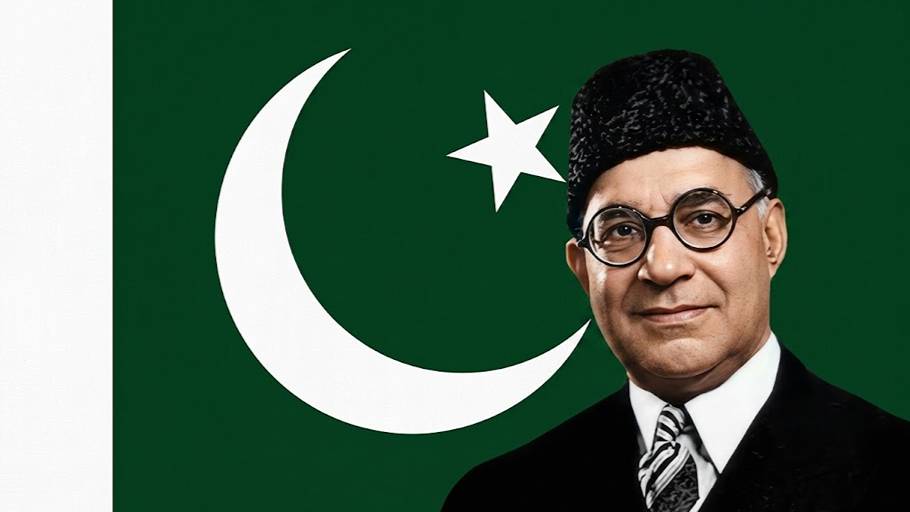
Liaquat Ali Khan is one of those figures every Pakistani hears about in school but few actually understand properly. We know he was Pakistan’s first Prime Minister. We know he was assassinated at Company Bagh in Rawalpindi. We know he was Quaid-e-Azam’s right-hand man during the Pakistan Movement. But the actual story of the man who literally built Pakistan’s early government? That takes real explanation beyond textbook summaries.
Look, the honest picture matters more than the sanitized version taught in schools. This is the man who kept Pakistan functioning after Jinnah died in September 1948. Without him, the country might have collapsed in its first years. He negotiated with India during Kashmir. He handled the massive refugee crisis. He established basic government institutions. He set Pakistan’s early foreign policy direction. And then he was assassinated under circumstances that remain suspicious over 70 years later.
This guide covers who was Liaquat Ali Khan with the actual historical picture. His early life and political emergence. His role in the Pakistan Movement. His achievements as Prime Minister. His assassination that changed Pakistani history. And honest assessment of his complicated legacy in 2026.
Early Life and Background
Nawabzada Liaquat Ali Khan was born on October 1, 1895 in Karnal, Punjab (now in Indian Haryana). His family belonged to the Muslim nobility with landowning background. His father Nawab Rustam Ali Khan was a prominent landowner who held the title of “Ruken-ud-Daula, Shamsher Jang, Nawab Bahadur.” The family had significant estates and social standing in East Punjab.
This aristocratic background shaped him in important ways. He grew up with education, political awareness, and social connections that most Indian Muslims of his era couldn’t access. But it also meant he understood Muslim elite concerns about the changing political landscape in British India.
His education was elite by any standard. Aligarh Muslim University for his early higher education. Then Oxford University where he studied law at Exeter College, earning his degree in 1921. He was called to the bar at Inner Temple in London in 1922. This educational trajectory placed him among the most qualified Indian Muslims of his generation.
His return to India in the early 1920s came during politically charged times. Indian nationalism was rising. Muslim political consciousness was developing separately from mainstream Congress politics. He initially practiced law but was drawn to political engagement almost immediately.
His personal life included marriage to Begum Ra’ana in 1933. She was Christian by birth but converted to Islam before marriage. She became one of Pakistan’s most influential women’s rights advocates and played major role in Pakistan’s early social development. Their partnership was genuinely equal for that era, which was unusual.
Political Emergence Before Partition
Understanding who was Liaquat Ali Khan requires tracking his political rise before Pakistan’s creation.
He joined the All-India Muslim League in 1923 when the League was still finding its political direction. His combination of elite education, aristocratic background, and genuine political skill made him valuable to Muslim political organization. He was elected to the UP Legislative Council in 1926, representing Muzaffarnagar-Meerut Muslim constituency.
Through the 1920s and 1930s, he gradually built political credibility within Muslim political circles. He served in various League positions. He wrote and spoke on Muslim political concerns. He built relationships across the Muslim political spectrum.
His relationship with Muhammad Ali Jinnah became defining. When Jinnah returned to India from London in 1934 to lead the Muslim League seriously, Liaquat Ali Khan became one of his most trusted lieutenants. This wasn’t just political alliance. It was genuine partnership where Jinnah handled overall strategy and public leadership while his deputy handled organizational work, negotiations, and detailed political management.
He became General Secretary of the All-India Muslim League in 1936, a position he held until Pakistan’s creation. This gave him massive influence over party organization, membership, and political strategy. He was essentially the operational head of the Muslim League while Jinnah was its symbolic and strategic head.
The Lahore Resolution of March 1940 was pivotal moment. He was central to the political organization that produced this demand for separate Muslim states. Behind the scenes work of getting Muslim League leaders aligned, organizing the massive gathering, and coordinating political messaging was substantially his responsibility.
Through the 1940s, as the demand for Pakistan intensified, his role expanded further. He led League delegations. He negotiated with British officials. He managed relationships with various Muslim political groups across British India.
Liaquat Ali Khan Achievements During Pakistan Movement
The Liaquat Ali Khan achievements during the Pakistan Movement deserve genuine recognition beyond just being Jinnah’s deputy.
Organizational Building: The Muslim League as a political organization was substantially built by his operational work. Membership drives. Regional coordination. Financial management. Political discipline. These unglamorous but essential functions were his responsibility.
1937 Elections Recovery: After the Muslim League’s poor performance in 1937 provincial elections, he led significant reorganization. This work paid off in 1945-46 elections where the League swept Muslim seats and validated demand for Pakistan.
Interim Government (1946-1947): When Congress and League formed interim government under British supervision, he became Finance Minister. He crafted budget policies that were politically shrewd. He presented budget that Congress leaders privately admitted was politically brilliant even as they disagreed with it. This budget genuinely embarrassed Congress ministers who couldn’t openly reject Muslim taxation policies.
Partition Negotiations: The complex negotiations about how partition would work required constant back-and-forth between League, Congress, and British representatives. He was central to League’s negotiating team. He argued for Pakistan’s territorial claims, financial share, and administrative arrangements.
Communal Coordination: As violence spread through 1946-47, he worked to maintain political focus while communities were being destroyed. This wasn’t easy leadership. Being political leader while your community faces massacre requires steady judgment.
Recognition as Successor: By 1947, he was clearly recognized as Jinnah’s political successor. When Pakistan formed, he became Prime Minister with universal agreement among League leaders. This wasn’t automatic. It reflected years of earning trust and demonstrating capability.
Pakistan’s First Prime Minister
Liaquat Ali Khan became Prime Minister of Pakistan on August 14, 1947. He held this position until his assassination on October 16, 1951. Four years and two months of leading a country that shouldn’t have survived by conventional analysis.
The challenges he faced from day one were genuinely overwhelming:
Refugee Crisis: Approximately 8 million Muslim refugees crossed into Pakistan during partition. These people needed food, shelter, medical care, employment, and rehabilitation. Pakistan’s government barely existed yet. Handling this scale of humanitarian crisis with almost no resources was nearly impossible.
Kashmir War: The Kashmir dispute erupted immediately after independence. Pakistani tribal invasion in October 1947 led to conflict with India that continued in various forms throughout his tenure. He had to manage military conflict while trying to build civilian government.
Building Government From Nothing: Pakistan started without established administration. Everything from ministries to police forces to postal systems had to be created or rebuilt. Files, records, and administrative infrastructure came from limited British Indian government splits.
Economic Crisis: The economy inherited from partition was disrupted. Traditional trading relationships were broken. Agricultural systems needed reorganization. Industrial base was minimal. Financial reserves were inadequate.
Political Stability: Different regional and ethnic groups had different visions for Pakistan. Managing coalition of Punjabis, Sindhis, Baloch, Pashtuns, and Bengalis while implementing Islamic character required constant political skill.
Jinnah’s Death: The Quaid-e-Azam died on September 11, 1948, just over a year into Pakistan’s existence. Losing the country’s founder while everything was still being established was devastating. He had to fill leadership void that couldn’t really be filled.
Major Achievements as Prime Minister
The Liaquat Ali Khan achievements as Prime Minister genuinely deserve recognition despite the country’s later problems.
Objectives Resolution (1949): Pakistan’s foundational constitutional document that established Islamic character while recognizing minority rights. This document has shaped Pakistan’s constitutional development ever since. It was politically difficult to craft because it needed to satisfy various religious and secular constituencies. He led this process.
Refugee Rehabilitation: The eventual settlement and rehabilitation of millions of refugees, while imperfect, kept them from complete disaster. Cities like Karachi and Lahore absorbed massive populations. Basic economic integration happened. This was substantial administrative accomplishment.
Foreign Policy Direction: Pakistan was set on pro-Western direction that shaped decades of foreign policy. His visit to United States in 1950 rather than Soviet Union established Pakistan’s Cold War alignment. Whether this was right decision remains debated but it was consequential.
Institutional Foundation: Pakistan’s early administrative structure, civil service organization, and basic governance systems were established under his leadership. These formed the foundation that later governments built upon or reformed.
Economic Planning: Basic economic planning began under his leadership. Development priorities were identified. Foreign aid relationships were established. Agricultural and industrial policies started taking shape.
International Recognition: Getting Pakistan recognized internationally as legitimate state required substantial diplomatic work. He traveled extensively representing Pakistan globally.
Kashmir Position: Pakistan’s diplomatic position on Kashmir was established under his leadership. Whether this position has served Pakistan well remains debated but it was defining.
Liaquat-Nehru Pact (1950): This agreement with Indian PM Nehru was attempt to reduce Hindu-Muslim tensions and protect minorities in both countries. It was partially successful but demonstrated his willingness to engage diplomatically with India even during tense period.
The Assassination That Changed Everything
The Liaquat Ali Khan assassination remains one of the most consequential events in Pakistani history.
On October 16, 1951, he was scheduled to address a public meeting at Company Bagh (now called Liaquat Bagh) in Rawalpindi. He was to speak about important political and administrative matters.
As he began his address to the crowd, an assassin named Said Akbar approached him and fired two shots at close range. He was hit and fatally wounded. He reportedly said “God protect Pakistan” as his last words. He died at the hospital.
Said Akbar was killed immediately by police at the scene. This is where the story becomes deeply suspicious. Why was the assassin killed rather than captured for interrogation? This has never been adequately explained.
The subsequent investigation was massively inadequate. Critical evidence was destroyed. Witnesses were not properly interviewed. The case was closed without meaningful conclusions about who ordered the assassination or why.
Various theories about the killing have emerged over decades:
Afghan Connection Theory: Some believe Afghan intelligence was involved due to disputes over the Durand Line and Pashtunistan issue. Said Akbar was Afghan national with alleged connections to Afghan authorities.
International Powers Theory: The Cold War context makes this significant. The Prime Minister had visited America but Pakistan hadn’t fully committed to US camp. Some theories suggest Soviet involvement to prevent Pakistan’s Western alignment. Others suggest American involvement to force alignment.
Domestic Political Theory: Some Pakistani political figures had reasons to want him removed. Land reform positions, political competition, and various grievances existed.
Bureaucratic Cover-up: The most disturbing possibility is that Pakistani officials involved in initial investigation were themselves complicit or covering for actual perpetrators. The destruction of evidence and killing of the assassin support this possibility.
The truth about the actual killer beyond Said Akbar has never been established. Files that might have contained relevant information reportedly disappeared over the years. Pakistani governments have never conducted meaningful re-investigation.
The Impact of His Death
Understanding what happened after this assassination shows how much his leadership had held Pakistan together.
Pakistani politics rapidly destabilized after his death. The country went through six Prime Ministers between 1951 and 1958 before General Ayub Khan’s military coup ended civilian rule for the first time.
The civilian political leadership never recovered its authority. The military and bureaucracy increasingly took control. Pakistan’s early civilian-military balance that he had maintained shifted permanently toward military dominance.
Kashmir policy continued in his direction but without his diplomatic skill.
Foreign policy alignment with America intensified through 1950s culminating in defense treaties.
Economic development continued but without his political framework holding things together.
Refugee integration continued but with less political focus.
His widow Begum Ra’ana continued important social work through the Pakistan Women’s National Guard and other organizations she founded. She served as Pakistan’s ambassador to various countries and continued advocating for women’s rights until her death in 1990.
Understanding His Complicated Legacy
Being honest about his legacy requires acknowledging complications.
Positive Legacy:
- Held Pakistan together during most vulnerable period
- Set constitutional foundation through Objectives Resolution
- Managed refugee crisis at unprecedented scale
- Established basic government institutions
- Provided steady leadership during Jinnah’s death
- Set international position for new country
Contested Aspects:
- Foreign policy alignment with West rather than non-alignment
- Delayed constitution-making that had long-term consequences
- Some argue he could have done more for Bengali integration
- Kashmir policy that led to decades of conflict
- Land reform that some see as too limited
Personal Character:
He was known for personal integrity in ways that later Pakistani politicians often lacked. When he was assassinated, examination of his affairs revealed he had genuinely limited personal wealth despite being Prime Minister for four years. His family lived in modest circumstances after his death. This contrast with later politicians is striking.
Historical Context:
Judging him by later standards is unfair. He led Pakistan during genuinely extraordinary circumstances that no leader had faced before. Building country from partition wreckage while managing massive refugee crisis and international conflicts required superhuman capability. He handled it with limited resources and inexperienced government.
His Place in Pakistani Memory
He holds specific place in Pakistani national memory that has evolved over decades.
Immediate post-death period saw significant mourning and recognition. Liaquat Bagh renamed in his honor. Cities, streets, and institutions named after him.
Later decades saw his memory somewhat marginalized as military governments and different political tendencies emphasized different aspects of Pakistani history. His civilian leadership didn’t fit military narratives well.
Recent decades have seen renewed interest in his role. Historians have reassessed his contribution. His role beyond just being Jinnah’s deputy has been increasingly recognized.
For Pakistani students today, textbook treatment often reduces him to few paragraphs about his role and assassination. The complexity of his actual contribution deserves better treatment.
Final Thoughts
The story of Liaquat Ali Khan matters more than most Pakistanis realize. He was the leader who kept Pakistan functioning during its most vulnerable early years. Without his capable leadership after Jinnah’s death, Pakistan might not have survived the initial period at all.
Understanding who was Liaquat Ali Khan requires seeing him beyond textbook summaries. He was genuinely one of the most consequential figures in Pakistani history. His organizational work built the Muslim League that achieved Pakistan. His administrative leadership stabilized the country during crisis. His constitutional work through Objectives Resolution shaped Pakistan’s basic character. His diplomatic engagement established Pakistan’s international position.
His achievements deserve genuine recognition rather than the secondary status he sometimes receives. He wasn’t just Jinnah’s deputy. He was capable political leader in his own right who happened to work in Jinnah’s shadow because of Jinnah’s unique stature. When Jinnah died, he proved capable of independent leadership under impossibly difficult circumstances.
The assassination remains genuinely disturbing chapter in Pakistani history. The failure to properly investigate. The destruction of evidence. The killing of the assassin before interrogation. All of this suggests something happened that Pakistani establishment didn’t want fully known. Over 70 years later, the truth remains hidden. This unresolved mystery affects how Pakistani politics has developed since.
For contemporary Pakistanis, remembering him matters for several reasons. Understanding what capable civilian leadership looks like during crisis. Recognizing that Pakistan has produced genuine statesmen even during difficult times. Learning from both his achievements and limitations. Appreciating that the country’s early success depended on specific individuals making right choices under extraordinary pressure.
That’s the real story of Liaquat Ali Khan in Pakistani history. A capable political leader who built the Muslim League operationally, guided Pakistan through its most vulnerable period, established basic institutions and constitutional character, provided stable leadership after Jinnah’s death, and was assassinated under circumstances that remain deeply suspicious. His legacy deserves the honest recognition that comes from understanding actual history rather than just textbook summaries.
Pakistan owes more to him than most citizens realize. Understanding him properly is part of understanding how Pakistan came to exist as functioning country during its most difficult early years.
High Protein Foods for Muscle Gain: The Real Pakistani Guide for 2026


Comments