



Why Does the UK Have Four Countries
Pull up a map of the United Kingdom and you see what looks like one country. One flag, one capital, one government in Westminster. But the moment you start talking to people from Scotland, Wales, or Northern Ireland, something becomes clear very quickly. These are not regions that happen to have different accents.
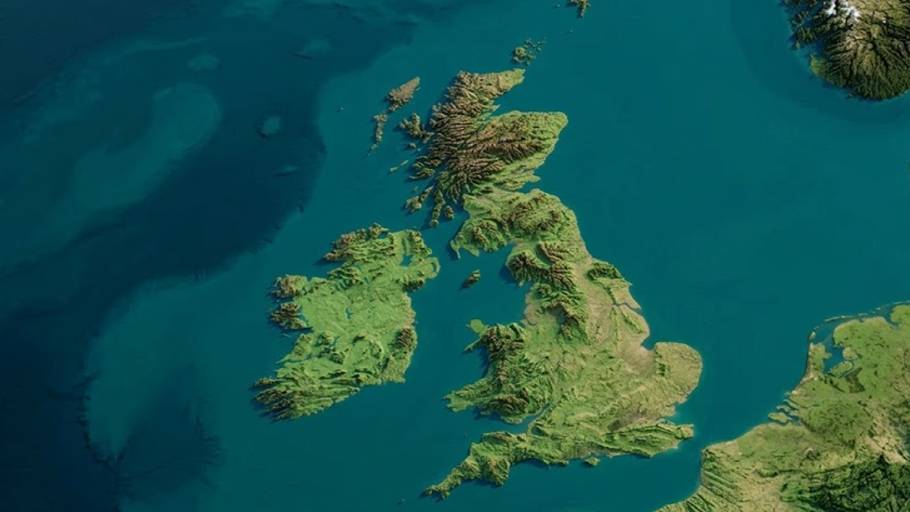
Pull up a map of the United Kingdom and you see what looks like one country. One flag, one capital, one government in Westminster. But the moment you start talking to people from Scotland, Wales, or Northern Ireland, something becomes clear very quickly. These are not regions that happen to have different accents. They are nations with their own histories, their own languages, their own legal systems, their own capitals, and in some cases their own laws that are different from the ones that apply in England. So why does the UK have four countries instead of just being one unified nation the way France or Germany is?
The answer is history, and it is a longer and more complicated story than most people expect.
What the UK Actually Is
Before getting into why the UK has four countries, it helps to understand what kind of political entity it actually is, because it is genuinely unusual.
The United Kingdom is a sovereign state made up of four constituent countries: England, Scotland, Wales, and Northern Ireland. It is not a federation the way the United States or Germany is. In those countries, power flows upward from semi-independent units to a central government. The UK works the opposite way. Sovereignty rests entirely with the UK Parliament at Westminster, which has chosen to hand specific powers downward to Scotland, Wales, and Northern Ireland through a process called devolution. That is why the four are called constituent countries rather than states or provinces.
The official full name tells you something important: The United Kingdom of Great Britain and Northern Ireland. Great Britain is the island that contains England, Scotland, and Wales. Northern Ireland sits on the island of Ireland and shares a land border with the Republic of Ireland. That geography matters because it shaped everything about how these four countries ended up together.
The population of the United Kingdom reached 69,281,400 in the mid-2024 ONS bulletin, up 1.1 percent in one year. England accounts for the vast majority of that population, more than 80 percent. Scotland holds nearly a third of the land but only a small fraction of the population. Wales and Northern Ireland contribute smaller shares still. One state, very unequal weights.
England and Wales: The First Union
The story of why the UK has four countries of the United Kingdom begins with England absorbing its smaller neighbors one by one over several centuries, and the first to go was Wales.
Wales had been gradually brought under English control from the 13th century onward. Edward I of England completed the military conquest of Wales in 1282 and began imposing English administration on the territory. The Laws in Wales Acts of 1535 and 1542, passed under Henry VIII, formally incorporated Wales into the English legal and parliamentary system. Wales was not asked whether it wanted this arrangement. It was imposed. Welsh was actively discouraged as a language of administration and law.
What is remarkable is that Wales retained its cultural identity, its language, and its distinct sense of nationhood through centuries of formal incorporation into England. Welsh is still spoken today by around 800,000 people. The Welsh dragon flies on a national flag. The capital Cardiff has its own Welsh Assembly. The union between England and Wales is the oldest of the four countries of the United Kingdom, but Welsh identity was never erased by it.
England and Scotland: The Act of Union 1707
Scotland is where the story of why does the UK have four countries gets genuinely complex, because Scotland was never conquered by England. The two kingdoms existed side by side for centuries, sometimes at war, sometimes allied, occasionally ruled by the same monarch but always as separate kingdoms.
The connection between the English and Scottish crowns began in 1603 when James VI of Scotland inherited the English throne and became James I of England. This was a personal union, meaning one person wore two crowns, but the kingdoms remained separate with their own parliaments, their own laws, and their own institutions. That arrangement lasted a century.
The Act of Union in 1707 brought the two kingdoms together into a single state called the Kingdom of Great Britain. It was not a straightforward decision in Scotland. There was genuine opposition. The Scottish Parliament voted to dissolve itself. Economic pressure, the failure of the Darien Scheme in which Scotland had lost enormous amounts of money in a colonial venture, and the promise of access to English trade networks all played a role in pushing Scotland toward union. Whether the union was genuinely voluntary or essentially forced by economic circumstances is a debate that has not been fully settled and is one reason Scottish independence sentiment remains alive today.
What Scotland got to keep matters enormously for understanding why the countries in the United Kingdom maintain distinct identities. Scotland retained its own legal system, which remains fundamentally different from English law to this day. It retained its own church, the Church of Scotland, separate from the Church of England. It kept its own educational system. These were not symbolic concessions. They are the institutional foundations of Scottish national identity, preserved through and after the union, which is why Scotland feels like a different country even though it has been part of the UK for over three hundred years.
Ireland: The Most Painful Chapter
The story of Ireland and why the UK has four countries rather than five, or three, or some other number, is the most painful and politically contested part of this history.
Ireland had been under English domination since the 12th century, but the formal political union came in 1801 when the Act of Union created the United Kingdom of Great Britain and Ireland. The Irish Parliament in Dublin was dissolved and Ireland sent representatives to Westminster instead. This union was deeply unpopular with large parts of the Irish population, particularly Catholics who faced significant legal and political discrimination under British rule.
The century that followed included the Great Famine of the 1840s, in which around one million people died and another million emigrated while Ireland was still part of the United Kingdom and food continued to be exported from the country. The relationship between Ireland and Britain during this period left wounds that have not completely healed.
After a war of independence, the Anglo-Irish Treaty of 1921 partitioned the island. Most of Ireland became the Irish Free State, which eventually became the fully independent Republic of Ireland. The six counties of the north, where a Protestant and unionist majority wished to remain part of the United Kingdom, became Northern Ireland. The UK’s official name changed from the United Kingdom of Great Britain and Ireland to the United Kingdom of Great Britain and Northern Ireland, which is what it remains today.
Northern Ireland’s inclusion in the four countries of the United Kingdom is therefore not ancient history. It is the product of a 20th century partition that divided communities, created a contested border, and produced decades of conflict known as the Troubles, which lasted from the late 1960s until the Good Friday Agreement of 1998. The question of whether Northern Ireland should be part of the UK or reunite with the Republic of Ireland remains a live political issue in 2026.
Why Are They Called Countries and Not Provinces?
This is a question that confuses a lot of people, and it gets to the heart of why does the UK have four countries rather than four regions or four provinces.
The word country in the context of the United Kingdom does not have the same meaning as country in international law. England, Scotland, Wales, and Northern Ireland are not sovereign states. They cannot sign international treaties, declare war, or be members of the United Nations independently. The UK as a whole does all of those things.
But the four are called countries rather than provinces because each of them was a separate sovereign nation before the various unions brought them together. Each had its own monarchy, its own parliament, its own laws, and its own fierce sense of national identity. The unions preserved those identities to varying degrees. Scotland’s separate legal system and church are the clearest example. Welsh language and culture is another. These are not superficial differences. They are the remnants of genuine national distinctiveness that survived centuries of political union.
The term constituent countries reflects this reality. They are countries in the sense of having distinct national identities, histories, and institutions, even though they are not independent sovereign states in the international sense.
Devolution: How the Four Countries Work Today
The modern expression of why is the UK made up of four countries rather than one unified nation is the devolution settlement that began in 1999.
Scotland has the Scottish Parliament in Edinburgh, with extensive powers over areas including education, health, justice, housing, and agriculture. It can raise and lower income tax rates within limits. Scotland has passed laws on matters ranging from minimum unit alcohol pricing to land reform that differ significantly from the laws in England.
Wales has the Senedd, the Welsh Parliament in Cardiff, with powers that have expanded over time and now cover areas including health, education, and some tax powers. Wales has made different policy choices from England on matters including organ donation, where Wales operates an opt-out system while England only adopted similar rules later.
Northern Ireland has the Northern Ireland Assembly in Belfast, established under the Good Friday Agreement. Its power-sharing structure requires unionist and nationalist parties to govern together, reflecting the divided community it represents. Northern Ireland has ten bank holidays per year compared to eight in England and Wales, and has different laws on various matters including some aspects of abortion legislation.
England is the only one of the four countries of the United Kingdom that does not have its own devolved parliament. England is governed directly by the UK Parliament at Westminster, where MPs from all four nations sit. This creates what is sometimes called the West Lothian question: Scottish, Welsh, and Northern Irish MPs can vote on laws that only apply to England, while English MPs have no equivalent vote on matters devolved to the other three nations.
National Identities That Never Went Away
One of the most striking aspects of why the UK has four countries is that national identity in each of the four nations has remained remarkably strong despite centuries of political union.
Scotland has its own national football team, rugby team, and competes separately from England in most international sports. The Scottish National Party has been the dominant force in Scottish politics for over a decade and held an independence referendum in 2014 in which 55 percent voted to remain in the UK. The question has not gone away.
Wales has its national language, Welsh, which survived English suppression and is now promoted through Welsh-medium schools and bilingual public services. Welsh language road signs, Welsh-language television, and a Welsh-speaking community of around 800,000 people are not the relics of a dying tradition but an active cultural identity.
Northern Ireland has perhaps the most complex national identity of any of the four countries of the United Kingdom because its population is divided between those who identify primarily as British and wish to remain in the UK and those who identify primarily as Irish and aspire to a united Ireland. The 2021 census showed for the first time that Catholics outnumbered Protestants in Northern Ireland, adding a demographic dimension to a question that was previously more evenly balanced.
England is the most complex case because Englishness and Britishness have often been conflated. England is so dominant in population and economic weight that the UK’s institutions, from the Westminster Parliament to the Bank of England, are often perceived as English institutions that the other nations participate in. Brexit, in which England and Wales voted to leave the EU while Scotland and Northern Ireland voted to remain, made the differences between the nations more visible than they had been for decades.
Quick Reference: The Four Countries of the United Kingdom
| Country | Capital | Population | Devolved Body | Year of Union |
|---|---|---|---|---|
| England | London | Over 56 million | None (governed from Westminster) | Foundation of UK |
| Scotland | Edinburgh | Around 5.5 million | Scottish Parliament (1999) | Act of Union 1707 |
| Wales | Cardiff | Around 3.2 million | Senedd (1999) | Laws in Wales Acts 1535 to 1542 |
| Northern Ireland | Belfast | Around 1.9 million | Northern Ireland Assembly (1998) | Act of Union 1801 |
Why Is the UK Made Up of Four Countries and Not One
The direct answer to why is the UK made up of four countries is that the United Kingdom was not designed from scratch as a unified nation. It grew over centuries through a series of unions between previously independent kingdoms and territories, each of which had its own history, culture, language, and institutions. Those unions were not always willing. They were not always equal. And they did not erase what came before them.
The four countries of the United Kingdom are the product of that layered history. England absorbed Wales through conquest and legislation in the 16th century. Scotland joined through the Act of Union in 1707 under a combination of economic pressure and political calculation. Ireland was incorporated in 1801 and then partly left in 1921, leaving Northern Ireland as the residual connection. At each stage, something was preserved as well as something being lost. The legal systems, languages, churches, and cultural traditions that survived these unions are why four distinct national identities still exist within one sovereign state today.
The Bottom Line
Why does the UK have four countries is ultimately a question about what happens when history does the nation-building instead of tidy modern planning. The countries in the United Kingdom did not come together because someone designed a federal system and invited four equal partners to join. They came together through centuries of conquest, marriage, economic need, political deal-making, and in Ireland’s case, partition and conflict.
The result is genuinely unusual in the world. Four countries with separate national identities, separate cultural traditions, separate legal systems in Scotland’s case, and three separate devolved governments, all existing within one sovereign state under one monarch and one parliament at Westminster. It is not a clean or logical arrangement. It is a historical one, and that is exactly why it works the way it does, and why the question of why the UK has four countries of the United Kingdom rather than one keeps getting asked.
How to Get a Job on Indeed: Step-by-Step Guide for Job Seekers


Comments