




The Rise and Fall of the British Empire
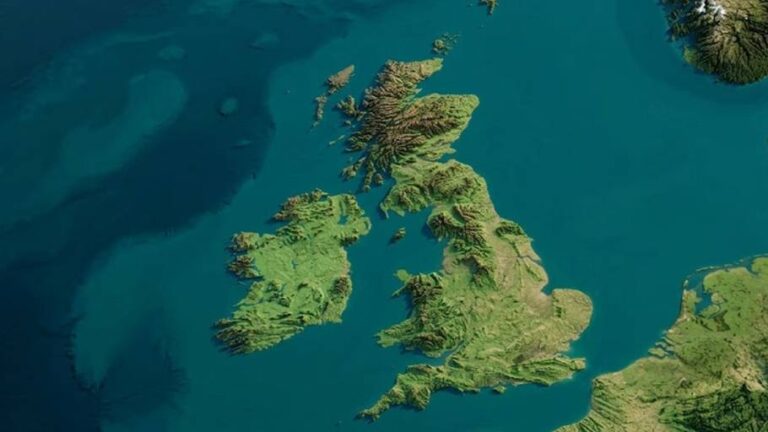
The rise and fall of the British Empire is one of the most consequential stories in human history. From a small island off the European coast, Britain built an empire that at its peak controlled approximately a quarter of the world’s land and people.
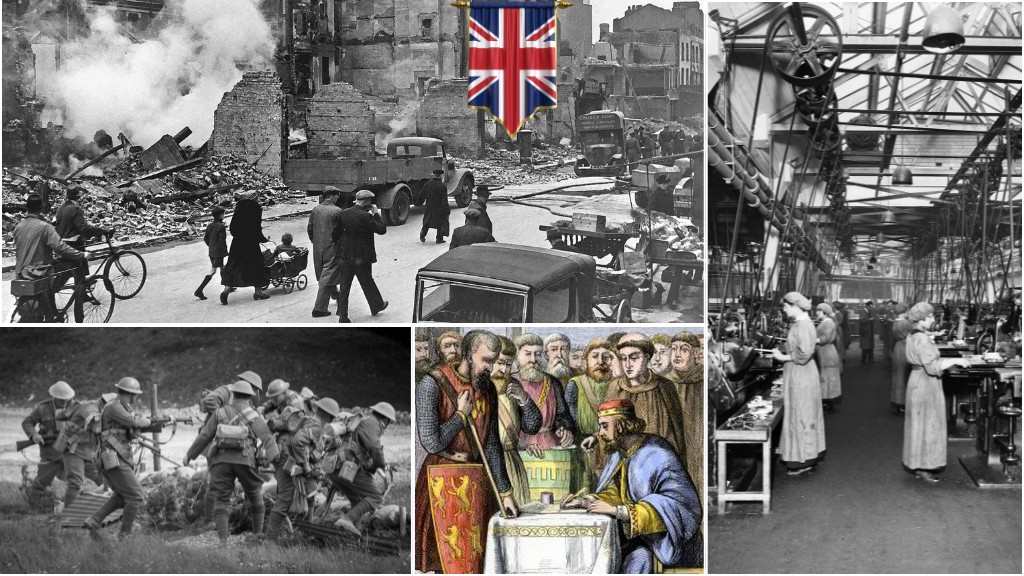
The rise and fall of the British Empire is one of the most consequential stories in human history. From a small island off the European coast, Britain built an empire that at its peak controlled approximately a quarter of the world’s land and people. The empire transformed global commerce, language, law, politics, and economics in ways that still shape the world today.
This guide on the rise and fall of the British Empire covers the actual journey from the Norman Conquest through global empire to the post-imperial nation Britain became. It includes the achievements that shaped modern democratic systems alongside the colonial violence that destroyed cultures and killed millions. Both stories belong to the same history.
Early Foundations: From Roman Britain to Norman Conquest
People had been living on the British Isles for hundreds of thousands of years before written records existed. The first significant external influence came from Rome.
The Romans first arrived in 55 BC under Julius Caesar, who failed to establish lasting control. The proper conquest came in AD 43 under Emperor Claudius. They built Londinium (modern London) as their trading center, established roads still influencing modern routes, and ruled for approximately 400 years.
When Rome collapsed and recalled its troops in the early 5th century, others moved into the vacuum. Anglo-Saxons from Germany and Denmark settled across England. Vikings from Scandinavia arrived raiding in 793, ultimately controlling the Danelaw across northern and central England.
In 1066, William of Normandy (later William the Conqueror) crossed the Channel and defeated King Harold II at the Battle of Hastings. The Norman Conquest fundamentally reshaped English society. The new Norman aristocracy spoke French while the population spoke English. Centuries of Norman rule left thousands of French words embedded in English, which is why modern English has roughly twice the vocabulary of most other languages.
These early foundations matter for the rise and fall of the British Empire because they established the linguistic, legal, and cultural foundation that later imperial expansion would carry across the globe.
Magna Carta: The Document That Outlived Its Creators
By 1215, King John had managed to lose major wars with France, lose substantial territory, and get excommunicated from the Catholic Church by Pope Innocent III. He had exhausted his nobility’s patience.
The barons cornered him at Runnymede, a riverside meadow on the Thames, and made him seal a document called the Magna Carta (Great Charter) in June 1215. The core principle was that even the king could not arbitrarily seize property or imprison people without legal process.
John agreed under duress, immediately tried to invalidate the document with papal support, and died the following year still fighting against it. But the document outlived him.
The principles in the Magna Carta were picked up, expanded, and applied across centuries. They influenced the development of English common law. They eventually shaped the American Constitution, the United Nations Universal Declaration of Human Rights, and legal systems across former British colonies and beyond.
This legal foundation became one of the early building blocks in the rise and fall of the British Empire. Britain would later export not just its military and commercial power but the legal framework that started in that 1215 meadow.
Tudor Beginnings: Sea Power and the Spanish Armada
The rise of the British Empire as a global power began under the Tudor dynasty (1485-1603). Henry VII stabilized the kingdom after the Wars of the Roses. Henry VIII broke from Rome and established the Church of England, setting Britain on a Protestant path that shaped its identity and conflicts for centuries.
Elizabeth I (1558-1603) presided over the moment Britain became a major naval power. In 1588, English ships under Lord Howard and Francis Drake defeated the Spanish Armada in the English Channel. The victory destroyed Spanish naval dominance and established Britain as the dominant sea power.
After Elizabeth, Britain spent decades developing its naval capabilities and beginning commercial expansion. The East India Company, chartered in 1600, would become one of history’s most powerful corporations and a key driver of imperial expansion.
The First British Empire: American Colonies and Caribbean Sugar
The rise and fall of the British Empire saw two distinct imperial periods. The first British Empire formed across the Atlantic.
North American colonies: Starting with Jamestown in 1607, Britain established 13 colonies along the eastern North American coast. New England developed shipping and trade. Virginia and the Carolinas developed plantation agriculture.
Caribbean possessions: Britain took Barbados (1625), Jamaica (1655), and various other Caribbean islands. These became sugar plantation economies entirely dependent on enslaved African labor.
West African slave trade stations: Britain established forts along the West African coast to facilitate the slave trade, transporting enslaved Africans to American and Caribbean plantations.
India through the East India Company: The East India Company gradually shifted from trading entity to military force in India through the 1700s, controlling increasing territory through both commerce and military conquest.
This first empire would lose its most significant component during the American Revolution (1775-1783). The thirteen American colonies declared independence in 1776 and won military victory at Yorktown in 1781. The Treaty of Paris in 1783 recognized American independence, ending the first British Empire’s largest component.
The Second British Empire: Pax Britannica
After American independence, Britain turned increasingly to Asia, Africa, and the Pacific. The second British Empire would prove far larger than the first.
India became the imperial crown jewel. The East India Company expanded control through the early 1800s. After the 1857 Indian Rebellion (called the Sepoy Mutiny by British, First War of Independence by Indians), the British Crown took direct control of India. Queen Victoria became Empress of India in 1876. India’s resources, population, and military capacity became central to British global power.
Napoleonic Wars (1799-1815) established British naval supremacy permanently. Admiral Nelson’s victory at Trafalgar in 1805 destroyed French and Spanish fleets. Britain’s victory at Waterloo in 1815 ended Napoleon’s empire.
The 19th century became the Pax Britannica era. Britain dominated global trade. The Royal Navy controlled major sea lanes. British finance dominated global capital markets through London’s City. British technology spread globally through the Industrial Revolution.
Scramble for Africa in the 1880s-1890s saw Britain acquire vast African territories including Egypt, Sudan, Kenya, Uganda, Nigeria, Rhodesia (modern Zimbabwe and Zambia), and South Africa. The Berlin Conference of 1884-1885 essentially divided Africa among European powers.
Pacific and Asian expansion: Australia (claimed 1770, first colony 1788), New Zealand (claimed 1840), Hong Kong (acquired 1842 after First Opium War), Singapore, Malaya, and various Pacific islands joined the empire.
Canada evolved from colony to self-governing dominion through the 1800s, with Confederation in 1867.
At its peak around 1920, the British Empire covered roughly 25% of the world’s land area and ruled approximately 25% of the world’s population. The phrase “the sun never sets on the British Empire” was literally true because British territories spanned all time zones.
The Industrial Revolution: Britain’s Engine of Power
One of the central reasons for the rise and fall of the British Empire was the Industrial Revolution that began in Britain in the late 1700s.
The Industrial Revolution started in Britain rather than other countries for specific reasons. Britain had coal and iron in abundance. The agricultural revolution had created surplus labor and food. Property rights and patent law protected innovators. Capital markets in London provided investment. Empire provided raw materials and markets.
Key innovations included James Watt’s improved steam engine (1769), the spinning jenny and spinning mule for textile production, the cotton gin, iron and steel production improvements, and ultimately railways and steamships.
The first passenger railway opened between Stockton and Darlington in 1825. Within decades Britain was sending engineers and investment to build railways across the empire and the world.
Social transformation accompanied industrialization. Factory towns grew rapidly in the Midlands and northern England. Manchester, Birmingham, Leeds, and other industrial centers expanded from market towns to major cities within decades.
Working conditions were brutal. Children worked in mines and factories. Working hours commonly exceeded 12-14 hours. Whole families shared single rooms in slum housing. Cholera and other diseases spread quickly through cities without proper sanitation.
Political responses to industrial conditions produced trade unions, the Chartist movement, labor legislation reforms, and ultimately the Labour Party. The political left in essentially its modern form developed in response to industrial Britain’s conditions.
The Industrial Revolution gave Britain enormous economic and military advantages that fueled imperial expansion throughout the 19th century.
The Dark Side of Empire
The rise and fall of the British Empire produced spectacular wealth alongside spectacular human suffering. Honest history requires acknowledging both.
The slave trade: Britain became the largest slave-trading nation in the 18th century. British ships transported approximately 3.1 million enslaved Africans to the Americas. The economy of cities like Liverpool, Bristol, and Glasgow grew on slave trade profits.
Abolition came in stages: The Slave Trade Act of 1807 banned the trade itself within the British Empire. The Slavery Abolition Act of 1833 (effective 1834) abolished slavery throughout most of the empire. Crucially, the British government paid £20 million in compensation (equivalent to 40% of the national budget) to slave owners, not to the people who had been enslaved.
Famines under British rule: Multiple famines occurred in British-ruled territories under conditions that suggest deliberate or negligent management.
The Irish Potato Famine (1845-1852) killed approximately 1 million people and forced 1-2 million to emigrate. During the famine, British authorities continued exporting Irish food while people starved.
Indian famines killed millions across the 19th and 20th centuries. The Great Famine of 1876-1878 killed 5-10 million people. The Bengal Famine of 1943 killed 2-3 million people while Churchill diverted food supplies for British forces and refused emergency aid.
Massacres and atrocities: The Amritsar Massacre (1919), where British forces under General Dyer killed at least 379 people gathered for a religious festival. The Mau Mau suppression in Kenya (1952-1960) involved concentration camps where tens of thousands died. The Boer War concentration camps (1900-1902) killed approximately 28,000 Boer civilians and 14,000 Black Africans.
Cultural destruction: Indigenous languages, religions, and cultures were systematically suppressed across the empire. Schools imposed English. Religious conversions were promoted. Local economic systems were disrupted to serve imperial commerce.
The rise and fall of the British Empire includes these histories. Britain has only partially reckoned with them, and many former colonies continue dealing with effects today.
The Wars That Broke Empire
The two World Wars fundamentally changed Britain and accelerated the fall of the British Empire.
World War I (1914-1918) killed approximately 886,000 British soldiers and wounded another 2 million. The “Pals battalions” system grouped friends and neighbors into the same units, which meant single battles could devastate entire neighborhoods at home. The war drained Britain financially, with the country becoming a debtor nation to the United States for the first time.
The Versailles Treaty (1919) reorganized the world but couldn’t reverse the wartime weakening of European empires.
World War II (1939-1945) broke Britain as a great power despite ending in victory. The Blitz (1940-1941) killed approximately 43,000 civilians and destroyed major portions of London, Coventry, Birmingham, Liverpool, and other cities. Winston Churchill rallied the country through speeches that remain among the most studied in political history.
Britain survived without invasion through the Battle of Britain in 1940 when the Royal Air Force prevented German air superiority. American entry into the war (1941) and eventual Soviet collaboration brought victory by 1945. But Britain finished the war essentially bankrupt and dependent on American loans.
The empire that had ruled a quarter of the world entered the postwar era unable to afford its own military commitments.
The Fall of Empire: Decolonization After 1945
The actual fall of the British Empire came faster than most contemporaries expected. The postwar period saw rapid decolonization.
India and Pakistan independence (1947): The independence of British India represented the empire’s most significant loss. The partition into India and Pakistan resulted in approximately 1-2 million deaths and the largest mass migration in history (around 15 million people). Muhammad Ali Jinnah became Pakistan’s founding leader. Jawaharlal Nehru became India’s first Prime Minister.
African independence (1957-1980): Ghana (1957) became the first sub-Saharan African colony to gain independence under Kwame Nkrumah. Nigeria followed in 1960. Kenya in 1963. The 1960s saw most African colonies gain independence. Rhodesia became Zimbabwe in 1980 after extended conflict.
Caribbean and Pacific: Jamaica, Trinidad, Barbados, and other Caribbean colonies became independent in the 1960s. Pacific territories gradually gained independence.
Suez Crisis (1956): The defining moment showing Britain’s reduced status. When Egypt nationalized the Suez Canal, Britain (with France and Israel) attempted military intervention. American pressure forced humiliating withdrawal. The crisis confirmed Britain was no longer a great power capable of independent global action.
Hong Kong handover (1997): The transfer of Hong Kong to China ended Britain’s last significant colonial possession.
The rise and fall of the British Empire didn’t end with a single dramatic moment. It dissolved gradually across 50 years, colony by colony, with various conflicts and political disputes.
Britain After Empire
What replaced the empire was never fully worked out. Britain struggled to find a clear post-imperial role for decades.
European Community membership (1973): After French President Charles de Gaulle vetoed British entry twice in the 1960s, Britain finally joined what became the European Union in January 1973. The relationship remained contentious throughout the next four decades.
Brexit (2016): A referendum on EU membership produced a 52-48% vote to leave. The political consequences continue affecting British politics. The vote revealed deep divisions about Britain’s post-imperial identity and relationship with Europe.
Modern Commonwealth: The Commonwealth of Nations continues with 56 member countries, most former British colonies. The organization provides diplomatic and cultural connections without political authority.
Queen Elizabeth II’s reign (1952-2022): The longest reign in British history saw Britain transition from imperial power to post-imperial nation. Her death in September 2022 marked the end of an era.
King Charles III ascended to the throne in 2022, becoming the first British monarch with a significantly diminished global role from the beginning of his reign.
What the Rise and Fall of the British Empire Left Behind
The rise and fall of the British Empire produced consequences that persist worldwide.
Language: English is the most widely spoken language globally when including second-language speakers. Approximately 1.5 billion people speak English, with about 380 million as their first language. This linguistic legacy creates ongoing cultural and economic advantages for Britain and English-speaking countries.
Legal systems: Common law systems based on British models operate across former colonies including the United States, Canada, Australia, India, Pakistan, Singapore, Hong Kong, and most former African colonies.
Parliamentary democracy: The Westminster model of parliamentary democracy influences governments worldwide. Many former colonies adopted variations of British political structures.
Industrial and economic systems: The Industrial Revolution that began in Britain became the model for industrial development globally. Modern global capitalism developed primarily through British institutions.
Educational institutions: British educational models, university structures, and academic disciplines spread globally.
Geographic borders: Many modern national borders trace back to colonial administrative divisions. Conflicts in India-Pakistan, the Middle East, parts of Africa, and elsewhere have roots in British colonial decisions.
Cultural exports: From Shakespeare to The Beatles to modern media, British cultural products continue having global reach.
Negative legacies: Persistent economic inequalities, ethnic conflicts in post-colonial states, lost cultural and linguistic heritage, and ongoing debates about historical responsibility all trace back to imperial decisions.
Why the Rise and Fall of the British Empire Still Matters
Understanding the rise and fall of the British Empire matters for understanding the modern world. The empire isn’t just historical curiosity. It’s the foundation underlying much of how the current global system works.
Global economic structures developed through imperial commerce. International trade patterns, currency systems, and financial institutions like London’s City reflect imperial-era foundations.
Geopolitical patterns including Western alliances, North-South economic inequality, and ongoing conflicts in regions like Kashmir and Palestine connect to imperial-era decisions.
Cultural and language dominance of English in international commerce, science, and entertainment creates structural advantages for English-speaking nations.
Legal and democratic systems worldwide reflect British influence, both positive (rule of law, parliamentary democracy) and problematic (colonial-era legislation still affecting former colonies).
Ongoing reckonings with imperial history continue. Debates about reparations for slavery, returning cultural artifacts to former colonies, addressing economic inequalities, and acknowledging historical violence remain active in former imperial territories.
Final Thoughts
The rise and fall of the British Empire produced both remarkable achievements and severe damage. The country that built parliamentary democracy and developed modern industrial economies also ran the slave trade for centuries. The nation that produced Newton, Darwin, Shakespeare, and the National Health Service also engineered famines and operated concentration camps.
Both stories are true. They belong to the same history. Honest assessment of the rise and fall of the British Empire requires acknowledging both achievement and atrocity rather than choosing between them.
The empire ended in the late 20th century but its consequences continue shaping the modern world. The English language, legal systems, parliamentary models, industrial economy, and many international institutions all trace back to this small island nation that briefly ruled a quarter of the planet.
The rise and fall of the British Empire isn’t a settled historical question. It’s an ongoing conversation about responsibility, identity, and how former colonial powers and former colonies relate to each other in the 21st century. Britain continues working through its post-imperial identity. Former colonies continue working through colonial legacies. The conversations aren’t finished and probably won’t be for generations to come.
Understanding this history matters because the present world emerged directly from it. The countries, borders, languages, legal systems, economic structures, and conflicts that shape current global affairs all connect back to the rise and fall of the British Empire. That makes this one of the most important historical topics anyone interested in understanding the modern world should study seriously.
For a detailed map and timeline of the territories, you can explore the British Empire resources on Britannica.
As the empire faded, new nations emerged. Read about the Life and Legacy of Muhammad Ali to see how the sub-continent’s history was rewritten.


Comments