




Why Does Trump Want Greenland? The Real Reasons Behind America’s Arctic Obsession
Why does Trump want Greenland is a question that’s stayed in international news since late 2024 when Trump revived his push to bring the world’s largest island under American control. The answer involves military strategy, rare earth minerals, great power competition with China and Russia, and the changing Arctic geography that climate change is creating.
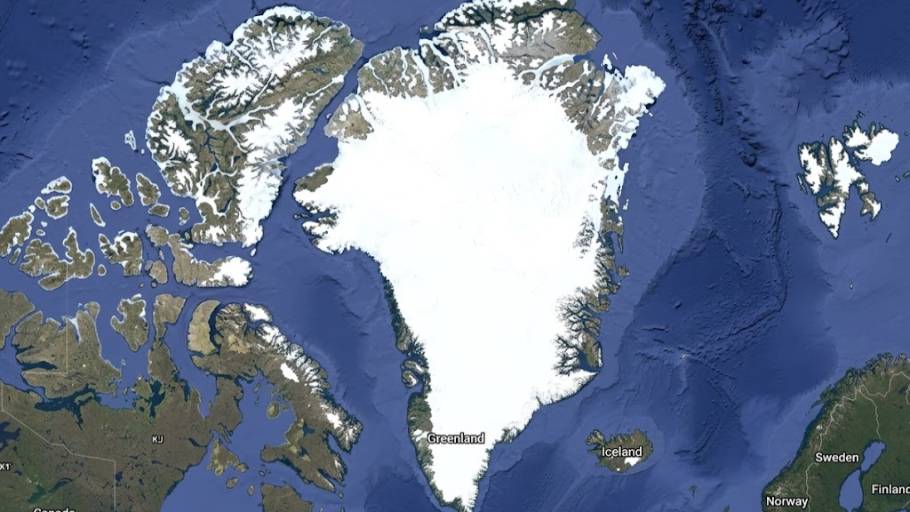
Why does Trump want Greenland is a question that’s stayed in international news since late 2024 when Trump revived his push to bring the world’s largest island under American control. The answer involves military strategy, rare earth minerals, great power competition with China and Russia, and the changing Arctic geography that climate change is creating. To understand why does Trump want Greenland properly, you need to look at what Greenland actually is, where it sits geographically, and the specific 2026 developments that have moved the situation forward significantly.
This guide on why does Trump want Greenland covers the actual strategic reasoning, the specific economic interests including rare earth deposits, the diplomatic situation with Denmark and Greenland, and where things actually stand in mid-2026.
What Greenland Actually Is
Greenland is an autonomous territory of Denmark sitting between the Arctic Ocean and North Atlantic. It covers 836,000 square miles, making it about four times the size of Spain. Approximately 80% of the island is covered by a thick ice sheet. About 57,000 people live there, mostly Inuit communities concentrated along the western coast.
The island has had its own parliament since 1979 and gained expanded self-rule in 2009. While Denmark handles defense and foreign affairs, Greenland controls most domestic policies including natural resources. The Greenlandic Premier as of 2026 is Jens-Frederik Nielsen, following the March 2025 elections that brought the center-right Demokraatit party to power on a platform favoring gradual independence from Denmark.
For most of modern history, Greenland barely appeared in international news. That changed when Trump made it a priority during his first term in 2019 and again starting late 2024.
The Military Strategic Case
The most serious answer to why does Trump want Greenland is military. Even critics of Trump’s approach generally accept that Greenland has genuine strategic importance.
Position relative to potential threats: The shortest route for a Russian ballistic missile to reach the continental United States runs directly over Greenland and the North Pole. Greenland sits along the critical missile defense pathway that the US needs to monitor and potentially intercept.
Pituffik Space Base: The US already operates this base in northwestern Greenland (renamed from Thule Air Base in 2023). It supports missile warning systems, missile defense radar, and space surveillance for both the US and NATO. The base has been an essential element of US strategic defense since the early Cold War.
GIUK Gap: Greenland straddles the GIUK Gap, the naval choke point between Greenland, Iceland, and the United Kingdom that links the Arctic Ocean to the North Atlantic. During the Cold War, controlling this gap was essential for tracking Soviet submarines. Today NATO uses it to monitor Russian naval movements. Losing visibility over that corridor would represent a serious strategic setback.
Trump put it directly when discussing why does Trump want Greenland: “Right now, Greenland is covered with Russian and Chinese ships all over the place. We need Greenland from the standpoint of national security.”
Defense analysts generally agree Greenland matters strategically while questioning whether the US actually needs to own the island to protect its interests. The existing Pituffik base and the 1951 US-Denmark defense agreement already provide American military access. The question is whether ownership versus the current arrangement actually matters operationally.
Rare Earth Minerals: The China Dimension
The second major reason why does Trump want Greenland involves rare earth minerals and competition with China. This dimension has become more prominent through 2025-2026.
China’s rare earth dominance: China currently controls 60-90% of the global supply chain for various rare earth elements through both mining and refining capacity. China has demonstrated willingness to weaponize this dominance through export controls during trade disputes. The 2025 Chinese export controls on heavy rare earths caused supply chain shortages and production delays for Western automotive and defense companies.
Critical mineral dependencies: Of the 50 critical minerals listed by the US Geological Survey, America imports between 50-100% of 41 of them. This dependency creates vulnerabilities the Trump administration views as urgent national security concerns.
Greenland’s mineral wealth: Greenland holds approximately 1.5 million tons of rare earth reserves, ranking 8th globally according to 2024 USGS data. The southern Gardar province contains three major deposits:
Kvanefjeld project: Located in southern Greenland. A Chinese company is currently the largest shareholder, creating particular American concerns about Chinese access to these resources.
Tanbreez project: Located in southern Greenland’s fjord network. Currently being developed by New York-based Critical Metals Corporation. The Export-Import Bank of the United States issued a letter of interest in January 2026 that could result in a $120 million loan for development.
A 2023 survey found that 25 of the 34 minerals classified as “critical raw materials” by the European Commission exist in Greenland.
The why does Trump want Greenland rare earth dimension extends beyond just owning the deposits. It includes preventing Chinese acquisition of additional Greenland mineral rights, securing supply chains for American defense and technology industries, and reducing dependency on Chinese refining capacity.
Trump’s Specific Mineral Strategy
The Trump administration has pursued multiple parallel approaches to rare earth supply chain security in 2025-2026:
MP Materials equity deal: The US government took an equity position in MP Materials, the American rare earth company operating the Mountain Pass mine in California. This represents direct government involvement in domestic rare earth production.
Saudi Arabia partnerships: Saudi mining company Maaden entered a joint venture with the US Defense Department and MP Materials to develop a rare earth refinery in Saudi Arabia. Critical Metals (the Tanbreez developer) signed a non-binding agreement in May 2026 with Saudi company Tariq Abdel Hadi Abdullah Al Qahtani & Brothers Company for a joint venture refining 25% of Tanbreez’s rare earth projects in Saudi Arabia.
Bilateral agreements: The Trump administration has pursued rare earth cooperation agreements with Japan, Australia, and other allies.
Greenland framework: Trump announced in January 2026 a framework deal with NATO that would include mineral rights to Greenland. The specific terms haven’t been fully disclosed.
These developments demonstrate that why does Trump want Greenland connects to a broader strategy beyond just the island itself. Greenland sits within a larger effort to build non-Chinese rare earth supply chains globally.
The Shipping Routes Factor
Why does Trump want Greenland also includes Arctic shipping route considerations. Climate change is opening two potentially significant routes:
Northwest Passage: The route through the Canadian Arctic that connects the Atlantic and Pacific oceans. Increasing accessibility as ice melts.
Transpolar Sea Route: A potential route directly across the Arctic Ocean. Currently inaccessible most of the year but becoming more feasible as warming continues.
Both routes could dramatically reduce shipping time between Asia and Europe compared to existing routes through the Suez Canal. Whoever controls access to these routes controls a significant piece of future global trade infrastructure.
Greenland sits along both potential routes. China has actively positioned itself for Arctic commerce, declaring itself a “near-Arctic state” in 2018 and announcing the Polar Silk Road as part of its Belt and Road Initiative.
The US strategic concern is preventing Chinese dominance of emerging Arctic commercial and military infrastructure. Greenland’s geographic position makes it relevant to both objectives.
What Greenland and Denmark Actually Think
The Greenlandic government has been consistently clear in opposing American annexation. Approximately 85% of Greenlanders oppose joining the United States. Thousands have protested in both Greenland and Denmark when Trump escalated his rhetoric.
Greenlandic Premier Jens-Frederik Nielsen (since March 2025 elections) has maintained that Greenland is not for sale. Former Premier Múte Egede similarly stated “Greenland is ours. We are not for sale and will never be for sale” during earlier 2025 negotiations.
The March 2025 elections produced a result favoring gradual independence from Denmark on Greenlandic timelines and terms, not movement toward American annexation. Greenland is moving toward greater autonomy from Denmark, but in its own direction rather than toward American control.
Denmark’s position: Denmark, a NATO founding member with a defense agreement with the US since 1951, has been caught uncomfortably between alliance obligations and protection of its territorial integrity. Danish public opinion strongly opposes American takeover. Danish Prime Minister Mette Frederiksen has consistently rejected Trump’s territorial proposals.
Denmark announced significant defense spending increases around Greenland in 2025-2026, including new Arctic naval vessels and surveillance systems. This represents a signal that Denmark takes Greenland’s security seriously and intends to maintain Danish sovereignty over the territory.
Vice President JD Vance visited Greenland in March 2025, generating significant Greenlandic opposition. Trump threatened 25% tariffs on Denmark and several European countries unless Denmark cooperated on Greenland.
Trump’s Evolving Approach in 2026
Trump’s approach to why does Trump want Greenland shifted during 2025-2026. At his January 2026 World Economic Forum speech in Davos, Trump stated “we need Greenland for national security, not minerals” while announcing he was pursuing a negotiated solution rather than military action.
At the same time, White House Press Secretary Karoline Leavitt said in January 2026: “President Trump has made it well known that acquiring Greenland is a national security priority of the United States, and it’s vital to deter our adversaries in the Arctic region. The President and his team are discussing a range of options to pursue this important foreign policy goal, and of course, utilizing the U.S. Military is always an option at the Commander in Chief’s disposal.”
When asked at his first-year-in-office press conference about military options, Trump told reporters: “You’ll find out.”
The combination suggests Trump views Greenland acquisition as serious priority while keeping multiple approaches open. The early 2026 framework agreement with NATO on mineral rights represents one path. Direct purchase remains theoretically possible despite Greenlandic refusal. Military action remains formally on the table even though specialists view it as extremely unlikely.
Historical Context for US-Greenland Relations
Why does Trump want Greenland has historical precedent that’s often overlooked. The United States has expressed interest in Greenland multiple times:
1867: Secretary of State William Seward investigated purchasing Greenland alongside the Alaska purchase from Russia. The Greenland purchase didn’t proceed.
1946: President Truman offered Denmark $100 million in gold for Greenland. Denmark refused.
World War II: The US occupied Greenland after Germany invaded Denmark, establishing military bases that became the foundation for current Pituffik base.
1951 Agreement: The Defense of Greenland Agreement between US and Denmark allowed continued US military presence.
2019: Trump first proposed buying Greenland during his first term. Denmark’s PM called the idea “absurd,” prompting Trump to cancel a state visit.
2019 MOU: Trump signed a memorandum of understanding with Greenland for joint surveys of mineral resources.
2024-2026: Renewed Trump push including January 2026 Davos statements and framework agreement.
The pattern shows ongoing American strategic interest in Greenland that predates Trump but has become unusually prominent during his presidencies.
The Practical Reality
Why does Trump want Greenland matters strategically. Whether his approach to acquiring it makes practical sense is a separate question.
Specialists generally agree on the strategic importance points:
Greenland’s geographic position matters for missile defense and naval monitoring
Rare earth resources represent genuine strategic interests
Arctic shipping routes will increase in importance
China’s interest in the Arctic justifies American counter-positioning
Where the analysis becomes contentious is on method:
The US already has Pituffik Space Base and defense agreements with Denmark providing military access
NATO membership of Denmark provides alliance framework
Direct purchase against Greenlandic and Danish will likely impossible without destroying NATO
Military force against a NATO ally would essentially end the alliance
Economic coercion against Denmark damages broader alliance system
The contradiction is that the alliance system Trump occasionally threatens over Greenland (NATO) is itself the framework that maintains American strategic position against Russia in the North Atlantic. Destroying NATO to gain Greenland would lose more strategic value than Greenland could compensate for.
The current direction appears to be mineral rights agreements through NATO frameworks rather than territorial acquisition. This achieves significant American strategic objectives without requiring outright annexation against Greenlandic and Danish opposition.
What Comes Next
Several scenarios remain possible for why does Trump want Greenland to play out in coming years:
Mineral rights framework: The most likely outcome based on January 2026 framework. US gets priority access to Greenland rare earths and other minerals without territorial control. Allows business partnerships including Critical Metals’ Tanbreez development with potential US backing.
Expanded military presence: Increased American military footprint in Greenland short of annexation. Could include additional bases or expanded Pituffik facilities.
Greenland independence: If Greenland gains full independence from Denmark in coming years, theoretical possibility of new US-Greenland direct arrangements emerges. This would require Greenlandic decisions on their timeline.
Status quo continuation: Continued American strategic interest expressed through existing defense agreements without significant changes to territorial arrangements.
Diplomatic deterioration: Continued tensions with Denmark and Greenland without resolution. Damage to NATO relations without territorial gain.
The probability balance favors the first scenario given January 2026 developments. The administration appears to be pursuing mineral and strategic objectives through frameworks that don’t require territorial acquisition.
Final Thoughts
Why does Trump want Greenland involves multiple legitimate strategic interests including military positioning, rare earth minerals, Arctic shipping routes, and great power competition with China and Russia. The strategic importance Greenland has acquired in American thinking is real and not entirely dependent on Trump’s particular approach.
The methods used to pursue these interests have generated significant controversy. Threats of military force or economic coercion against NATO allies have damaged American diplomatic relationships. The actual acquisition of Greenland through purchase or force appears essentially impossible given Greenlandic and Danish opposition.
The realistic resolution involves mineral rights agreements, continued military cooperation through existing frameworks, and Greenlandic-driven decisions about their own political future. The January 2026 framework agreement and parallel rare earth partnerships with Saudi Arabia, Japan, and Australia suggest the administration is actually pursuing the substantive objectives through workable channels even while maintaining the territorial rhetoric.
For Greenland itself, the Trump attention has accelerated international interest and investment opportunity while creating political pressures the small island nation didn’t seek. The 56,000 Greenlandic residents have found themselves at the center of great power competition through no choice of their own.
Why does Trump want Greenland will probably remain in the news through 2026 and beyond. The underlying strategic interests aren’t going away regardless of how the immediate political situation resolves. Greenland matters in 2026 for the same fundamental reasons it mattered during the Cold War and will likely continue mattering as Arctic geography becomes increasingly strategically significant through ongoing climate change.
Read More: While the US focuses on Arctic resources, it is also deeply engaged in stabilizing other volatile regions. Read about the latest developments in the will Trump visit Pakistan for Iran peace deal.


Comments