




How the Gaming Industry Revenue Became a Global Billion-Dollar Powerhouse in 2026
Walk into any gaming cafe in Karachi, Lahore, or Rawalpindi on a Saturday night in 2026 and you’ll see the same thing. Boys hunched over PUBG Mobile matches, headsets on, teammates on Discord, all of them part of an industry that quietly became larger than Hollywood and global music combined.
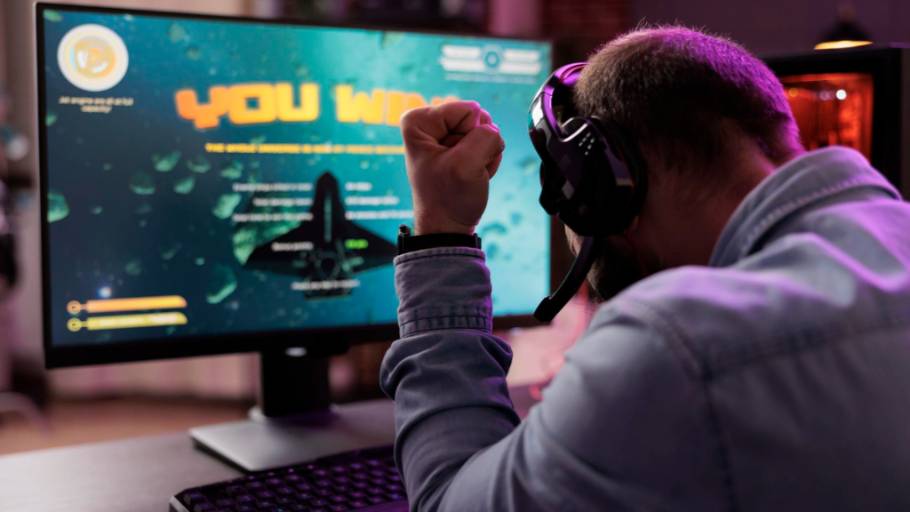
Walk into any gaming cafe in Karachi, Lahore, or Rawalpindi on a Saturday night in 2026 and you’ll see the same thing. Boys hunched over PUBG Mobile matches, headsets on, teammates on Discord, all of them part of an industry that quietly became larger than Hollywood and global music combined. Global gaming will cross USD 200 billion in revenue this year. The entire film industry brings in around USD 33 billion. Recorded music does roughly USD 30 billion. Gaming is bigger than both, by a wide margin.
How the industry got this big is genuinely strange. Mobile turned out to matter more than consoles. Free games made more money than paid ones. PUBG Mobile, which a lot of Pakistani parents still barely understand, became one of the most profitable products on earth. The journey from arcade quarters in 1980 to multi-billion-dollar mobile games is full of turns nobody really predicted when they were happening.
The Scale of Gaming in 2026
A few numbers that set the context:
The global gaming industry revenue is estimated at USD 187 to USD 200+ billion for 2025, with continued growth projected through 2026 and beyond. The global film industry box office hit around USD 33 billion in 2025. The recorded music industry generated approximately USD 30 billion globally. The gaming industry is roughly three times the size of either, and exceeds both combined.
Mobile gaming represents approximately 49 to 51 percent of total gaming revenue, making it the single largest segment. Console gaming follows at around 28 to 30 percent. PC gaming accounts for roughly 19 to 22 percent. Esports as a separate revenue category generated around USD 2.4 billion in 2025, growing steadily but still small relative to the broader industry.
Geographically, Asia-Pacific dominates global gaming revenue with approximately 47 percent of total spend, driven by China, Japan, South Korea, and rapid growth across Southeast Asia, India, and Pakistan. North America accounts for around 26 percent, Europe roughly 19 percent, and other regions including Latin America, Middle East, and Africa making up the remainder.
These numbers represent a sustained transformation. Gaming industry revenue has grown almost continuously for thirty years, surviving multiple economic downturns and emerging stronger from each one.
The Early Foundations (1970s to 1990s)
The gaming industry began commercially with arcade games in the early 1970s. Pong (1972), Space Invaders (1978), and Pac-Man (1980) created the first wave of public engagement with video games. These were quarter-fed machines in malls, bars, and dedicated arcades.
Home consoles changed everything. The Nintendo Entertainment System launched in North America in 1985 and brought gaming into living rooms at a scale arcades could never match. Sega Genesis, Super Nintendo, and eventually Sony PlayStation (1994) and Microsoft Xbox (2001) created the console market that still anchors a quarter of gaming industry revenue today.
The personal computer became a parallel gaming platform through the 1990s and 2000s, with titles like Doom, Quake, StarCraft, Counter-Strike, World of Warcraft, and The Sims creating dedicated PC gaming communities. PC gaming introduced online multiplayer, modding cultures, and competitive gaming foundations that later became esports.
Through this era, the business model was straightforward: develop game, sell game on disc or cartridge, customer pays once and owns the product. Total industry revenue grew steadily but predictably, reaching around USD 50 to USD 60 billion globally by 2010. Big numbers, but nothing compared to what came next.
The Mobile Gaming Revolution
The single biggest driver of gaming industry revenue growth in the last fifteen years is mobile gaming.
The launch of the Apple App Store (2008) and Google Play Store (2008) made smartphones into gaming platforms accessible to anyone with a phone. By 2015, the smartphone gaming audience had passed PC and console gaming combined globally. By 2020, mobile gaming alone exceeded the entire pre-mobile gaming industry’s total size.
Hit mobile games that drove this growth include Candy Crush Saga (2012, generated over USD 20 billion in lifetime revenue), Clash of Clans (2012), Pokémon GO (2016), PUBG Mobile (2018), Genshin Impact (2020), Honor of Kings (China dominant title), and countless casual gaming hits.
Mobile gaming opened markets that previously had minimal gaming industry presence. Pakistan, India, Indonesia, Brazil, Egypt, Nigeria, and dozens of other emerging markets developed substantial gaming audiences within years of smartphones becoming affordable. The Pakistani gaming market specifically has grown significantly, with PUBG Mobile becoming a cultural phenomenon and mobile gaming spending growing year over year despite economic challenges.
What makes mobile gaming so revenue-dominant is the combination of massive audience reach (billions of smartphones globally), low friction to start playing (free downloads), and effective monetization through in-app purchases (covered in detail below).
Official Data:For a deeper dive into annual market growth and player demographics, visit the official reports by Newzoo – Global Games Market Report or track industry trends on GamesIndustry.biz.
Free-to-Play and Microtransaction Economics
The business model shift that transformed gaming industry revenue economics was the rise of free-to-play (F2P) games with microtransactions.
Traditional gaming sold a finished product for USD 60. Free-to-play games charge nothing upfront but generate revenue through in-game purchases: skins, character upgrades, loot boxes, battle passes, currency packs, and special features.
The math is counterintuitive but powerful. A free-to-play game might have only 2 to 5 percent of players spending any money, but those paying users (called “whales” in industry terminology) spend significantly more than traditional game buyers. A single committed player in games like Fortnite, Roblox, or Genshin Impact can spend hundreds or thousands of dollars annually on a game that technically costs nothing.
The numbers from major F2P games illustrate the scale:
- Fortnite has generated over USD 30 billion in lifetime revenue since 2017
- Honor of Kings by Tencent reportedly generated over USD 17 billion in revenue
- Roblox generates over USD 3 billion annually in revenue, primarily from in-game purchases by its predominantly young user base
- Genshin Impact reportedly crossed USD 5 billion in revenue within four years of launch
- PUBG Mobile generates over USD 1.5 billion annually
This monetization model expanded gaming industry revenue dramatically because it captured spend from players who would never pay USD 60 for a game but happily spend USD 10 here and there for cosmetic items or convenience upgrades.
The Console Wars Continue
Console gaming hasn’t shrunk despite mobile’s dominance. It has matured into a stable, profitable segment with three major players competing for premium gaming audiences.
Sony PlayStation continues to lead in hardware sales globally with the PS5, supported by exclusive titles like Spider-Man, God of War, Horizon, and The Last of Us franchises.
Microsoft Xbox has pivoted toward Xbox Game Pass as its core strategy, the Netflix-of-gaming subscription that provides access to hundreds of titles for a monthly fee. The 2023 acquisition of Activision Blizzard for USD 68.7 billion (the largest gaming acquisition in history) brought Call of Duty, World of Warcraft, Candy Crush, and other major franchises under Microsoft’s ownership.
Nintendo continues its distinctive strategy with the Switch and Switch successor consoles, focused on first-party titles like Mario, Zelda, Pokémon, and Animal Crossing. Nintendo’s approach prioritizes specific Nintendo experiences over competing on raw hardware specifications.
Console gaming industry revenue has remained stable at around USD 50 to USD 60 billion annually, driven by both hardware sales and software/services. The model has shifted from one-time game purchases toward services, subscriptions, and digital content.
PC Gaming and the Steam Economy
PC gaming has remained a substantial segment of gaming industry revenue at around USD 35 to USD 45 billion annually, anchored by Valve’s Steam platform which dominates PC game distribution.
Steam reportedly takes a 30 percent cut of most game sales on its platform, making Valve one of the most profitable companies in entertainment despite operating as a private company. The Epic Games Store, launched in 2018 as a Steam competitor, charges only 12 percent and has won notable exclusives but hasn’t displaced Steam’s dominant position.
PC gaming’s growth in recent years has come from indie game success, the rise of complex strategy and simulation games, esports anchored on PC platforms, and the modding communities that extend the life of games like Skyrim, Minecraft, and others indefinitely.
The Esports Economy
Esports turned gaming into a professional career path with millions of dollars in prize pools, professional teams, broadcast rights, sponsorship deals, and dedicated arena events.
The current major esports titles by audience and prize money include League of Legends (the longest-running major esport), Dota 2 (with The International tournaments featuring multi-million-dollar prize pools), Counter-Strike 2 (the latest iteration of CS:GO), Valorant (Riot Games’ tactical shooter), and Mobile Legends Bang Bang (huge in Southeast Asia including Indonesia, Philippines, and Vietnam).
Esports industry revenue reached approximately USD 2.4 billion globally in 2025, driven by:
- Sponsorships (60+ percent of revenue): Brands paying to associate with teams and tournaments
- Media rights (20+ percent): Broadcast deals with streaming platforms and traditional broadcasters
- Merchandise and ticket sales
- Publisher fees and franchise revenue
- Streaming and content monetization
While USD 2.4 billion is small compared to the broader gaming industry revenue, esports growth has been consistent, and major leagues like League of Legends Championship Series have established franchise systems similar to traditional professional sports.
The Pakistani esports scene has grown notably, with PUBG Mobile tournaments offering significant prize pools and Pakistani teams competing in international tournaments. The Pakistan eSports Federation has been pushing for recognition and government support for the industry.
The Streaming and Content Creator Economy
Twitch, YouTube Gaming, Kick, and other platforms created a parallel gaming economy around content creation and live streaming.
Top gaming creators generate income through Twitch subscriptions, YouTube ad revenue, sponsorship deals, brand partnerships, and direct viewer support through donations and Patreon-style subscriptions. The top tier of gaming creators earn more than most professional athletes, with figures like Ninja, Kai Cenat, Pokimane, and others operating substantial business empires built on gaming content.
This streaming economy has become a major marketing channel for gaming industry revenue. Game publishers pay creators to play and promote new releases. Streamer endorsements can drive launch-week sales more effectively than traditional advertising. Several games have launched into mainstream success specifically because Twitch and YouTube creators picked them up organically.
Pakistani gaming streamers and content creators have grown alongside the global trend, with creators building audiences for Urdu and English gaming content. The intersection of YouTube Gaming and Pakistani creators continues to expand as bandwidth improves and gaming becomes more mainstream culturally.
The Saudi Arabia and Middle East Pivot
One of the most significant recent developments in gaming industry revenue has been Saudi Arabia’s aggressive investment in the global gaming industry.
The Saudi Public Investment Fund (PIF) has committed over USD 38 billion to gaming investments through its Savvy Games Group subsidiary. PIF holds major stakes in Activision Blizzard (before Microsoft’s acquisition), Electronic Arts, Take-Two Interactive, Nintendo, Capcom, Embracer Group, and Nexon. Savvy Games acquired ESL FACEIT Group (a major esports tournament organizer) and Scopely (mobile game publisher) in major transactions.
The Saudi strategy aims to position the country as a global gaming hub, with substantial investments in tournaments (Esports World Cup with USD 60+ million prize pool), local game development studios, and infrastructure. This represents one of the largest single-country investments in gaming industry expansion ever attempted.
The implications for global gaming industry revenue include increased capital availability, growing tournament prize pools, and a shifting center of gravity toward Middle East gaming events alongside traditional Western and Asian centers.
AI and the Future of Game Development
Artificial intelligence is significantly reshaping how games are developed in 2026, with implications for both gaming industry revenue and how games are made.
Production cost reduction: AI tools are reducing the time and labor required for asset generation, level design, character animation, and quality assurance. Studios that previously needed 300 developers can produce comparable games with 200 developers using AI augmentation.
New game experiences: AI-powered NPCs (non-player characters) capable of dynamic conversations, procedurally generated content that adapts to player behavior, and personalized gameplay experiences are becoming technically feasible.
Indie game viability: AI tools are making it possible for very small teams or solo developers to produce games that previously required substantial team investment. This is expanding the supply side of the industry significantly.
Job market disruption: The same AI capabilities are creating significant industry layoffs. From 2023 through 2025, over 35,000 gaming industry workers were laid off across major studios including Microsoft, Sony, EA, Take-Two, Ubisoft, and many others. The industry is restructuring around AI-augmented workflows.
Cloud Gaming’s Slow Build
Cloud gaming (streaming games from servers rather than running them on local hardware) has been promised as “the future of gaming” for over a decade but has grown more slowly than predicted.
Current cloud gaming services include Xbox Cloud Gaming (Microsoft), GeForce Now (Nvidia), PlayStation Plus Cloud Streaming, and various smaller services. The technical quality has improved significantly, with reduced latency and higher resolution streaming, but adoption remains modest relative to traditional gaming.
The opportunity is real: cloud gaming could make AAA games accessible to billions of people in markets where expensive gaming hardware is out of reach. For Pakistani users specifically, cloud gaming could eventually allow access to console-quality experiences on phones or basic laptops without requiring USD 500+ hardware purchases.
Whether cloud gaming becomes a major gaming industry revenue driver in the next 5 years remains an open question. The infrastructure costs are high, the user experience still trails native hardware, and pricing models haven’t fully matured.
The Pakistani Gaming Market
For Pakistani readers, the gaming industry presents specific opportunities and realities:
Market growth: Pakistani gaming market is growing rapidly with smartphone penetration. Mobile gaming dominates with PUBG Mobile, Call of Duty Mobile, and various casual titles having massive Pakistani user bases.
Esports scene: Pakistani esports has grown notably with players competing in international PUBG Mobile and Call of Duty Mobile tournaments. Pakistani teams have reached respectable international competitive standings.
Local development: Studios like Mindstorm Studios have produced internationally recognized titles. The local game development industry remains small but is growing, with several Pakistani-developed mobile games achieving regional success.
Income opportunities: For Pakistani gaming professionals, opportunities exist in mobile game development (UE5, Unity), game art and animation (for international studios as freelance work), esports playing and coaching, content creation and streaming, and quality assurance testing for international studios.
Challenges: Bandwidth limitations affect cloud gaming and large downloads. Payment infrastructure historically made in-game purchases difficult, though this has improved. Industry recognition by local employment markets and academic institutions remains limited.
Why Gaming Industry Revenue Keeps Growing
Several factors continue driving gaming industry revenue growth despite the industry’s already massive scale:
Demographic expansion: Gaming is no longer dominated by young men. The average gamer is now in their mid-30s, women represent roughly half of all gamers globally, and gaming spans every age bracket. Each new demographic that adopts gaming adds new revenue.
Geographic expansion: Emerging markets in Africa, South Asia, Latin America, and the Middle East continue to add hundreds of millions of new gamers as smartphone penetration increases and economic development continues.
Time spent: Gaming time per active player continues to increase. The average mobile gamer spends 30+ minutes daily on games. Console and PC gamers often log 10+ hours weekly. This time translates to engagement that monetizes.
New monetization models: Battle passes, subscription services (Xbox Game Pass), tournament entry fees, NFT/digital ownership (controversial but persistent), and creator economy revenue continue to evolve and expand total gaming industry revenue.
Convergence with other industries: Gaming increasingly intersects with social media, music (in-game concerts), fashion (digital wearables), education (educational games), and fitness (gamified workouts). Each convergence creates new revenue.
The Honest Concerns
Several aspects of gaming industry growth raise legitimate concerns:
Loot boxes and gambling-like mechanics have drawn regulatory attention in multiple countries, with some jurisdictions classifying them as gambling and banning them entirely from children’s games.
Worker conditions in game development have come under scrutiny with reports of crunch culture, mandatory overtime, and inadequate compensation relative to revenue generated.
Predatory monetization targeting children or vulnerable users has produced specific regulatory responses in multiple countries.
Layoffs despite record industry profits have created tension between industry growth and worker security.
Content moderation challenges in online games continue to grow as harassment, hate speech, and harmful behavior persist in gaming communities.
The industry’s response to these issues has been mixed. Some changes have happened. Many problems persist. As gaming industry revenue continues to grow, the social and regulatory expectations on the industry will likely intensify rather than diminish.
Final Thoughts
The story of how gaming industry revenue became what it is in 2026 is a story of technology meeting human behavior at scale. Arcade machines, home consoles, personal computers, online connectivity, smartphones, app stores, free-to-play monetization, esports, streaming, AI tools, cloud gaming, and global expansion each added new dimensions of revenue to an industry that fifty years ago barely existed.
The gaming industry revenue exceeding film and music combined isn’t a temporary spike. It reflects fundamental shifts in how billions of people spend their time and money. Gaming has become genuinely competitive with traditional media for entertainment hours, and the trend lines continue pointing upward.
For Pakistani readers, the implications are practical. Career opportunities in game development, esports, content creation, and gaming-adjacent fields are real and growing. Gaming itself has become a substantial part of how Pakistani young people spend leisure time and money. Understanding this industry as both a career option and a cultural force matters for navigating the next decade.
The gaming industry that started with quarters in arcade machines fifty years ago now shapes how billions of humans experience leisure, competition, social connection, and entertainment. The story of how gaming industry revenue reached this scale is far from finished, and the next chapter will likely look as different from 2026 as 2026 looks from 1985.
Read More:Content creation is a high-income skill in the gaming world. To explore other ways to monetize your digital expertise, check out our guide on the best skills to learn to make money in 2026.

Comments