


CNIC Data Modification in Pakistan: Complete Guide to Changing Your CNIC Details
Your CNIC is the most important document you own as a Pakistani citizen. When the information on it is wrong or outdated, problems follow you everywhere, from the bank, to the SIM registration counter, to any government office you walk into.
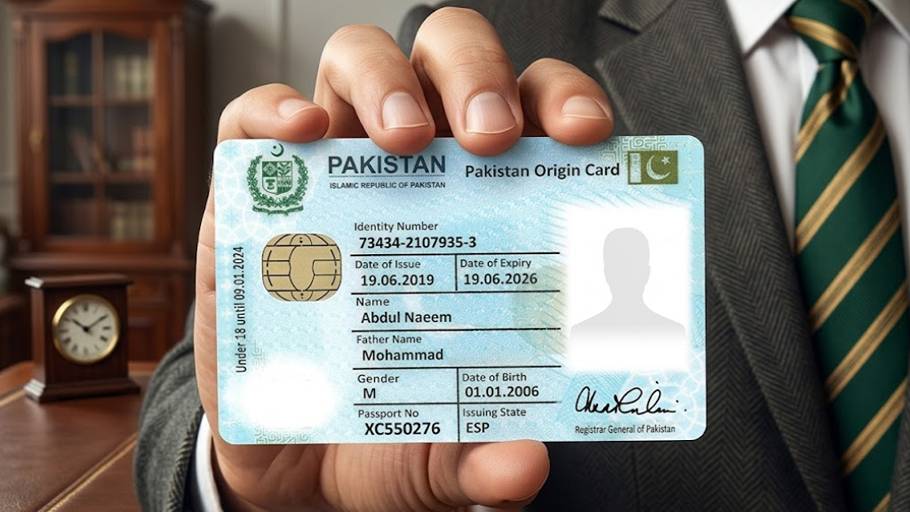
Your CNIC is the most important document you own as a Pakistani citizen. When the information on it is wrong or outdated, problems follow you everywhere, from the bank, to the SIM registration counter, to any government office you walk into. CNIC Data Modification in Pakistan is something thousands of people need every single day, whether it is correcting a spelling mistake, updating a home address, or reflecting a change in marital status after marriage. The good news is that NADRA has significantly improved this service in 2026, and many changes can now be made online from home without a single visit to a registration center.
This guide covers everything you need to know about CNIC Data Modification in Pakistan, from what can be changed and how the process works, to exact fees and the documents you need to bring.
What CNIC Data Modification in Pakistan Actually Covers
CNIC Data Modification in Pakistan refers to officially updating or correcting personal information recorded on your Computerised National Identity Card through NADRA. A CNIC is issued under Section 9 and 10 of the NADRA Ordinance 2000 and is valid for 10 years. During those ten years, life changes. You move house. You get married. Names get misspelled in the system. All of these require going through the CNIC modification process to set the record straight.
The types of changes covered include name corrections, address updates, marital status changes, date of birth corrections, occupation updates, and changes to family identity details like a father’s name. As of February 2026, NADRA introduced new rules under S.R.O. 330(I)/2026, published in the Gazette of Pakistan, which modernize Pakistan’s identity framework further. These changes include QR-based verification on identity documents and lifetime CNIC validity for senior citizens aged 60 and above. Existing CNICs remain valid and these features are being applied progressively.
Three Categories of Modification
Not every change is treated the same way under the CNIC modification process. NADRA divides them into three broad categories.
The first category includes routine changes that are processed relatively quickly: address updates, minor name spelling corrections, occupation changes, and marital status updates after marriage. These are the most common requests and move through the system efficiently when documents are in order.
The second category involves changes that require more scrutiny. Major name changes, significant date of birth corrections, and updates to father’s name or other family identity details all go through NADRA’s verification board. These take more time and require more supporting evidence.
The third category requires a court order. If you want to change your name in a way that goes beyond what your existing documents support, NADRA will ask for a civil court ruling before proceeding. This is the least common situation but important to know about before you start the process.
How to Change Address on CNIC
How to change address on CNIC is the most frequently searched question related to CNIC Data Modification in Pakistan, and the 2026 process is more accessible than it has historically been.
The key thing to understand first is that your CNIC address must match your registered domicile. NADRA connects your card address to your family registration and the Union Council where your family record is maintained. Moving to a new city does not automatically entitle you to that city’s address on your CNIC unless your domicile is also transferred. This is where many people get stuck.
For changes within the same district, the CNIC modification process for an address update is relatively simple. You visit your nearest NADRA Registration Center or use the Pak-Identity portal at id.nadra.gov.pk with your existing CNIC and a recent utility bill showing the new address. If your address change involves a new district entirely, you will typically need to visit a center in person rather than completing the process online, because the family registration transfer requires physical verification.
How to Change CNIC Details After Marriage
For women especially, knowing how to change CNIC details after marriage is essential. Getting married triggers changes across multiple fields on your card, including marital status, your husband’s CNIC number being linked to your record, and in many cases your address if you have moved to a new household.
The starting point for how to change CNIC details after marriage is your Nikah Nama, specifically the registered version. NADRA does not accept an unregistered Nikah Nama. Many couples complete the nikah ceremony but never register it at the Union Council. If that is your situation, registering it there must happen before you can proceed with CNIC Data Modification in Pakistan for marriage-related changes.
Once your registered Nikah Nama is in hand, you go to a NADRA Registration Center or apply through the Pak-Identity portal. You submit your existing CNIC, the Nikah Nama, and your husband’s CNIC. NADRA will update your marital status, link your husband’s record to yours, and process any additional changes you have requested at the same time, such as an address update.
If you also want to change your name after marriage, that is handled as a separate name modification within the same application. Educational certificates showing the new name and an affidavit are the supporting documents NADRA will ask for in that case.
Documents Required for CNIC Modification
The documents required for CNIC modification depend on what you are changing, but a few items are common across almost every type of request: your original existing CNIC, a recent passport-size photograph, and biometric verification at the NADRA center for most cases.
Beyond that, here is what each common modification type requires:
For address changes, documents required for CNIC modification include a recent utility bill not older than three months showing your name and new address, and a tenancy agreement or property ownership documents. If transferring to a new district, a Family Registration Certificate is also needed.
For name corrections, you need your birth certificate, B-Form, educational certificates showing the correctly spelled name, and a sworn affidavit. If your documents are inconsistent across different records, NADRA may ask for additional proof before processing.
For marital status after marriage, the documents required for CNIC modification are your registered Nikah Nama and your husband’s original CNIC alongside your own.
For date of birth corrections, NADRA needs your B-Form, a birth certificate from the union council or hospital, and in some cases school registration records confirming the correct date.
Documents Required for CNIC Modification: Quick Reference
| Modification Type | Documents Required |
|---|---|
| Address change same district | Existing CNIC, utility bill, tenancy or ownership proof |
| Address change new district | Existing CNIC, utility bill, Family Registration Certificate |
| Marital status after marriage | Existing CNIC, registered Nikah Nama, husband’s CNIC |
| Name correction minor | Existing CNIC, birth certificate, educational certificates, affidavit |
| Name correction major | All above plus civil court order |
| Date of birth correction | Existing CNIC, B-Form, birth certificate, school records |
| Father’s name correction | Existing CNIC, father’s CNIC, birth certificate, B-Form |
The Online CNIC Modification Process
NADRA’s digital transformation has made a large portion of the CNIC modification process possible from home. The Pak-Identity portal and Pak-ID mobile app both support online applications for CNIC Data Modification in Pakistan for citizens both inside the country and overseas.
To start online, visit id.nadra.gov.pk or open the Pak-ID app. Log in with your CNIC number and verify your identity through the system. Select the type of modification you need, upload scanned copies of your supporting documents, and pay the applicable fee through Raast, a debit card, or a credit card. After submission, track your application status through the same portal or by contacting NADRA’s helpline at 1800-1-23232.
If your modification requires biometric re-verification or involves complex changes, the system will direct you to visit a NADRA Registration Center to complete that step in person. Most routine changes including straightforward address updates and marital status modifications can be completed entirely online if your documents are in order.
CNIC Modification Fees in 2026
| Service Category | Fee | Processing Time |
|---|---|---|
| Normal | PKR 750 | Around 30 days |
| Urgent | PKR 1,500 | Around 15 days |
| Executive | PKR 2,500 | Around 6 to 10 days |
NADRA does not charge a late fee for expired CNICs, but an outdated or inaccurate CNIC creates real problems at banks, courts, and government offices. The modification fees are modest relative to the complications an inaccurate card causes.
Common Problems That Cause Delays
Most delays in the CNIC modification process come down to two things: document mismatches and incomplete submissions. Before applying, check that your name is spelled consistently across your birth certificate, B-Form, educational certificates, and any other official records. Any inconsistency will slow down your CNIC Data Modification in Pakistan application significantly.
For address changes, make sure the utility bill you are submitting is in your own name and is not older than three months. A bill in someone else’s name is frequently rejected as proof of residence.
For how to change CNIC details after marriage, the most common problem is an unregistered Nikah Nama. Go to your Union Council and get it registered before applying. Without that registration, NADRA cannot process marriage-related modifications.
Under the 2025 NADRA reforms, district and regional identity boards are now legally required to resolve name corrections within 30 days. This gives applicants a clearer and enforceable timeline, which is a significant improvement over the previously indefinite processing windows.
The Bottom Line
CNIC Data Modification in Pakistan in 2026 is faster, more accessible, and increasingly manageable from home thanks to NADRA’s digital services. Whether you are working out how to change address on CNIC, how to change CNIC details after marriage, or correcting any other personal information, the path forward is clear: gather the right documents, apply through the Pak-Identity portal or at a NADRA Registration Center, pay the applicable fee, and track your application until your updated card arrives.
The documents required for CNIC modification and the CNIC modification process steps are straightforward when you know what to prepare. A consistent set of supporting documents and a registered Nikah Nama for marriage-related changes are what separate a smooth application from a delayed one. Your CNIC is the foundation of your legal identity in Pakistan. Keeping it accurate is always worth the effort.
How to Apply for a Passport in Pakistan: Complete Step-by-Step Guide

Comments