




The Ultimate Guide to Building a Brand from Scratch in 2026
Most articles about building a brand from scratch are written by people who have never actually built one. They tell you to “find your why” and “be authentic” and “tell your story,” then leave you staring at a blank screen wondering what you’re supposed to do on Monday morning. The real version is messier.
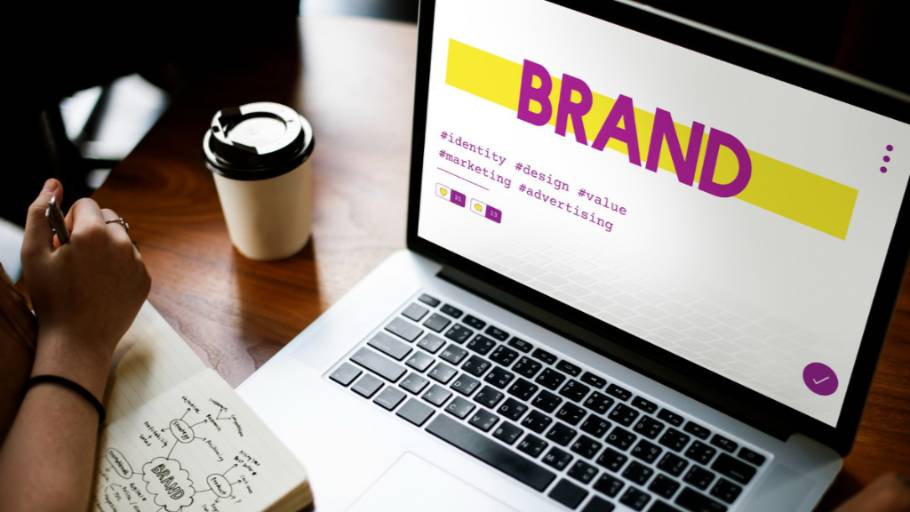
Most articles about building a brand from scratch are written by people who have never actually built one. They tell you to “find your why” and “be authentic” and “tell your story,” then leave you staring at a blank screen wondering what you’re supposed to do on Monday morning.
The real version is messier. Brand building in 2026 is less about logos and color palettes and more about building enough genuine recognition that people remember your name without seeing your ads. It’s slow. It’s expensive in time even when it’s cheap in money. It involves making a hundred small decisions about how you talk, what you stand for, and what you choose not to do, and then living with those decisions long enough for them to compound into something recognizable.
This guide walks through how brand building actually works now. The frameworks that genuinely help, the tools founders use in 2026, the platform dynamics that have shifted, and the parts where most new founders waste 6 to 12 months before figuring out what should have been obvious.
What a Brand Actually Is (and Isn’t)
A brand is not your logo. It’s not your color palette. It’s not your tagline. Those are brand assets, which are different from the brand itself.
A brand is the collection of associations, feelings, and expectations that show up in someone’s head when they hear your name. Patagonia means “environmentally responsible outdoor gear made by people who actually care.” Liquid Death means “edgy water that doesn’t take itself too seriously.” Apple means “premium technology with thoughtful design.” These associations took years and millions of dollars to build, but the principle is the same at every scale.
The honest job of building a brand from scratch is shaping what comes to mind when people think of you. Everything else, the visual design, the website, the social posts, the customer service, is a means to that end.
Most early-stage founders mistake the means for the goal. They obsess over their logo and ignore the actual experience customers have with their business. By 2026, the gap between brands that win and brands that don’t is almost entirely about consistency and quality of customer experience, not graphic design polish.
Design Resource: To start creating your visual identity, you can use professional tools like Canva for Business or explore deep design concepts on Adobe Creative Cloud.
Step One: Get Brutally Clear on Who It’s For
Before purpose, before vision, before any of the philosophical questions, the most useful exercise is defining who your brand is built for in painful specificity.
“Women aged 25 to 45 who care about wellness” is not a target customer. That describes 40 percent of the country. The real version is something like “Mothers in their early 30s living in Tier 2 US cities, household income $80K to $150K, currently buying brands like Hims & Hers and Ritual, frustrated that supplement quality information is so hard to find, spending 90 minutes a day on Instagram and TikTok.”
That level of specificity changes every decision that follows. The language you use. The platforms you focus on. The visual style that fits. The price point you can charge. The objections you need to address.
The exercise to do at this stage is build a single, named customer persona with real detail. Where they work, what they read, what they’re frustrated about, what competitors they’re already buying from, what they post on social media. If you can’t write a paragraph about your target customer that feels like a real human, you don’t know them well enough yet.
Step Two: Position Against Specific Competitors
A common mistake is “we don’t have competitors” or “everyone is our competitor.” Both are wrong and both block useful thinking.
Real positioning answers: who is the customer currently buying from instead of you, and why would they switch? If you’re building a coffee brand, your competitor isn’t “coffee.” It’s Starbucks for some segments, Blue Bottle for others, Trader Joe’s house brand for budget shoppers, and so on. Each segment has different customers with different motivations.
The clearest brands have a sharp answer to “we’re like X but for Y” or “X for people who care about Z.” Liquid Death is bottled water for people who like punk aesthetics. Hims is healthcare for men who don’t want to deal with a doctor’s office. Allbirds is sneakers for people who feel guilty about plastic.
Spend real time with the brands your customer is currently choosing instead of you. Buy their products. Read their reviews. Subscribe to their email lists. Understand why people buy them and where they fall short. Your brand needs to genuinely solve one of those shortfalls in a way that’s worth switching for.
Step Three: Choose Your Brand Archetype
Brand archetypes are a framework that helps you make consistent decisions about voice and personality without overthinking each one. The classic 12 archetypes (the Sage, the Rebel, the Caregiver, the Hero, and so on) give you a personality template.
Patagonia is the Hero (saves the planet through environmental action). Harley-Davidson is the Outlaw (rebellion and freedom). Disney is the Magician (turning the ordinary into the extraordinary). Liquid Death is the Jester (irreverent humor as identity). Mailchimp is the Creator (built for people who make things).
Pick one primary archetype. Maybe a secondary that complements it. Then test every brand decision against the archetype. Does this email sound like a Jester would write it? Does this product page feel like a Sage would explain things? This single framework eliminates most of the inconsistency that kills early brands.
Step Four: Name and Visual Identity
The name comes after positioning, not before. Once you know who your brand is for and what archetype you’re working with, the name should feel like it fits naturally.
A few practical naming rules in 2026:
The .com domain should be available, or a clean alternative (.co, .ai for tech). Three-word .com names are still findable. One-word .coms are usually taken or expensive (Brandbucket and Brandable list available premium options ranging from $500 to $50,000+).
Social handles should be available on the platforms your audience uses. If your name is taken on Instagram and TikTok, you have a discovery problem before you even launch.
Trademark availability matters more than people think. Run a USPTO TESS search before falling in love with a name. A trademark dispute six months in is expensive. Trademark attorneys typically charge $300 to $1,500 to file a federal trademark application.
The name should be reasonably easy to spell, pronounce, and remember. “Squarespace” works. “Cqwoa.io” doesn’t.
For visual identity, the practical 2026 approach is hiring a designer on Fiverr Pro, Upwork, or Dribbble for $300 to $3,000 depending on scope, or using Looka, Brandmark, or Canva for DIY work if your budget is genuinely zero. The professional design route produces meaningfully better results, but a clean Canva-built identity beats a delayed launch.
Key visual decisions: a primary logo, a simple mark or icon version, a color palette (three to five colors), one or two typeface choices, and basic guidance on photography style. Tools like Figma and Frontify let you organize all this into a usable brand guide.
Step Five: Develop Your Voice
Brand voice is how you sound across every touchpoint. It’s the single biggest lever for building recognition that founders underuse.
Define three voice attributes that describe how you communicate. Mailchimp’s voice is “fun but not silly, confident but not arrogant, smart but not stuffy.” That guides every email, every microcopy decision, every help article. Notion’s voice is precise, slightly poetic, and quietly confident. Liquid Death’s voice is openly absurd and theatrical.
Write a voice guide that includes the three attributes, words you use, words you avoid, and example sentences for common situations (welcome emails, error messages, product descriptions). Then enforce it. Every piece of copy that goes out should sound like the same person wrote it.
This single discipline separates brands that feel coherent from brands that feel like a collection of random documents.
Step Six: Build Where Your Customers Already Are
The 2026 platform landscape is fragmented but predictable. Different brand types do best on different platforms.
B2C consumer brands: Instagram and TikTok remain primary. Instagram for aesthetics and aspiration, TikTok for discovery and viral reach. YouTube for longer-form content and SEO.
B2B and professional services: LinkedIn is the workhorse. Twitter (X) still matters in tech, media, and finance. YouTube for thought leadership and explainer content.
Creator and personality brands: TikTok for discovery, Instagram for community, YouTube for depth, newsletter (Substack or Beehiiv) for direct audience ownership.
E-commerce brands: Instagram and TikTok for top-of-funnel awareness, Pinterest for product discovery, Google Shopping for transactional intent, email for retention.
You don’t need to be on every platform. Pick one or two where your specific audience genuinely spends time, and build deep presence there before expanding. A brand with 50,000 engaged TikTok followers beats a brand with 5,000 followers spread across six platforms.
Step Seven: Founder-Led Content (The 2026 Shift)
The biggest change in brand building over the past few years is the rise of founder-led content. Personal brand layered on top of business brand drives recognition faster than business brand alone, especially in the first 12 to 24 months.
The reason is structural. Algorithms prefer faces. Audiences trust people over logos. The startup costs of building a personal brand are minimal compared to traditional advertising. Founders who post consistently from their own accounts (LinkedIn for B2B, Instagram or TikTok for consumer) tend to grow business recognition meaningfully faster than founders who stay invisible.
This doesn’t mean every founder needs to become an influencer. It does mean that being absent from the conversation entirely is a competitive disadvantage in 2026 that didn’t exist a decade ago.
The minimum effective dose for most founders is two or three posts per week on one chosen platform, focused on insights from your industry, behind-the-scenes details of building the business, and genuine value for your target audience. Done for 12 months, this usually outperforms paid advertising of comparable cost for early-stage brand building.
Step Eight: Tell Your Story Honestly
Brand storytelling has been so overused that the phrase has lost meaning. The actual work is documenting why your business exists, what you’ve personally seen wrong with the current options in your market, and what you’re trying to do about it.
Specifics matter. “I started this because I saw a gap in the market” is meaningless. “I started this because my mother spent $200 a month on supplements that turned out to contain less than half the active ingredients listed on the label, and I couldn’t find a brand I trusted” is a story.
The structure that works for most founder origin stories: the personal moment that triggered the idea, the specific frustration with existing options, the research you did to confirm the problem, and what you decided to build differently.
This story shows up in your About page, your first email to subscribers, your social media bio, and your founder content. Repeat it consistently. People need to hear something multiple times before it becomes the association in their head.
Step Nine: Customer Experience as the Foundation
Every interaction someone has with your business is teaching them what your brand actually means, regardless of what your marketing says.
This is where most early-stage brands quietly fail. The brand promises something premium, then ships in beat-up boxes. The website talks about white-glove service, then takes three days to respond to support emails. The social media shows perfection, then the actual product has obvious quality issues.
The fix is treating customer experience as the primary brand-building activity, not the afterthought. Specifically:
- Response time on customer messages within hours, not days
- Packaging and unboxing that reinforces the brand at the moment of receipt
- Error and refund handling that doesn’t feel adversarial
- Quality consistency that means the product or service is what you promised
- Follow-up communication that builds relationships beyond the transaction
In 2026, word of mouth amplified by social media is the strongest brand-building force available to small businesses. One genuinely great customer experience generates content that thousands of new prospects will see organically. One bad experience does the opposite.
Step Ten: Measure What Actually Matters
Brand building is hard to measure precisely, but a few signals indicate real progress.
Direct traffic and branded search. As your brand grows, more people type your name into Google or come directly to your site. Tracking direct traffic and branded search volume in Google Search Console shows whether brand awareness is actually growing.
Repeat purchase rate and customer retention. Strong brands convert one-time buyers into repeat customers at higher rates. If your retention is improving, your brand is working.
Net Promoter Score (NPS) or referral rate. People recommend brands they actually trust. Asking customers how likely they are to recommend you, and tracking that score over time, gives a direct signal on brand strength.
Unprompted mentions. Search your brand name on social media and forums regularly. Are people talking about you without being prompted by ads or content? That’s the clearest indicator of real brand presence.
Email open rates and engagement. Strong brands have audiences that actually want to hear from them. Open rates above 30 percent and click rates above 3 percent suggest real brand affinity.
If these metrics are trending up, you’re winning even if revenue feels slow. If they’re flat, the brand isn’t compounding and something needs to change.
Realistic Costs and Time Frame
Building a brand from scratch in 2026 with a realistic budget breakdown:
- DIY bootstrap path: $200 to $2,000 in first-year brand expenses. Canva templates, basic domain and hosting, free social platforms, founder-led content, zero paid advertising.
- Lean professional path: $5,000 to $15,000 in first year. Mid-tier designer, professional website, basic email marketing tool, small initial advertising budget for testing, freelance content support.
- Aggressive launch path: $25,000 to $100,000+ in first year. Full brand agency, professional photography, video content production, PR support, meaningful paid advertising budget.
Time frames are honest. Most brands take 12 to 24 months to develop genuine recognition within their niche. Three to five years to build broad brand awareness. The brands that “appear overnight” almost always had years of quiet building behind them.
Common Mistakes That Slow Founders Down
The patterns that repeat across failed brand attempts:
- Obsessing over logo design while ignoring customer experience
- Trying to appeal to everyone instead of speaking specifically to one audience
- Inconsistent voice across different channels and content types
- Hiring a brand agency too early before knowing what the brand actually is
- Avoiding founder-led content out of discomfort with being visible
- Launching before validating that anyone actually wants what you’re selling
- Copying competitor positioning instead of differentiating
- Quitting at month 4 when recognition isn’t happening yet
- Ignoring trademark and IP protection until a dispute arises
- Treating social media as broadcasting instead of conversation
Avoiding even half of these is genuine competitive advantage.
Final Thoughts
Building a brand from scratch in 2026 isn’t easier than it used to be, but it’s possible with less capital than ever before. The platforms are free. The tools are accessible. The frameworks are well-documented. What’s harder is the consistency of execution over the 12 to 24 months it actually takes for a brand to form in customers’ minds.
The founders who succeed treat brand building as a years-long compounding project, not a launch campaign. They get specific about who they’re for. They build consistent voice and visual identity. They invest in customer experience as the primary brand-building activity. They show up on the platforms their audience uses. And they keep showing up after the initial excitement fades.
A brand that genuinely matters to its customers in three years almost always started with a founder who was willing to commit to the unglamorous work in year one when nothing seemed to be happening. The compounding only shows up after you’ve put the time in.
Read More:Building a brand is a high-value skill. If you’re looking to master the technical side of this process, check out our guide on the best skills to learn to make money in 2026.



Comments