




Affordable Universities in Canada: Best Options for International Students in 2026
Studying in Canada in 2026 is a completely different conversation than it was in 2022. The country has tightened study permit caps. The Student Direct Stream that fast-tracked applications for Pakistani and Indian students closed in late 2024. Post-graduation work permit eligibility now depends on which program you choose.
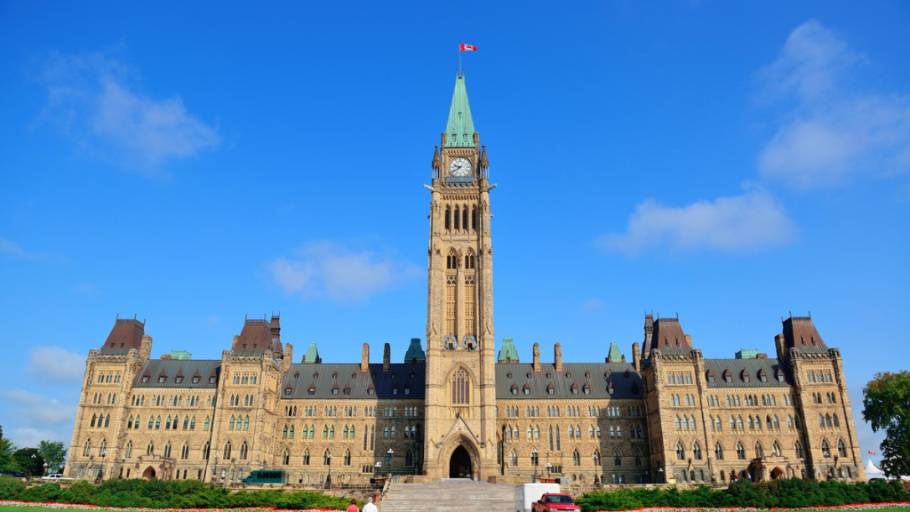
Studying in Canada in 2026 is a completely different conversation than it was in 2022. The country has tightened study permit caps. The Student Direct Stream that fast-tracked applications for Pakistani and Indian students closed in late 2024. Post-graduation work permit eligibility now depends on which program you choose. Provincial Attestation Letters are required before IRCC will even look at most applications. The combined effect is a system that still works but expects you to be a more informed applicant than your cousin who got admitted in 2019.
The good news is that the affordable universities in Canada that have been the smart-money pick for international students for years are still there, still affordable by Canadian standards, and still offering legitimate paths to PGWP and permanent residency for students who plan correctly.
This guide covers what actually matters in 2026. The cheapest universities by tuition and total cost, the new permit and attestation requirements, the IRCC proof of funds rules, the PGWP eligibility shift, and the specific schools that consistently make sense for Pakistani and other South Asian students on a budget.
What Changed in 2024 and 2025 (and Why It Matters)
Before any university shortlist, four major policy changes shape every Canada study decision now.
International student permit cap. In January 2024, IRCC introduced a national cap on new study permits. The total was further reduced in 2025 to approximately 437,000 permits for the year, with provincial allocation quotas. This means competition for permits has tightened significantly. Universities have had to manage their international intake within these quotas.
Provincial Attestation Letter (PAL or TAL). Most study permit applications now require a Provincial Attestation Letter from the province or territory where you’ll study, confirming you’re within that province’s allocation. Without it, IRCC will not process your application. Each university handles the PAL issuance process differently, so this is now part of the admissions workflow.
Student Direct Stream (SDS) closure. The SDS program, which gave fast-track processing to applicants from specific countries including Pakistan, India, the Philippines, and others, was shut down on November 8, 2024. All applicants now go through the standard study permit process, which typically takes 8 to 20 weeks compared to the SDS’s 2 to 8 weeks.
PGWP eligibility tightened. As of November 2024, eligibility for the Post-Graduation Work Permit is tied to specific programs of study aligned with labor market needs. Not every degree leads to a PGWP anymore. Before choosing a program, verify it remains PGWP-eligible. This single check protects your entire post-study work plan.
These changes don’t make Canada a bad option. They make it a more deliberate decision that rewards proper planning.
Why Canada Still Makes Sense
Despite the tighter rules, Canada continues to offer genuine advantages for international students.
The education quality remains strong. Canadian universities consistently rank in global top 100 lists, with degrees recognized worldwide. The cost compared to the US and UK is still meaningfully lower, especially when paired with the right province and university selection.
The PGWP, where applicable, allows up to 3 years of work experience that counts toward permanent residency. Canada’s pathways to PR through Express Entry and Provincial Nominee Programs remain the clearest in the Western world for students.
Work rights during studies are competitive. International students can work up to 24 hours per week off-campus during academic sessions (raised from 20 hours in Fall 2024) and full-time during scheduled breaks. Minimum wages of CAD 15 to CAD 18 per hour in most provinces make part-time work genuinely useful for covering living expenses.
The combination of quality, work rights, post-graduation options, and affordability for those who choose carefully keeps Canada one of the most rational destinations for international students in 2026.
What “Affordable” Actually Means
When evaluating affordable universities in Canada, tuition alone is misleading. The real calculation includes:
Tuition: Varies from CAD 9,000 to CAD 70,000+ per year depending on university and program
Living expenses: Range from CAD 12,000 (smaller cities) to CAD 25,000+ (Toronto, Vancouver) annually
Mandatory health insurance: CAD 600 to CAD 1,100 per year, often added to tuition
Books and supplies: CAD 1,000 to CAD 2,000 per year
Transportation: CAD 90 to CAD 160 monthly for student transit passes
Initial setup costs: Flight, deposits, winter clothing, can easily reach CAD 3,000 to CAD 5,000
A university with CAD 12,000 tuition in an expensive city like Toronto may cost more in total than a CAD 22,000 tuition university in Winnipeg or St. John’s. Total cost should drive the decision.
Top Affordable Universities in Canada for 2026-27
Based on current published tuition rates and total cost considerations, these schools consistently offer the best value for international students.
1. Memorial University of Newfoundland (St. John’s)
Memorial University remains one of the most affordable options for international students with strong academic programs. International undergraduate tuition ranges roughly from CAD 20,790 to CAD 26,915 per year depending on the program in 2025-26.
Newfoundland and Labrador remains the most affordable province for international students overall, with the lowest average undergraduate tuition in Canada (around CAD 18,867). St. John’s also has relatively low rental costs compared to Toronto or Vancouver, making the total cost picture genuinely competitive.
Strong programs include engineering, business, medicine, ocean sciences, and social sciences. Acceptance rates are higher than at top-tier Canadian schools, which helps applicants without perfect academic records.
2. Brandon University (Manitoba)
Brandon University offers some of the lowest international tuition in Canada, with annual rates roughly CAD 9,000 to CAD 11,000 for most undergraduate programs in 2025-26. Combined with Manitoba’s low cost of living, this is among the cheapest affordable universities in Canada for serious students.
Smaller class sizes mean more personal attention from professors. The trade-off is being in a smaller city (Brandon’s population is around 50,000) with fewer urban amenities. For focused students who want education over experience, the math works.
3. University of Manitoba (Winnipeg)
The University of Manitoba is a larger research university with international undergraduate tuition ranging from approximately CAD 19,914 (Arts) to CAD 27,059 (Engineering) per year in 2025-26.
Winnipeg has moderate cost of living, a substantial Pakistani and South Asian community for new arrivals, and a growing tech and business sector. Manitoba’s Provincial Nominee Program is one of the friendlier PNP pathways for graduates seeking PR after studies.
4. University of Saskatchewan (Saskatoon)
International undergraduate tuition at the University of Saskatchewan typically ranges from CAD 22,000 to CAD 29,000 per year depending on program in 2025-26. Strong in agriculture, medicine, veterinary sciences, and engineering.
Saskatoon offers low cost of living compared to most major Canadian cities. Saskatchewan’s PNP is also active and welcoming for graduates with in-demand skills.
5. University of Winnipeg (Manitoba)
A smaller alternative to University of Manitoba within the same city. International tuition ranges from approximately CAD 17,000 to CAD 21,000 per year depending on program in 2025-26. Strong in liberal arts, business, and indigenous studies.
The smaller campus and focused programs suit students who prefer a less overwhelming academic environment.
6. University of Regina (Saskatchewan)
Tuition ranges from CAD 21,000 to CAD 27,000 per year for international students in 2025-26. Notable for journalism, social work, engineering, and business.
Regina has affordable housing and a manageable cost of living. The university offers automatic entrance scholarships based on academic merit, reducing effective tuition for strong applicants.
7. University of Northern British Columbia (Prince George)
UNBC offers tuition starting around CAD 22,000 per year for 2025-26, significantly lower than Vancouver-area universities. Strong in environmental science, natural resources, and First Nations studies.
Prince George has lower housing costs than Vancouver while still providing BC residency time toward Provincial Nominee Program eligibility.
8. Université de Saint-Boniface (Manitoba)
For students who can study in French, Saint-Boniface offers some of the cheapest international tuition in Canada at approximately CAD 9,000 to CAD 11,000 per year for 2025-26. Suitable for students with French-language proficiency who want to maintain bilingual skills.
9. Cape Breton University (Nova Scotia)
International tuition at CBU ranges from approximately CAD 16,000 to CAD 22,000 per year in 2025-26. Strong in business analytics and engineering. Located in Sydney, Nova Scotia with low cost of living and a substantial international student population.
10. University of New Brunswick (Fredericton or Saint John)
International tuition at UNB ranges from approximately CAD 17,000 to CAD 26,000 per year in 2025-26. Strong in engineering, computer science, and forestry. Both Fredericton and Saint John offer moderate cost of living.
IRCC Proof of Funds for 2026
This is the area where most applicants get blindsided. The financial requirements have increased significantly.
For applications outside Quebec, the IRCC requires single applicants to show CAD 22,895 in living expenses for one year, separate from tuition and travel costs. This applies to applications submitted on or after September 1, 2025.
For Quebec applications, since January 1, 2026, single applicants must demonstrate CAD 24,617 in living expenses through the CAQ (Quebec Acceptance Certificate) process.
If your first-year tuition is CAD 22,000, your minimum total funds proof requirement outside Quebec is approximately CAD 45,000 (tuition plus living expenses). Add travel costs of CAD 2,000 to CAD 4,000, and the realistic minimum is closer to CAD 47,000 to CAD 50,000.
Guaranteed Investment Certificate (GIC) is the most common way Pakistani and Indian students demonstrate proof of funds. Canadian banks like Scotiabank, RBC, CIBC, and ICICI Bank Canada offer student GICs of CAD 22,895 that you deposit before applying and receive back in installments after arriving. The GIC is no longer mandatory under standard processing but remains the most reliable way to demonstrate funds.
Fund sources must be clear. Borrowed funds, gifted amounts without paper trails, or money that suddenly appeared in your account three weeks before application all trigger refusals.
Application Process Step by Step
The post-SDS application process for Pakistani and other international students:
Step 1: Choose your province and university based on tuition, programs, and PGWP eligibility. Verify that your specific program leads to PGWP if that matters to you.
Step 2: Check application deadlines. Most Fall 2026 intakes have deadlines between November 2025 and March 2026. Some programs have earlier deadlines.
Step 3: Prepare academic documents including transcripts, English proficiency scores (IELTS 6.5 or TOEFL 90 minimum for most programs), Statement of Purpose, and letters of recommendation.
Step 4: Submit applications through university portals or provincial application services (OUAC for Ontario, ApplyAlberta for Alberta, etc.).
Step 5: Once accepted, request your Letter of Acceptance and Provincial Attestation Letter from the university. Both are required for the study permit application.
Step 6: Arrange your GIC or other proof of funds documentation. Pay your tuition deposit.
Step 7: Apply for your study permit through IRCC. Standard processing is now 8 to 20 weeks. Plan accordingly.
Step 8: After permit approval, book flights and arrange accommodation. Many universities offer first-semester guaranteed housing for international students if requested early.
Applying 8 to 12 months before your intended start date is now the realistic minimum timeline. The old 4 to 6 month rush no longer works post-SDS closure.
Official Verification:For the most current financial requirements and visa processing times, always refer to the Official Government of Canada (IRCC) website.
Scholarships Worth Pursuing
Several major scholarship programs remain accessible to international students.
Vanier Canada Graduate Scholarships: CAD 50,000 per year for 3 years for doctoral students. Highly competitive but life-changing for recipients.
Lester B. Pearson International Scholarship (University of Toronto): Fully funded covering tuition, books, residence, and incidental fees for four years. Among the most prestigious undergraduate scholarships in Canada.
UBC International Scholars Program: Various awards including the Karen McKellin International Leader of Tomorrow Award, covering full tuition plus living expenses.
University of Manitoba International Undergraduate Student Scholarships: Automatic entrance scholarships based on academic merit, no separate application needed.
Memorial University Entrance Scholarships: Automatic for international students based on academic average, ranging from CAD 1,000 to CAD 9,000.
Saskatchewan International Excellence Awards: Available at University of Saskatchewan and University of Regina for top international applicants.
Quebec Merit Scholarship Program for Foreign Students: For graduate students in Quebec universities.
Most affordable universities in Canada also offer their own entrance scholarships for international students, typically ranging from CAD 1,000 to CAD 10,000 annually based on academic merit.
PGWP Eligibility (Critical to Check)
Since November 2024, eligibility for the Post-Graduation Work Permit has been tied to specific programs of study. Not every degree qualifies.
PGWP-eligible programs generally include those aligned with labor market needs in healthcare, education, STEM, trades, transportation, and agriculture. Programs outside these categories may not qualify for PGWP regardless of the institution offering them.
Before committing to a specific program, verify its PGWP eligibility through the IRCC website or your university’s international student office. A 4-year investment that doesn’t lead to a work permit is a major risk if your goal is Canadian work experience and eventual PR.
This single check has become as important as choosing the right university itself.
Cost of Living by City
Realistic 2026 monthly living expenses for international students:
- Toronto and Vancouver: CAD 2,200 to CAD 3,000 monthly (high housing costs)
- Montreal: CAD 1,500 to CAD 2,000 monthly
- Ottawa and Calgary: CAD 1,600 to CAD 2,200 monthly
- Winnipeg, Regina, Saskatoon: CAD 1,100 to CAD 1,500 monthly
- Halifax and Fredericton: CAD 1,300 to CAD 1,700 monthly
- St. John’s and Charlottetown: CAD 1,100 to CAD 1,500 monthly
- Brandon, Prince George, Sydney (CB): CAD 1,000 to CAD 1,400 monthly
Annual living expenses in smaller cities can be CAD 12,000 to CAD 18,000, while Toronto and Vancouver typically require CAD 25,000+ per year. This is why total cost analysis matters more than tuition alone when evaluating affordable universities in Canada.
Practical Tips for Pakistani and South Asian Applicants
Specific guidance for applicants from Pakistan, India, Bangladesh, and similar regions:
Document attestation: HEC (Higher Education Commission) attestation of Pakistani transcripts is required by most Canadian universities. Plan 3 to 6 weeks for this process. IBCC (Inter Board Committee of Chairmen) attestation for school certificates also takes time.
IELTS preparation: Most Pakistani students need IELTS scores of 6.5 overall (with 6.0 in each band) for undergraduate admission and 7.0 overall for graduate programs. British Council Pakistan and IDP Pakistan are the official test administrators.
Financial documentation: Show clear sources of funds in your bank accounts for at least 4 to 6 months before applying. Sudden large deposits raise questions during visa processing.
GIC through Canadian banks: Scotiabank, RBC, CIBC, and ICICI Bank Canada offer GIC products specifically designed for international students. The funds are held in Canada and released to you after arrival.
Community networks: Established Pakistani student communities exist in most major Canadian university cities including Toronto, Winnipeg, Calgary, Ottawa, and Saskatoon. Connect with them before arrival for housing, banking, and settling-in support.
Visa interview preparation: Visa officers ask about your study plan, ties to Pakistan, intent to return, and financial capacity. Prepare clear answers. Genuine students with proper documentation get approved at higher rates than those who appear to be using study permits as immigration shortcuts.
Common Mistakes Pakistani Applicants Make
Patterns that lead to refusals and disappointment:
- Applying to non-PGWP-eligible programs without realizing it
- Skipping the Provincial Attestation Letter step
- Showing borrowed funds or sudden deposits as proof of funds
- Choosing the cheapest university without checking program reputation in Pakistan
- Missing application deadlines because of slow document attestation
- Underestimating living costs in expensive cities
- Not preparing for IELTS adequately and rushing the test
- Applying without a clear Statement of Purpose that explains the choice of school and program
- Assuming SDS still exists (it doesn’t)
- Targeting only top-tier schools without backup options
Avoiding even three or four of these significantly improves approval rates.
Final Thoughts
The affordable universities in Canada listed above continue to offer genuine value for international students in 2026, but the application landscape has changed significantly. Tighter permit caps, the PAL requirement, the end of SDS, and PGWP eligibility tied to specific programs all mean you can’t apply the way students applied in 2022.
What hasn’t changed is that with careful planning, the right university, and proper documentation, Canada remains one of the most rational destinations for ambitious international students. Newfoundland, Manitoba, Saskatchewan, and the Atlantic provinces continue to deliver quality education at costs that make sense even for budget-conscious applicants.
Pick your university based on total cost and PGWP eligibility, not just tuition. Apply 8 to 12 months early. Get your documentation right. Choose a program aligned with your career and immigration goals. Prepare your finances clearly and legitimately. These basics consistently separate successful applicants from those who face refusals or end up regretting their choices.
The path to Canadian education and eventually permanent residency is still open in 2026. It just requires more deliberate planning than it did before.
Read More:To manage your expenses in Canada, having high-income skills is a game-changer. Explore our guide on the best skills to learn to make money in 2026 to boost your part-time earning potential.



Comments