




History of Karachi: From a Fishing Village to the City of Lights
Most people who live in Karachi today know it as a city of traffic, noise, chai dhabbas, the sea, and an energy that does not really stop.
Most people who live in Karachi today know it as a city of traffic, noise, chai dhabbas, the sea, and an energy that does not really stop. What fewer people think about is how old this place actually is, and how many different civilizations, empires, and ordinary people built and rebuilt it across thousands of years before the modern city took shape. The History of Karachi is not a straight line. It is a story of a coastal settlement that kept getting discovered, conquered, renamed, and reinvented until it became the megalopolis of 20 million people that it is today.
The Ancient Roots: Karachi Before It Had a Name
The area where Karachi sits today has been inhabited for a very long time. The History of Karachi in its earliest form belongs to a coastline that connected the Indus Valley to the sea routes of the ancient world. When Alexander the Great came to this area in the 4th century BC while returning west, the Greeks called it Krokola and spoke of the port of Morontobara, now known as Manora Island, from where Alexander’s admiral Nearchus set sail. The Greeks also named it Barbarikon, a seaport of the Indo-Greek Bactrian kingdom.
In the 8th century, the area was known to the Arabs as Debal. It was from this coastal point that Muhammad bin Qasim and his army entered Sindh in 712 AD, one of the most consequential moments in the entire subcontinent’s history. The fact that it happened through the land that would become Karachi is a Karachi fact that most people do not fully appreciate.
historical records of Alexander’s naval expedition via Krokola
Kolachi: The Real Beginning
The more recognizable beginning of Karachi History as a settled community starts around 1729, when a small fishing village called Kolachi-jo-Goth, meaning the settlement of Kolachi, was established in the area by Baloch tribes from Balochistan and Makran. Descendants of the original community still live near Karachi Port today. The original name Kolachi survives in the locality known as Mai Kolachi.
The legend behind the name is one of the more interesting Karachi facts from this period. According to local tradition, the city was named after a woman called Mai Kolachi, who was once a leader of her people. Whether historically precise or not, the name stuck.
A small fort was constructed for protection, armed with cannons imported from Muscat. The fort had two main gateways: one facing the sea known as Kharra Darwaaza, corresponding to today’s Kharadar, and the other facing the Lyari River known as Meet’ha Darwaaza, corresponding to today’s Mithadar. Both neighborhoods still exist in Karachi. When you walk through their narrow lanes, you are walking through the oldest surviving geography of the History of Karachi.
By 1838, just before the British arrived, the town’s population had reached approximately 15,000 people. It was a modest but growing coastal settlement with an active sea trade.
The British Arrive: 1839 and Everything Changes
The most dramatic turning point in the History of Karachi came on February 1, 1839, when the British East India Company conquered the town after HMS Wellesley anchored off Manora Island. Two days later, the little fort surrendered. The town was formally annexed to British India when Sindh was conquered by Charles James Napier in 1843.
What followed over the next several decades is one of the most rapid urban transformations in Karachi History. The British understood immediately what they had acquired: a deep natural harbor, a location connecting the Arabian Sea to the interior of the subcontinent, and a strategic position for commercial operations across the region. They set about building accordingly.
It was from Karachi that the first telegraph message from India was sent to England. Harbor modernization began in 1860. By 1866-67, the government had spent about 250,000 pounds sterling on the Karachi Port. With the opening of the Suez Canal in 1869, Karachi’s importance grew rapidly and it became a full-fledged seaport. The Karachi Port Trust was established in 1886, and between 1888 and 1910 the East Wharf measuring 186,000 feet in length was constructed. When Punjab emerged as the granary of India in the 1890s, Karachi became the region’s principal export outlet.
The railway connected Karachi to the interior. Public buildings went up, including Frere Hall, built around 1865. Parsi merchants played a pivotal role in Karachi’s growth by investing in businesses, infrastructure, and philanthropy. The population numbers tell the story plainly. In 1838 the city had 15,000 people. By 1862 it had grown to 62,384. By the early 20th century it had crossed 200,000.
By 1924 an aerodrome had been built and Karachi became the main airport of entry to India, a Karachi fact that surprises many people today. The city became the provincial capital of Sindh in 1936, further cementing its importance within British India.
1947: Partition and the Birth of a New Capital
The most transformative single event in the History of Karachi came on August 14, 1947. Pakistan was born and Karachi was chosen as its capital. With the creation of Pakistan, Karachi became not only the capital and premier port of the new country but also a center for industry, business, and administration.
What followed was one of the largest demographic transformations any city has ever experienced. Millions of Muslim refugees known as Mohajirs arrived from India, particularly from Hyderabad, Lucknow, Delhi, and Bombay. They came with their languages, cultures, professional skills, and grief. Simultaneously, large numbers of Hindus and Sikhs who had previously been part of Karachi’s diverse population departed for India.
The city that emerged from this exchange was fundamentally different from the one that had existed before. Urdu became the dominant language. New neighborhoods grew up almost overnight. The cultural character of Karachi shifted permanently. These Karachi facts help explain why the city feels so distinct from the rest of Sindh, where Sindhi is the dominant language and culture.
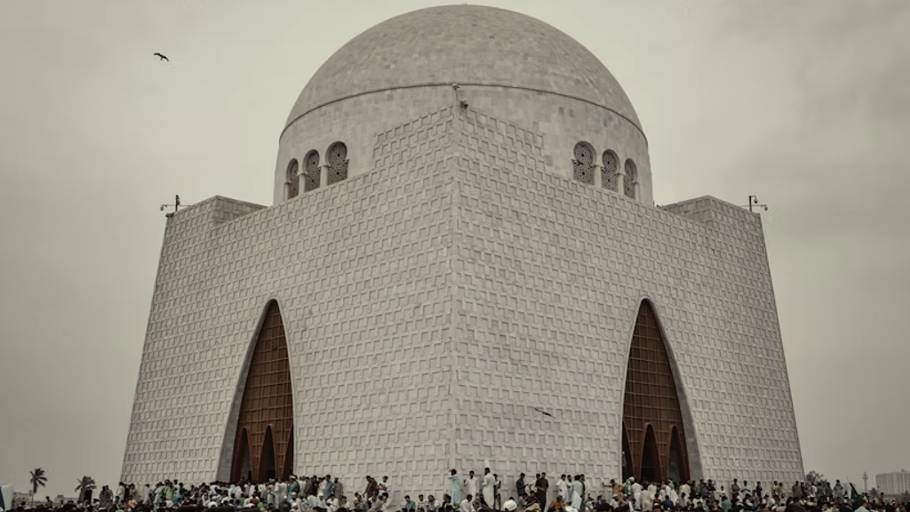
Quaid-e-Azam Muhammad Ali Jinnah, the founder of Pakistan, died in Karachi on September 11, 1948, just over a year after independence. His mausoleum, known as Mazar-e-Quaid, stands in the heart of the city today and is one of the most visited sites in Pakistan. The History of Karachi and the history of Pakistan’s founding are connected at this most personal level.
Although Rawalpindi became the interim capital in 1959 before the capital permanently moved to Islamabad in 1969, Karachi maintained its preeminence as Pakistan’s business and industrial hub. Losing capital status shaped a long-running grievance about political marginalization that persists in Karachi History to this day.
Growth, Violence, and Recovery
The 1960s brought significant economic growth. Textile mills, light manufacturing, and trade expanded the industrial base. Workers from every province came looking for economic opportunity. The University of Karachi was established and educational institutions multiplied across the city.
The 1980s were a deeply difficult period in Karachi History. The Soviet-Afghan War brought weapons, drugs, and large numbers of Afghan refugees into the city. Ethnic tensions between Mohajirs, Pashtuns, Sindhis, and other groups escalated into serious violence. The Muttahida Qaumi Movement emerged in 1984 as a political force representing the Urdu-speaking community, and its relationship with the Pakistani state produced periods of extreme conflict particularly through the late 1980s and 1990s. Targeted killings and political extortion became features of daily life for many Karachiites. These are difficult Karachi facts but they cannot be omitted from any honest History of Karachi because they shaped the city profoundly.
The Karachi Operation, launched in 2013 primarily by the Rangers paramilitary force, was a turning point. Targeted against criminal networks, extortion rackets, and militant organizations, it gradually reduced the violence that had plagued the city for decades. Target killings that had numbered in the hundreds per year declined significantly. People began going out at night. Businesses that had closed reopened. Investment returned. The recovery is incomplete but real.
Karachi Today: The City That Runs Pakistan
The History of Karachi has produced one of the most complex and fascinating cities in the world. Here are the essential Karachi facts about the city as it stands today.
Karachi is Pakistan’s largest city with a population estimated between 16 and 22 million people, making it one of the largest cities in the world. It generates approximately 25 percent of Pakistan’s total GDP, handles around 60 percent of the country’s international trade through Karachi Port and Port Qasim, and accounts for roughly 70 percent of Pakistan’s tax revenue. The Pakistan Stock Exchange, the headquarters of most major corporations, and the country’s largest media organizations are all based here.
The city is home to people from every province of Pakistan and represents the country’s most genuinely diverse urban population. Its food culture alone tells you what the History of Karachi has produced: Mohajir biryani, Baloch sajji, Pashtun chapli kebab, Sindhi curry, and Iranian restaurants all existing within a few kilometers of each other. Karachi absorbs traditions and transforms them into something distinctly its own.
The sea remains part of Karachi’s identity in ways that go beyond geography. Clifton Beach, Manora Island, the fishing harbor at Kemari, and the smell of salt air that drifts through the city on the right wind are part of what Karachi feels like to those who grew up here. The Arabian Sea is not just water at the edge of the city. It is part of the city’s soul.
What the History of Karachi Means
The History of Karachi is ultimately a story about what happens when geography, trade, migration, politics, and ordinary human ambition collide over a very long time. A fishing village became an ancient waypoint. An ancient waypoint became a colonial port. A colonial port became the capital of a new nation. And through all of it, people kept coming, kept building, and kept making the city their own.
The Karachi facts that matter most are not just the population numbers or the GDP figures. They are the fact that someone from every corner of Pakistan can find a neighborhood in Karachi where people speak their language and cook their food. The fact that the first telegraph to England from India was sent from here. The fact that a woman called Mai Kolachi gave her name to a city of 20 million people. And the fact that Jinnah, the man who created Pakistan, died and is buried in the city he chose as his capital.
The History of Karachi is still being written every day by the people stuck in its traffic, eating at its restaurants, working in its factories and offices, and walking on the beach at night when the sea breeze makes everything feel, briefly, like it might all be alright.
Australia Mining Industry: The Complete Story of the Country That Digs Up the World



Comments