




Australia Mining Industry: The Complete Story of the Country That Digs Up the World
There is a reason people call Australia the lucky country. A lot of that luck is buried underground. Iron ore, coal, gold, lithium, copper, nickel, rare earths, the list of what sits beneath Australian soil reads like a shopping list for the modern global economy.
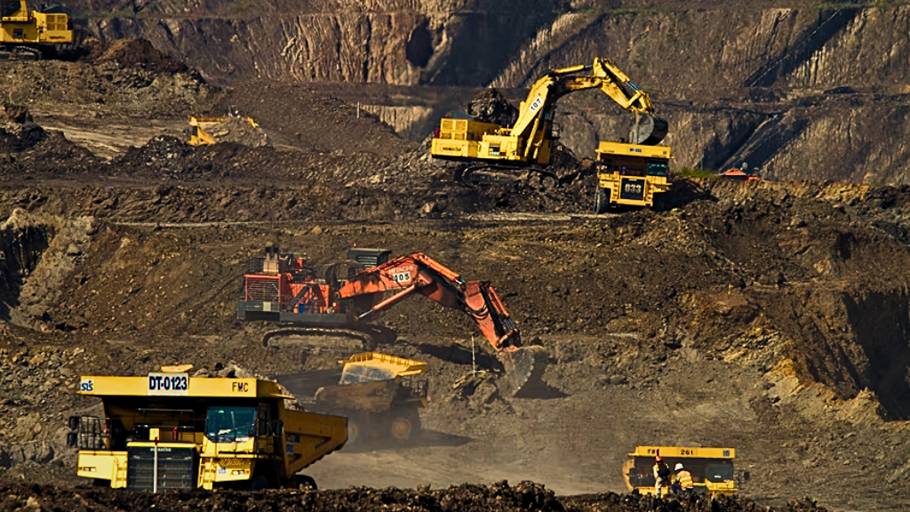
There is a reason people call Australia the lucky country. A lot of that luck is buried underground. Iron ore, coal, gold, lithium, copper, nickel, rare earths, the list of what sits beneath Australian soil reads like a shopping list for the modern global economy. The Australia Mining Industry did not become one of the most powerful economic forces in the world by accident. It got there through geography, investment, political will, and decades of building the infrastructure and expertise to pull these resources out of the ground at a scale that few countries can match.
This article covers the full picture of the Australia Mining Industry in 2026, what it is worth, what it produces, where it sells, who works in it, what is going wrong, and where it goes from here.
How Big Is the Australia Mining Industry
The numbers involved in Mining in Australia are genuinely hard to put in context without comparison. Mining gross value added reached a record high of 74,721 AUD million in Q4 2025 according to Australian Bureau of Statistics data, up from 72,861 AUD million in Q3 2025. Deloitte Access Economics confirmed in March 2026 that mining gross value added grew 3.7 percent over the year to December 2025, well above Australia’s overall GDP growth of 2.6 percent in the same period. It was the first time in nearly two years that the sector had outpaced the broader economy.
Mining contributes somewhere between 8.9 and 12 percent of Australia’s GDP depending on the methodology and year used, with some projections suggesting it could cross 10 percent by 2026 as production volumes and commodity prices support growth. What is less disputed is what the sector does for exports. Total resource and energy export earnings reached $385 billion in 2024-25 according to the Department of Industry, Science and Resources. Mining accounts for approximately 60 to 70 percent of Australia’s total export earnings, making it the single most important source of foreign income the country has.
Mining sector pre-tax profits reached $38.149 billion in Q4 2025, representing enormous absolute profit magnitude even though in percentage growth terms the sector ranked fourth among Australian industries in that quarter. The total income of the Australia Mining Industry in FY2024 reached approximately 513.39 billion Australian dollars according to Australian Bureau of Statistics data compiled by Statista.
Capital expenditure across Mining in Australia has stabilized at around 1.9 percent of GDP, which is measured growth rather than the kind of full-scale boom seen in the 2000s when investment peaked at 6.2 percent of GDP. That context matters because some observers looking at current growth figures expect a repeat of that era. Deloitte and other analysts are clear that what is happening now is a steady uplift rather than a supercycle.
Australia’s Natural Resources: What Is Actually in the Ground
Australia’s natural resources are among the most diverse and valuable of any country on earth. Understanding what the country produces explains why the Australia Mining Industry has the global reach it does.
Iron ore is the biggest story. Australia is the world’s largest exporter of iron ore, with the majority coming from the Pilbara region of Western Australia. BHP, Rio Tinto, and Fortescue are the three companies that dominate production. Iron ore goes primarily to China, where it feeds steel production that builds the infrastructure and manufacturing base of the world’s second-largest economy. When China’s construction sector slows, Australian iron ore prices feel it almost immediately.
Coal remains significant despite the global energy transition. Australia accounts for around 5 percent of global coal output according to GlobalData. Thermal coal for power generation and metallurgical coal for steel production both flow primarily to Asian markets including Japan, South Korea, India, and China.
Gold is one of the sector’s fastest-moving stories right now. Gold exploration expenditure surged to a record high in Q4 2025 according to Deloitte data, as record gold prices attracted exploration investment at levels not seen in years. Gold production climbed in the same period, and the outlook for Australian gold output is positive heading into the rest of 2026.
Critical minerals are where the most forward-looking interest in Australia’s natural resources is concentrated. Lithium, cobalt, nickel, copper, and rare earth elements are the building blocks of electric vehicle batteries, wind turbines, solar panels, and the digital infrastructure that the global energy transition depends on. Critical minerals export earnings are forecast to grow from $11 billion in 2024-25 to $14 billion in 2026-27, supported by government investment and new US-Australia supply chain agreements according to Deloitte Access Economics data from May 2026.
Australia’s Mining Economy and China: The Complicated Relationship
No account of Australia’s mining economy is honest without addressing China. For most of the past two decades, China was the engine that kept Australian mining export revenue at historically high levels. China consumed extraordinary volumes of iron ore and coal to fuel urbanisation and industrialisation at a speed the world had never seen. Australia was the nearest, most reliable, and most competitive source of both.
That relationship became politically complicated starting around 2020 when Australia called for an independent inquiry into the origins of COVID-19 and China responded with trade restrictions on Australian barley, wine, beef, timber, and coal. The coal ban in particular was intended to hurt Australia’s mining economy but had a mixed outcome. Australian coal found buyers elsewhere while China struggled with energy shortages partly caused by the disruption.
The trade relationship has partially normalised since then, but the episode left a strategic lesson that the Australia Mining Industry and government have both absorbed. Diversifying export destinations and supply chain relationships is now a stated priority. The US-Australia critical minerals supply chain agreements referenced by Deloitte are part of that broader strategic shift, positioning Australian critical minerals as a trusted alternative to Chinese-controlled supply chains for lithium, cobalt, and rare earths.
Iron ore’s relationship with China is harder to diversify because China is so dominant a buyer. Around 60 percent of Australian iron ore exports go to China. There is no realistic near-term substitute for that demand at the volumes Australia produces. Which means the Australia Mining Industry’s largest single revenue source is intimately tied to the health of the Chinese construction and manufacturing sector, a dependency that keeps Australian policymakers watching Chinese economic data closely.
Employment and Regional Impact
The Australian mining industry directly employs around 250,000 people and supports approximately 1.2 million indirect jobs, according to 2026-sourced statistics. Those direct jobs are concentrated in Western Australia, Queensland, and the Northern Territory, regions where mining is not just one sector among many but often the primary economic activity for entire communities.
Mining wages in Australia are among the highest in any sector. The fly-in, fly-out model that dominates large-scale remote mining operations means workers earn significantly above national average wages in exchange for rotating periods away from home and family. It is a trade-off many workers accept, and the salary levels it supports flow through to housing markets, retail, and local service economies in regional centres.
Contract workers accounted for 40 percent of mining jobs in recent periods, reflecting the project-based nature of much mining work and the preference of large operators to flex their workforce with commodity price cycles. Women made up 14 percent of the mining workforce, which has improved over time but remains well below the national average across all industries. The sector has made diversity commitments, but the physical and geographic nature of remote mining operations creates barriers that are slower to change than policy alone can address.
Total new-deposit exploration spending across all commodities grew 7 percent year on year in Q4 2025, and gold exploration alone hit record highs. That exploration investment is the sector planting seeds for future production. When exploration goes up, output tends to follow in three to five years as deposits are assessed, approved, and developed.
The Nickel Problem and Copper Outlook
Not everything in mining in Australia is moving in the right direction, and the nickel story is the most striking example of how quickly market conditions can change.
Global nickel oversupply, driven primarily by Indonesia rapidly scaling up nickel production from 2022 onward, hit Australian nickel producers hard. The oversupply pushed prices down to levels that made many Australian nickel operations uneconomic. BHP curtailed its Nickel West operations in December 2024, which had a significant impact on Western Australian nickel output. GlobalData projects a 6.6 percent decline in Australian mined nickel output by 2026. The operations will not disappear permanently because nickel is a critical mineral for battery production and demand is expected to grow as EV adoption accelerates. But the near-term pain is real and the workers and communities affected by closures are feeling it.
Copper output is also facing near-term pressure. GlobalData expects copper output to fall by 7.9 percent to 710,400 tonnes in 2025, largely due to the closure of the Mount Isa mine in 2024 and operational disruptions at key mines. That figure is expected to recover from 2026 onward as operating conditions normalise, with output projected to reach 1,073,200 tonnes by 2030. The long-term case for Australian copper is strong given global electrification trends, but the transition period between current production levels and future growth involves genuine short-term disruption.
The Critical Minerals Opportunity
The most strategically important shift happening in the Australia Mining Industry right now is the pivot toward critical minerals. This is not a new idea but it is becoming more urgent and more concrete.
Australia holds some of the world’s largest reserves of lithium, cobalt, nickel, and rare earth elements. These materials are essential for the electric vehicle batteries, wind turbines, solar panels, and electronic components that the global clean energy transition runs on. Australia’s natural resources in this space position the country exceptionally well if it can develop the downstream processing capacity to move beyond raw mineral exports toward refined and processed products.
The US-Australia critical minerals supply chain agreements represent a significant geopolitical development. With the United States seeking to reduce dependence on Chinese-controlled critical mineral supply chains, Australia is positioned as the most natural alternative. Large, stable reserves. Established mining infrastructure. Political alignment with the US and its allies. The challenge is that Australia currently exports most critical minerals in raw form and the refining and processing largely happens in China. Building domestic processing capacity is expensive, takes time, and requires sustained government policy support and private investment that is only beginning to materialise at scale.
Critical minerals export earnings growing from $11 billion to $14 billion between FY2024-25 and FY2026-27 is a meaningful increase but still modest compared to the $385 billion in total resource and energy exports. The critical minerals story is real but it will take a decade or more to fully reshape Australia’s mining economy.
Environmental Pressures and the Energy Transition
The Australia Mining Industry produced approximately 180 million tonnes of CO2 in recent years and used 2.3 billion cubic metres of water annually according to verified environmental data. Those are large numbers in a country that is already experiencing acute water stress and climate-related environmental pressure from extreme heat, bushfires, and changing rainfall patterns.
The industry has made efforts to reduce its footprint. Mine water reuse rates reached 45 percent. Approximately $1 billion has been directed toward biodiversity projects associated with mining operations. Major miners including BHP and Rio Tinto have made net-zero commitments with specific timelines attached.
The political and regulatory pressure is increasing. Environmental approvals for new mines are taking longer. Community opposition to new projects in sensitive areas is growing. The energy transition that is creating demand for critical minerals is simultaneously making the carbon footprint of extracting those minerals a subject of intense scrutiny, which creates a genuine tension at the heart of green mining arguments.
At the same time, the transition away from coal is creating a different kind of pressure on the thermal coal sector. Australia’s coal exports remain large and profitable in the near term because Asian demand has not dropped as fast as climate pledges suggest it should. But the trajectory is downward, and the Australia Mining Industry is gradually shifting its capital allocation away from new thermal coal projects and toward critical minerals as a result.
Quick Reference: Australia Mining Industry at a Glance
| Indicator | Latest Data | Source |
|---|---|---|
| Mining GDP contribution | 8.9 to 12% of GDP | ABS, various 2025-26 |
| Mining GDP value (Q4 2025) | AUD 74,721 million | ABS via Trading Economics |
| Mining GDP growth (year to Dec 2025) | 3.7% | Deloitte / ABS |
| Total resource and energy exports (FY2024-25) | $385 billion | DISR |
| Critical minerals exports (FY2024-25) | $11 billion | Deloitte |
| Critical minerals exports forecast (FY2026-27) | $14 billion | Deloitte |
| Direct employment | 250,000 | World Metrics 2026 |
| Indirect jobs supported | 1.2 million | World Metrics 2026 |
| Mining sector pre-tax profit (Q4 2025) | $38.149 billion | ABS |
| Capital expenditure (% of GDP) | 1.9% | Deloitte Access Economics |
Where the Australia Mining Industry Goes From Here
The most honest assessment of Australia’s mining economy in 2026 is that it is in a period of transition within a position of structural strength. The raw materials that powered the 2000s boom are still being produced at enormous scale and generating enormous revenue. But the mix is shifting, the markets are evolving, and the strategic environment has changed.
Iron ore remains the dominant earner but China’s construction slowdown means the price cycle is less reliably strong than it was. Coal is profitable today but the policy and investment trend is against new long-term commitments in thermal coal. Gold is having a strong moment driven by record prices and is attracting exploration investment accordingly. Lithium prices went through a dramatic correction after the 2022 to 2023 surge, which has slowed some planned projects, but the fundamental demand case for battery minerals over the next decade is not seriously disputed.
The Australia Mining Industry that emerges from this transition period is likely to be one that still exports enormous volumes of iron ore and coal, adds significant critical minerals production capacity, does more downstream processing domestically, and operates within tighter environmental constraints than it has historically faced. That is a more complicated picture than the straightforward dig and ship model that built Australia’s mining economy, but it is also a more resilient and arguably more valuable one.
Australia still has the reserves, the infrastructure, the geological expertise, and the geopolitical positioning to be one of the most important mining nations in the world for the next several decades. What determines whether that potential is fully realised is less about what is in the ground and more about the investment decisions, policy settings, and market relationships built above it.
Economy of Pakistan: A Complete Overview of Growth, Challenges, and the Road Ahead

Comments