




Economy of Pakistan: A Complete Overview of Growth, Challenges, and the Road Ahead
Pakistan has had a rough few years economically. Anyone who lived through 2022 and 2023 knows that.
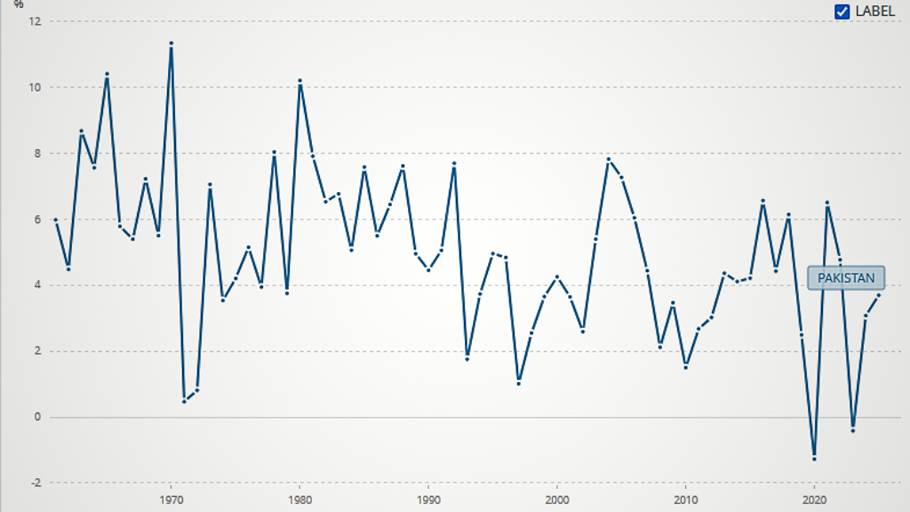
Pakistan has had a rough few years economically. Anyone who lived through 2022 and 2023 knows that. The rupee was in freefall, inflation was touching levels most Pakistanis had never seen in their lifetimes, the foreign exchange reserves were dangerously low, and the country came closer to sovereign default than most people in power wanted to publicly admit. Getting an IMF bailout was not a choice so much as a necessity, and the conditions attached to it, fuel subsidy removal, interest rate hikes, rupee devaluation, hit ordinary households hard and immediately.
The fact that the Economy of Pakistan has stabilized as much as it has by mid-2026 is not nothing. It took genuine fiscal discipline, painful policy decisions, and a degree of reform follow-through that Pakistan has not always managed. This article looks at where things actually stand, what the numbers say, and what still needs to happen.
How Big Is the Economy of Pakistan
Pakistan GDP in 2026 sits at approximately $452.1 billion in nominal terms, making it the 40th largest economy in the world according to the Finance Division’s Monthly Economic Update for June 2026. When you measure by purchasing power parity, which adjusts for the cost of living and accounts for Pakistan’s large informal economy, that figure rises to around $2.16 trillion, placing the country at 20th globally.
The gap between those two numbers is significant. Around 34 percent of Pakistan’s economic activity happens outside the formal sector entirely. The country also uses a base year for its GDP calculations that is nearly a decade old, which causes further underestimation. GDP per capita in nominal terms sits at around $1,729 to $1,901 depending on the source, which places Pakistan at 160th in the world and makes clear that aggregate economic size and what people actually earn are two very different things here.
Three sectors make up the Economy of Pakistan. Services dominate at around 58 percent of GDP, covering retail, transport, banking, telecom, and the growing IT and digital services space. Agriculture contributes about 23 percent and employs 37 percent of the workforce. Industry accounts for the remaining 18 percent, anchored by large-scale manufacturing, textiles, and construction.
Pakistan Economic Growth: What the Numbers Actually Show
The headline figure from the Pakistan Economic Survey 2025-26, released in June 2026, is GDP growth of 3.7 percent for the fiscal year. That is the highest growth rate in four years and a real step up from the 3.1 percent recorded in FY2025.
Finance Minister Muhammad Aurangzeb presented the survey in Islamabad and described the results as a story of resilience and discipline. Tax revenues grew 10.1 percent. The fiscal deficit narrowed to 0.7 percent of GDP in the July to March period, which Reuters described as the strongest fiscal performance in decades. The primary surplus reached 3.2 percent of GDP. Markup payments on government debt fell 23 percent, freeing up fiscal space that had previously been swallowed entirely by debt servicing costs.
The Asian Development Bank, in its April 2026 flagship report, confirmed that Pakistan’s economy had stabilized and was showing stronger momentum. ADB projects growth of 3.5 percent in FY2026 and 4.5 percent in FY2027 as manufacturing recovers and investment picks up. The State Bank kept its policy rate at 10.5 percent in early 2026, with internal projections putting Pakistan Economic Growth for FY26 between 3.75 and 4.75 percent.
What actually drove this growth? Agriculture expanded 2.9 percent in Q1 of FY2026. Industry grew 9.4 percent in the same period, which is a strong number by any measure. Services added 2.4 percent. All three sectors moving in the same direction in the same quarter does not happen as often as it should in Pakistan, and that alignment is part of why the confidence, while still cautious, has improved.
Pakistan Inflation: From Crisis to Cautious Stability
Nothing affects Pakistani households more directly than prices. The inflation story of the past three years has been brutal for most people and needs to be told honestly.
Pakistan inflation peaked close to 38 percent in 2023. Families across every income level felt it. Food prices, energy bills, rent, transport costs, everything went up faster than wages could keep pace with. The causes were layered: a collapsed rupee, removal of fuel subsidies under IMF conditions, global commodity price shocks, and years of fiscal imbalance finally catching up at once.
By the July to May period of FY2026, average CPI inflation had come down to 6.7 percent compared to 4.6 percent in the same period the previous year. The Pakistan Economic Survey noted that price stability was broadly preserved despite the Gulf conflict’s impact on energy prices. That was the story through most of the fiscal year.
Then something happened. The Hormuz Strait closure at the end of February 2026 disrupted energy imports significantly. The government had to implement power cuts and a four-day working week. By May 2026, monthly CPI had risen to 11.7 percent year on year, sharply above the 3.5 percent recorded in May 2025. Transport inflation jumped 36.8 percent. Housing, electricity, and fuel costs rose 16.8 percent. Non-perishable food went up 9.4 percent.
The IMF and Pakistan revised the full-year Pakistan inflation outlook to 7.5 percent for FY2026, higher than the earlier projection of 6.1 percent. ADB’s July 2026 forecast puts inflation at 7.2 percent for 2026 and 8.3 percent for 2027. The progress made against inflation since 2023 is real. But the external shock from regional geopolitics has introduced pressure that was not in the plan.
Trade: The Deficit That Will Not Go Away
Exports reached $40.79 billion in 2025. Textiles led at $16.3 billion, followed by food at $7 billion, chemicals and pharmaceuticals at $1.42 billion, leather goods at $877 million, and sports goods at $439 million. The United States remains the biggest buyer at 17.5 percent of total exports, followed by China at 8.7 percent, the UAE at 6.7 percent, and the United Kingdom at 6.5 percent.
Imports at $78.02 billion create the trade deficit that has been a structural problem in the Economy of Pakistan for as long as most people can remember. Petroleum at $15.1 billion is the single biggest import item, which tells you something important about how exposed the country is to energy price shocks and regional instability. China accounts for 25.4 percent of all imports, followed by the UAE at 11.9 percent and Saudi Arabia at 8.5 percent.
The trade deficit from July to March FY2026 stood at $23.53 billion according to the Economic Survey. By May 2026, the monthly figure had widened to its highest level since June 2022, when Pakistan was in the middle of its worst balance-of-payments crisis in recent memory. The current account still posted a surplus of $255 million in the July to May period, largely because remittances kept flowing in strongly enough to offset the trade shortfall. That is a narrow margin and it depends heavily on factors outside Pakistan’s direct control.
Remittances and IT: The Two Bright Spots
Two areas stand out in the current economic situation of Pakistan because they are genuinely growing and they bring in foreign currency that the economy needs.
Remittances from overseas Pakistanis have been running at record levels. They support the rupee, build foreign exchange reserves, and sustain millions of families directly. The State Bank had set a target of lifting foreign exchange reserves to $17.5 billion by June 2026, and remittances are one of the primary ways that target gets met.
IT exports and the freelancing economy are the other story worth telling. Pakistan consistently ranks among the top countries globally for freelancer population. Young Pakistanis earning in dollars through platforms like Upwork and Fiverr are not just supplementing their income, they are bringing hard currency into a country that imports far more than it exports. The government has supported the sector through tax incentives and policy adjustments. Both remittances and IT exports do the same essential thing for the Economy of Pakistan: they bring dollars in.
Agriculture, Industry, and Services
Agriculture’s 23 percent share of Pakistan GDP understates how much it matters. It employs 37 percent of the workforce and determines food prices for 257 million people. Major crops include wheat, cotton, rice, sugarcane, and maize. Agricultural machinery imports rose nearly 25 percent in FY2026, suggesting farmers are investing in productivity rather than just surviving season to season. That is a good sign. The vulnerability to climate shocks is not going away, however. The 2022 floods caused over $30 billion in economic damage and set back agriculture significantly.
Services at 58 percent of Pakistan GDP have been the most resilient sector through the economic crisis. Banking, telecom, retail, and digital services all held up better than manufacturing during the difficult period and continue to drive the bulk of economic activity.
Industry’s 18 percent share covers textiles, food processing, chemicals, and construction. Manufacturing PMI entered contractionary territory in April 2026 after the Hormuz disruption and recovered only weakly through May and June according to FocusEconomics. That is a near-term concern for Pakistan Economic Growth that the data through the end of the fiscal year had not fully resolved.
Poverty and Human Development: The Honest Picture
The poverty numbers are hard to sit with when set against the economic progress being reported. The population below the poverty line stands at 44.7 percent in 2026, with 16.4 percent in extreme poverty. Pakistan’s Human Development Index of 0.544 places it at 168th globally, classified as low. GDP per capita at around $1,729 to $1,901 puts Pakistan near the bottom of South Asia.
These figures sit alongside a $452 billion economy, which illustrates how much can be true at the same time. A country can be recovering economically in aggregate terms while the majority of its population is still struggling to meet basic needs. Pakistan has a lot of catching up to do, and growth of 3.7 percent, while welcome, is not the 6 to 7 percent that most economists agree is needed to meaningfully reduce poverty and absorb the young workforce entering the labor market every year.
Unemployment officially stands at 6.9 percent with a labor force of 78.9 million. But those figures do not capture underemployment or the informal work that keeps much of the population getting by without being counted as formally employed.
CPEC and Long-Term Investment
The China-Pakistan Economic Corridor is still one of the most significant long-term investments running through the Economy of Pakistan. Roads, power plants, industrial zones, and the Gwadar port development are all real infrastructure with real productive potential. Progress has been slower than the original plans projected. Security concerns, financing arrangements, and coordination challenges have all played a role. But the infrastructure that has been built is there, and Gwadar’s potential as a regional transit hub connecting China to the Arabian Sea is still a genuine long-term asset if Pakistan can create the conditions for it to be used.
What Still Needs to Happen
The path forward for Pakistan Economic Growth is not a mystery. Economists broadly agree on what needs to happen. The export base needs to move beyond low-value textiles into higher-value manufacturing and digital services. Energy import dependence needs to be reduced through domestic renewable energy investment. The tax base needs to broaden so revenues do not depend entirely on a narrow slice of the formal economy. The business environment needs to improve enough to attract private investment that does not require government guarantees. And the demographic opportunity of a young population needs to be channeled into productive employment before it becomes social pressure.
None of these are new ideas. Most of them have been in economic plans and IMF program documents for years. The challenge has always been sustained implementation across political cycles, which is where Pakistan has historically fallen short.
Where Things Stand
The Economy of Pakistan in 2026 is in a genuinely better place than it was two years ago. That matters and should not be dismissed. Pakistan GDP growth of 3.7 percent is real. The fiscal turnaround is real. Average Pakistan inflation falling from 38 percent to single digits is a meaningful achievement that required difficult decisions. The current account surplus and record remittances are real positives in the current economic situation of Pakistan.
The risks are also real. Renewed inflation pressure from the Hormuz disruption. A trade deficit that keeps widening. Manufacturing under pressure. A poverty rate that remains among the highest in the region. And a geopolitical environment that can send shocks through the economy faster than policy can respond.
Pakistan has been at turning points before and not always turned the right way. Whether 2026 represents the beginning of a more sustained recovery or another temporary stabilization before the next crisis is a question that the next two to three fiscal years will answer more honestly than any forecast.
Scholarships in Pakistan: The Real Guide to Getting Your Education Funded


Comments