




How Cristiano Ronaldo Became the Greatest Footballer of All Time
How Cristiano Ronaldo became the greatest footballer of all time isn’t a debate that needs another 5,000 words. The numbers settle most of it. 973 career goals as of May 2026. 5 Ballon d’Ors. 5 Champions League titles. 1 European Championship with Portugal. 9 league titles across England, Spain, Italy, and Saudi Arabia.
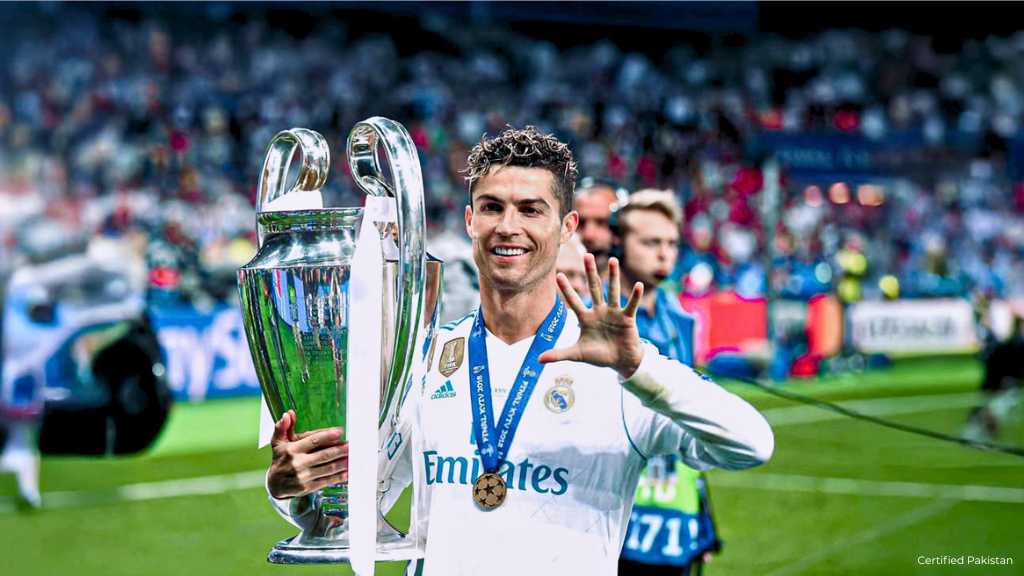
How Cristiano Ronaldo became the greatest footballer of all time isn’t a debate that needs another 5,000 words. The numbers settle most of it. 973 career goals as of May 2026. 5 Ballon d’Ors. 5 Champions League titles. 1 European Championship with Portugal. 9 league titles across England, Spain, Italy, and Saudi Arabia. Still scoring regularly at 41 years old. Still on track to become the first player ever to score 1,000 professional goals.
The actual story of how Cristiano Ronaldo became the greatest footballer of all time is about everything that produced those numbers. The work ethic that became legendary. The mental approach that separates him from contemporaries. The longevity nobody else has managed. The clutch moments in finals. The transformations of his body across multiple eras of football. This is that complete story, updated through 2026.
From Madeira to Sporting CP
Cristiano Ronaldo dos Santos Aveiro was born on February 5, 1985 on the small Portuguese island of Madeira. His family had very little. His father Dinis was an alcoholic who worked as a gardener and equipment manager. His mother Dolores worked as a cook. Ronaldo had three older siblings and the family lived in a small apartment in Funchal.
He started playing for Andorinha at age 8, then moved to Nacional. At 12, Sporting CP signed him and moved him to Lisbon, away from his family. The separation from his mother at that young age affected him significantly. He cried often during his early years at Sporting’s academy.
At 15, he was diagnosed with a heart condition (tachycardia) that required surgery. Doctors used laser treatment to fix his racing heartbeat. He returned to training within days. This early medical scare became part of how Cristiano Ronaldo became the greatest footballer of all time because it could have ended his career before it started.
Ronaldo made his Sporting CP first-team debut on August 14, 2002, against Braga. He scored his first senior goal in a 3-0 win over Moreirense. He scored 5 official goals for Sporting CP before Manchester United signed him in summer 2003.
Manchester United: The First Transformation
Manchester United paid £12.24 million for Ronaldo in August 2003 after a pre-season friendly where he tormented their defenders. Sir Alex Ferguson reportedly told the team they had to sign him after that match. Ronaldo was 18 years old and got the iconic No. 7 shirt previously worn by David Beckham, Eric Cantona, and Bryan Robson.
His first United seasons (2003-2006) were promising but inconsistent. He was a tricks-focused winger who frustrated teammates with his showboating. Then around 2006-07, something changed. The tricks became finishing. The skill became efficient. Ronaldo started scoring 20+ goals per season as a wide forward.
The 2007-08 season was the breakout. He scored 42 goals across all competitions, won the Premier League with United, won the Champions League with United, and won his first Ballon d’Or. The Ballon d’Or wasn’t just about goals. It was recognition that Ronaldo had transformed from a flair player into a complete footballer. This was the first major piece of evidence in how Cristiano Ronaldo became the greatest footballer of all time.
His Manchester United career produced 118 goals in 292 matches across 6 seasons, 3 Premier League titles, 1 Champions League title, 1 FA Cup, 2 League Cups, and 1 Club World Cup.
Real Madrid: The Peak Years
Real Madrid signed Ronaldo in summer 2009 for a then-world-record fee of €94 million. The next 9 years produced some of the most dominant individual football ever played. Ronaldo scored 450 goals in 438 matches for Real Madrid, becoming the club’s all-time top scorer. He averaged more than a goal per game across nearly a decade.
His Real Madrid years were where how Cristiano Ronaldo became the greatest footballer of all time crystallized. 4 Champions League titles (2014, 2016, 2017, 2018, including three consecutive). 2 La Liga titles. 2 Copa del Rey trophies. 3 FIFA Club World Cups. 4 Ballon d’Ors (2013, 2014, 2016, 2017). The transformation from winger to elite center-forward was completed during these years.
Specific Real Madrid moments became part of football history. The 2014 Champions League final against Atletico Madrid that went to extra time. The 2017 Champions League final against Juventus where he scored twice. The 2018 final against Liverpool where his backheel passes set up goals and his bicycle kick against Juventus in the quarterfinals became one of the most replayed goals ever. He scored hat-tricks regularly. He scored in 11 consecutive Champions League matches at one point. He set the record for most goals in a single Champions League season with 17.
Juventus and Brief United Return
Juventus signed Ronaldo in 2018 for €100 million when he was 33. Most expected decline. He scored 101 goals in 134 matches for Juventus across 3 seasons, won 2 Serie A titles, and added various other trophies. The Italian league experience added another dimension to his resume by becoming the first player to win league titles in England, Spain, and Italy.
In summer 2021, Ronaldo returned to Manchester United for a brief second stint. The 2021-22 season was difficult as United struggled and Ronaldo’s role became inconsistent under multiple managers. After a public falling out with manager Erik ten Hag in late 2022, his contract was terminated. He scored 27 goals in 54 appearances during the second United stint.
Al-Nassr and the Saudi Pro League Era
Al-Nassr signed Ronaldo in December 2022 in a deal making him the world’s highest-paid athlete with a reported salary over $200 million annually. He made his Saudi Pro League debut in January 2023. Most observers questioned whether Ronaldo’s Al-Nassr move was a serious football decision or a payday. The numbers since have answered.
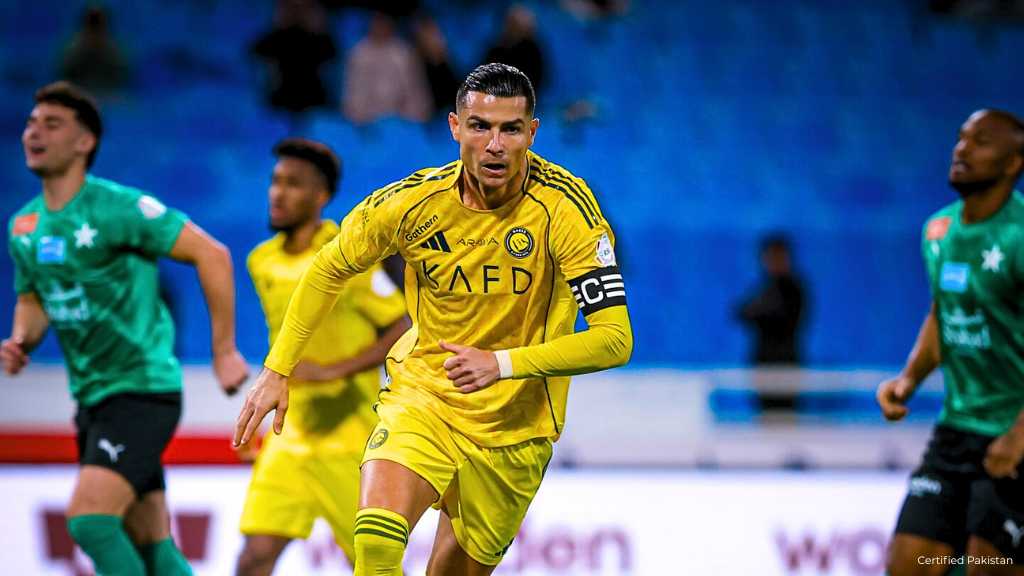
129 goals in 148 matches for Al-Nassr through May 2026. 102 Saudi Pro League goals total. 35 goals in the 2023-24 season alone, breaking the Saudi Pro League single-season scoring record. 40+ goals in calendar year 2025. 15 goals in 19 matches during the 2026 calendar year so far.
In May 2026, Al-Nassr won the 2025-26 Saudi Pro League title by defeating Damac in the decisive final match. Ronaldo scored twice in that title-defining victory. The win delivered the league championship that Al-Nassr had been chasing throughout his time at the club. This Saudi Pro League title is the most recent piece of evidence in how Cristiano Ronaldo became the greatest footballer of all time because it shows him still producing winning football at 41.
His impact on Saudi football has been substantial. The Saudi Pro League went from a relatively unknown competition to attracting global attention. Players including Neymar, Karim Benzema, Sadio Mane, Riyad Mahrez, and dozens of others followed Ronaldo to Saudi clubs partially because of the example he set.
International Career with Portugal
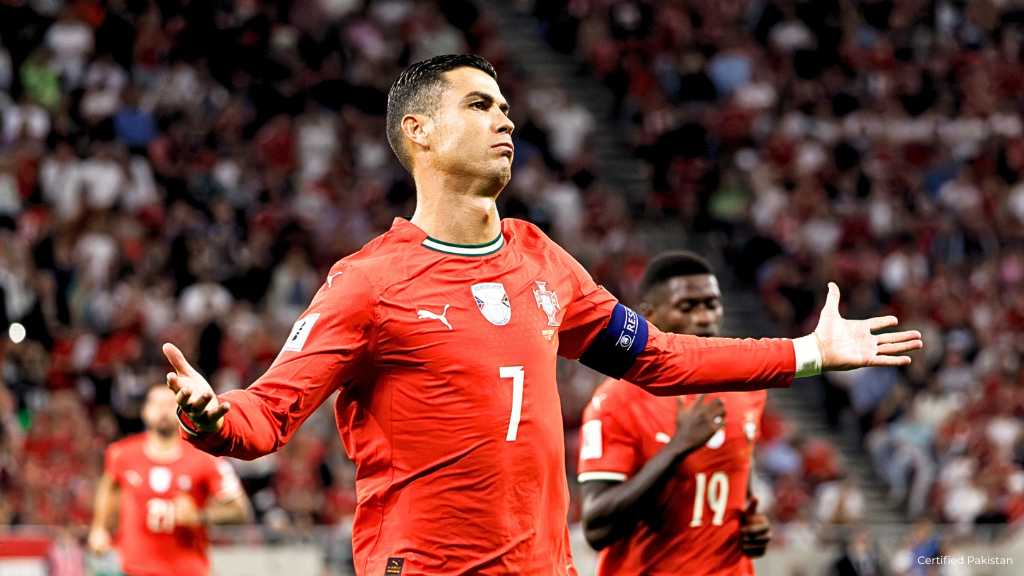
Ronaldo’s Portugal career began in 2003 at age 18. He has now scored over 135 international goals, the highest total in men’s international football history. He’s captained Portugal through Euros, World Cups, and Nations League competitions.
His major international achievements include:
Euro 2016: Portugal won their first major international trophy by defeating host France 1-0 in the final. Ronaldo went off injured early in the final and coached from the sidelines, but his earlier tournament goals had been essential to Portugal’s run.
UEFA Nations League 2019: Portugal won the inaugural UEFA Nations League with Ronaldo scoring a hat-trick in the semifinal against Switzerland.
Multiple Euro and World Cup appearances: Portugal has reached the knockout stages of multiple major tournaments with Ronaldo as captain.
For the 2026 FIFA World Cup, Ronaldo is expected to lead Portugal in what would be his record 6th World Cup. The tournament begins June 11, 2026 across North America. Whether 2026 is his final World Cup remains to be seen, but it represents another chance for the trophy he hasn’t won.
The Numbers That Settle the GOAT Debate
When people analyze how Cristiano Ronaldo became the greatest footballer of all time through pure statistics, the case becomes substantial:
- 973 career goals (as of May 2026), the most in football history
- 27 goals from 1,000 career goals, a milestone nobody else has approached
- Over 135 international goals, the most in men’s football history
- 5 Champions League titles, the most by any player in history
- 5 Ballon d’Or awards (2008, 2013, 2014, 2016, 2017)
- 9 league titles across 4 countries (England, Spain, Italy, Saudi Arabia)
- 501 goals after turning 30, a single statistic that’s hard to comprehend
- 40+ goals in 14 different calendar years, demonstrating unprecedented consistency
- Most goals in Champions League history
- Most Champions League goals in a single season (17)
These numbers across 23 years of senior football represent something nobody else has produced. Some players had higher peaks (Lionel Messi’s 2009-2015 peak). Some had specific better skills (Messi’s dribbling, Iniesta’s passing). Nobody has combined the volume, longevity, and trophies that Ronaldo has produced.
The Fitness That Makes 41 Possible
How Cristiano Ronaldo became the greatest footballer of all time at 41 connects directly to his approach to physical conditioning. His regimen has become legendary in football circles.
He follows a high-protein diet emphasizing fish, lean meats, vegetables, and limited processed foods. He trains 3-4 hours daily across morning and afternoon sessions when possible. He prioritizes sleep, often napping during the day to add to night sleep. He uses cryotherapy chambers regularly. His body composition at 41 is still around 7-8% body fat, comparable to players half his age.
His mental approach to fitness might matter more than the specific routines. The discipline to maintain professional conditioning across two decades while teammates, opponents, and rivals decline is what separates him. Many players have similar diet plans and training routines. Few stick to them with the consistency Ronaldo has shown.
Business Empire and Brand
The CR7 brand has grown into a multi-billion dollar empire spanning hotels, perfumes, clothing, fitness apps, eyewear, and various other products. The CR7 hotel chain has properties in Lisbon, Madeira, Madrid, New York, Marrakech, and other cities. The fragrance line generates substantial annual revenue. The fitness app continues growing.
Ronaldo’s Instagram following exceeded 670 million by mid-2026, making him the most-followed person on the platform. His YouTube channel UR Cristiano, launched in 2024, has gained tens of millions of subscribers and represents his direct connection with fans.
His estimated net worth in 2026 is over $1.5 billion, making him one of the wealthiest athletes in history. His sponsorship deals with Nike, Herbalife, and other brands continue providing massive annual income alongside his Al-Nassr salary.
Charity and Personal Life
The personal side of how Cristiano Ronaldo became the greatest footballer of all time includes consistent charitable work that he doesn’t publicize heavily. He has donated millions to children’s hospitals, particularly for pediatric cancer treatment. He famously donated his Champions League bonus money to charity multiple times. He gives blood regularly, which is why he has no tattoos (donors with tattoos face restrictions).
His relationship with Georgina Rodriguez has been long-term since 2017, with several children together. His son Cristiano Jr. has begun his own football career in academy systems. The family balance alongside his professional career has been notably stable compared to many high-profile athletes.
The Ronaldo vs Messi Debate
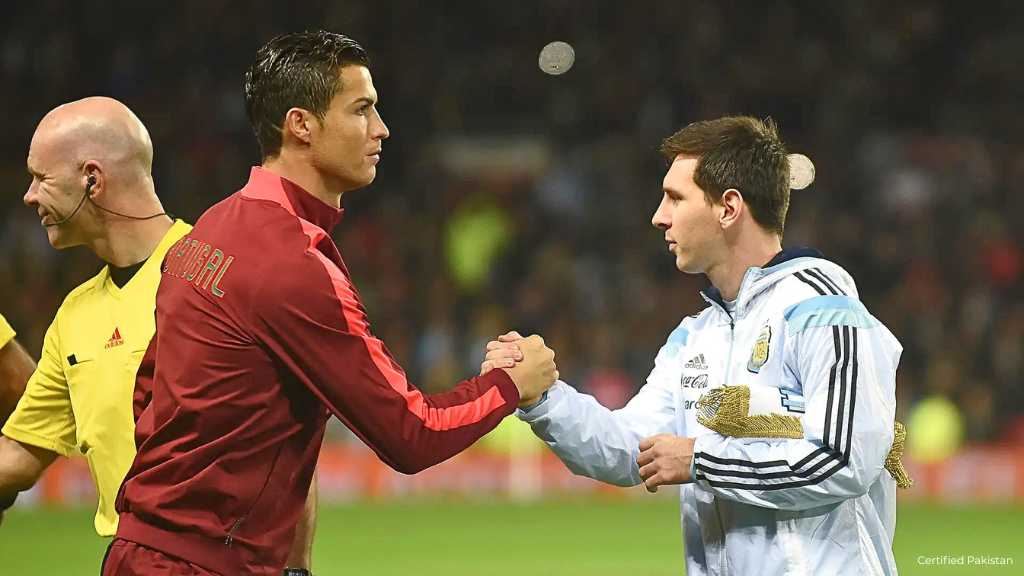
When people analyze how Cristiano Ronaldo became the greatest footballer of all time alongside Messi’s case, the comparison reveals different versions of greatness rather than clear winners.
Ronaldo’s case: Most career goals ever (973). Most international goals ever (135+). Most Champions League titles (5). League titles in 4 different countries. 501 goals after age 30. Sustained excellence across 23 years.
Messi’s case: 8 Ballon d’Ors (3 more than Ronaldo). World Cup winner 2022. More assists (410 vs Ronaldo’s 261). Higher goal-per-game ratio in his peak years. Greater perceived natural talent.
Both arguments are legitimate. The honest assessment is that they’re both the greatest players of their generation by any measurement, with the specific GOAT designation depending on which metrics you prioritize. Pure goals and longevity favor Ronaldo. Awards and natural talent favor Messi. The World Cup tilts the discussion for many who couldn’t decide before 2022.
What’s Left
At 41, with 973 career goals and 27 from 1,000, Ronaldo has clear targets remaining. The 1,000-goal milestone would be unprecedented in football history. The 2026 World Cup represents possibly his final major international tournament. The 2026-27 Saudi Pro League season will give him another chance to add championships and goals.
How Cristiano Ronaldo became the greatest footballer of all time isn’t finished. Three more years on his Al-Nassr contract through 2028 could add another 50-100 career goals depending on his fitness and continued availability. The 1,000 mark is reachable. The international goal record will only grow. The legacy continues being written month by month.
Final Thoughts
How Cristiano Ronaldo became the greatest footballer of all time comes down to a specific combination of natural ability, work ethic, mental approach, and longevity that nobody else in football history has matched. The natural ability got him to the elite level by his early 20s. The work ethic kept him there for over two decades. The mental approach handled the pressure of being at clubs where anything less than perfection was failure. The longevity converted his peak years into a complete career resume that may take generations to challenge.
The numbers will keep updating. The records will keep being set. As long as Ronaldo continues playing, the case for how Cristiano Ronaldo became the greatest footballer of all time continues being made every match. What’s already done is enough for the argument. What comes next over the next few years will be additional evidence on top of what’s already established.
From a kid in Madeira who had heart surgery at 15 to a 41-year-old still scoring regularly in 2026, the journey defines what sustained athletic excellence actually looks like. The complete story of how Cristiano Ronaldo became the greatest footballer of all time isn’t just about football. It’s about what becomes possible when natural talent meets relentless work over a long enough period to compound into something no individual season could produce.
Ronaldo’s business acumen is just as impressive as his football skills. To see how another global icon built a massive empire through relentless vision, read the Jeff Bezos biography and Amazon success story.
For a real-time breakdown of his goals, assists, and heat maps in the Saudi Pro League, you can follow Cristiano Ronaldo’s official stats on Transfermarkt.
Comments