




Quaid-e-Azam Muhammad Ali Jinnah: The Man Who Created Pakistan
Quaid-e-Azam Muhammad Ali Jinnah is a name every Pakistani knows from childhood, but the actual story of the man often gets reduced to a few familiar facts. He founded Pakistan. He was a great lawyer. He smoked cigars. Most school textbooks stop there. The real story is more interesting and more complicated.
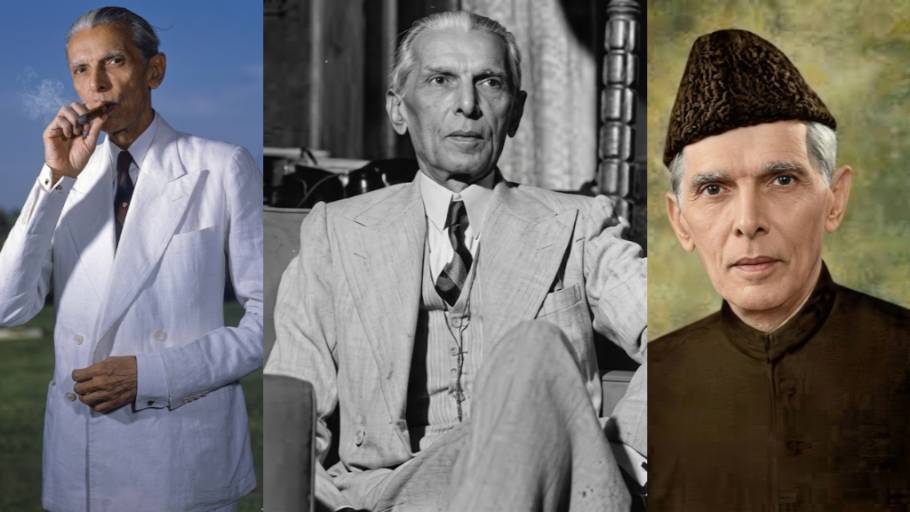
Quaid-e-Azam Muhammad Ali Jinnah is a name every Pakistani knows from childhood, but the actual story of the man often gets reduced to a few familiar facts. He founded Pakistan. He was a great lawyer. He smoked cigars. Most school textbooks stop there.
The real story is more interesting and more complicated. A Karachi-born boy who studied law in London became one of the most influential political figures of the 20th century. He transformed himself from a champion of Hindu-Muslim unity into the founder of a separate Muslim state. And he did it all while battling tuberculosis that would kill him within a year of independence.
This guide on Quaid-e-Azam Muhammad Ali Jinnah covers the actual life from Karachi childhood to the founding of Pakistan, the political journey through Congress and the Muslim League, the man behind the formal “Father of the Nation” image, and why his legacy remains contested almost 80 years after his death.
Early Life in Karachi
The Quaid was born on December 25, 1876, in Karachi, in what was then British India and is now Pakistan. His birth name was Mahomedali Jinnahbhai.
The family belonged to the Khoja Ismaili community, a small Muslim merchant community originally from Gujarat. His father, Jinnahbhai Poonja, ran a successful merchant business dealing in hides, gum arabic, and other goods.
They lived comfortably in a house at Wazir Mansion in Karachi, which still stands as a museum today. Jinnah was the eldest of seven children. His siblings included Fatima Jinnah, who would later become his closest companion and political partner throughout his career.
His early education happened at the Sindh-Madrasatul-Islam in Karachi and then the Christian Missionary Society High School. He wasn’t a particularly distinguished student in the conventional sense. Teachers reported him as alert and observant but not someone who memorized lessons in the traditional manner that schools rewarded.
In 1892, at age 16, his father arranged for him to travel to London for business apprenticeship with Graham’s Shipping and Trading Company. Before leaving, his mother arranged his marriage to Emibai Jinnah, a 14-year-old cousin. The marriage barely lasted. Both his mother and Emibai died while he was in London.
The London Years and Legal Education
The Quaid-e-Azam Muhammad Ali Jinnah story takes a decisive turn in London. Within weeks of arriving for his business apprenticeship, he decided business wasn’t his path. He wanted to study law instead.
This was an unusual decision for a 16-year-old in 1892, but Jinnah’s strong will showed even then.
He enrolled at Lincoln’s Inn, one of the four Inns of Court that train English barristers. He chose Lincoln’s Inn specifically because its entrance featured names of great lawgivers including Prophet Muhammad (PBUH), which appealed to him.
He completed his bar examination in 1895 at age 19, becoming the youngest Indian called to the bar at the time.
The London years shaped him significantly. He attended Parliament sessions to observe political debate. He watched Dadabhai Naoroji, the first Indian to be elected to the British Parliament, deliver speeches.
He absorbed British legal and political traditions deeply. His English became polished and his style of dress shifted permanently toward Western suits that he would wear his entire life.
He returned to India in 1896 with a barrister’s qualification but limited prospects. His father’s business had collapsed during his absence. The family faced financial difficulties. The Quaid moved to Bombay (now Mumbai) to establish his legal practice from scratch.
Today, his birthplace is preserved as a protected national heritage site. You can check its historical location and tourism details via the official Government of Pakistan Heritage Portal.
Building His Legal Career
The early legal career was difficult. Jinnah struggled financially for nearly three years in Bombay before getting his first significant case.
By the early 1900s, his reputation as a careful, prepared, and effective barrister was growing. He took on increasingly important cases.
His legal style was distinctive. He prepared meticulously. He spoke with precision rather than passion. He focused on legal arguments rather than emotional appeals. Colleagues described him as one of the finest legal minds in India.
By 1916, he was earning approximately Rs 5,000 per month, an enormous sum at the time. He had become one of the most successful lawyers in India.
The financial security allowed him to enter politics seriously, which had interested him since his London days.
His success at the bar gave him several important traits that would shape his political career. Complete confidence in his own judgment. Ability to argue any position effectively. Patience for long processes. Willingness to take unpopular positions if he believed they were correct.
Entry into Politics
Jinnah entered politics through the Indian National Congress, the main political organization seeking Indian self-government within the British Empire. He attended his first Congress session in 1906 in Calcutta.
The Congress at that time was moderate, working through constitutional means rather than confrontation with British authority.
In 1913, he also joined the All-India Muslim League while remaining a Congress member. The League had been founded in 1906 to protect Muslim political interests.
His joining was significant because he believed Hindu-Muslim unity was essential for Indian independence and saw himself as bridge between the two communities.
This was the era when Gopal Krishna Gokhale, a senior Congress leader, called the young Jinnah “the best ambassador of Hindu-Muslim unity.” He was actively pursuing cooperation between the two largest religious communities in India.
His most significant achievement during this period was the Lucknow Pact of 1916. He negotiated an agreement between Congress and the Muslim League that established joint demands for greater self-government and protected Muslim political representation.
The pact represented the peak of Hindu-Muslim political cooperation and showed his skills as a negotiator.
Marriage to Ruttie Petit
In 1918, the Quaid married Ratanbai “Ruttie” Petit, the daughter of a wealthy Parsi family in Bombay. He was 42, she was 18.
The marriage caused major controversy. Her father initially obtained a legal injunction trying to prevent the marriage. But Ruttie converted to Islam and the marriage proceeded once she reached age 18.
Their only child, Dina Wadia, was born in 1919. The marriage was passionate but troubled.
Jinnah’s intense focus on politics and law and Ruttie’s more social and artistic temperament created strain. They formally separated in 1928 after years of difficulty.
Ruttie died in 1929 at only 29 years old. Jinnah was reportedly devastated. He never remarried.
His sister Fatima Jinnah became his closest companion and would remain so for the rest of his life.
His daughter Dina later married Neville Wadia, a Parsi businessman, against her father’s wishes in 1938. The relationship between father and daughter became strained, though they remained in some contact.
Dina lived primarily in the United States after Pakistan’s creation and never moved to Pakistan despite invitations.
The Break with Congress
His political journey took a major turn in the 1920s. Several factors caused his disillusionment with Congress.
Mahatma Gandhi entered Indian politics and Congress in 1915, returning from South Africa. Gandhi’s style was fundamentally different from Jinnah’s.
Where the Quaid believed in constitutional politics and legal processes, Gandhi believed in mass civil disobedience and religious-spiritual political mobilization. Where Jinnah dressed in Western suits, Gandhi adopted traditional Indian dress.
The 1920 Nagpur session of Congress adopted Gandhi’s non-cooperation movement program. Jinnah opposed this approach, arguing that mass civil disobedience would lead to violence and chaos rather than constitutional progress.
He resigned from Congress at this session, ending his 14-year membership.
He continued working through the Muslim League and the legislative assemblies. He remained committed to Hindu-Muslim unity but increasingly believed that Muslim political interests needed separate protection rather than being merged into Congress’s overall program.
Through the 1920s, he made multiple attempts to find constitutional formulas that would protect Muslim interests within a united India. His 14 Points of 1929 represented one such attempt. They outlined Muslim political demands including separate electorates, federal structure, and protection of Muslim-majority provinces.
These efforts mostly failed because Congress refused to accept the constitutional protections Jinnah considered necessary. By the early 1930s, frustrated with Indian politics, he relocated to London to practice law.
Return to India and Two-Nation Theory
The Quaid returned to India in 1934, recalled by Muslim League members who needed his leadership. The political situation had deteriorated significantly.
The 1937 provincial elections showed Congress winning major victories while the Muslim League performed poorly. Congress refused to share power with the Muslim League even in Muslim-majority areas where the League had performed reasonably.
This Congress refusal to genuinely share power crystallized his thinking. He concluded that Hindus and Muslims constituted two separate nations rather than one. They had different cultures, histories, religious practices, and political interests.
Living together in a single unified state would mean permanent Muslim political subordination to Hindu majority.
The Two-Nation Theory became the foundation of the Pakistan Movement. The Lahore Resolution of March 23, 1940 (now celebrated as Pakistan Day) formally demanded separate Muslim states in Muslim-majority regions of British India.
The resolution didn’t yet specify a single united Pakistan, but the seed of separate Muslim political existence was planted.
From 1940 to 1947, the Quaid worked relentlessly to build support for Pakistan among Indian Muslims. The Muslim League transformed from a small elite organization into a mass political party.
The 1945-46 elections showed the League winning overwhelming support in Muslim-majority provinces, validating the demand for Pakistan.
The Final Push for Pakistan
The years from 1946 to 1947 were the most intense of Jinnah’s political career.
The Cabinet Mission Plan of 1946 attempted to create a federal India with autonomous Muslim-majority groups. He initially accepted it as alternative to full partition.
Congress rejected the plan’s federal structure, ending this last chance for unified India.
The Direct Action Day of August 16, 1946 was meant to be peaceful protest but resulted in horrific communal violence. The Great Calcutta Killings saw thousands die. The violence demonstrated that Hindu-Muslim coexistence in a unified state had become impossible.
Lord Mountbatten arrived as the last Viceroy in March 1947 with a mission to transfer power. The June 3 Plan announced partition with separate dominions for India and Pakistan.
The Radcliffe Boundary Commission drew the border lines that would divide Punjab and Bengal in particular.
Throughout this period, the Quaid’s health was deteriorating from tuberculosis he had been hiding. Few people knew how sick he was. His doctors had been treating him secretly. Even Mountbatten learned of Jinnah’s condition only after partition.
Pakistan’s Founding
Pakistan came into existence on August 14, 1947. Jinnah became its first Governor-General.
The new country faced immediate massive challenges.
The partition violence killed approximately 1-2 million people across Punjab and Bengal. About 15 million people migrated across the new borders in the largest mass migration in human history.
Refugees flooded into Pakistan needing housing, food, jobs, and basic services that the new government barely existed to provide.
Pakistan started essentially without financial resources. The agreed division of British India’s assets gave Pakistan its share but India delayed transfers.
The new government operated initially without offices, files, or basic infrastructure. Officials worked from camps and improvised buildings in Karachi.
The Quaid threw himself into the work of building Pakistan despite his deteriorating health. He gave his famous August 11, 1947 speech to the Constituent Assembly outlining his vision of Pakistan.
“You are free; you are free to go to your temples, you are free to go to your mosques or to any other place of worship in this State of Pakistan. You may belong to any religion or caste or creed – that has nothing to do with the business of the State.”
This speech remains contested in Pakistani political discussion. Some interpret it as commitment to secular state where religion is personal matter. Others interpret it differently in context of Islamic political identity that motivated Pakistan’s creation.
He toured Pakistan to inspect refugee camps, government operations, and provincial situations despite his doctors warning him to rest. He worked obsessively while his body was failing.
Death and Immediate Legacy
Jinnah died on September 11, 1948, just over a year after Pakistan’s founding. He was 71 years old.
The cause was tuberculosis combined with lung cancer. He had been concealing his illness for years, knowing that public knowledge of his health would have weakened his political position during the critical partition negotiations.
His death came at the worst possible time for Pakistan. The new country had no other figure with comparable authority or political skill.
Liaquat Ali Khan, his deputy, took over as Prime Minister but lacked Jinnah’s stature. Within three years, Liaquat himself would be assassinated.
Pakistan’s political development never fully recovered from losing its founder so quickly.
Fatima Jinnah, his devoted sister, was with him until the end. She continued his political legacy through the rest of her life, eventually running unsuccessfully for President against Ayub Khan in 1965.
His mausoleum in Karachi, the Mazar-e-Quaid, was completed in 1971 and remains one of Pakistan’s most important national monuments.
The Man Behind the Image
The formal “Father of the Nation” image differs from the actual person his contemporaries knew. Here are some characteristics of the real man:
- Intensely private and reserved: He maintained formal distance even from close colleagues. His personal warmth came through with very few people including Fatima Jinnah.
- Meticulous about appearance: His suits were Savile Row. His monocle and cigar were trademark details. He believed in personal dignity through appearance and demanded high quality in everything he wore.
- Complicated relationship with religion: He was a believing Muslim but not a religious scholar or particularly devout in conventional sense. He drank alcohol occasionally, ate non-halal food, and didn’t pray five times daily. His Islamic identity was more cultural and political than ritual.
- Brilliant lawyer who could argue any position: His political opponents respected his arguments even when they disagreed with his positions. He could destroy weak arguments in court or political debate with equal precision.
- Capable of changing positions when evidence convinced him: His evolution from Hindu-Muslim unity champion to Pakistan founder happened through political experience rather than ideological fixation.
- Extraordinary work capacity despite poor health: His ability to maintain political control while dying of tuberculosis demonstrated remarkable willpower that few of his contemporaries could match.
- Not motivated by personal wealth: He didn’t seek riches despite legal earning capacity that made him wealthy. He lived comfortably but not extravagantly. He donated significantly to educational and charitable causes including Aligarh Muslim University.
Continuing Debates About His Legacy
The Quaid-e-Azam Muhammad Ali Jinnah legacy remains debated in Pakistan and India. Several questions remain genuinely contested:
- Was his vision for Pakistan secular or Islamic? His August 11 speech suggests one direction. Other statements suggest different directions. Different political movements in Pakistan claim him for different positions on this fundamental question.
- Was Pakistan’s creation inevitable? Historians continue debating whether partition was unavoidable given political circumstances or whether different choices could have produced different outcomes preserving Hindu-Muslim coexistence in a unified state.
- How much credit does Jinnah deserve versus other leaders? Some narratives emphasize his individual role almost entirely. Others emphasize broader political and social movements he led but didn’t create alone.
- What would he have wanted modern Pakistan to look like? Multiple Pakistani political traditions claim his intellectual legacy for very different positions on religion, governance, and economic policy.
- Was his approach to minorities consistent? His August 11 speech promised religious freedom for all. Whether his actual political decisions consistently reflected this commitment is debated.
- How should his complex personal life be understood? His marriages, family relationships, and personal practices were more complicated than the simplified hero image suggests.
These debates show how the Quaid remains a living political figure rather than just historical figure. Different generations of Pakistanis interpret his vision differently as political circumstances change.
Final Thoughts
Jinnah’s life from Karachi boy to founder of Pakistan represents one of the most consequential political journeys of the 20th century. He created a nation of 70 million people at independence (now over 240 million) through political and legal skill that few others could have managed.
The Pakistan he founded faced enormous challenges from the beginning and continues facing challenges today. Whether the country has lived up to his vision remains genuinely debatable.
What’s clear is that Pakistan exists because of his specific political work in specific historical circumstances that wouldn’t have produced the same outcome under different leadership.
For Pakistanis, the Quaid represents the founding figure whose ideas shape national identity. His image appears on currency, in government buildings, and in school textbooks across the country. His birthday December 25 is celebrated as a national holiday. His death anniversary September 11 commemorates his loss.
Beyond the formal honors, the actual man was more complex than the simplified national hero image. He was a brilliant lawyer who became a politician through circumstance and conviction. He was a devoted brother who lost a wife young and a daughter to estrangement. He was a sick man working to build a country he wouldn’t live to see develop.
Understanding Quaid-e-Azam Muhammad Ali Jinnah as the actual person matters because Pakistan’s continuing political and cultural debates often invoke his name and authority. Knowing what he actually said, did, and represented helps separate legitimate appeals to his legacy from political claims that don’t actually reflect his views.
That’s the honest version of the Quaid’s life. A remarkable man who accomplished remarkable things in difficult circumstances, with all the complications and contradictions that real human beings carry alongside their historical achievements.
Best Online Earning Platforms 2026: What Actually Pays and What Doesn’t



Comments