




Why Airlift Failed in Pakistan: The Story Behind a $100M Shutdown
Why Airlift failed in Pakistan is something every Pakistani who follows business should understand. Honestly, this wasn’t just another startup that didn’t make it. This was the biggest, most-hyped, and most-funded startup in Pakistan’s history collapsing within a matter of months.
Why Airlift failed in Pakistan is something every Pakistani who follows business should understand. Honestly, this wasn’t just another startup that didn’t make it. This was the biggest, most-hyped, and most-funded startup in Pakistan’s history collapsing within a matter of months. It is the kind of failure that still gets talked about in business circles four years later.
Airlift raised $109 million, became Pakistan’s most valuable startup, and even expanded to South Africa. They secured major international coverage in TechCrunch and Bloomberg. Then, on July 12, 2022, the company announced a complete shutdown. Operations stopped the next day, and thousands of people lost their jobs overnight.
The official story blamed a global recession and a sudden funding crunch. While that is a piece of the puzzle, it is not the whole story. The real reasons why Airlift failed in Pakistan are much messier and far more interesting than the press release version.
What Airlift Even Was
If you don’t remember Airlift clearly, the company actually had two completely different lives, both of which are worth knowing about.
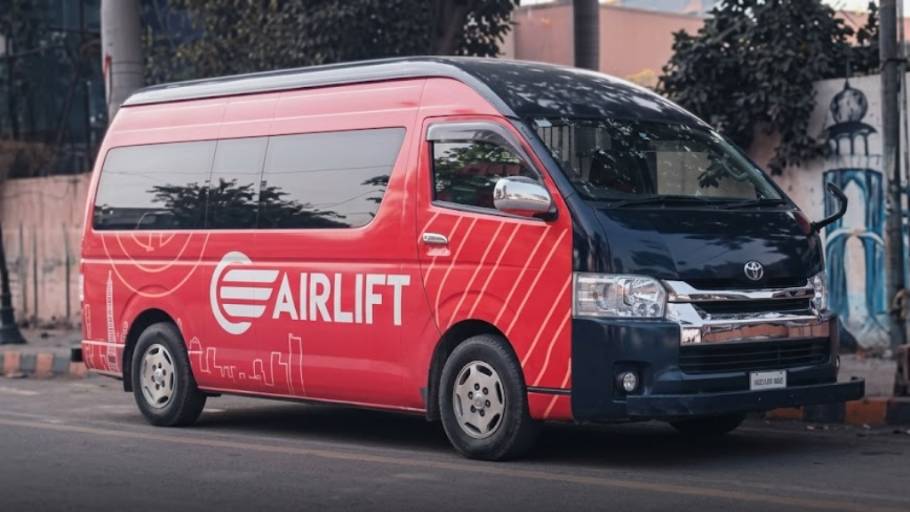
Airlift launched in 2019 as a mass transit service. Think of it as Careem but for buses. They ran their own premium buses on fixed routes in Lahore, Karachi, and a few other urban centers. You would book a seat through the app and get a scheduled bus ride. The unit economics were tough, but the model solved a real, everyday consumer problem.
Then COVID-19 hit in 2020. Public transport became impossible, and the bus business basically died overnight.
The founders made a massive call to pivot the entire company to quick commerce. The new model allowed users to order groceries through the app and get them delivered to their door in 30 minutes. It was the same brand but a completely different business.
The new Airlift looked incredibly impressive at first. They built dark stores, which are specialized warehouses that only fulfill deliveries without walk-in customers, across major cities. They hired hundreds of riders and heavily subsidized delivery so customers paid next to nothing. Because COVID-19 created a huge demand for home delivery, it worked exceptionally well for a while. Then, the market shifted.
The Money Story
The funding side matters immensely when trying to understand why Airlift failed in Pakistan. In August 2021, Airlift raised $85 million in a Series B round. That was the biggest single fundraise in Pakistani startup history by a long shot, with the next closest local round being maybe a third of that amount.
International investors like First Round Capital and Buckley Ventures led the round. The reported valuation hit $275 million, which was unprecedented for a Pakistani company. Total funding across all rounds reached around $109 million by mid-2022, making the company look completely unstoppable from the outside.
With that scale of venture capital comes extreme pressure. Investors expect aggressive, non-stop growth. To meet these demands, Airlift expanded fast. They launched in South Africa in late 2021, opened dozens of new dark stores across Pakistan, and kept subsidizing customer prices to aggressively capture market share. The burn rate was massive, driven by the assumption that more funding would always be available. That assumption turned out to be fatal.
What Actually Killed Airlift
The collapse was caused by a combination of aggressive internal strategies and sudden external shocks. Based on actual industry operational data, these are the core reasons why Airlift failed:
-
An Insane Cash Burn Rate: Airlift was spending vastly more money than it was bringing in. Free deliveries, deep discounts, expensive warehouse leases, a massive workforce, and aggressive marketing burned through cash with no clear path to profitability.
-
The Inherent Difficulty of Quick Commerce: Even in wealthy Western markets, 30-minute grocery delivery loses money on the majority of orders. The margins are tight at best and terrible at worst. Global players like Gorillas, Getir, and Jokr have all struggled or shut down entirely. This is not just a Pakistan-specific issue.
-
Local Operational Complications: Rising fuel prices, high inflation hitting consumer wallets, consistent load shedding affecting dark store operations, and broken urban logistics infrastructure made guaranteed 30-minute delivery nearly impossible. Silicon Valley playbooks failed to account for these specific Pakistani challenges.
-
Premature Scaling: The company prioritized scale first and figured out profit later. This strategy works when capital is cheap and abundant, but it stops working the moment capital becomes expensive and scarce.
-
The South Africa Expansion: Going international before the home market was profitable drained critical management attention and thinned out their remaining capital.
-
The Series C1 Collapse: Airlift was actively negotiating a $50 million Series C1 round in mid-2022 with a lead investor. When global macroeconomic conditions shifted, the investor backed out and the entire deal collapsed in days.
-
The Global VC Market Crash: Global venture funding dropped 27% in 2022 as interest rates rose and tech valuations collapsed. The funding environment turned hostile at the worst possible time for Airlift’s runway.
To see how global funding shifts and layoffs impacted the tech sector during this period, you can track the real-time data on the Layoffs.fyi Tracker.
-
Zero Customer Loyalty: Users opened the app because it was cheap and fast. When prices went up and subsidies came down, customers had no emotional connection to the brand and left immediately.
The Timing Was Brutal
What makes the story particularly painful is that things looked recoverable just months before the shutdown. In the first quarter of 2022, Airlift posted a gross revenue of $21.9 million with a net revenue of $900,000, representing a slim 4% margin. The company was burning cash but had a clear narrative about reaching profitability.
Founder Usman Gul told investors that Airlift was three months away from operational profitability and six to nine months from full company profitability. To manage costs, Airlift laid off 31% of its workforce in May 2022. While painful, it was framed as smart cost management to navigate global funding challenges.
When the lead investor for the Series C1 round backed out in July, other participating investors got cold feet. Without that fresh capital, Airlift had absolutely no runway left. The massive cash burn became an immediate death sentence. On July 12, the shutdown was announced, and operations ceased completely on July 13.
The Inside Story Was Messier
As the dust settled, former employees and market analysts highlighted internal vulnerabilities that went beyond simple macroeconomic changes:
-
Decision-Making and Oversight Issues: Internal management suffered from critical oversight issues that contributed heavily to their financial difficulties, complicating the clean “global conditions” narrative.
-
Flawed Projections: Internal models promised aggressive margin improvements that never materialized in the real world. Investors felt the company was overstating its true path to profitability.
-
Inventory Waste: Quick commerce requires highly sophisticated inventory systems. Airlift struggled with immense stock waste and operational inefficiencies that severely hurt their bottom-line margins.
-
The Pricing Trap: When Airlift tried raising prices to improve margins, user demand plummeted. Customers built on artificial subsidies do not tolerate paying actual market costs.
What Pakistani Founders Should Take From This
The real value of analyzing why Airlift failed lies in the lessons it offers to anyone building a business today:
Foreign VC Money Carries Macro Risk
When you depend entirely on foreign capital, you are at the mercy of global interest rates and foreign market conditions. Entrepreneurs who build with local revenue streams maintain far more control over their fate. Self-funded growth is harder, but you don’t die the moment international investors get scared.
Profitability Matters Early
The growth-at-all-costs model assumes capital winters do not exist. In reality, market cycles hit unexpected downturns. Startups with sustainable unit economics survive those winters, while companies reliant on constant funding rounds collapse.
Silicon Valley Playbooks Do Not Directly Translate
What works in San Francisco does not automatically work in Lahore or Karachi. Fuel costs, bad roads, low consumer spending power, and cash-on-delivery systems present highly specific local complications. Successfully adapting a business model matters infinitely more than blindly copying it.
Customer Loyalty Beats Acquisition
Buying users with venture-backed discounts creates fake growth metrics. Real customers stay because they value the core service, even when prices adjust to real market costs. Furthermore, running out of capital during tough economic shifts requires intense resource management.
The Bigger Picture for Pakistan’s Startup Scene
The impact of the collapse extended far beyond one company, fundamentally altering how the entire local ecosystem operates. International venture capitalists became incredibly cautious, raising the risk perception and making funding rounds significantly harder for all Pakistani startups throughout the subsequent years.
The “burn money for growth” approach lost its prestige, forcing founders to pivot toward sustainable economics and actual profitability. While the sudden closure flooded the market with a wave of highly experienced operational and tech talent, it also forced regulators to look closer at how abrupt startup failures impact thousands of everyday employees and consumers.
Final Thoughts
Why Airlift failed in Pakistan is a cautionary tale of running a Silicon Valley playbook in tough local conditions during a global capital winter. While external factors triggered the collapse, they ultimately exposed deep internal vulnerabilities rather than creating them. Other companies with sustainable unit metrics and capital discipline weathered the exact same storm.
For Pakistani founders building today, the takeaway isn’t that ambitious startups cannot work here. It’s that they must be built on real foundations, working unit economics, and disciplined growth. The Airlift collapse marked the end of an era, paving the way for a healthier ecosystem focused on durable, long-term business models.
Quaid-e-Azam Muhammad Ali Jinnah: The Man Who Created Pakistan



Comments