




Pakistan Resolution: The Complete Story of March 23, 1940
Every Pakistani kid memorizes the Pakistan Resolution in Class 5. The date. The place. The mover. We can recite the basics in our sleep. What we don’t learn in school is the actual story behind it, which is way more interesting than the textbook version makes it sound. Here’s something most people don’t know.
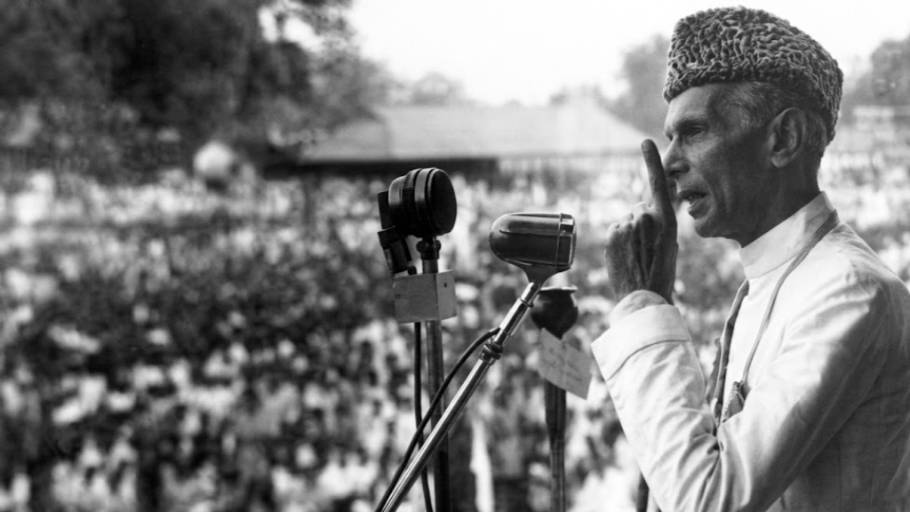
Every Pakistani kid memorizes the Pakistan Resolution in Class 5. The date. The place. The mover. We can recite the basics in our sleep. What we don’t learn in school is the actual story behind it, which is way more interesting than the textbook version makes it sound.
Here’s something most people don’t know. The document wasn’t called the Pakistan Resolution back in 1940. The word “Pakistan” doesn’t appear anywhere in the text. The whole thing was kept deliberately vague about what kind of country was being demanded. The name and the specific meaning came later, after years of political work.
This guide walks through what really happened at the Lahore session in March 1940. What the document actually said. Who was actually behind it. Why it was necessary in the first place. And how it slowly evolved over seven years into the foundation for Pakistan in 1947. The honest version, not the simplified one your social studies teacher gave you.
What Was Happening Before 1940
To understand why this declaration was even needed, you have to look at Indian politics in the late 1930s. Things were bad.
The 1937 provincial elections under the Government of India Act 1935 were a disaster for the Muslim League. Congress swept the Hindu-majority provinces. The League performed poorly even in Muslim-majority areas. Then Congress did something that destroyed whatever trust was left. They refused to share power with the League even where coalition governments made obvious sense.
What followed was the Congress Ministries period from 1937 to 1939. Congress-ruled provinces pushed policies that genuinely alienated Muslims. Hindi got promoted over Urdu. Vande Mataram (a Hindu nationalist song) became compulsory at school functions. Cow slaughter restrictions affected Muslim economic life and food. The message was pretty clear. Hindu majoritarian rule was going to be the future of independent India.
Quaid-e-Azam Muhammad Ali Jinnah had spent years championing Hindu-Muslim unity. Congress leaders themselves called him “the best ambassador of Hindu-Muslim unity.” But the Congress Ministries experience convinced him that genuine power-sharing just wasn’t going to happen. Without constitutional protections built in, Muslims would be permanent second-class citizens in any unified India.
So when people ask why this demand emerged, the answer isn’t religious extremism or sudden ideological awakening. It came from concrete political experience of being shut out of power even when the math should have given inclusion.
The Build-Up
The 1940 declaration didn’t appear out of nowhere. Muslim leaders had been thinking about separate Muslim political existence for years before this.
Some moments that mattered:
- Allama Iqbal’s 1930 Allahabad Address: At the Muslim League’s annual session, Iqbal proposed combining Punjab, Northwest Frontier, Sindh, and Balochistan into one state. He saw this as a solution within an Indian federation, not necessarily a separate country. But the seed was planted.
- Chaudhary Rahmat Ali’s 1933 pamphlet: A Cambridge student published “Now or Never” which introduced “PAKISTAN” as an acronym for Punjab, Afghania (NWFP), Kashmir, Sindh, and Balochistan. The Muslim League initially dismissed this as student fantasy. The name stuck around anyway.
- Congress Ministries 1937-39: The disaster we already discussed. Practical evidence that Hindu-Muslim political cooperation under Congress wasn’t going to happen.
- Pirpur Report 1938 and Sharif Report 1939: Muslim League investigations documenting Muslim grievances under Congress rule. These formalized the case.
- World War II declaration October 1939: Britain dragged India into the war without consulting Indian leaders. Congress ministries resigned in protest. A political vacuum opened up. The Muslim League stepped into it.
By early 1940, Jinnah and senior League leadership had reached a conclusion. Some form of separate Muslim political entity was necessary. The Lahore session was going to make that conclusion formal.
The Lahore Session
The Muslim League’s annual session happened at Minto Park (now Iqbal Park) in Lahore from March 22-24, 1940. About 100,000 people attended. It was the largest Muslim political gathering in Indian history up to that point.
The venue mattered too. Lahore was the cultural and political heart of Muslim Punjab. Holding the session there sent a message that the League meant serious business.
Jinnah delivered the presidential address on March 22. The speech ran nearly two hours and laid out the two-nation theory in detail. Here’s what he basically said:
Hindus and Muslims aren’t one nation. They’re two distinct nations with different religions, cultures, histories, and political interests. Forcing two nations into one state will produce permanent conflict and minority subordination. The solution is dividing India into autonomous Muslim and Hindu regions. Federal arrangements within unified India just aren’t enough protection.
That speech basically set up everything the declaration would say the next day.
What the Document Actually Said
The resolution was moved on March 23, 1940 by A.K. Fazlul Huq, the Premier of Bengal. This part genuinely matters and gets underplayed in most accounts. A Bengali leader, not a Punjabi, proposed the foundational text. Muslim political mobilization wasn’t just a northwest thing.
The actual language was strategically vague. The key passage said:
“That geographically contiguous units are demarcated into regions which should be so constituted, with such territorial readjustments as may be necessary, that the areas in which the Muslims are numerically in a majority as in the North Western and Eastern Zones of India should be grouped to constitute ‘Independent States’ in which the constituent units shall be autonomous and sovereign.”
Read that carefully. A few things stand out:
- “Independent States” is plural: The text calls for multiple states, not a single Pakistan. The two Muslim-majority zones (northwest and east) would form separate states.
- “Autonomous and sovereign” units within zones: Even within those zones, individual provinces would have significant autonomy.
- No mention of “Pakistan”: The word literally doesn’t appear in the text. The name got attached later by Hindu and British newspapers.
- Relationship with rest of India was unclear: Whether these states would have federal connections to Hindu-majority India wasn’t specified.
The vagueness wasn’t accidental. It was strategic. Different Muslim political constituencies could read what they wanted into it. Bengali Muslims, Punjabi Muslims, Sindhis, Pakhtuns could all support the declaration while imagining different specific outcomes.
Several leaders seconded the resolution. Chaudhry Khaliquzzaman from UP. Maulana Zafar Ali Khan from Punjab. Sardar Aurangzeb from NWFP. Sir Abdullah Haroon from Sindh. Multi-regional seconding demonstrated the cross-province consensus.
It was adopted unanimously on March 24, 1940.
The Name Came Later
Here’s something that genuinely confuses people. What we now call the Pakistan Resolution wasn’t called that in 1940. It was the Lahore Resolution.
The renaming happened through press coverage. Hindu and British newspapers started calling it the “Pakistan Resolution” because of Rahmat Ali’s 1933 acronym. The Muslim League itself didn’t initially use the term “Pakistan” officially.
Within a few years though, “Pakistan” became attached to the document’s goals. By 1947, Pakistan was the actual name of the country that emerged. The retroactive renaming stuck.
This naming evolution actually tells you something important. The document’s meaning evolved over time. What started as a vague demand for “Independent States” gradually crystallized into a demand for a specific country called Pakistan. That political crystallization took seven years of work.
Who Actually Wrote It
The textbook version usually gives Jinnah credit for everything. The reality was more collaborative.
Several people contributed to the drafting:
- Sikandar Hayat Khan: The Premier of Punjab drafted substantial portions before the session. Some historians argue his original draft was actually softer than what got adopted.
- Muhammad Zafarullah Khan: Senior League member who reportedly worked on the final text.
- Liaquat Ali Khan and other League leaders: Contributed refinements during the drafting process.
- Final committee review: A committee finalized the exact wording before presentation.
Jinnah’s role was more political architect and presenter. He set the direction. The specific language came from collaborative work.
This matters because it shows the document wasn’t a single-author manifesto. It emerged from broader League consensus.
How People Reacted
Responses to the declaration varied dramatically depending on which side of Indian politics you were on.
Congress: Strongly opposed. Gandhi called it “an untruth” and rejected the two-nation theory completely. Nehru saw the proposed division as impossible. The official position stayed that Hindus and Muslims were one Indian nation despite religious differences.
British: Initially didn’t take it seriously as a practical demand. They viewed it as a bargaining chip for constitutional negotiations. Within a few years, they realized they’d misjudged.
Other Muslim leaders: Not all Muslims supported it. Maulana Azad and Muslim Congress members opposed the demand. Various Sufi groups, Deobandi religious scholars, and traditional ulama had problems with the political vision. Majority Muslim support existed but it wasn’t universal.
Hindu Mahasabha: Vinayak Damodar Savarkar and the Hindu Mahasabha actually had positions overlapping with the two-nation theory. They argued that Hindus were a nation needing political organization. Their support paradoxically validated some League arguments.
Bengali politics: Bengali Muslim politics was complicated. While the document was moved by Bengali leader Fazlul Huq, Bengali Muslim politics had multiple currents. Not all of them aligned with the West-Pakistani-centered vision that would eventually emerge.
Regional Muslim leaders: Sindhi, Pakhtun, and Baloch Muslim leaders had varying responses. Many saw it as protecting their interests but interpreted it differently than central League leadership did.
What Happened Between 1940 and 1947
The Lahore Resolution didn’t immediately create Pakistan. Seven years of political work happened before partition actually occurred.
The major events:
1942 Cripps Mission: British proposed post-war independence with a provincial opt-out option. Both Congress and Muslim League rejected it, but for different reasons.
1944 Gandhi-Jinnah talks: Direct negotiations failed because Gandhi rejected the two-nation theory that the 1940 declaration had implied.
1945-46 elections: Muslim League performed dramatically better than 1937. Overwhelming Muslim votes validated their claim to represent Indian Muslims politically.
1946 Cabinet Mission Plan: British proposed a three-tier federal India with grouped provinces. Both Congress and League initially accepted. Disputes over interpretation collapsed the plan.
1946 Direct Action Day: August 16, 1946 Muslim League called for direct action. Communal violence followed, particularly the Great Calcutta Killings where thousands died.
1947 Mountbatten Plan: Lord Mountbatten arrived as the last Viceroy. He announced partition through the June 3 Plan. The Radcliffe Boundary Commission drew specific borders.
August 14-15, 1947: Partition created Pakistan and India as separate independent countries. Pakistan emerged in two non-contiguous wings (West Pakistan and East Pakistan).
Notice what happened. The original 1940 vision of multiple Muslim states became a single Pakistan with two wings. The “Independent States” language got reinterpreted as the political situation evolved.
Critical Things Worth Knowing
The Lahore declaration has been subject to genuine debate among historians:
Was it actually about partition?: Some historians argue the original text didn’t necessarily mean a separate country. The “Independent States” language could have meant autonomous regions within Indian federation. The interpretation as a full partition demand developed later.
Did Muslims uniformly support it?: Plenty of Muslim political voices opposed the demand. Congress Muslims, religious traditionalists, regional leaders who had different ideas. The “all Muslims wanted Pakistan” story considerably simplifies things.
How worked-out was the demand?: The vague language shows specific details hadn’t been figured out. The country was demanded before its actual form was clearly designed.
Was 1940 really the turning point?: Some historians argue the 1937-39 Congress Ministries experience mattered more in shifting Muslim opinion than the 1940 resolution itself. The declaration may have just formalized changes already happening.
What about British policy?: British divide-and-rule approach and constitutional designs shaped everything. Pure communal explanations of the demand miss the British role in creating the political environment.
These critical perspectives don’t take anything away from the importance. They add real complexity to the simplified textbook version.
Why This Still Matters
The Pakistan Resolution stays relevant in multiple ways:
National founding document: Pakistan celebrates March 23 as Pakistan Day. National holiday. Military parade in Islamabad. The whole protocol.
Two-nation theory still gets debated: The intellectual framework Jinnah laid out continues being argued about in Pakistan and India.
Bangladesh’s complicated relationship: The “Eastern Zone” language included Bengal. Bangladesh’s 1971 independence raises real questions about whether the original vision got realized or fundamentally betrayed.
Pakistani identity debates: Was Pakistan supposed to be an Islamic state, a secular state with a Muslim majority, or something else? The vague founding text doesn’t clearly answer this. Different Pakistani political movements all claim it for their positions.
Minority rights questions: How non-Muslims would be treated in proposed Muslim states wasn’t spelled out. This question still affects Pakistani policy.
Kashmir argument: The language about Muslim-majority areas applies to Kashmir in ways that continue affecting Indo-Pakistani relations today.
How Pakistan Remembers It
Modern Pakistan treats the 1940 declaration as foundational. The commemorations include:
- Pakistan Day (March 23): National holiday. Military parade in Islamabad. Government speeches.
- Minar-e-Pakistan: The 70-meter tall monument at the exact spot in Lahore where it was adopted. Built in 1968. Major national memorial.
- Education: All Pakistani schools teach about it. Memorizing date, location, and mover is standard.
- Political rhetoric: Politicians regularly invoke it as foundation for different positions. Different political agendas all claim it.
- Media coverage: Annual coverage with documentaries, articles, special programs.
The official commemoration focuses on the triumphant founding narrative. More complex parts (Bengali leadership role, internal debates, vague original language) get less attention than the simplified hero story.
Final Thoughts
The Pakistan Resolution is genuinely one of the most consequential political documents of the 20th century. The text was vague. The drafting was collaborative. The interpretation evolved over years. The country that actually emerged differed in important ways from what the original document proposed. None of that takes away from its historical significance.
For Pakistanis, this is foundational stuff. Understanding the actual history rather than just memorizing dates gives way better appreciation of how the country came to exist. The real story has more nuance, more complexity, and more interesting characters than what textbooks bother to include.
For Indians, the 1940 declaration represents the formal start of the political process that ended in partition. The two-nation theory it implied continues being debated in Indian politics.
For students of South Asian history, this is a great example of how vague political documents can have massive consequences. The “Independent States” language got reinterpreted multiple times as circumstances changed. The document’s importance came as much from what it enabled as from what it specifically said.
The honest version isn’t the patriotic textbook story. It’s a vague document drafted collaboratively at a specific political moment, responding to concrete grievances, that got reinterpreted over seven years to eventually create Pakistan in 1947. The country exists because of that evolution, not in spite of it.
That’s the real story of the Pakistan Resolution. A founding document that meant different things to different people, evolved into something specific through years of political work, and continues being debated, celebrated, and reinterpreted in 2026.
History of East and West Pakistan: The Real Story Behind 1947 to 1971



Comments