




Allama Muhammad Iqbal: The Real Story Behind Pakistan’s Spiritual Father
Every Pakistani knows Allama Muhammad Iqbal’s name. We celebrate his birthday on November 9. We memorize his poetry in school. We call him the spiritual father of Pakistan. What most of us don’t actually know is the real life behind the title. Honestly, Iqbal was way more complicated than the textbook version suggests.
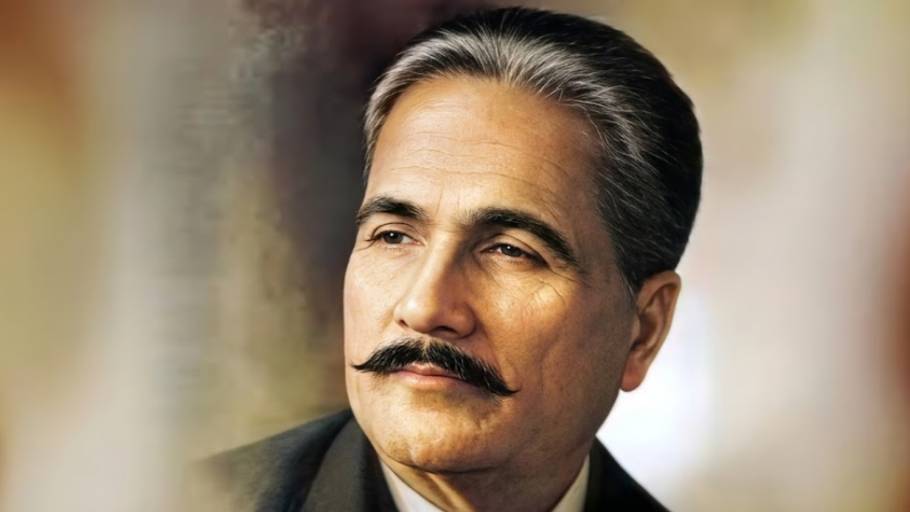
Every Pakistani knows Allama Muhammad Iqbal’s name. We celebrate his birthday on November 9. We memorize his poetry in school. We call him the spiritual father of Pakistan. What most of us don’t actually know is the real life behind the title.
Honestly, Iqbal was way more complicated than the textbook version suggests. He was a poet, philosopher, lawyer, politician, and Islamic thinker who studied at Cambridge and Munich. He wrote in Urdu, Persian, and English. He developed philosophical ideas that influenced thinkers across the Muslim world. He proposed the Muslim state idea in 1930, seventeen years before Pakistan actually existed. And he died in 1938, never living to see the country he had imagined.
This guide covers the real Allama Muhammad Iqbal. His actual life from Sialkot childhood through European education to political and philosophical work. The poetry and ideas that made him famous. The controversies that get glossed over. And how his legacy continues being debated in 2026.
Early Life in Sialkot
Allama Muhammad Iqbal was born on November 9, 1877 in Sialkot, in what was then British India. His family was of Kashmiri Brahmin origin who had converted to Islam several generations earlier.
His father Sheikh Noor Muhammad was a tailor by profession but more importantly a deeply religious man with mystical inclinations. He was reportedly self-taught in Islamic philosophy and Sufi thought. His influence on young Iqbal was significant.
His mother Imam Bibi was illiterate but had strong character and faith. Iqbal stayed deeply attached to her throughout her life. When she died in 1914, he wrote one of his most personal poems about her death.
He had four siblings including his older brother Sheikh Ata Muhammad who later became an engineer and supported Iqbal’s education. The family wasn’t wealthy but emphasized education and religious learning.
His early education started at home learning Quran, Persian, and Arabic. He then attended the Scotch Mission College in Sialkot. His teacher there, Syed Mir Hassan, became a huge influence on him. Mir Hassan taught classical Arabic, Persian poetry, and Islamic philosophy. The grounding Iqbal got from him shaped his entire intellectual development.
Government College Lahore
In 1895, Iqbal moved to Lahore to attend Government College Lahore. This was a major step that shaped everything that came after.
At Government College, Iqbal studied philosophy, English literature, and Arabic. He earned his BA in 1897 and MA in Philosophy in 1899. The college was producing intellectual talent across British India at this time.
The crucial teacher at Government College was Sir Thomas Arnold, the British orientalist who taught philosophy. Arnold introduced Iqbal to Western philosophical traditions while respecting Eastern thought. He became both teacher and lifelong friend. He would later play a key role in encouraging Iqbal to study in Europe.
While studying, Iqbal also started his poetic career seriously. His Urdu poetry started getting attention in Lahore literary circles. The famous poem “Tarana-e-Hindi” (which became known as “Saare Jahan Se Achha”) was written during this period. It’s worth noting this early nationalism celebrated India broadly, not specifically Muslim political identity. His thinking would evolve significantly later.
After his MA, he taught philosophy at Government College and Oriental College Lahore. He was building reputation as both teacher and emerging poet.
European Education
In 1905, Iqbal traveled to Europe for advanced studies. This experience fundamentally shaped his philosophical development and worldview.
He started at Cambridge University, studying philosophy at Trinity College under R.A. Nicholson and Edward Browne, both renowned orientalists. He earned his BA in 1907.
He then moved to Munich, Germany to complete his PhD. His doctoral thesis was titled “The Development of Metaphysics in Persia.” He completed his PhD in 1908. The thesis examined Persian philosophical traditions including those of Al-Ghazali, Avicenna, and Sufi thinkers.
During his European years, Iqbal also qualified as a barrister at Lincoln’s Inn in London. He returned to India in 1908 as both philosopher and lawyer.
The European experience was transformative. Iqbal witnessed the rise of European imperialism affecting the Muslim world. He saw the consequences of materialism and nationalism that he came to view as spiritually empty. He met European philosophers and Muslim thinkers from across the world. He absorbed European intellectual traditions while developing his own critique of them.
This European education made Iqbal genuinely different from many of his Indian Muslim contemporaries. He could engage seriously with both Western philosophy and Islamic tradition. He understood European thought from inside, not just from books.
The Lawyer and Teacher
After returning to India in 1908, Iqbal established himself as both philosopher-teacher and practicing lawyer.
He practiced law in Lahore, primarily handling civil cases. The legal work provided his livelihood for most of his life. He wasn’t a particularly successful lawyer in financial terms. He often complained about how legal work distracted him from his real interests in philosophy and poetry. But it paid the bills.
He also continued teaching philosophy at Government College Lahore for periods. He took various academic positions but never as his primary focus.
The combination was unusual. Most lawyers focused on law. Most academics focused on academics. Iqbal moved between worlds while developing his real intellectual interests on the side.
His financial life remained modest throughout his career. He never accumulated significant wealth despite his fame. He turned down lucrative positions that would have compromised his intellectual independence. He lived comfortably but not extravagantly.
The Poetry That Made Him Famous
Allama Muhammad Iqbal became globally known primarily through his poetry. His work in Urdu and Persian made him one of the most influential poets in the Muslim world.
His major Urdu poetry collections include:
- Bang-e-Dra (1924): His first major Urdu collection. Contains the famous “Tarana-e-Hindi” and “Tarana-e-Milli” among other works. This collection established him as major Urdu poet.
- Bal-e-Jibril (1935): One of his most acclaimed Urdu collections. Contains some of his most quoted verses including extensive philosophical content.
- Zarb-e-Kalim (1936): His most directly political Urdu poetry. Addresses contemporary political issues alongside spiritual themes.
His major Persian poetry collections include:
- Asrar-e-Khudi (1915): “Secrets of the Self.” Major philosophical poem introducing his concept of khudi (selfhood).
- Rumuz-e-Bekhudi (1918): Continues philosophical themes about community and self-realization.
- Payam-e-Mashriq (1923): Written as response to Goethe’s “West-östlicher Divan.” Shows Iqbal’s engagement with European literature.
- Zabur-e-Ajam (1927): Persian philosophical poetry.
- Javid Nama (1932): His most ambitious Persian work. A spiritual journey through different heavenly realms inspired by Dante’s Divine Comedy.
His Persian poetry actually had bigger international impact than his Urdu poetry. Persian was still the language of educated discourse across much of the Muslim world from Turkey to Central Asia to South Asia. Through Persian, his ideas reached audiences worldwide.
His English work mostly consisted of:
- The Reconstruction of Religious Thought in Islam (1930): His major prose work compiling lectures he had given. This remains influential in Islamic philosophical discussions globally.
- Various essays and lectures throughout his career.
For authentic access to his complete poetic works (such as Bang-e-Dra and Bal-e-Jibril), structural analysis, and historical manuscripts, visit the official statutory body: Iqbal Academy Pakistan.
His Major Ideas
Beyond the poetry, Iqbal developed substantial philosophical ideas worth understanding.
Khudi (Selfhood): His most distinctive philosophical concept. Khudi refers to ego, self, or individual identity. Iqbal argued that strengthening khudi through religious devotion, action, and creative striving is the purpose of human existence. He rejected both Hindu monistic absorption of self and Western materialism’s reduction of self.
Ijtihad (Independent Reasoning): Iqbal argued that Muslim societies needed to revive ijtihad, the practice of independent legal and theological reasoning. He criticized blind imitation (taqlid) and called for reinterpreting Islamic tradition for modern conditions.
Action over contemplation: Iqbal valued action, struggle, and creative work over passive contemplation. He criticized Sufi traditions that emphasized withdrawal from worldly action.
Critique of nationalism: Iqbal viewed Western-style nationalism as spiritually empty and ultimately destructive. He argued for a different kind of community based on shared values and faith rather than racial or territorial nationalism.
Critique of materialism: He criticized Western materialism and its consequences. He saw modern Europe as spiritually impoverished despite its technological advancement.
Vision of Muslim renaissance: Throughout his work, Iqbal called for Muslim renaissance combining Islamic spiritual foundations with modern intellectual engagement. He rejected both rigid traditionalism and complete Western imitation.
These ideas continue being debated and applied in contemporary Islamic thought worldwide.
The Allahabad Address 1930
The single most politically consequential moment in Allama Muhammad Iqbal’s life came at the 1930 Allahabad session of the All-India Muslim League.
In his presidential address, Iqbal proposed that the Muslim-majority areas of northwest India should form an autonomous state within an Indian federation. The relevant passage:
“I would like to see the Punjab, North-West Frontier Province, Sind and Baluchistan amalgamated into a single State. Self-government within the British Empire or without the British Empire, the formation of a consolidated Northwest Indian Muslim State appears to me to be the final destiny of the Muslims, at least of Northwest India.”
This is often called the conceptual origin of Pakistan. But several things need clarification:
Iqbal proposed this as solution within an Indian federation, not as separate country. The framing assumed continued British Empire connection or at least Indian federal arrangement.
He didn’t propose Pakistan as separate independent nation. The vision was autonomous Muslim state within larger political arrangement.
He focused on northwest India specifically. The eastern Muslim-majority region (Bengal) wasn’t included in his original proposal.
He died in 1938, nine years before Pakistan emerged. He never engaged with the specific Pakistan demand that took shape after the 1940 Lahore Resolution.
The connection between Iqbal’s 1930 address and Pakistan’s 1947 creation is real but complicated. Iqbal provided important conceptual foundation. The specific political work happened by others after his death.
Relationship with Jinnah
The relationship between Allama Muhammad Iqbal and Quaid-e-Azam Muhammad Ali Jinnah developed gradually and significantly.
When Iqbal made his 1930 Allahabad address, Jinnah was actually somewhat distant from active Muslim League politics. Jinnah had moved to London in the early 1930s, frustrated with Indian politics.
Iqbal played important role in convincing Jinnah to return and lead the Muslim League. The two corresponded extensively in the 1930s. Iqbal wrote letters urging Jinnah to take active leadership role.
These Iqbal-Jinnah letters, particularly those written between 1936 and 1937, are historically significant. They show Iqbal developing political philosophy alongside Jinnah’s gradual move toward separate Muslim political identity.
Jinnah genuinely respected Iqbal as intellectual and spiritual guide. He referred to Iqbal as his teacher and guide. Iqbal’s ideas influenced Jinnah’s political thinking even when their specific approaches differed.
This is the basis for calling Iqbal Pakistan’s spiritual father while calling Jinnah its political founder. The intellectual foundation came significantly from Iqbal. The political execution came from Jinnah.
Personal Life and Family
Allama Muhammad Iqbal’s personal life was more complicated than the formal biographies suggest.
He married three times. His first marriage in 1893 to Karim Bibi was arranged when he was a teenager. They had two children but the marriage was unhappy and they separated though not formally divorced.
His second marriage in 1910 was to Sardar Begum. This marriage produced his son Javed Iqbal in 1924.
His third marriage in 1914 to Mukhtar Begum produced no surviving children. She died in 1924.
Sardar Begum died in 1935, before Iqbal himself. His later years were marked by losing both this wife and his health.
His relationships with these wives have been subject to various historical interpretations. His son Javed Iqbal (who later became a Supreme Court judge in Pakistan) wrote about his father’s complicated personal life in his own biographical works.
His son Javed Iqbal (1924-2015) became a prominent legal figure and intellectual in Pakistan. He preserved much of his father’s intellectual legacy and wrote extensively about him. He served on the Supreme Court of Pakistan and contributed significantly to Pakistani jurisprudence.
His daughter from his first marriage, Munira Bano, also had children and grandchildren who continue carrying the family name.
Final Years and Death
Iqbal’s last years from 1935 to 1938 were marked by declining health alongside continued intellectual and political activity.
His wife Sardar Begum died in 1935. He suffered from throat problems that eventually proved fatal. His ability to give lectures and speeches diminished. But his writing continued.
He continued correspondence with Jinnah through 1937. His final letters to Jinnah remain important historical documents about the developing Muslim political vision.
He worked on poetry and prose despite illness. His later works show continuing depth even as physical capacity declined.
Allama Muhammad Iqbal died on April 21, 1938 in Lahore. He was 60 years old. He didn’t live to see the Lahore Resolution of 1940, let alone Pakistan’s 1947 creation.
His funeral in Lahore drew massive crowds. His tomb (Mazar-e-Iqbal) is located near the Badshahi Mosque in Lahore and remains a significant memorial site.
His Continuing Influence
The intellectual and cultural impact of Iqbal’s work continues internationally:
In Pakistan: He’s the national poet. His birthday November 9 is a public holiday (Iqbal Day). His poetry is part of standard education. His thinking gets invoked across the political spectrum. The Iqbal Academy in Pakistan continues research on his work.
In Iran: Iqbal is celebrated as major Persian-language poet. Iranian intellectuals study his work extensively. He’s connected to broader Iranian poetic tradition.
In Afghanistan: His Persian poetry circulates widely. He’s seen as part of shared Persian-Islamic literary heritage.
In Turkey: Translated extensively into Turkish. His philosophical work influences contemporary Turkish Islamic intellectuals.
In Bangladesh: His Bengali heritage and ideas continue being valued despite the 1971 separation.
In the Western Muslim diaspora: His English work and translated poetry reach Muslim communities in Britain, North America, and Europe.
Academic interest: Western academic study of Iqbal continues at major universities. His philosophical synthesis attracts scholars working on Islamic modernism, political philosophy, and Sufism.
Critical Perspectives Worth Knowing
The standard Pakistani narrative about Iqbal often glosses over genuinely contested aspects of his thought:
On nationalism: Iqbal’s early “Tarana-e-Hindi” celebrated Indian unity. His later work moved toward Muslim political identity. The shift was real and the contradiction sometimes gets minimized.
On political philosophy: Iqbal’s specific political proposals were vague. His 1930 address proposed autonomous Muslim state within Indian federation, not separate country. The transition from his vision to actual Pakistan involved significant reinterpretation.
On Sufism: Iqbal had complicated relationship with traditional Sufism. He critiqued some Sufi traditions while drawing on others. Pakistani religious movements with different orientations all claim him.
On modernity: He critiqued Western materialism but embraced Western philosophical and scientific traditions. His position was nuanced rather than simple rejection or acceptance.
On gender: His views on women’s roles and rights were more progressive than some contemporaries but more conservative than others. His writing addresses gender questions in ways that get debated today.
On democracy: Iqbal had complex views on democracy. He critiqued certain Western democratic forms while supporting genuine self-government. His views don’t fit neatly into modern democratic theory.
These complexities make Iqbal genuinely interesting as thinker rather than just iconic figure to invoke for various political purposes.
Final Thoughts
Allama Muhammad Iqbal was genuinely one of the most important Muslim intellectuals of the 20th century. He combined poetry, philosophy, and political thought in ways few thinkers manage. His work influenced Muslim political consciousness across South Asia and beyond. He provided crucial intellectual foundation for what eventually became Pakistan even though he didn’t live to see it.
For Pakistanis, understanding the real Iqbal matters more than just memorizing his poetry. The actual man was more interesting and complex than the simplified national hero image suggests. He was a philosopher who happened to write poetry, a lawyer who wished he had time for philosophy, a political thinker who didn’t quite see how his ideas would be implemented, and a religious modernist who critiqued both rigid tradition and uncritical Westernization.
His ideas continue being relevant in 2026 because the questions he addressed remain unresolved. How should Muslim societies relate to modernity? What does authentic Islamic intellectual tradition look like in contemporary conditions? How should religious communities organize politically? Iqbal’s answers weren’t perfect but his questions remain genuinely important.
For students of Islamic thought generally, Allama Muhammad Iqbal represents serious engagement with both Islamic tradition and Western philosophy. He shows that this combination is possible without surrendering either commitment.
For poetry lovers, his Urdu and Persian verse remains some of the most powerful religious and philosophical poetry produced in any tradition. The aesthetic achievement alone justifies his enduring reputation.
That’s the real story of Allama Muhammad Iqbal. A complicated, brilliant, sometimes contradictory thinker who shaped how millions of people think about politics, religion, philosophy, and selfhood. The textbook simplifications don’t do him justice. The actual story is way more interesting.
Pakistan Resolution: The Complete Story of March 23, 1940



Comments