




History of Pakistan Army Chiefs: The Real Story of Military Leadership
History of Pakistan Army Chiefs is something every Pakistani has opinions about but few of us actually know the full picture. We know Ayub Khan took over the country. We know Zia-ul-Haq ruled for over a decade. We know Musharraf was the last general to do a coup.
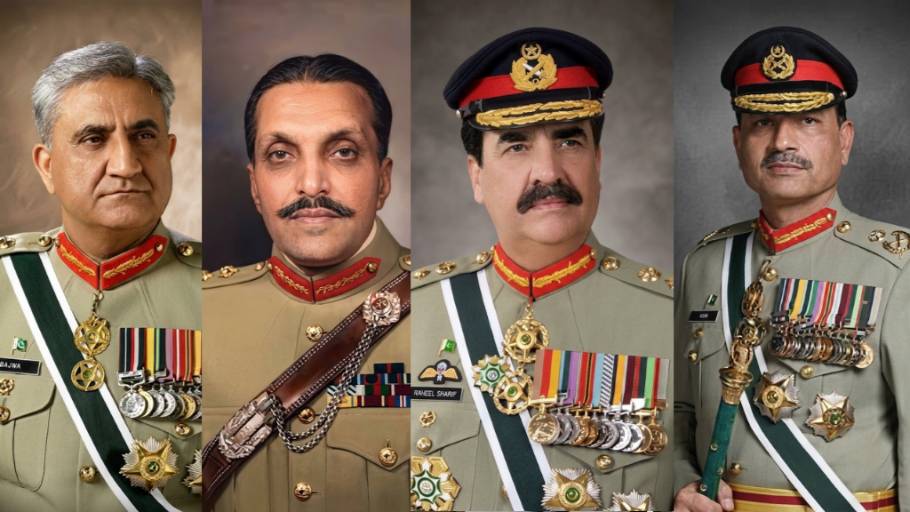
History of Pakistan Army Chiefs is something every Pakistani has opinions about but few of us actually know the full picture. We know Ayub Khan took over the country. We know Zia-ul-Haq ruled for over a decade. We know Musharraf was the last general to do a coup. The army chief job has been the most powerful position in Pakistan throughout most of our history, often more powerful than whoever was officially prime minister or president.
Honestly, the actual story of army chiefs of Pakistan is way more interesting than the simplified version. Some of these men shaped Pakistani history more than civilian politicians ever did. Three of them ran the country as military dictators. Others stayed in the background but influenced everything. The current Chief of Army Staff Pakistan, Asim Munir, has become arguably the most powerful figure in the country today.
This guide walks through the history of Pakistan Army Chiefs from 1947 to 2026. The actual men who held the role. The decisions they made. The wars they led. The coups they staged. And the evolution of Pakistan army leadership into what it is today. The real history, not just the patriotic version.
How the Position Actually Works
Before getting into individual men, the history of Pakistan Army Chiefs needs some context. The role itself has evolved significantly.
In 1947, the position was called Commander-in-Chief of the Pakistan Army. It stayed that way until 1972 when Bhutto changed the title to Chief of Army Staff (COAS). The change was meant to be more democratic-sounding. The actual power didn’t really change.
The COAS is officially appointed by the Prime Minister with President’s approval. Standard tenure is supposed to be three years. In practice, extensions have been common for politically powerful chiefs.
Things changed dramatically in 2025. Parliament passed the 27th Constitutional Amendment in November 2025 extending COAS tenure to five years and creating a new position called Chief of Defence Forces (CDF). The CDF role is held concurrently with COAS by the same person. This basically formalized the army chief’s authority over Air Force and Navy too.
So when we talk about the history of Pakistan Army Chiefs in 2026, we’re talking about a fundamentally more powerful position than it was even a few years ago.
The Early Years (1947-1958)
The first phase of Pakistan army leadership involved British officers and gradual handover to Pakistani officers.
General Sir Frank Messervy (1947) was the first Commander-in-Chief at independence. A British officer who oversaw the initial setup. His tenure was brief as Pakistan moved toward Pakistani leadership.
General Sir Douglas Gracey (1948-1951) continued the British leadership tradition. His most controversial decision was refusing to send Pakistani troops to support the Kashmir tribal invasion in October 1947 without British approval. This created tensions with Jinnah but established the precedent of professional military leadership.
General Ayub Khan (1951-1958) was the first Pakistani Commander-in-Chief. His appointment in January 1951 marked the start of Pakistani control over the army. He was an ambitious man who quietly built his power base while officially serving the civilian government.
The early army leadership focused on professionalization, equipment, and integration of officers from British Indian Army into Pakistani service. The institution was being built while simultaneously dealing with Kashmir conflict and refugee crisis.
The Ayub Era and First Coup (1958-1971)
The history of Pakistan Army Chiefs entered military rule territory with Ayub Khan. In October 1958, he staged the first military coup in Pakistani history. President Iskander Mirza had declared martial law on October 7, 1958. Ayub used that to consolidate his own position and force Mirza out by October 27.
Ayub became President while remaining the army chief. He later promoted himself to Field Marshal in 1959, becoming Pakistan’s first five-star general. He abandoned the COAS office after this promotion. His rule lasted until 1969.
General Muhammad Musa (1958-1966) served as COAS under Ayub’s regime. He led the army during the 1965 war with India. The war ended in stalemate but Musa took political pressure for not achieving more decisive results. He was eventually replaced.
General Yahya Khan (1966-1971) became COAS in September 1966 and then took over from Ayub as President in March 1969. His tenure was catastrophic for Pakistan.
Yahya oversaw the 1970 elections that were supposed to bring democracy back. When Awami League won majority in East Pakistan, Yahya refused to transfer power. Operation Searchlight launched in March 1971. The brutal military operation in East Pakistan, the subsequent war with India, and the December 1971 surrender at Dhaka all happened under his leadership.
The history of Pakistan Army Chiefs has no darker chapter than the 1971 disaster. Yahya was forced to resign in December 1971 after the surrender. He was placed under house arrest by the new Bhutto government.
The Bhutto Era Chiefs (1972-1977)
After 1971, Pakistan needed army leadership focused on rebuilding rather than political adventure. Bhutto chose carefully for this period.
General Gul Hassan Khan (1971-1972) had a very brief tenure. He was removed quickly when Bhutto sensed he might become too politically ambitious.
General Tikka Khan (1972-1976) became COAS in March 1972. He was nicknamed “Butcher of Bengal” for his role in 1971 operations in East Pakistan but Bhutto found him useful for army leadership. He oversaw army rebuilding after the 1971 disaster.
General Muhammad Zia-ul-Haq (1976-1988) was appointed by Bhutto in 1976 as someone considered politically safe and personally loyal. This turned out to be one of the most consequential miscalculations in Pakistani political history.
The Zia Era (1977-1988)
The history of Pakistan Army Chiefs took its longest dictatorship under Zia-ul-Haq. He overthrew Bhutto in July 1977, executed him in 1979, and ruled Pakistan until his death in 1988.
Zia transformed Pakistani society significantly. Islamic laws were introduced. Religious education expanded. The Afghan war made Pakistan an American Cold War ally. Massive aid flowed in. The nuclear program expanded substantially.
Zia kept the COAS role throughout his presidency, unlike Ayub who abandoned it after becoming Field Marshal. The dual role concentrated unprecedented power.
His death in a mysterious C-130 crash on August 17, 1988 ended an era. The plane went down near Bahawalpur with most of the senior military leadership aboard. The crash investigation never definitively determined the cause.
The Zia tenure shaped Pakistani institutional culture in ways that continue affecting army leadership today. The military’s political role expanded. Religious orientation became more pronounced. Civil-military relations were permanently changed.
The Democratic Restoration Period (1988-1998)
After Zia’s death, several army chiefs of Pakistan navigated the difficult civilian-military balance.
General Mirza Aslam Beg (1988-1991) served during the early democratic restoration. He didn’t take power himself but maintained significant influence behind the scenes. He was known for his “strategic depth” doctrine that shaped Pakistan’s Afghanistan policy.
General Asif Nawaz Janjua (1991-1993) had a brief tenure marked by his sudden death in January 1993 from a heart attack. He was respected as professional officer.
General Abdul Waheed Kakar (1993-1996) is remembered as one of the more genuinely professional army chiefs of Pakistan. He played key role in the 1993 political crisis that led to both President Ghulam Ishaq Khan and Prime Minister Nawaz Sharif resigning. Kakar showed restraint by not taking power himself despite having the opportunity.
General Jehangir Karamat (1996-1998) ended his career in unprecedented way. He resigned in October 1998 after public disagreement with Prime Minister Nawaz Sharif. The resignation was rare example of civilian authority being respected by army leadership.
The Musharraf Era (1998-2007)
The history of Pakistan Army Chiefs entered another military rule phase with Pervez Musharraf. Nawaz Sharif appointed him in October 1998 hoping for compliant army leadership. He got the opposite.
Musharraf launched the Kargil conflict with India in 1999, then took over the country in October 1999 when Nawaz tried to remove him from his position. The coup happened mid-flight while Musharraf was returning from Sri Lanka.
Musharraf ruled Pakistan from 1999 to 2008. He served as both President and COAS for most of this period. The post-9/11 alliance with America transformed Pakistan’s strategic position. Massive aid resumed. Pakistan became frontline ally in War on Terror.
His tenure included the 2007 lawyers’ movement, the assassination of Benazir Bhutto, and eventual democratic restoration. He gave up the COAS position in November 2007 but stayed as President until forced to resign in August 2008.
After leaving office, Musharraf faced treason charges and lived in exile until his death in February 2023 in Dubai.
The Kayani and Sharif Years (2007-2016)
The post-Musharraf period saw army chiefs of Pakistan focused on rebuilding institutional credibility after another military regime.
General Ashfaq Parvez Kayani (2007-2013) served two terms, getting a three-year extension in 2010 from the PPP government. He maintained civilian democracy but kept the military’s actual power intact. His era saw major military operations in tribal areas against TTP.
Kayani was known for keeping the military out of direct political role while preserving its influence. This was politically sophisticated approach that worked for the institutional interests.
General Raheel Sharif (2013-2016) became COAS in November 2013 under the second Nawaz Sharif government. He launched Operation Zarb-e-Azb against TTP in North Waziristan in June 2014. The operation was largely successful in reducing TTP capability.
Raheel Sharif became extremely popular publicly. There was speculation he would seek extension. He refused and retired on schedule in November 2016. He later took position as commander of Saudi-led Islamic Military Counter Terrorism Coalition.
The Bajwa Era (2016-2022)
General Qamar Javed Bajwa (2016-2022) became COAS in November 2016. His six-year tenure (extended in 2019) shaped much of recent Pakistani political history.
Bajwa was central to several major events:
- 2017 ousting of Nawaz Sharif from Prime Minister position
- 2018 election that brought Imran Khan to power
- 2019 Indo-Pakistani crisis after Pulwama and Balakot strikes
- 2020-2021 economic crisis management
- April 2022 vote of no confidence that removed Imran Khan
- Complex relationship with the political establishment throughout
His tenure ended with significant controversies. Imran Khan turned against Bajwa publicly. The “neutral” stance Bajwa claimed during the 2022 political crisis became contested. He retired in November 2022 to mixed legacy assessments.
The Asim Munir Era (2022-Present)
The history of Pakistan Army Chiefs in its most recent phase belongs to Field Marshal Asim Munir. His appointment in November 2022 came after intense political battle between Nawaz Sharif’s government and Imran Khan’s opposition.
Asim Munir was born in Rawalpindi in 1968 to a family that migrated from Jalandhar after 1947 partition. His father was principal of a technical school and imam at a local mosque. The family background shaped his religious orientation.
He graduated from Officers Training School Mangla in 1986 with Sword of Honour as top cadet. He served in Pakistan Army’s Frontier Force Regiment. During posting in Saudi Arabia, he memorized the entire Quran, becoming the first hafiz to lead the Pakistan Army.
His intelligence background is distinctive. He’s the only person to have served as Director General of both Military Intelligence (MI) and Inter-Services Intelligence (ISI). His ISI tenure under Imran Khan ended after about eight months following reported tensions between the two.
Munir’s tenure as Chief of Army Staff Pakistan has included several major events:
May 2025 India-Pakistan Conflict: Operation Bunyan-um-Marsoos in response to Indian Operation Sindoor. The conflict included aerial engagements where Pakistani forces claimed multiple Indian aircraft including a Rafale. The Pakistani government credited Munir’s leadership with managing the crisis.
Cabinet approves COAS Gen Asim Munir’s promotion to field marshal – DAWN
May 2025 Field Marshal promotion: On May 20, 2025, the federal cabinet promoted Munir to Field Marshal rank. He became only the second person in Pakistani history to hold the rank after Ayub Khan in 1959. Unlike Ayub who abandoned the COAS office after promotion, Munir retained both his rank as Field Marshal and his position as army chief.
November 2025 Constitutional Amendment: The 27th Constitutional Amendment created the position of Chief of Defence Forces (CDF). Munir was appointed as the first CDF on December 4, 2025. The position is held concurrently with COAS. His tenure as army chief restarted for five-year term from the CDF notification date. This effectively secures his position until 2030.
April 2026 Iran War Mediation: Pakistan played mediating role between Iran and the United States amid the 2026 Iran war. Munir was tasked with maintaining contacts with American Vice President JD Vance, special envoy Steve Witkoff, and Iranian Foreign Minister Abbas Araqchi. He traveled to Tehran on April 15, 2026 to facilitate negotiations. The mediation effort enhanced Pakistan’s regional diplomatic standing.
Domestic consolidation: Munir has overseen significant consolidation of military authority within Pakistan’s constitutional framework. The Special Investment Facilitation Council (SIFC) includes him as member, formalizing military role in economic decisions. The army’s institutional presence in formal economy has expanded through entities like Fauji Foundation.
The Asim Munir era represents fundamental change in how Pakistan army leadership operates. The Chief of Defence Forces role gives him formal authority over Air Force and Navy that previous army chiefs only had informally. The Field Marshal rank with concurrent COAS position is genuinely unprecedented.
What These Chiefs Tell Us About Pakistan
Looking at the history of Pakistan Army Chiefs collectively reveals patterns worth understanding:
Three of them took over the country directly: Ayub Khan in 1958, Zia-ul-Haq in 1977, and Pervez Musharraf in 1999. Together they ruled Pakistan for nearly 30 years cumulatively. The pattern of military intervention in politics has been recurring.
Even non-coup chiefs have shaped politics: Bajwa, Kayani, and now Munir have all exercised significant political influence without formal takeover. The army’s role in Pakistani politics goes far beyond just the periods of direct military rule.
Tenure extensions are common: Several army chiefs have received extensions beyond their original three-year terms. The 2025 constitutional amendment formalizing five-year tenure reflects long-standing practice.
Religious orientation has varied: From relatively secular early chiefs to deeply religious figures like Zia and now Munir, the army leadership has shown range. The current era under hafiz-COAS Munir is distinctive.
Civil-military balance remains contested: Every transition has involved questions about who actually controls strategic decisions. The 2026 reality is that civilian government operates within constraints set by military leadership.
Foreign relations dominated by army chiefs: Major foreign policy decisions including relationships with US, China, India, and Saudi Arabia have been shaped substantially by individual army chiefs more than civilian foreign ministers.
The Modern Reality
The history of Pakistan Army Chiefs has reached a point in 2026 that’s genuinely different from any previous era. The combination of factors makes the current situation unprecedented:
Field Marshal with active COAS role: Munir is the first person to hold five-star rank while continuing as active army chief. Ayub became Field Marshal but gave up COAS position. The combination is new.
Chief of Defence Forces role: Formal authority over all armed services rather than just informal influence. This is constitutional consolidation of military authority.
Extended tenure until 2030: The five-year term reset upon CDF appointment effectively secures Munir’s position for the rest of the decade. This is the longest formally secured tenure in modern army leadership.
Lifelong privileges: The constitutional amendment grants him privileges associated with Field Marshal rank indefinitely, including effective immunity from prosecution. This makes the position essentially permanent.
Multi-domain influence: Economic policy through SIFC, foreign policy through diplomatic mediation, domestic stability through institutional roles. The current army chief’s influence spans more domains than ever before.
For Pakistanis, these changes represent fundamental restructuring of how the country operates. The civilian-military balance has shifted in ways that affect every aspect of national life.
Final Thoughts
The history of Pakistan Army Chiefs from 1947 to 2026 tells the actual story of Pakistani political development. The civilian government story most textbooks focus on is only half the picture. The army leadership story is genuinely as consequential.
Some patterns matter for understanding Pakistan today. Military leaders have repeatedly intervened directly when they considered civilian government inadequate. They have always maintained substantial influence even during civilian government periods. The institutional interests of the army have remained relatively consistent across different individual leaders.
The current Chief of Army Staff Pakistan, Field Marshal Asim Munir, represents culmination of certain trends and beginning of others. The formal consolidation of military authority through 2025 constitutional changes makes his position legally more secure than any previous army chief.
What this means for Pakistan’s future depends on how the relationship between consolidated military authority and democratic institutions develops. History suggests several possible trajectories. Continued consolidation could lead to gradual erosion of democratic forms. Civilian pushback could create new tensions. External pressures could shift the calculations.
For Pakistanis trying to understand our country, knowing the actual history of Pakistan Army Chiefs matters more than just memorizing names and dates. The patterns these men have created continue shaping daily political reality in 2026 and will continue doing so going forward.
That’s the real story of Pakistan army leadership across 79 years of history. From British officers handling over command to a Field Marshal hafiz running both army and defense forces with five-year term locked in until 2030. The role has evolved enormously. The institutional power has only grown. The history continues being written.
GTA 6 Price in Pakistan: Real Cost, Editions, and What You Should Know



Comments