




Pakistan Air Force Achievements: The Real Story in 2026
Pakistan Air Force achievements is a topic that’s gotten a lot more attention internationally in the past two years. The May 2025 conflict with India put the PAF on global news in a way that hasn’t happened since the 1965 war. JF-17 Thunder export deals are getting signed across multiple continents.
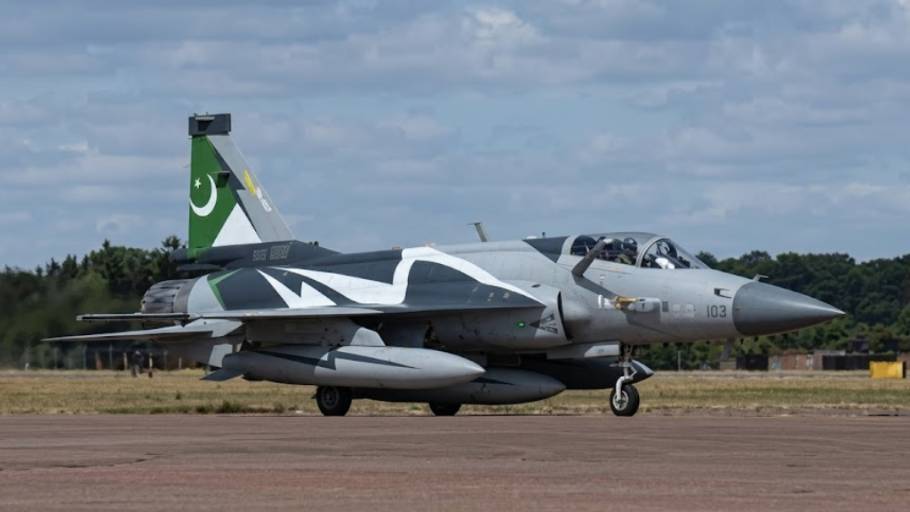
Pakistan Air Force achievements is a topic that’s gotten a lot more attention internationally in the past two years. The May 2025 conflict with India put the PAF on global news in a way that hasn’t happened since the 1965 war. JF-17 Thunder export deals are getting signed across multiple continents. Operations against militant groups in Afghanistan have continued through 2025 and 2026.
Honestly, the PAF’s story is more complicated than either Pakistani triumphalism or Indian dismissiveness suggests. There were genuine achievements on the opening nights of May 2025. There were also serious setbacks by May 10. The JF-17 program represents real success in defense industry development. The Afghanistan operations show evolving capability. Modern PAF deserves honest assessment, not just nationalist celebration.
This guide covers Pakistan Air Force achievements with the actual facts. The 2025 India conflict and what really happened. The JF-17 program and export deals. Operations in Afghanistan. The history that led here. And honest perspective on where the PAF stands in 2026.
A Quick Look at PAF History
Before getting into modern Pakistan Air Force achievements, some history matters for context.
The PAF was established on August 14, 1947, when Pakistan gained independence. The early years were tough. Limited aircraft. Limited trained personnel. Limited resources. The force basically had to build itself from scratch using what came over from the divided British Indian Air Force.
The 1965 war with India is where the PAF earned its reputation. Despite being heavily outnumbered, Pakistani pilots performed remarkably well. M.M. Alam’s claimed multiple kills in a single sortie became part of PAF legend. The force generally exceeded expectations against a numerically superior Indian Air Force.
The 1971 war went very differently. East Pakistan was essentially indefensible. The PAF couldn’t sustain operations across both fronts. The defeat in 1971 was comprehensive and continues affecting PAF strategic thinking decades later.
The 1980s brought F-16 acquisitions from the United States. These remained backbone of PAF capability for decades. The Afghan war period saw PAF involvement in various operations. The 1990s sanctions era was difficult, with US arms cutoffs forcing Pakistan to develop alternatives.
The 2000s started the modern transformation through the JF-17 program with China.
The May 2025 Conflict
The biggest single moment for recent Pakistan Air Force achievements came during the four-day conflict with India in May 2025. The whole thing started after the April 22 Pahalgam terrorist attack in Kashmir. India launched Operation Sindoor on May 7 with strikes on what it called terrorist sites in Pakistan and Pakistan-administered Kashmir.
What followed was an 88-hour air campaign from May 7 to 10, 2025.
The opening night (May 7): This is where PAF had its biggest claimed successes. Pakistani forces engaged 42 fighters including JF-17, F-16, and J-10 aircraft in response. The Indian Air Force had numerical superiority with over 130 aircraft involved in the beyond-visual-range engagement.
Pakistani officials initially claimed five Indian aircraft and one UAV shot down. The confirmed losses through subsequent independent investigation include one Rafale (serial BS-001 found at Bathinda), one Mirage 2000, and either a MiG-29UPG or Su-30MKI. These confirmed losses came from a January 15, 2026 report by the Centre d’Histoire et de Prospective Militaires in Switzerland.
The Rafale shootdown specifically became internationally significant. A Chinese-made J-10 fighter armed with PL-15 long-range air-to-air missile took down what Pakistan called India’s most capable aircraft. Reuters reported that the loss was linked to Indian intelligence underestimating the PL-15’s range.
The reversal (May 10): Here’s the part the Pakistani narrative often skips. By the morning of May 10, the picture had completely reversed. The Indian Air Force had achieved air superiority over key sectors of Pakistani airspace. The Pakistan Air Force was increasingly unable to sustain operations it had executed on the opening night.
The Indian S-400 air defense system engaged Pakistani aircraft at ranges approaching 300 kilometers. This forced complete reassessment of where and how PAF could operate. Multiple Pakistani aircraft losses occurred including F-16s and JF-17s.
The decisive phase came in coordinated Indian strikes between 02:00 and 05:00 on May 10. BrahMos, SCALP-EG, and Rampage missiles hit Pakistani targets from northern Islamabad area to central and southern airbases. The strikes were designed to degrade command, control, and operational capacity simultaneously.
The S-400 attack claim came on May 10. Pakistan claimed JF-17 jets destroyed an Indian S-400 system at Adampur Air Force Station using CM-400AKG missiles. India strongly denied this, with PM Modi later visiting Adampur and posing in front of an apparently operational S-400 launcher.
Ceasefire May 10: The conflict ended with a ceasefire after the Indian May 10 strikes had achieved their objectives. Pakistani Air Force achievements in those four days included genuine successes on the opening night but the overall trajectory by ceasefire favored India.
The honest assessment isn’t that Pakistan “won” or “lost” the air war. The opening 24-48 hours saw genuine PAF tactical successes including the Rafale shootdown. The closing days saw Indian air superiority. Both pictures are real.
What the Rafale Shootdown Meant
The single Rafale shootdown on May 7 generated massive international attention disproportionate to its tactical significance. Why?
The Rafale is one of the most expensive Western fighter aircraft. France markets it as a top-tier 4.5 generation fighter. India had recently acquired Rafales as major capability upgrade. The aircraft’s combat record had been limited.
Pakistan Air Force achievements in shooting one down using Chinese J-10 with Chinese PL-15 missile sent multiple messages:
Chinese fighters could engage and defeat top Western fighters in actual combat. Chinese long-range air-to-air missiles worked as advertised. Pakistani pilots could use these systems effectively against trained adversaries. The shootdown wasn’t a fluke but a designed engagement.
President Trump publicly praised the JF-17 performance, which was unusual for an American president to comment on aircraft from a Chinese-Pakistani partnership. This drove serious international interest in the JF-17 program.
The Washington Post verified visual evidence consistent with the Rafale and Mirage 2000 crashes. India’s Chief of Defence Staff Anil Chauhan acknowledged Indian aerial losses but declined to specify numbers. The losses were significant enough that international media coverage focused on them heavily.
The JF-17 Thunder Program
Pakistan Air Force achievements through the JF-17 program represent the most consequential long-term success. The aircraft has fundamentally changed Pakistan’s position in global defense markets.
The JF-17 background is worth knowing. Co-developed with China starting in the 1990s as response to US arms sanctions, the aircraft was designed as affordable multirole fighter. The name “JF” stands for “Joint Fighter” and “17” suggests upgrade over F-16. The first prototype flew in 2003. Service entry came in 2007.
The current Block III is the most advanced variant. It features active electronically scanned array radar, helmet-mounted display, advanced cockpit, and capability to use long-range air-to-air missiles like PL-15. The aircraft demonstrated its capabilities publicly at RIAT 2025 in the UK.
Export deals (2025-2026): The May 2025 combat performance dramatically boosted JF-17 export interest. Recent and pending deals include:
- Nigeria: Already operating JF-17s, expanded interest
- Myanmar: Existing operator with continuing program
- Azerbaijan: Operating JF-17s with continuing relationship
- Iraq: Active interest discussed in January 2026 meetings with PAF Chief Air Chief Marshal Zaheer Ahmed Baber Sidhu
- Bangladesh: In formal talks for JF-17C Block 3 acquisition as of January 2026
- Indonesia: Potential $40 aircraft deal discussed during January 2026 high-level talks
- Libya: $4-4.6 billion deal for 16 JF-17s signed with Khalifa Haftar’s Libyan National Army in December 2025
- Saudi Arabia: Discussions reported in January 2026 about converting $2 billion of Saudi loans to Pakistan into JF-17 acquisitions (though US discouraging this in favor of F-35 sale)
- Somalia: 24 JF-17 Block 3 on order following February 2026 negotiations and April 2026 signing
This export footprint is genuinely significant. Pakistan has moved from being primarily defense importer to becoming defense exporter with credible product. The JF-17 has become the most successful aircraft program from a non-traditional defense exporter in recent decades.
PFX program: Looking forward, Pakistan Air Force achievements include the PFX (Pakistan Fighter Experimental) program for next-generation fighter. A PAF official stated at IDEAS 2024 that the jet should fly within 4-5 years. The C-130H displayed at RIAT 2025 showed PFX prominently, symbolizing PAF commitment to indigenous fifth-generation development.
Operations Against Afghanistan 2025-2026
Recent Pakistan Air Force achievements include sustained operations against militant groups operating from Afghan territory. These have escalated significantly since late 2025.
Operation Khyber Storm (October 9, 2025): Pakistan carried out airstrikes in Kabul, Khost, Jalalabad, and Paktika. The Kabul strike specifically targeted TTP leader Noor Wali Mehsud at Abdul Haq Square. Mehsud survived but the strikes demonstrated Pakistani capability to reach targets deep inside Afghan territory.
Precision strikes (October 15, 2025): Additional Pakistani airstrikes targeted Taliban military installations. The strikes hit Fourth and Eighth Taliban Brigades and the Fifth Border Corps in Kandahar. Reports indicated 15-20 Taliban fighters killed.
The October strikes caused controversy. According to Taliban officials, civilian casualties included three Afghan cricket players. The International Cricket Council expressed sorrow over the cricket player deaths. Afghanistan’s Cricket Board withdrew from the 2025 Pakistan T20I Tri-Nation Series in respect for the victims.
Operation Ghazab Lil Haq (February 26, 2026): This represented the largest Pakistan Air Force achievements against Afghanistan to date. The operation targeted positions in Nangarhar, Nuristan, Kunar, Khost, Paktia, and Paktika provinces.
According to Pakistani officials, the airstrikes destroyed:
- 2 corps headquarters
- 3 brigade headquarters
- 2 ammunition depots
- 1 logistics base
- 3 battalion headquarters
- 2 sector headquarters
- 80+ tanks, artillery pieces, and APCs
Casualty figures included approximately 133 Taliban fighters killed and 200+ injured. Defense Minister Khawaja Asif announced the beginning of “open war” between the two countries.
These operations demonstrate evolving PAF capability for sustained cross-border air campaigns. They also show willingness to operate against the Afghan Taliban government, not just non-state militant groups.
Drone and UAV Capabilities
Pakistan Air Force achievements increasingly include drone capabilities alongside conventional aircraft. The PAF has acquired Turkish Bayraktar TB2 and Akinci drones, integrating these into operations.
Chinese drones including Wing Loong II have been part of the inventory for years. The PAF has used these in border surveillance and various operations.
Domestic drone development has progressed through partnerships with Turkey and indigenous programs. This represents another area where Pakistan has moved beyond pure import dependency.
Air Defense Capabilities
The May 2025 conflict exposed gaps in Pakistani air defense relative to Indian capabilities. The S-400 system India operates created standoff distances that Pakistani aircraft struggled to operate within.
Pakistan Air Force achievements in air defense include the HQ-9P (Chinese long-range surface-to-air missile) system acquisition, LY-80 medium-range systems, and various shorter-range systems. The integration of these into networked air defense continues being developed.
The AEW&CS (Airborne Early Warning and Control Systems) advantage that PAF maintained during May 2025 was significant. PAF operates 14 AEW&CS aircraft versus India’s 8. The Saab Erieye system has been particularly valuable for the force.
Despite some claimed AEW&CS performance during May 2025, the broader air defense vulnerability remained. The May 10 Indian strikes demonstrated that Pakistani depth wasn’t adequately defended against modern long-range precision weapons.
Training and International Cooperation
Pakistan Air Force achievements include continued international training partnerships and joint exercises.
The Anatolian Eagle exercises with Turkey continue. Joint training with Chinese PLA Air Force happens regularly. Saudi Arabian Air Force training partnerships continue despite the Saudi shift toward Western systems.
PAF participates in international air shows including RIAT, Dubai Air Show, IDEAS, and others. These showcase capabilities and develop commercial relationships.
The PAF Academy at Risalpur trains pilots from multiple countries. International cadets train alongside Pakistani officers, building relationships and influencing future defense decisions.
Honest Assessment of Where PAF Stands
The Pakistan Air Force achievements picture in 2026 contains real successes and real limitations.
Real successes:
- JF-17 program represents genuine defense industry development
- Export deals demonstrate international credibility
- May 7, 2025 opening night showed tactical competence
- Operations against Afghanistan show evolving capability
- AEW&CS capability provides genuine advantage
- Trump-era American praise for JF-17 elevated international perception
Real limitations:
- May 10, 2025 reversal showed inability to sustain operations against superior Indian forces
- Air defense gaps remain against modern Indian capabilities
- Fifth-generation fighter capability lags behind India’s planned acquisitions
- Force size limitations against larger Indian Air Force
- Long-range precision strike capability gap remains
- Dependence on Chinese systems creates strategic vulnerabilities
The PAF is a capable regional air force with growing international defense industry presence. It’s not, however, in same tier as superpower air forces. The honest framing matters more than either nationalist celebration or dismissive criticism.
What This All Means
For Pakistanis, Pakistan Air Force achievements should be assessed honestly without either inflating or dismissing them. The PAF performs better than some expected. It has limitations that need addressing. The JF-17 program is genuine success. The May 2025 conflict was complicated with both successes and setbacks.
For international observers, Pakistan represents an interesting case of middle-power defense development. The JF-17 program shows how Chinese technology transfer combined with Pakistani manufacturing produces capable products at lower cost than Western alternatives. This is restructuring how mid-tier countries think about acquiring fighters.
For defense industry analysts, the JF-17’s combat performance in May 2025 validated Chinese aviation technology in ways that affect global defense markets. The fighter’s affordability combined with demonstrated capability creates real competition for Western and Russian fighters in markets where capability matters more than alliance politics.
For India, the May 2025 conflict produced both genuine concerns about specific Pakistani capabilities and validation of Indian conventional military superiority. The Rafale loss is a real problem requiring response. The May 10 reversal demonstrated continuing Indian advantage when full capabilities are employed.
Final Thoughts
Pakistan Air Force achievements in 2025-2026 represent a force in genuine transition. From traditional defense importer to defense exporter. From regional player to internationally recognized military aviation contributor. From force dependent on Western technology to capable operator of Chinese systems.
The JF-17 program is the genuine long-term success. Export deals are signing across continents. Combat performance validated the platform. The defense industrial base supporting these operations represents real capability development.
The May 2025 conflict was more complicated than the simplified narratives suggest. The opening night brought genuine tactical successes including the Rafale shootdown that captured global attention. The closing days brought Indian air superiority that exposed Pakistani limitations. Both pictures are real and both matter for honest assessment.
Operations against Afghanistan represent evolving capability and willingness to use force. Whether these operations achieve strategic objectives remains debated. They demonstrate sustained capability for cross-border air campaigns that few mid-power air forces can match.
The honest version of Pakistan Air Force achievements in 2026 isn’t pure triumph or pure failure. It’s a credible regional air force with real successes, real limitations, and growing international presence in defense markets. The story continues developing. The next several years will determine whether the May 2025 successes prove sustainable or whether the May 10 limitations prove decisive.
For PAF supporters, the achievements deserve recognition while acknowledging the gaps. For PAF critics, the limitations deserve acknowledgment without dismissing the genuine successes. The reality contains both.
That’s the actual picture of Pakistan Air Force achievements in 2026. A force that performed beyond expectations in some areas, fell short in others, and continues developing capability that matters both for South Asian security and global defense industry dynamics.
Famous Festivals of Pakistan: The Real Guide to Cultural Celebrations



Comments