




Abdul Sattar Edhi: The Real Story of Pakistan’s Greatest Humanitarian
Abdul Sattar Edhi is a name every Pakistani knows but the actual story behind the man often gets reduced to surface-level facts. We know he ran an ambulance service. We know he helped poor people. We know he lived simply. Honestly, the full picture is way more remarkable than the simplified version suggests.
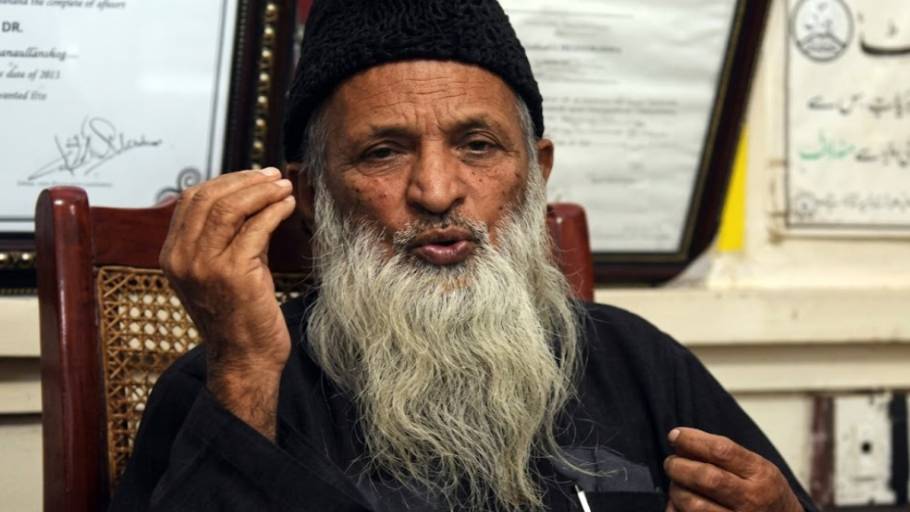
Abdul Sattar Edhi is a name every Pakistani knows but the actual story behind the man often gets reduced to surface-level facts. We know he ran an ambulance service. We know he helped poor people. We know he lived simply. Honestly, the full picture is way more remarkable than the simplified version suggests.
This was a man who built the world’s largest volunteer ambulance service starting with one second-hand vehicle. He sheltered tens of thousands of orphans across decades. He ran morgues, animal shelters, drug rehabilitation centers, and feeding programs simultaneously. He owned two pairs of clothes and slept in a small room next to his office for most of his life. He turned down national awards because he didn’t want them. He was nominated for Nobel Peace Prize multiple times.
This guide covers the real Abdul Sattar Edhi. His actual life from Gujarat childhood through partition migration to building the largest humanitarian organization in Pakistan’s history. The principles that drove him. The controversies that followed him. And why his legacy continues mattering in 2026, nearly a decade after his death.
Early Life in Gujarat
He was born on January 1, 1928 in Bantva, a small town in Gujarat in what was then British India. His family belonged to the Memon community, traders from Gujarat known for business acumen and tight-knit social structures.
His father Abdul Shakoor Edhi was a small-scale trader. His mother Ghurba Edhi shaped him profoundly in ways that would define his entire life. She suffered from mental illness and physical paralysis for years. Young Abdul Sattar cared for her devotedly, learning early what it meant to serve someone completely.
The lessons from caring for his mother stayed with him forever. He often spoke about how his mother gave him two coins every morning before school, one for himself and one to give to someone in need. He had to account for both at the end of the day. This simple daily practice became the foundation of his lifelong philosophy.
His mother died in 1947 when he was 19. The combination of caring for her and losing her shaped his understanding of what humans needed and what services society failed to provide.
His formal education was limited. He attended local schools but didn’t complete formal higher education. What he lacked in degrees he made up for in practical wisdom and direct experience with human suffering.
Migration to Pakistan
The 1947 partition changed everything. His family migrated from Gujarat to the new state of Pakistan. They settled in Karachi, which was becoming the country’s largest city as millions of refugees poured in.
The early Karachi years were difficult. The family had limited resources. The city itself was overwhelmed with refugee crisis. Living conditions for migrants were brutal. Healthcare was inadequate. Social services barely existed.
Young Edhi worked various jobs to support the family. He sold cloth, worked as commission agent, and did whatever earned money. He learned the city, its people, and its problems through these years of hard work.
The Karachi he lived in was a city of contradictions. Massive wealth alongside extreme poverty. Modern infrastructure being built next to slums. Government failing to provide basic services to millions. This environment gave him both the problems and the determination to address them.
The First Edhi Center
The humanitarian we know started taking shape in 1951. He saw something in Karachi that bothered him deeply. A flu epidemic was killing people. Government healthcare wasn’t reaching everyone. He decided to do something himself.
He set up a small medical dispensary in Mithadar, a neighborhood in old Karachi. He used his savings to buy basic medicines. He provided free treatment to whoever came. The dispensary became his first humanitarian project.
He soon noticed another problem. Sick and dying people had nowhere to go for emergency transport. Karachi had no organized ambulance service. People died because they couldn’t get to hospitals. Families couldn’t move dead bodies. The basic dignity of healthcare and death wasn’t available to poor Pakistanis.
In 1957, he bought his first ambulance with public donations. One second-hand vehicle. That was the beginning of what would become the world’s largest volunteer ambulance service.
He drove the ambulance himself. He picked up sick people. He transported dead bodies. He did the work that nobody else wanted to do or thought was important enough to organize. The personal involvement set the pattern for everything that followed.
Building the Edhi Foundation
The Edhi Foundation as we know it grew gradually through the 1960s and 1970s. He expanded operations based on direct observation of what people needed.
The foundation’s services expanded to include:
- Ambulance services: Started with one vehicle, eventually grew to over 1,800 ambulances across Pakistan
- Free hospitals and clinics: Providing medical care to those who couldn’t afford private healthcare
- Orphanages: Sheltering abandoned and orphaned children across multiple cities
- Women’s shelters: Providing safety for women escaping domestic violence or other dangers
- Homes for the mentally ill: Caring for people that family couldn’t or wouldn’t keep
- Morgues and burial services: Including washing and burying unclaimed bodies with dignity
- Drug rehabilitation centers: Treating addiction across multiple facilities
- Animal shelters: Including the famous bird shelter in Karachi
- Food distribution programs: Free meals for the hungry across multiple locations
- Maternity homes: Providing safe childbirth for women without other options
- Adoption services: Including the famous Jhula (cradle) program where parents could leave unwanted babies safely
The Jhula program is worth understanding specifically. He installed cradles outside Edhi centers where parents could leave babies anonymously without judgment. The signs said simply “Do not kill, leave the baby here.” Tens of thousands of babies were saved through this program over decades. Many were adopted into loving families through the foundation’s services.
By the 2000s, the foundation had become genuinely massive. The ambulance fleet was the largest volunteer ambulance service in the world. The orphanages housed thousands of children. The food programs fed thousands daily. The morgues received and prepared bodies that families couldn’t or wouldn’t claim.
How He Actually Lived
The personal life of this humanitarian was something genuinely extraordinary in modern context. He lived the way he expected others to live in service.
He owned two pairs of clothes throughout most of his life. Simple shalwar kameez. He wore them until they were worn out, then replaced them. He had no wardrobe of expensive clothes despite running an organization receiving millions in donations.
He slept in a small room next to his office in Mithadar. The room contained basic furniture, a bed, and not much else. For decades, this was his home despite being capable of building or buying expensive houses anywhere.
He didn’t own a car despite running the country’s largest ambulance fleet. He traveled in ambulances, public transport, or whatever was convenient. He didn’t see car ownership as priority for his personal use.
His meals were simple. He ate the same food served at Edhi feeding programs to those who couldn’t afford other meals. He didn’t accept special treatment in restaurants or feasts.
He never took salary from the foundation. He survived on minimal personal resources, refusing to draw money from an organization he saw as belonging to those it served.
His wife Bilquis Edhi shared this lifestyle completely. They married in 1965 and she became his closest partner in running the foundation. Their four children grew up understanding what their parents’ life was about.
This wasn’t asceticism for show. It was genuinely how he believed someone serving humanity should live. He used to say that owning things was burden he didn’t want when there was so much work to do.
The Universal Principle
Beyond the operational details, Abdul Sattar Edhi was driven by a universal principle that shaped everything he did. He served people regardless of religion, caste, nationality, or any other distinction.
His ambulances picked up Hindus, Christians, Muslims, Sikhs, and people of every other religion. His morgues prepared bodies according to whatever religious tradition applied. His orphanages cared for children regardless of background.
This universalism was unusual in a country where sectarian and communal tensions often determined who got help. He explicitly rejected those distinctions. He famously said, “No religion is higher than humanity.”
The position got him criticism from various religious quarters at different times. Some questioned whether he was sufficiently Islamic in his approach. He responded by continuing the universal service rather than changing the approach to satisfy critics.
His ambulances drove into riot-affected areas to evacuate the wounded regardless of which side they were on. During communal violence, his teams worked in zones where formal government services couldn’t or wouldn’t operate. This neutrality was both his strength and his vulnerability.
The foundation operated in zones where almost no other organization could function. When Karachi went through its worst periods of ethnic and political violence in the 1990s and 2000s, Edhi ambulances were often the only emergency services that could move through certain neighborhoods. That access was earned through years of universal service.
International Recognition
He accumulated international recognition that he generally accepted reluctantly. He didn’t seek awards or pursue prestige.
His honors included:
- Lenin Peace Prize 1988: Soviet Union’s major peace award
- Ahmadiyya Muslim Peace Prize 2010: Recognition for humanitarian service
- Various honorary doctorates from universities globally
- Nobel Peace Prize nominations multiple times
- Time Magazine’s recognition as one of most influential people
- Pakistan’s Nishan-e-Imtiaz 1989: Highest civilian award
The Nobel nominations are worth noting specifically. He was nominated multiple times by various peace activists, including Malala Yousafzai who said publicly he deserved it more than she did. He never won the actual prize.
He famously turned down various awards that he considered would distract from the work. He didn’t want speaking tours or ceremonial events that would take him away from running the foundation.
His international reputation grew through documentary films, books, and journalistic coverage. The 2014 documentary “Among the Believers” featured his work. Various international correspondents wrote profiles. The English-speaking world started learning about him in the 2000s through these channels.
Health Challenges and Final Years
The later years of his life were marked by health challenges he faced with characteristic stoicism.
He suffered from kidney failure starting around 2013. He required dialysis multiple times weekly. He could have flown to any country in the world for the best medical treatment. He stayed in Pakistan and used local hospitals like the patients he served.
Despite the kidney problems, he continued working as much as possible. He gave interviews from his hospital bed. He attended Edhi Foundation events when physically able. He kept the organization moving forward.
His final illness extended through 2015 and into 2016. The Pakistani public followed his health closely. Politicians visited him in hospital. Religious leaders prayed for him. The whole country recognized that someone genuinely special was dying.
Abdul Sattar Edhi died on July 8, 2016 at the Sindh Institute of Urology and Transplantation in Karachi. He was 88 years old. His funeral was attended by political leaders, religious figures, and tens of thousands of ordinary Pakistanis. He was given a state funeral with full military honors.
He was buried at Edhi Village in Karachi according to his own wishes. The grave is simple, like everything else about how he lived.
The Edhi Foundation After Him
The question after his death was whether the Edhi Foundation could survive without him. The honest answer in 2026 is mostly yes, with some complications.
Faisal Edhi, his son, took over leadership of the foundation. He had been involved in operations for years before his father’s death. The transition was relatively smooth in terms of continuity of services.
The foundation continues operating across Pakistan. Ambulance services run. Orphanages function. Food programs continue. The basic operational structure his father built remains functional.
Some challenges have emerged:
- Donor patterns: Without the founder’s charismatic presence, donor patterns have shifted somewhat. The personal connection many Pakistanis felt to him himself can’t be replicated.
- Operational expansion: New project initiatives have slowed compared to his lifetime when he constantly identified new needs to address.
- Political pressures: The foundation has faced various political pressures and controversies. Some specifically targeted Faisal Edhi or operational decisions.
- Bilquis Edhi’s role: His widow continued playing major role until her own death on April 15, 2022. Her loss removed another senior figure who connected to the founding period.
- Generational transition: Many people who worked directly with the founder are retiring or have left. The institutional culture is gradually evolving.
The foundation remains massive and impactful. It also remains one of Pakistan’s most trusted humanitarian organizations. The work continues even as it inevitably changes.
Guinness World Records – Largest Volunteer Ambulance Organisation
What Made Him Different
When we compare him to other humanitarian figures, several things stand out as genuinely distinctive:
Personal involvement: He drove ambulances himself for decades. He washed bodies in morgues. He held abandoned babies. He didn’t delegate the actual work to others while taking credit.
Refusal of personal wealth: He had multiple opportunities to become wealthy through the organization or his fame. He systematically refused. The two pairs of clothes weren’t strategic image-making. They were his actual reality.
Universal service: His commitment to serving regardless of religion or background was genuinely consistent across decades. He didn’t compromise it under pressure from various groups.
Operational scale combined with personal simplicity: He built one of the world’s largest volunteer organizations while living in a small room. The contrast between organizational scale and personal simplicity was remarkable.
Resistance to political alignment: He stayed away from political parties throughout his life. He critiqued politicians regardless of party. He refused to let the foundation become political tool.
Religious devotion without sectarianism: He was deeply religious in personal practice but rejected sectarian distinctions in service. This combination is rarer than people sometimes assume.
Long-term consistency: He did this work for over 60 years. Most charismatic founders shift focus or burn out. He maintained the same basic mission and approach throughout his life.
Why His Legacy Still Matters
His legacy in 2026 continues mattering for several reasons that go beyond just memorializing one impressive person.
Model of humanitarian service: His organizational model influenced humanitarian work across Pakistan and beyond. Various organizations built on what Edhi Foundation showed was possible.
Trust building: He built one of the most trusted institutions in Pakistan during a period when trust in institutions generally collapsed. The Edhi Foundation continues being one of the few organizations Pakistanis genuinely trust.
Demonstrating universal Islamic values: His approach showed how Islamic principles can be applied universally rather than restrictively. This matters for ongoing debates about Islamic humanitarianism.
Critique of materialism: His personal lifestyle critique of materialism continues being relevant in increasingly consumerist Pakistani society. The contrast between his life and contemporary patterns highlights questions worth asking.
Service over status: His refusal of status, position, and personal aggrandizement contrasts with how Pakistani civil society often operates. The example continues being relevant.
Operational excellence in difficult environment: Running such large operations effectively in Pakistan’s challenging environment showed what was possible despite all the difficulties. The standard he set remains the benchmark for humanitarian work in Pakistan.
Final Thoughts
Abdul Sattar Edhi represented something genuinely rare. A combination of operational excellence at massive scale with personal simplicity that didn’t waver across decades. He built institutions that affected millions while owning almost nothing himself. He served everyone while criticizing the systems that made his work necessary.
For Pakistanis, understanding the real man matters because his life raises questions about how to actually live well in conditions of inequality and suffering. The simplified national hero version is comfortable. The actual man’s example is challenging in ways that matter.
He didn’t solve Pakistan’s problems. He couldn’t. No single organization or person could address the systemic issues that create the conditions his foundation responded to. But he showed what one person committed completely to humanitarian work could actually accomplish over a lifetime.
For people in other countries learning about him, he offers an example of what humanitarian leadership looks like when it’s not connected to UN bureaucracies, celebrity culture, or political maneuvering. He just did the work, year after year, with whatever resources came to him.
His foundation continues operating. Pakistani patients still get transported by Edhi ambulances. Pakistani orphans still receive care at Edhi facilities. Pakistani bodies still get prepared with dignity at Edhi morgues. The infrastructure he built keeps serving people he never met and never could have met.
The honest version of his life isn’t really about one extraordinary man. It’s about what becomes possible when someone genuinely commits their entire life to serving others without expecting personal benefit. The model is replicable in principle even if rarely practiced.
That’s the real story of Abdul Sattar Edhi. A man from Gujarat who came to Karachi in 1947, built the world’s largest volunteer ambulance service, sheltered tens of thousands of orphans, and lived in two pairs of clothes throughout. The legacy continues affecting Pakistan every day, even nearly a decade after his death in 2016.
Pakistan Air Force Achievements: The Real Story in 2026


Comments