




How Pakistan Came Into Existence: The Real Story of 1947
Every Pakistani kid learns how Pakistan came into existence in school. Jinnah wanted Pakistan. The Muslim League fought for it. The British finally agreed. August 14, 1947 happened. Independence Day. End of story. The actual history is messier and honestly way more interesting than what textbooks bother to include.
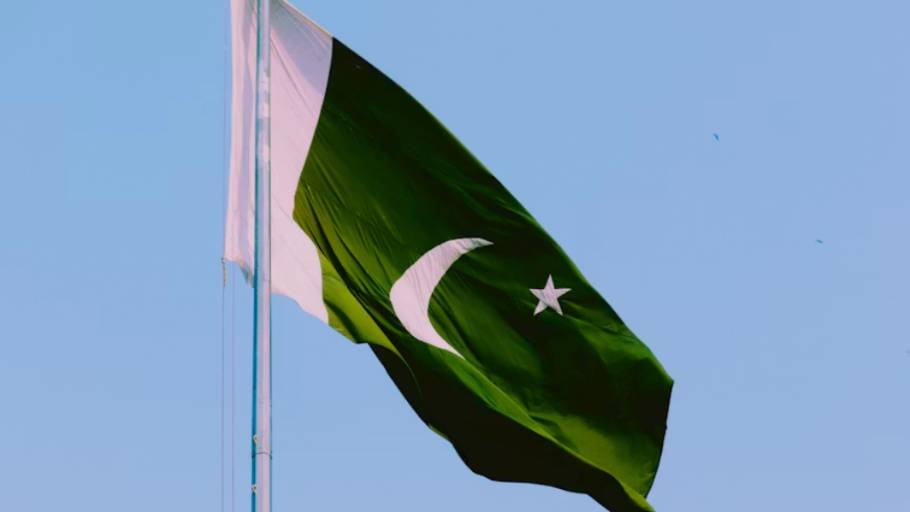
Every Pakistani kid learns how Pakistan came into existence in school. Jinnah wanted Pakistan. The Muslim League fought for it. The British finally agreed. August 14, 1947 happened. Independence Day. End of story.
The actual history is messier and honestly way more interesting than what textbooks bother to include. The country didn’t just appear because Jinnah demanded it. There were almost 90 years of political evolution before independence. A community gradually decided it was a separate nation rather than just a religious minority. World wars created opportunities. Compromises got rejected. Missed chances piled up. And eventually one of the most violent partitions in human history produced two countries from one British India.
This is the version with the actual nuance. The political battles, the Congress mistakes, the colonial calculations, the leaders who shaped events, and the catastrophe that came with independence. None of it was inevitable. All of it came from specific decisions made by specific people.
The Roots Go Back Way Further Than 1947
Here’s something most Pakistanis don’t fully appreciate about how Pakistan came into existence. The political journey that produced our country started almost a century before 1947.
The 1857 War of Independence changed everything for Indian Muslims. The British crushed the rebellion and ended Mughal political power for good. The last Mughal emperor was exiled to Burma. Muslims went from being the ruling class for centuries to being a politically powerless community overnight.
This was a massive psychological shift. Sir Syed Ahmad Khan emerged in this context. He understood Muslims needed modern education and engagement with British political systems to survive. He founded what became Aligarh Muslim University in 1875. His vision was Muslim modernization within colonial framework.
Sir Syed also started doing something that mattered politically. He began arguing Hindus and Muslims were two separate communities with different interests. He didn’t propose a separate country. But he created the intellectual vocabulary that later became the two-nation theory.
The All India Muslim League was founded in 1906 in Dhaka. The original purpose was just protecting Muslim political interests within British India. Not creating Pakistan. Just making sure Muslims weren’t completely dominated by Hindu majority through Congress.
Then the Lucknow Pact of 1916 actually showed cooperation could work. Muslim League and Congress agreed on joint demands for self-government. Jinnah, who was also a Congress member at this point, was central to making that deal happen.
So in the 1910s the question wasn’t whether Muslims would get their own country. It was how Muslim political interests could be protected within unified India.
Where It Actually Went Wrong
The 1937 provincial elections changed direction completely. This is honestly the moment where partition became likely.
The 1935 Government of India Act allowed elections for provincial governments. The 1937 elections went terribly for the Muslim League. Congress swept Hindu-majority provinces. The League performed badly even in some Muslim-majority areas.
Then Congress made a political error that turned out to be fatal. They refused to share power with the Muslim League. Even where coalition governments would have made obvious sense, Congress wanted single-party rule. They treated the League as junior partner unworthy of serious power-sharing.
The Congress Ministries period from 1937 to 1939 made everything worse. Congress-ruled provinces pushed policies that genuinely alienated Muslims. Hindi got promoted over Urdu. Vande Mataram, a Hindu nationalist song, became compulsory at school functions. Cow slaughter restrictions affected Muslim economic life.
The message Muslims received was clear. In an independent India dominated by Congress, Hindus would set the cultural and political tone. Muslims would be permanent minority with limited real influence.
This experience changed Jinnah completely. He had spent decades as Hindu-Muslim unity advocate. Congress leaders themselves called him “the best ambassador of Hindu-Muslim unity.” The 1937-39 experience convinced him unity was impossible if Congress wouldn’t actually share power.
So how Pakistan came into existence partly happened because of Congress political miscalculation. Their refusal to treat the Muslim League as genuine equal partner pushed Muslim politics toward separation. If Congress had been willing to share power in 1937, the entire trajectory might have been different.
The Lahore Resolution
The next big moment in how Pakistan came into existence came at the Muslim League’s annual session in Lahore from March 22-24, 1940. About 100,000 people attended at Minto Park, which is now Iqbal Park. Largest Muslim political gathering in Indian history at that point.
On March 23, 1940, A.K. Fazlul Huq, the Bengali premier, moved what later got called the Pakistan Resolution. The text was deliberately vague. It called for “Independent States” in Muslim-majority regions but didn’t specify a single Pakistan or even name the proposed country.
Here’s something interesting most people miss. The word “Pakistan” doesn’t appear in the original text. The name had been coined by Cambridge student Chaudhary Rahmat Ali in 1933 as an acronym. The Muslim League hadn’t officially adopted it yet. Press coverage gradually attached “Pakistan” to the demand.
Jinnah’s presidential address on March 22 laid out the two-nation theory in full. Hindus and Muslims weren’t one nation. They were two distinct nations with different cultures, religions, histories, and political interests. Forcing them into one state would create permanent conflict.
This was a massive shift from the 1916 Lucknow Pact era. Within 24 years, the same Jinnah who had negotiated Hindu-Muslim cooperation was arguing for two separate political nations. The change came from accumulated political experience, not sudden ideological awakening.
The Lahore Resolution set the political direction. It didn’t immediately produce Pakistan but it made eventual partition much more likely.
The 1940s Political Mess
The years between 1940 and 1947 saw intense political maneuvering that determined how Pakistan came into existence. World War II created opportunities and complications. Britain needed Indian support for the war. Different Indian political groups tried to leverage British wartime difficulties.
The 1942 Cripps Mission offered post-war independence with provincial opt-out provisions. Both Congress and Muslim League rejected it but for different reasons. Congress wanted immediate independence without conditions. The League wanted clearer guarantees for Muslim political autonomy.
The 1942 Quit India Movement by Congress backfired strategically. Congress leaders went to prison. The Muslim League used this period to expand its political base. By the time Congress leaders came out, the League had become much stronger.
The 1944 Gandhi-Jinnah talks were a serious attempt at compromise. They failed completely because Gandhi rejected the two-nation theory while Jinnah insisted on it as foundation for any agreement. The two leaders couldn’t bridge that gap.
The 1945-46 elections were decisive. The Muslim League performed dramatically better than 1937. Won overwhelming majorities in Muslim-majority provinces. This validated the League’s claim to represent Indian Muslims politically. Congress couldn’t dismiss the League as fringe organization anymore.
By early 1946, all serious observers recognized some form of Muslim political autonomy was inevitable. The question became what form it would take.
The Last Chance That Got Wasted
The most important attempt to avoid partition in how Pakistan came into existence happened in 1946. The British sent the Cabinet Mission to India to propose constitutional solution.
The Cabinet Mission Plan proposed three-tier federal India with central government having limited powers (defense, foreign affairs, communications), three groups of provinces with significant autonomy, and Muslim-majority and Hindu-majority groups having different political characters.
This was basically Pakistan within India. Muslim-majority groups would have enough autonomy to protect Muslim interests without requiring complete separation. Both Congress and Muslim League initially accepted the plan.
Then everything fell apart. Congress refused to fully accept the grouping arrangement that gave Muslim-majority groups real autonomy. Nehru gave a press conference suggesting Congress would modify the plan after independence. The Muslim League viewed this as bad faith and withdrew acceptance.
This was honestly the last realistic chance to avoid partition. The Cabinet Mission Plan could have produced unified India where Muslim political interests were genuinely protected. Congress political miscalculation about wanting more central power made the plan collapse.
After the Cabinet Mission Plan failed, partition became essentially inevitable. The Muslim League had support, organization, and clear demand. Congress had refused the compromise that could have prevented separation.
When Things Got Violent
The transition from political demand to actual partition involved horrific violence. The story of how Pakistan came into existence isn’t a peaceful one. It’s one of the bloodiest political transitions in history.
On August 16, 1946, the Muslim League called Direct Action Day to demonstrate political power and demand Pakistan. The day was supposed to be peaceful protest. It turned into massive communal violence.
The Great Calcutta Killings of 1946 left thousands dead. Hindu-Muslim violence on a scale not seen before. The communities couldn’t safely live together anymore. The political failure to share power had produced street-level violence.
Through late 1946 and early 1947, violence spread across multiple regions. Hindu-Muslim riots in Bihar. Sikh-Muslim violence in Punjab. Various communities attacking each other in waves of revenge killings.
The colonial government essentially lost control of communal violence. Police and army couldn’t prevent attacks. Communities started arming themselves for self-defense or for offensive operations against neighbors.
The political failure to find compromise had produced ground-level breakdown of relationships between communities. Whatever the politicians decided, the populations couldn’t peacefully coexist anymore. This violence shaped what partition would look like when it finally came.
The Final Stretch With Mountbatten
The final phase of how Pakistan came into existence happened rapidly in 1947 under Lord Mountbatten’s leadership. He arrived in March 1947 as the last Viceroy. His mission was transferring power. The British had decided they were leaving India. Question was how to manage the departure.
Mountbatten’s initial assessment was that delay would make things worse. Communal violence was escalating. Government control was breaking down. He decided to accelerate the timeline dramatically.
The June 3 Plan announced the framework. India would be partitioned into India and Pakistan. Provinces with Muslim majorities would form Pakistan if their assemblies voted accordingly. The transition would happen by August 15, 1947.
The Radcliffe Boundary Commission was set up to draw the actual borders. Sir Cyril Radcliffe was the British judge given the impossible task. He had never been to India before. He had a few weeks to divide Punjab and Bengal in particular.
Radcliffe’s lines were announced after independence in August 1947. The borders he drew determined which villages, towns, and cities would be in India and which in Pakistan. The lines tried to follow Muslim and Hindu population concentrations but inevitably divided communities and families.
August 14, 1947
The country officially came into existence on August 14, 1947. India became independent on August 15, 1947. The exact dating involved local time considerations and ceremonies happened on different sides of the new border.
Quaid-e-Azam Muhammad Ali Jinnah became the first Governor-General. He arrived in Karachi from Delhi to take leadership of the new country.
Liaquat Ali Khan became the first Prime Minister. The early administration included League leaders from various regions of the new country.
The new Pakistan consisted of two non-contiguous wings separated by 1,600 kilometers of Indian territory. West Pakistan included Punjab’s western part, Sindh, Northwest Frontier Province, Balochistan, and various princely states. East Pakistan was the Muslim-majority eastern half of Bengal.
This geographic absurdity would create problems eventually leading to East Pakistan becoming Bangladesh in 1971. But in 1947, the immediate concern was just surviving the transition.
The Catastrophe That Came With Independence
We can’t tell the honest story of how Pakistan came into existence without talking about the partition violence. It defined the country’s birth.
Estimates of deaths during partition range from approximately 500,000 to over 2 million people. The violence was concentrated in Punjab where Hindu, Sikh, and Muslim communities had been deeply interlinked. The division created conditions for mass slaughter.
Approximately 15 million people migrated across the new borders. It was the largest forced migration in human history. Muslims moved from India to Pakistan. Hindus and Sikhs moved from Pakistan to India. Communities had to relocate from areas where they had lived for centuries.
Trains arrived at stations with all passengers dead. Convoys of refugees were attacked along routes. Women were systematically raped. Children were killed or separated from families. The violence was unprecedented in scale.
For Pakistan, this meant the country was born in refugee crisis. Millions of refugees arrived in Karachi, Lahore, and other cities with nothing. The government barely existed yet had to deal with massive humanitarian catastrophe.
Jinnah himself was reportedly devastated by the violence. He had advocated for separation expecting it could be relatively peaceful. The reality was much worse than anyone predicted.
The Early Years Were Brutal
The first years of Pakistan’s existence were defined by crisis management. The country had to build government institutions, integrate refugees, handle the Kashmir conflict with India, and establish economic foundations all simultaneously.
Karachi became the first capital. Government departments operated from improvised offices. Infrastructure was overwhelmed by refugees. International recognition had to be established from scratch.
The Kashmir dispute erupted almost immediately. The princely state of Jammu and Kashmir had majority Muslim population but Hindu Maharaja. When Pashtun tribal forces invaded in October 1947, the Maharaja signed instrument of accession to India. War followed. The Kashmir dispute that began then continues affecting Pakistan-India relations today.
Jinnah’s health was deteriorating. He had been hiding tuberculosis for years. He died on September 11, 1948, just over a year after Pakistan’s creation. His loss removed the figure who had unified the diverse coalition that created Pakistan.
Liaquat Ali Khan continued as Prime Minister until he was assassinated in October 1951. His death removed another key founding figure. Pakistani politics never fully recovered from these early losses of leadership.
The early years were brutal but the country survived. Basic institutions got established. The refugee crisis gradually stabilized. Pakistan existed as functioning country, however imperfectly.
Why This Still Matters
Understanding how Pakistan came into existence matters for several reasons that continue being relevant in 2026.
National identity questions keep coming back. The two-nation theory, the role of Islam, the relationship with India all derive from this founding history. Pakistani debates about what kind of country we are keep returning to questions that weren’t fully resolved in 1947.
Indo-Pakistani relations are still shaped by partition trauma. The violence, displacement, and Kashmir conflict have deep roots in 1947 events. Each generation has to renegotiate what the founding history means for current relationships.
The Bangladesh separation in 1971 raises hard questions about whether the original 1947 two-nation theory was implemented correctly. East Pakistan’s separation suggests the logic that created Pakistan didn’t actually hold together very well.
Minority rights questions stay relevant. How non-Muslims would be treated wasn’t fully spelled out at creation. Jinnah’s August 11, 1947 speech promised religious freedom for all. Whether subsequent governments lived up to that promise remains debated.
Pakistan’s federalism struggles have roots in the founding period. The country includes multiple ethnic and linguistic groups with different political interests. The constitutional framework has continuously struggled to manage these differences.
Final Thoughts
The story of how Pakistan came into existence isn’t just historical curiosity. It’s foundational story that continues shaping the country and the region today. The country exists because of specific decisions made by specific people facing specific circumstances in the 1940s. Different decisions could have produced different outcomes.
The creation involved genuine grievances about Muslim political marginalization. It involved real political organization and leadership. It involved British colonial decisions about how to transfer power. It involved Congress political miscalculations. It involved Muslim League political effectiveness. It involved horrific violence that nobody adequately prepared for.
For Pakistanis, understanding the actual history rather than just the patriotic version produces better appreciation of how the country came to exist. The story is more complicated and more interesting than school textbooks usually present.
For Indians, the partition story matters too. The same events that created Pakistan also reshaped India. The bilateral relationship continues being affected by 1947 history.
For students of nationalism and state formation, Pakistan offers fascinating case study. A new country was created in 1947 based on religious identity at a time when most new countries were being created based on ethnic or geographic identity. The Pakistan model influenced other nationalist movements globally.
For people interested in colonial transitions, the partition shows how badly things can go when colonial powers withdraw without adequate planning for transition. The British departure was managed in ways that produced massive violence and displacement.
The honest version of how Pakistan came into existence isn’t pure triumph. It’s not pure tragedy either. It’s a real story about a community deciding it needed political autonomy, working through political channels for decades to achieve it, facing British colonial maneuvering throughout, dealing with Congress political miscalculations, and ultimately producing a country at enormous cost in human suffering.
Pakistan exists today because of choices made in 1947. The country continues developing. The questions raised at creation continue being relevant. The honest history matters more than the simplified version for understanding where we came from and where we’re going.
That’s the real story of how Pakistan came into existence. A complicated political process driven by genuine Muslim political concerns, Congress miscalculation, Muslim League effectiveness, British transitional mismanagement, and ground-level communal breakdown that produced one of the most consequential national births of the 20th century.
When Did Islamabad Become the Capital of Pakistan: The Full Story



Comments