When Did Islamabad Become the Capital of Pakistan: The Full Story
Table of Contents
When did Islamabad become the capital of Pakistan is a question most Pakistanis answer with “1960” or “Ayub Khan made it the capital.” Both are kind of right but neither tells the actual story. The shift from Karachi to Islamabad took over a decade. It involved political calculations, military logic, and one of the most ambitious city-building projects in South Asian history.
The honest version is more interesting than the textbook version. Karachi was Pakistan’s first capital. Then Rawalpindi served as temporary capital for years. Then Islamabad got designed from scratch by a Greek architect. Then government departments shifted gradually over multiple years. The actual transition was messier and more drawn out than the simple “1960 and done” version most people learn.
This guide walks through when did Islamabad become the capital of Pakistan with the full context. The original Karachi years. The decision to move. The Rawalpindi interim period. The Islamabad construction project. The actual dates things happened. And why this whole story matters for understanding modern Pakistan.
Karachi Was the First Capital
Before getting to when did Islamabad become the capital of Pakistan, we need to talk about Karachi. Because Karachi was where everything started in 1947.
When Pakistan came into existence on August 14, 1947, Karachi became the capital essentially by default. It was the largest city in the western wing of the country. It had a working port. It had some existing colonial-era government infrastructure. It was where Quaid-e-Azam Muhammad Ali Jinnah and the early Pakistani leadership were based.
Karachi as capital had immediate problems though. The city was overwhelmed by refugees pouring in from India. Population exploded within months. Infrastructure couldn’t handle the load. Government departments operated from makeshift offices and improvised buildings.
The geographic location was also a strategic concern. Karachi sat right on the coast in the south. It was far from the northern areas where Pakistan’s borders with India and Afghanistan needed military attention. It was vulnerable to naval attack and coastal pressure.
Despite these issues, Karachi served as capital throughout the late 1940s and 1950s. The country built government buildings, hosted foreign embassies, and developed central institutions there. The Mausoleum of Quaid-e-Azam was built in Karachi, recognizing the city’s central role in early Pakistan.
But the conversation about moving the capital started early. People in government recognized that Karachi wasn’t the ideal long-term solution.
Why They Wanted to Move
The question of when did Islamabad become the capital of Pakistan has to start with why they wanted to move at all. Several reasons drove the decision.
Karachi was overcrowded: By the late 1950s, Karachi’s population had exploded beyond what the city could handle. Refugee crises, internal migration, and natural growth had created an unmanageable urban situation. Government functions were competing with massive social problems for attention.
Strategic vulnerability: Karachi’s coastal location made it militarily vulnerable. In any future conflict with India, the capital would be exposed to naval attack. Government leadership being concentrated in such a vulnerable location was strategic weakness.
Distance from northern areas: Most of Pakistan’s strategic concerns were in the north. Kashmir dispute with India. Border with Afghanistan. Northwestern tribal areas. The capital being so far south made administrative response to northern issues slower and more difficult.
Ethnic and political balance: Karachi was dominated by Mohajirs (refugees from India) and Sindhis. Moving the capital to a more neutral location was seen as helping national integration rather than concentrating power in any one ethnic region.
Climate: Karachi has harsh climate. Hot, humid, unpleasant for much of the year. The diplomatic and government community wanted a more livable location.
Symbolism of new beginning: Building a brand new capital represented Pakistan’s modernization ambitions. A purpose-built capital city would be different from anything else in South Asia. It would signal Pakistan’s ambitions to become a modern state.
Ayub Khan’s military preference: General Ayub Khan, who became president after the 1958 military coup, had specific preferences for moving the capital. He wanted it closer to Rawalpindi where the army headquarters was located. The proximity would simplify civil-military coordination.
All these reasons combined to make the capital move politically and strategically logical even though it would be enormously expensive.
The Decision to Move
The actual decision about when did Islamabad become the capital of Pakistan started taking shape in the late 1950s under Ayub Khan’s military government.
In 1958, Ayub Khan took power through a military coup. He almost immediately started looking at major projects to transform Pakistan. Moving the capital was one of his priorities.
A commission was set up in 1959 to identify the location for a new capital. The commission was headed by General Yahya Khan. Various sites across Pakistan were considered. Areas near Karachi, Hyderabad, Lahore, Peshawar, and other locations were all evaluated.
The commission ultimately recommended an area on the Pothohar Plateau near Rawalpindi. The location had several advantages:
- Close to Rawalpindi (the temporary capital) for continuity
- Pleasant climate at higher elevation
- Strategic location far from coastal vulnerability
- Geographic center of West Pakistan (the larger and more populous wing)
- Beautiful natural setting near Margalla Hills
- Available land for construction without major displacement
- Close to existing infrastructure including the Grand Trunk Road
The site was officially approved in 1959. Construction would start in 1960.
Pakistan was about to undertake one of the most ambitious city-building projects in modern history. Building a capital city from scratch.
The Rawalpindi Interim Period
Here’s something most people don’t realize when they ask when did Islamabad become the capital of Pakistan. Between Karachi and Islamabad, Rawalpindi served as interim capital for several years.
The federal government started shifting from Karachi to Rawalpindi in 1959. The military and bureaucratic leadership preferred Rawalpindi because it was closer to where they were planning the new capital. They could oversee Islamabad construction while running the country.
Rawalpindi was officially the capital of Pakistan from 1959 to 1969, even as Islamabad was being built. Government ministries operated from Rawalpindi. Foreign embassies opened there. Parliament met there. The administrative center of Pakistan was Rawalpindi for that decade.
This is why the answer to when did Islamabad become the capital of Pakistan isn’t a single clear date. The transition happened in stages from Karachi to Rawalpindi to Islamabad over more than a decade.
The Rawalpindi years saw enormous activity. Government leaders lived in Rawalpindi while traveling to Islamabad construction sites regularly. Decisions about the new capital were made from Rawalpindi. The whole interim period was about preparing for the actual move.
Building Islamabad
The construction of Islamabad is genuinely remarkable. A whole capital city was designed and built from scratch in a remote area.
The master plan was developed by Greek architect Constantinos Doxiadis. He was hired in 1959-1960 to design the city. Doxiadis was internationally famous for urban planning theory and had designed cities and urban projects in multiple countries.
His design for Islamabad was modernist and rational. The city was divided into sectors, each given a letter and number designation. The sectors were organized in a grid pattern that would accommodate growth. Major arteries connected different parts of the city.
The plan included:
- Administrative sectors for government functions
- Residential sectors for different income levels
- Educational sectors for schools and universities
- Commercial sectors for businesses and markets
- Diplomatic enclave for embassies and international missions
- Green belts and parks throughout
- Protected areas around Margalla Hills
Construction started in 1960. Workers, architects, engineers, and laborers came from across Pakistan and internationally to build the new capital. The pace was aggressive given the scale of what was being attempted.
Key buildings constructed in the early years:
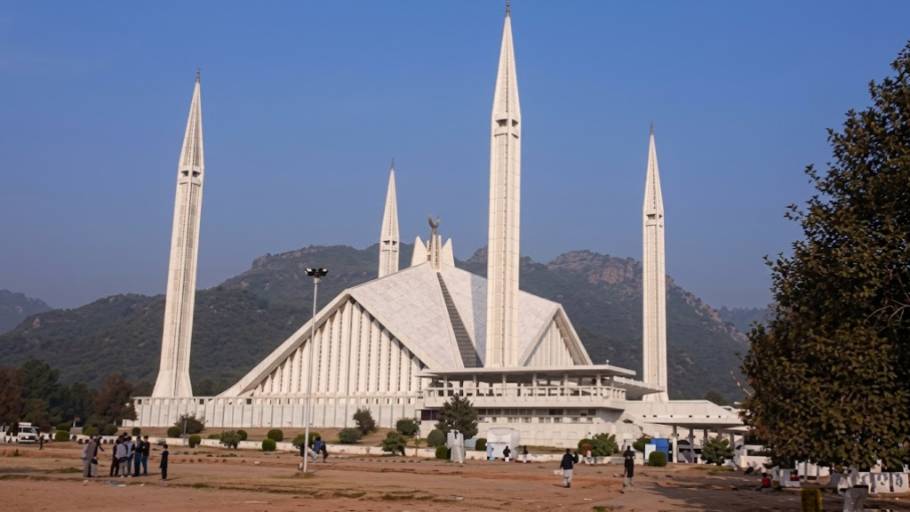
- Faisal Mosque foundation (1976, completed 1986)
- Presidential Palace area
- Parliament House
- Various ministry buildings
- Sector developments for residential areas
- Diplomatic Enclave for embassies
The construction continued for years. Even as government departments moved to Islamabad, building continued on additional facilities. The city kept growing through the 1970s and 1980s.
When Did Islamabad Actually Become Capital
So the precise answer to when did Islamabad become the capital of Pakistan requires understanding it as a process, not a single date.
1960: Construction of Islamabad officially began. The name “Islamabad” (meaning “City of Islam”) was approved. But Islamabad wasn’t a functioning capital yet.
1965-1966: First government departments started shifting to Islamabad. Most government still operated from Rawalpindi though.
1967: Significant portion of government had relocated to Islamabad. The official ministries were splitting between Rawalpindi and the new city.
1969: This is generally considered the year Islamabad became the official capital of Pakistan. The major government functions had shifted. The status was confirmed. Most sources consider 1969 the formal date of Islamabad becoming the capital.
1970s: Government continued shifting departments to Islamabad. Embassies relocated from Karachi and Rawalpindi. The city kept growing.
1980s onward: Islamabad continued developing as the established capital. Population growth, additional construction, and continued government concentration there.
So when someone asks when did Islamabad become the capital of Pakistan, the most accurate single-year answer is 1969. But the actual process started in 1959-1960 and continued for years.
What Made Islamabad Different
The development of Islamabad as Pakistan’s capital created a city genuinely different from other Pakistani cities. Several distinctive features emerged:
Planned development: Unlike Karachi and Lahore which grew organically over centuries, Islamabad was planned from scratch. The sector system, road network, green spaces, and zoning were all designed before construction.
Government concentration: Islamabad’s economy is heavily government-dominated. Federal employees, military officers, diplomats, and consultants make up large portion of the city’s professional class. This creates different social dynamics than commercial cities.
Cleanliness and order: Islamabad consistently ranks as one of the cleanest cities in South Asia. The planned development and government attention have maintained higher standards than other Pakistani cities.
International character: The diplomatic enclave and international agencies make Islamabad more international than other Pakistani cities. Foreign embassies, international development organizations, and expatriate communities are concentrated here.
Margalla Hills environment: The natural beauty of Margalla Hills surrounding the city creates environmental quality unusual for Pakistani urban areas.
Modernist architecture: The city’s main buildings showcase modernist Pakistani architecture. Faisal Mosque, Pakistan Monument, Parliament House represent specific architectural visions.
Lower population density: Compared to Karachi or Lahore, Islamabad has lower population density and more space per resident.
These distinctive features have shaped Islamabad’s character over the decades.
The Politics Behind the Move
Beyond technical and strategic reasons, the question of when did Islamabad become the capital of Pakistan has political dimensions worth understanding.
Ayub Khan’s military government: The capital move happened under military rule. Ayub Khan’s military government could push through ambitious projects that civilian governments might have struggled to execute. The political environment enabled the project.
West Pakistan dominance: The capital move strengthened West Pakistan’s dominance over East Pakistan. Islamabad was in the western wing, far from Bengali populations in the east. This contributed to the tensions that eventually led to the 1971 separation.
Military proximity: Locating the capital near Rawalpindi made civil-military coordination easier. This served both legitimate purposes (administrative efficiency) and problematic ones (concentrating military influence over civilian government).
Punjabi influence concerns: Some critics argued that moving the capital to the Pothohar Plateau strengthened Punjabi political influence. The location is in northern Punjab and convenient for Punjab-based political and military elites.
Economic costs: Building Islamabad cost enormous amounts of money during a period when Pakistan had significant development needs. The investment in capital construction came at the expense of other potential investments.
National prestige projects: The capital move was partly about creating a symbol of modern Pakistan. The grandeur and modernist character of Islamabad were intended to project Pakistani ambitions on the international stage.
Understanding these political dimensions helps explain why the move happened when it did and how.
Islamabad in 2026
The capital that Ayub Khan and Doxiadis envisioned in 1960 has become a real city with its own character and challenges.
The population has grown enormously beyond original projections. The city houses several million people now, including residents of the Islamabad Capital Territory and the connected urban area with Rawalpindi.
The twin city dynamic with Rawalpindi continues to define the area. Many people work in Islamabad but live in Rawalpindi or vice versa. The combined urban area is one of Pakistan’s largest population centers.
Modern challenges include:
- Traffic congestion despite planned road systems
- Air quality concerns particularly in winter
- Population growth straining original infrastructure
- Urban planning challenges as the city grows beyond original sectors
- Security considerations affecting daily life
Despite these challenges, Islamabad remains genuinely distinctive among Pakistani cities. The quality of life, environmental beauty, and government services continue making it attractive for many Pakistanis.
The Margalla Hills National Park surrounding the city provides genuine natural environment in an urban setting that few cities globally can match.
Why the Whole Story Matters
Understanding when did Islamabad become the capital of Pakistan and the full history behind it matters for several reasons:
Modernization story: Islamabad represents Pakistan’s modernization ambitions. The city was meant to be modern, planned, beautiful, functional. Its development reflects Pakistani aspirations even when other parts of national development have been disappointing.
Civil-military relations: The capital’s proximity to Rawalpindi (army headquarters) reflects the central role of military in Pakistani politics. The geographic arrangement makes civil-military relationships practical realities, not just political concepts.
Urban planning lessons: Islamabad’s successes and failures as a planned city offer lessons for other urban development. What worked, what didn’t, how planned cities evolve over decades.
National integration questions: The location of the capital affected national integration. Different ethnic and regional groups have different relationships with Islamabad. These dynamics continue affecting Pakistani politics.
Historical decision making: Studying how the capital move decision was made offers insights into Pakistani decision-making processes. Military government’s ability to push through major projects, the role of foreign expertise, the priorities of different periods.
Final Thoughts
When did Islamabad become the capital of Pakistan isn’t a question with a simple one-date answer. The transition started in 1959-1960 with the decision and initial construction. It continued through the 1960s as government functions gradually shifted from Karachi to Rawalpindi to Islamabad. It formally completed by 1969 when Islamabad was established as the official capital.
The story behind this transition reflects much about Pakistan’s history and ambitions. Strategic concerns drove the move. Military government enabled the execution. Greek architectural expertise shaped the design. National pride influenced the scale. Multiple factors combined to create a genuinely distinctive capital city.
For Pakistanis, Islamabad represents both achievement and ongoing project. The city was built quickly and ambitiously. It continues evolving. It serves as the political and administrative center of the country. It also continues raising questions about what modern Pakistan should look like.
For international visitors, Islamabad offers experiences quite different from Karachi or Lahore. The planned development, the natural environment, the diplomatic atmosphere all create distinctive visiting experiences.
For students of urban history, the city offers fascinating case study of planned capital development in post-colonial contexts. Few cities offer such clear examples of how purpose-built capitals develop over decades.
The answer to when did Islamabad become the capital of Pakistan in its simplest form is 1969. But the real story is richer than that single date suggests. The decision-making, construction, transition, and ongoing development represent decades of Pakistani history compressed into one urban project.
Islamabad continues being the capital of Pakistan in 2026, nearly 60 years after the official transition. The city built from scratch on the Pothohar Plateau has become an established center of Pakistani national life. The next decades will continue revealing how the original vision evolves to meet new challenges.
That’s the full story of when did Islamabad become the capital of Pakistan. A transition that started in 1959, gradually unfolded through the 1960s, formally completed in 1969, and continues developing today as Pakistan’s planned capital city.
Pakistan’s Nuclear Program History: The Complete Story