




Silicon Valley Startups: The Global Powerhouse of Innovation
Walk through SoMa in San Francisco or down University Avenue in Palo Alto in 2026 and you’ll see something different from the Silicon Valley of even five years ago.
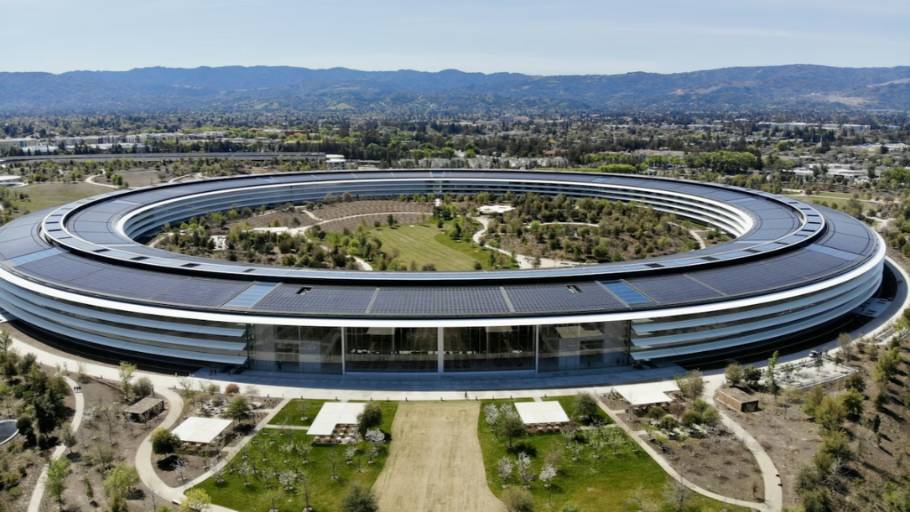
Walk through SoMa in San Francisco or down University Avenue in Palo Alto in 2026 and you’ll see something different from the Silicon Valley of even five years ago. The garage-startup mythology is still part of the brand, but the actual money, talent, and attention are now concentrated in a much narrower set of companies than they used to be. OpenAI alone is worth more than most countries’ entire startup ecosystems. Anthropic, xAI, Perplexity, and a handful of AI-native companies are absorbing what used to be funding for hundreds of separate ideas across consumer, enterprise, and infrastructure.
Silicon Valley still works. It still produces world-changing companies at a rate nowhere else can match. But the playing field has shifted, the cost structure has gotten brutal, and the AI boom has redrawn the map of where capital actually goes.
This is the realistic 2026 picture of Silicon Valley startups. The companies that matter right now, the firms funding them, the structural advantages still in play, and the parts of the system that have visibly broken since 2022.
What Silicon Valley Actually Is
Silicon Valley refers to the geographic area south of San Francisco, stretching roughly from Palo Alto through Mountain View, Cupertino, and San Jose. The name dates back to the silicon chip companies (Intel, Fairchild Semiconductor) that anchored the region in the 1960s and 1970s.
In modern usage, “Silicon Valley” often includes San Francisco itself, particularly the SoMa, Mission, and Financial District neighborhoods where most current startups are physically based. The technical Valley (Palo Alto, Mountain View) hosts the legacy giants. The City (San Francisco) hosts most of the new generation, especially the AI companies driving 2026’s funding boom.
This geographic split matters because it shapes everything from real estate dynamics to cultural identity to where founders actually meet.
The 2026 AI Concentration
The biggest single fact about Silicon Valley startups in 2026 is how concentrated the capital and talent are around AI.
OpenAI, based in San Francisco’s Mission Bay, has raised funding rounds valuing the company at over $300 billion. Its products (ChatGPT, the API, the GPT models) are the reference point that every other AI startup either competes with or builds on top of.
Anthropic, also based in San Francisco, has crossed $60 billion in valuation with backers including Google, Amazon, and major VC firms. Claude has become a serious competitor to OpenAI’s models, particularly for enterprise use.
xAI, Elon Musk’s AI company, has raised massive rounds to compete with both OpenAI and Anthropic, with significant compute investment around its Grok models.
Perplexity has built a real audience for AI-powered search, raising at multi-billion-dollar valuations and forcing Google to ship its own AI search features.
Mistral, while French-headquartered, runs significant operations in the Bay Area and represents the European AI presence in Silicon Valley’s orbit.
Cursor (Anysphere) has become the dominant AI coding tool, growing from a Y Combinator startup to a multi-billion-dollar company in under three years.
Beyond these headline names, hundreds of smaller AI-native startups are concentrated in SF and the Valley, building everything from AI sales tools to AI hardware. The funding flowing into this category has reshaped what a typical Silicon Valley startup even looks like.
Where the Money Actually Comes From
Venture capital remains the financial engine of Silicon Valley, but the distribution has shifted significantly.
The traditional power firms on Sand Hill Road in Menlo Park still dominate large rounds. Sequoia Capital remains the prestige firm with stakes in many of the major AI companies. Andreessen Horowitz (a16z) has split into specialized funds covering AI, crypto, biotech, and consumer. Benchmark, Greylock, Founders Fund, Lightspeed Venture Partners, Accel, and Khosla Ventures continue to lead major rounds across categories.
The accelerator world is also changing. Y Combinator still runs three batches per year and remains the most prestigious accelerator globally. Their portfolio includes Airbnb, Stripe, DoorDash, Coinbase, OpenAI (early days), and many of the current AI generation. Pear VC, AI Grant, and various AI-specific programs have emerged to compete.
Corporate venture capital from Google, Microsoft, NVIDIA, and Amazon has become enormous. NVIDIA Ventures in particular has invested in many of the AI startups dependent on their chips. Microsoft’s investment in OpenAI is the most famous single corporate VC bet in tech history.
Family offices, sovereign wealth funds, and crossover investors (Tiger Global, Coatue, Founders Fund’s growth arm) have become major sources of late-stage capital alongside traditional VCs.
For founders, what’s changed is the bar. Pre-AI-boom, you could raise a $2 million seed on a deck and an idea. Post-AI-boom, expectations have risen significantly for non-AI startups. AI companies, conversely, have raised $100M+ rounds at idea stage based primarily on founder pedigree from OpenAI, Google DeepMind, or top academic labs.
Official Data:For real-time tracking of funding rounds and unicorn valuations, visit Crunchbase’s Silicon Valley Hub or explore the latest tech trends on TechCrunch.
The Talent Pipeline
Silicon Valley’s talent advantage comes from several overlapping sources.
Stanford University remains the single most important academic feeder. The computer science department has produced founders behind Google, Yahoo, Sun Microsystems, Cisco, NVIDIA, Instagram, LinkedIn, and many others. Stanford’s Graduate School of Business and the d.school create cross-functional founder networks.
UC Berkeley produces engineering talent in massive volumes, with strong programs in computer science, AI research, and entrepreneurship through Berkeley Haas and the Berkeley AI Research lab.
Carnegie Mellon, MIT, Caltech, and a few other top schools feed Silicon Valley despite not being local. AI talent specifically often comes from CMU, MIT, and overseas universities including IIT (India), Tsinghua (China), and ETH Zurich (Switzerland).
The H-1B visa program continues to be critical for accessing international talent, though political uncertainty around immigration policy has been an ongoing concern for tech employers.
Beyond university pipelines, the “PayPal Mafia” effect (employees of successful companies starting new companies) continues to produce founders. Ex-employees of Google, Facebook, Stripe, Airbnb, and most recently OpenAI have founded a disproportionate share of current Silicon Valley startups.
The Great Decoupling
One thing that’s genuinely changed since 2020 is that the Silicon Valley monopoly on tech talent and capital has cracked.
Austin, Texas has become the most credible “Silicon Valley alternative,” attracting tech workers fleeing California taxes and cost of living. Tesla, Oracle, and many smaller companies relocated headquarters or operations there. Elon Musk’s various companies anchor an Austin tech scene that’s now substantial.
Miami had a moment around crypto and finance, attracting figures like Keith Rabois and Peter Thiel’s network. Some of that energy has faded but Miami remains a real secondary hub.
New York City has reasserted itself as a major tech hub, particularly for AI, fintech, and consumer applications. NYC offers proximity to Wall Street, media, and global business that SF can’t match.
Remote-first companies like GitLab, Zapier, Automattic, and many newer startups operate without a physical Silicon Valley presence at all, hiring globally.
What this means in practice: Silicon Valley is still the gravitational center, but you can now build a serious tech company from elsewhere in ways that weren’t really possible in 2015. The Valley’s monopoly is weaker, even if its dominance remains.
How These Companies Actually Move Fast
The “build fast, fail fast” cliche oversimplifies what’s actually happening, but the underlying speed advantage is real.
A typical AI-native startup in 2026 might go from formation to a working product in 8 to 12 weeks. The reasons aren’t magic. They’re structural.
Foundation models do the heavy lifting. Instead of building AI from scratch, startups build on top of OpenAI, Anthropic, or open-source models like Llama. This removes years of work that previous generations of AI startups had to do.
Cloud infrastructure scales without setup. AWS, GCP, and Azure let small teams handle global scale without owning servers. Startups in 2005 needed datacenter expertise. Startups in 2026 deploy through a few API calls.
Open-source tooling has matured. Authentication, payments (Stripe), databases (Supabase, PlanetScale), deployment (Vercel, Netlify), and dozens of other building blocks are available as services. Founders integrate rather than build.
The talent expects this pace. Engineers, designers, and founders in Silicon Valley grew up in this environment. The cultural expectation of shipping fast, gathering feedback, and iterating in public is the default.
The downside of this speed is that many startups ship without thinking carefully about consequences. The “move fast and break things” mentality has produced real societal damage in areas including social media, online gambling, gig work classification, and now AI safety.
The Cost of Doing Business
The biggest practical challenge for Silicon Valley startups in 2026 is cost.
San Francisco commercial office rent runs $50 to $120 per square foot annually depending on neighborhood and quality. Software engineer salaries at major companies have crossed $400,000 to $700,000+ in total compensation for senior roles, with AI specialists at top labs earning $1M+ packages.
A typical seed-stage AI startup with 8 employees in SF burns through roughly $250,000 to $400,000 per month once you account for salaries, equity-linked obligations, office space, compute costs, and operational overhead. A $5 million seed round lasts 12 to 18 months at this pace.
Real estate for personal housing is even more brutal. The median home price in Palo Alto exceeds $3.5 million. Renting a 2-bedroom apartment in decent San Francisco neighborhoods runs $4,500 to $7,000 monthly. This dynamic has driven both companies and individual workers out of the region in numbers that weren’t happening pre-COVID.
The cost structure favors companies with significant funding. Bootstrapped startups, side projects, and capital-light businesses increasingly start elsewhere even if their founders trained or worked in the Valley.
Famous Companies and Their Origin Reality
The famous Silicon Valley success stories deserve more honest treatment than the “two guys in a garage” mythology suggests.
Google was founded by Larry Page and Sergey Brin while PhD students at Stanford, with early funding from professors and Andy Bechtolsheim. Real founding advantages: world-class technical research, access to Stanford’s network, and Yahoo’s failure to acquire them early.
Apple started in a garage but with Steve Wozniak’s deep technical expertise and Steve Jobs’ commercial drive. The “garage” framing obscures that Jobs had already worked at Atari and had business sophistication beyond a typical college dropout.
Facebook started at Harvard, moved to Palo Alto, and raised early money from Peter Thiel and Accel before achieving scale. The dorm-room origin is real but the rapid professionalization through VC support was what made it work.
Tesla wasn’t really a garage startup. Musk took over an existing company (Tesla Motors, founded by Martin Eberhard and Marc Tarpenning) and brought in his own capital plus Daimler and Toyota investment to scale.
OpenAI started as a non-profit research lab in 2015 with $1 billion in pledged funding from Musk, Sam Altman, and others. The 2019 transition to a capped-profit structure and the Microsoft investment changed everything. OpenAI’s success is much more about institutional positioning than garage scrappiness.
The honest pattern across all these is: technical depth, access to capital and networks, and timing. Hard work matters but so does the structural environment that Silicon Valley provides.
What’s Actually Hard About Silicon Valley Startups
A few realities that the founder media often glosses over:
Most startups fail. Roughly 75 percent of VC-backed startups don’t return capital to investors. Failure rates for early-stage companies are even higher. The survivor bias in startup media massively distorts perception.
The intensity is real and not always healthy. Working at a high-growth startup typically means 60 to 80 hour weeks for years. Burnout, divorce rates, and mental health issues are well-documented but rarely discussed publicly.
Equity compensation often doesn’t pay off. Most startup equity is worth nothing or significantly less than the salary you gave up to take it. The dream of “joining a unicorn at the right time” is real but rare.
Diversity remains a significant issue. Despite improvements, Silicon Valley remains heavily male, heavily Asian and white, and has well-documented patterns of bias in hiring and funding decisions. Female-founded companies still receive a small fraction of VC funding.
The exit environment is harder than it used to be. IPO windows have narrowed. M&A scrutiny from regulators has increased. Many late-stage companies are now stuck waiting for liquidity events that may never come.
These realities don’t make Silicon Valley less valuable as an ecosystem. They make it less mythological and more like every other competitive environment with real tradeoffs.
The 2026 AI Reset and What’s Next
The current AI wave has produced both genuine breakthroughs and genuine speculative excess.
The breakthroughs include foundation models that have genuinely changed productivity in software, writing, research, and analysis. AI tools have meaningfully altered how millions of professionals work. The economic impact, while still being measured, is real.
The speculation includes hundreds of “AI for X” startups that are essentially ChatGPT wrappers without defensible business models. Valuations on companies without revenue or clear differentiation have reached levels reminiscent of the 1999 dot-com bubble in specific subsectors.
The next 18 to 36 months will likely see significant consolidation. Many AI startups will fail or get acquired for token amounts. The winners will be the ones with genuine technical differentiation, distribution advantages, or proprietary data positions.
Beyond AI, the next waves likely include quantum computing (still early), biotech and longevity (well-funded, especially in the Bay Area), defense tech (Anduril, Palantir, others), space (SpaceX continues to dominate but new entrants exist), and various hardware-software combinations.
How to Actually Be Part of It
For founders, engineers, and operators interested in being part of Silicon Valley:
Y Combinator remains the single best on-ramp for founders without existing networks. The application is open, the program is structured, and the network it provides is genuinely valuable.
Working at a top tech company for 2 to 4 years before starting your own thing remains one of the most reliable paths. The pattern recognition, network, and credibility built during that time pay off significantly.
Top engineering programs at Stanford, Berkeley, CMU, MIT create on-ramps both through education and through alumni networks. Not strictly necessary but genuinely useful.
Building publicly through Twitter (X), GitHub, and personal content has become a real path. The Silicon Valley network is more accessible online than at any point in history. Showing your work consistently for 1 to 2 years builds the social capital that opens doors.
Going through Y Combinator’s network of investors directly for AI-native ideas. The funding environment for AI is still favorable enough that strong founders with credible backgrounds can raise serious capital quickly.
You don’t need to physically be in Silicon Valley to build a successful tech company in 2026, but proximity still helps. The serendipitous conversations, the dinner parties, the office hours with experienced founders are still concentrated in SF and the Valley in ways that remote alternatives can’t fully replicate.
Final Thoughts
Silicon Valley in 2026 is a smaller story than it was a decade ago in some ways, and a bigger story in others.
Smaller: the concentration of capital and attention in fewer companies (especially the major AI labs), the geographic decoupling that’s made other cities credible alternatives, the cost structures that have pushed bootstrapped builders elsewhere.
Bigger: the absolute scale of what’s being built. OpenAI alone may eventually be more valuable than the entire S&P 500 was in 1990. The AI infrastructure being deployed will reshape every industry in the global economy. The talent density in specific subdomains (AI safety, hardware, biotech) is higher than ever.
The mythology of Silicon Valley startups remains useful as inspiration but increasingly disconnected from how the actual money and progress are flowing. The interesting work now happens at a smaller number of better-capitalized companies, often founded by ex-employees of the previous generation’s winners.
For anyone serious about being part of this in 2026, the path is clearer than the inspirational stories suggest. Build technical depth. Get into the right networks. Pick problems that match the current funding environment. Move when the conditions are right, not when the mythology tells you to.
The ecosystem still works. It just looks different from what the older guides describe.
Read More:While Silicon Valley builds the tech, savvy entrepreneurs use it to create wealth. Explore our latest guide on the best online business ideas in 2026 to see how you can leverage these innovations.


Comments