




Why Is Climate Change Getting Worse: The Real Reasons Behind the Crisis
Why is climate change getting worse is a question hitting harder every summer. 2024 was the hottest year on record. Then 2025 broke that record. Pakistan just survived another brutal heatwave. Floods that used to happen once a century now come every few years. Something is clearly accelerating and it’s not slowing down.
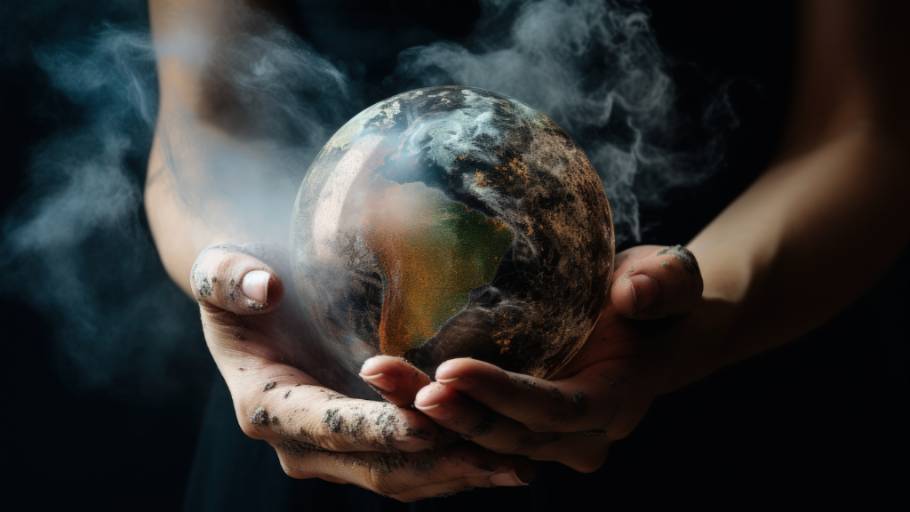
Why is climate change getting worse is a question hitting harder every summer. 2024 was the hottest year on record. Then 2025 broke that record. Pakistan just survived another brutal heatwave. Floods that used to happen once a century now come every few years. Something is clearly accelerating and it’s not slowing down.
The basic science hasn’t changed. We’ve known about greenhouse gases for decades. Scientists warned about warming back in the 1980s. Politicians made promises at climate conferences going back to the 1990s. Yet here we are in 2026 with things objectively worse than the pessimistic predictions said would happen.
The honest answer involves several problems happening at once. Emissions never actually dropped despite all the climate agreements. Feedback loops are kicking in faster than models predicted. Political action keeps failing. And countries like Pakistan pay the price for pollution we didn’t create.
The Numbers Don’t Lie
Let’s establish what’s actually happening. This isn’t theoretical anymore.
Global temperatures in 2025 exceeded 1.5°C above pre-industrial levels. This was supposed to be the safe limit world leaders committed to in the Paris Agreement in 2015. We blew past it a full decade earlier than the worst predictions. That’s not a small miss. That’s fundamental failure.
Carbon dioxide in the atmosphere hit 425+ ppm in 2026. Pre-industrial levels were around 280 ppm. Humans have added more CO2 in the past 70 years than accumulated over the previous 10,000 years combined. We’re running an experiment on the atmosphere at insane speed.
Ocean temperatures kept breaking records. Marine heatwaves that used to be rare now happen constantly. Coral reefs are dying globally. Sea levels rose faster than models predicted.
Extreme weather multiplied everywhere. Heatwaves, floods, droughts, storms that used to be rare are becoming normal. Pakistan’s 2022 floods that displaced 33 million people weren’t a one-time thing. Similar patterns keep repeating.
So the answer to why is climate change getting worse isn’t about future risks. We’re watching it happen right now.
Emissions Never Actually Stopped
Here’s the fundamental problem most climate conversations dance around. Despite decades of climate agreements, global emissions never actually decreased.
The Kyoto Protocol was signed in 1997. Paris Agreement in 2015. COP conferences with dramatic commitments year after year. Meanwhile actual global carbon emissions kept rising nearly every year. COVID-19 briefly interrupted them. Then they resumed rising.
Why is climate change getting worse comes down partly to this stubborn reality. Rich countries reduced their emissions somewhat but exported manufacturing to countries like China and India. Those emissions still exist. They just happen elsewhere now. Global totals didn’t drop.
China became the world’s largest emitter but is also building more solar and wind capacity than anywhere else. Their emissions may be peaking but not dropping fast enough. India’s emissions are still growing because they’re still developing. Rich countries still emit far more per person than developing countries.
Fossil fuel companies kept expanding operations. Despite green marketing, oil and gas exploration continued aggressively. New projects got approved. The infrastructure being built now locks in decades of future emissions.
Consumption patterns in wealthy countries kept growing. More flights, more cars, more electronics, more meat, more everything. Individual actions to reduce consumption barely dented overall trends.
The Feedback Loops Are Activating
Here’s the scary part in 2026. The feedback loops scientists warned about are kicking in faster than models predicted.
Arctic ice loss reduces the planet’s reflectivity. White ice reflects sunlight back to space. Dark ocean water absorbs it. As ice melts, more heat gets absorbed, causing more melting. This is accelerating.
Permafrost thawing releases methane and CO2 that was locked away for thousands of years. Siberian and Alaskan permafrost contains staggering amounts of stored carbon. Methane is 80+ times more powerful than CO2 as a greenhouse gas over 20 years.
Forest fires globally are burning more area more frequently. California, Australia, Amazon, Siberia, Canada. Each major fire releases stored carbon and destroys future carbon sinks. Dead forests can’t absorb CO2 anymore.
The Amazon rainforest is showing signs of transitioning from carbon sink to carbon source. Parts of it now release more CO2 than they absorb due to logging, fires, and drought. This was predicted for later this century but is happening now.
Ocean absorption capacity is decreasing. Oceans have absorbed about 90% of excess heat and 30% of CO2 emissions until now. Warmer water absorbs less CO2. This is a compounding problem.
These feedback loops mean climate change isn’t linear anymore. It’s accelerating. Even if emissions stopped tomorrow, some warming is already locked in.
The Political Failure
Being honest about why is climate change getting worse means acknowledging why political solutions keep failing. This isn’t primarily a technology problem. We have technology to reduce emissions dramatically. The problem is political.
Fossil fuel industry lobbying has been extraordinarily effective. Companies like ExxonMobil knew about climate change since the 1970s and deliberately funded denial campaigns. Political influence continues today. Fossil fuel subsidies globally still exceed renewable subsidies.
Democratic governments face short-term electoral pressures. Climate solutions require long-term investment for benefits appearing decades later. Politicians facing reelection every few years struggle to prioritize this over immediate economic concerns.
Populist politics has undermined climate action in multiple countries. Trump withdrew from Paris Agreement twice now. European populist parties oppose climate policies. Political consensus that briefly existed around 2015 has fractured.
Wealthy countries have failed to fund climate adaptation in poorer countries. The Paris Agreement promised $100 billion annually for climate finance. Actual delivery has consistently fallen short. Countries most affected are also least equipped to adapt.
Climate solutions require sacrifice from wealthy consumers who don’t want to sacrifice. Fewer flights, less meat, smaller houses, less consumption. These are politically toxic. Politicians who suggest them lose elections. So they don’t suggest them.
What This Means for Pakistan
Pakistan has particular reason to care about why is climate change getting worse. We’re among the most climate-vulnerable countries despite contributing very little to the problem.
The 2022 floods showed what’s coming. 33 million people affected. Massive economic damage. Agricultural devastation. Public health crisis. Similar events will happen more frequently.
Heatwaves keep getting worse. Pakistan’s summer 2024 and 2025 saw temperatures over 50°C in some areas. Karachi’s humidity plus heat creates genuinely dangerous conditions. Working outdoors becomes physically impossible during peak periods.
Glacier retreat in the Karakoram and Himalayan regions threatens long-term water security. Pakistan’s rivers depend on glacier melt. Faster melting means more short-term flooding followed by long-term water crises.
Monsoon patterns are becoming erratic. Some years too much rain in short periods causing floods. Other years insufficient rain causing droughts. Agricultural planning becomes nearly impossible.
Karachi faces sea level rise threats. Coastal areas already flood during heavy rains. Combined with future sea level rise, low-lying areas could be devastated.
The climate finance we’re supposed to receive from wealthy countries has been minimal. Pakistan bears costs for emissions we didn’t create. This is fundamentally unjust.
The Individual Actions Trap
One common response to why is climate change getting worse focuses on individual actions. Reduce your carbon footprint. Buy an electric car. Eat less meat. This narrative was actually pushed heavily by fossil fuel companies to shift responsibility from systems to individuals.
Individual actions matter somewhat but can’t solve systemic problems. If every environmentally conscious person reduced their emissions dramatically, it wouldn’t offset continued corporate and government inaction. The math doesn’t work.
Individual actions also require resources most people don’t have. Solar panels require money. Electric vehicles require money. Living efficiently requires urban infrastructure that doesn’t exist in many places. Blaming poor Pakistanis for climate change is absurd when the average American emits 15 times more CO2 per person.
The focus on individual responsibility distracts from systemic changes needed. When companies and governments make climate a personal choice, they avoid regulatory reforms that would actually work.
That doesn’t mean individual actions are worthless. Supporting climate policies, voting for climate-serious politicians, reducing waste, all matters. But as part of collective political pressure, not as substitutes for it.
The Rich Countries Problem
Being honest about why is climate change getting worse requires acknowledging that wealthy countries created most of the problem and continue emitting much more per capita.
Historical emissions from Europe and North America built the atmospheric CO2 warming the planet now. The Industrial Revolution ran on coal that’s still affecting climate today. Rich countries got wealthy through emissions that poor countries now must limit.
Current per capita emissions in wealthy countries remain far higher than in developing countries. Average American emits about 15 tons CO2 annually. Average Pakistani emits about 1 ton. Yet developing countries face pressure to limit emissions while still developing.
Wealthy countries exported their manufacturing to poorer countries and now blame those countries for the resulting emissions. Chinese factories making iPhones for Americans get counted as Chinese emissions. This accounting benefits wealthy consumers while making developing countries look worse.
Climate finance promises from wealthy countries have been consistently underfunded. What has been delivered is often loans rather than grants, adding debt burden to already stressed countries.
Final Thoughts
Why is climate change getting worse isn’t really a mystery anymore. We know what’s causing it. We know what would fix it. The problem is that fixing it requires political will and structural changes we haven’t managed to deliver despite decades of warnings.
For Pakistanis, this reality is particularly painful. We’re paying costs for emissions we didn’t create. Our floods, heatwaves, and agricultural stresses come from atmospheric CO2 that Americans and Europeans mostly contributed. Yet the political systems that should coordinate response keep failing.
The situation will keep getting worse until fundamental changes happen. More heatwaves. More floods. More agricultural stress. More displacement. Pakistan and other developing countries will bear disproportionate costs while contributing least to the underlying problem.
For individuals, the honest advice is preparation and political engagement. Prepare your family and community for continued extreme weather. Water storage. Cooling capacity. Emergency plans. Stay politically engaged. Support politicians serious about climate. Demand accountability from officials who keep failing to plan for what’s coming.
The climate crisis is the defining challenge of our generation. Understanding why is climate change getting worse helps us respond intelligently rather than pretending everything is fine. The scientific consensus is clear. The political failure is documented. The consequences are already visible.
What we do in the next decade will determine how bad the next 50 years become. That’s genuinely how serious this is.
Why Is Netherlands So Rich: The Real Story Behind Dutch Wealth


Comments